Categoria: congresso-2025

  • Processo di traduzione delle “Linee guida internazionali e standard di buone prassi per l’erogazione di fisioterapia in acqua” (IOAPT, 2025)

    Processo di traduzione delle “Linee guida internazionali e standard di buone prassi per l’erogazione di fisioterapia in acqua” (IOAPT, 2025)

    Translation process of “International Guidelines and Good Practice Standards for Aquatic Physiotherapy Intervention” (IOAPT, 2025)

    Autori

    Guerri Lucia (Pt, freelance; master’s degree “Idrokinesiterapia”; AIFI NIS Fisioterapia in acqua; Brescia, Italy)

    Coppola Lucia (Pt; MSc; Health Professional Department Azienda Ospedale Università Padova; Aquatic Therapeutic Exercise Association AQUATEA APS representative; AIFI NIS Fisioterapia in acqua; Padova, Italy)

    Bianconi Tatiana (Pt; chief of rehabilitation, Spinal Unit ASST GOM Niguarda, Milano; AIFI NIS Fisioterapia in acqua; Milano, Italy)

    Martinelli Vincenzo (Pt; freelance; Disability Manager; master’s degree “Idrokinesiterapia”; AIFI NIS Acqua; Bergamo, Italy)

    Coladonato Adriano (Pt; Fisiogruppo Roma; AIFI NIS Fisioterapia in acqua; Roma, Italy)

    Rocco Manuel ( Pt; MSc; master’s degree “Idrokinesiterapia”; Milano; AIFI NIS Fisioterapia in acqua; Milano, Italy)

    Background and aims

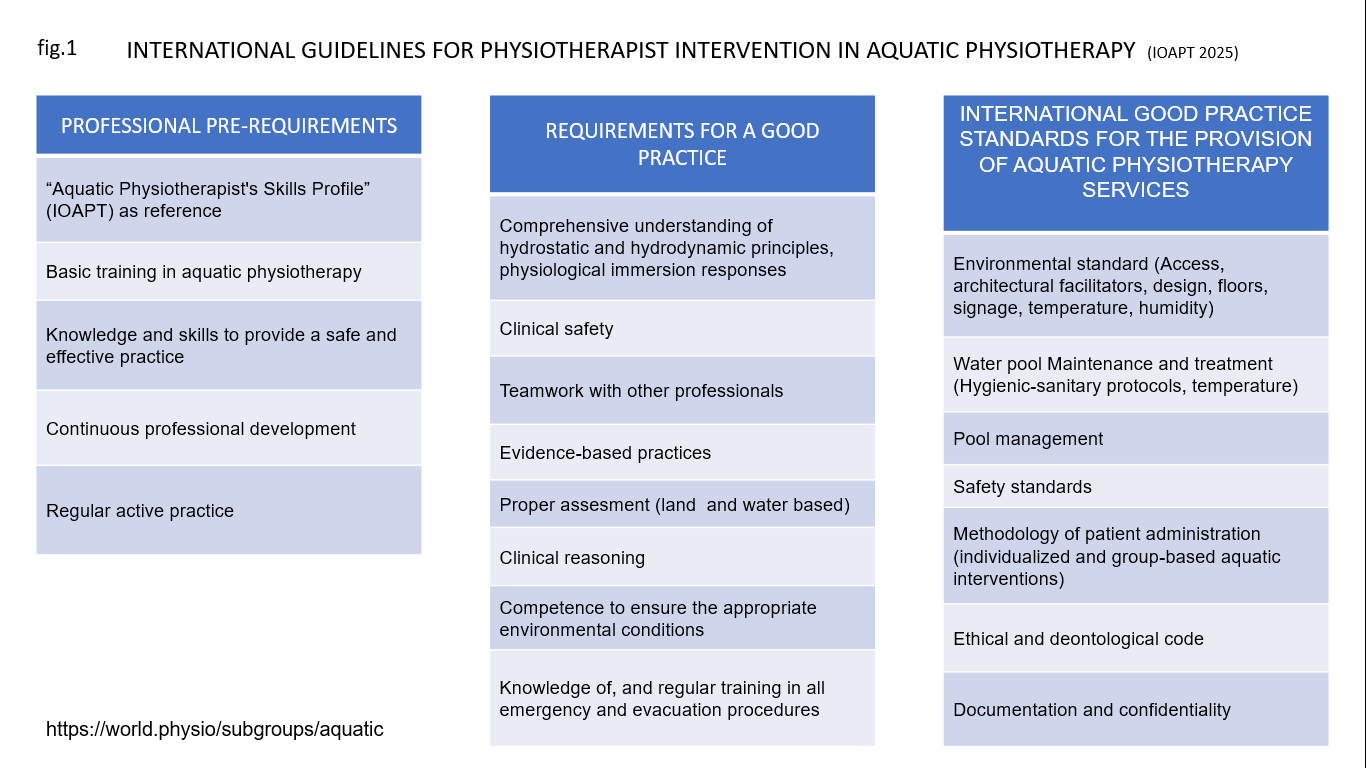
    Aquatic physiotherapy is supported by scientific literature as complementary or alternative treatment, in a wide range of conditions of rehabilitative interest. In response to the global variability in education and practice, the International Guidelines and Good Practice Standards for Aquatic Physiotherapy Intervention—developed by the International Organisation of Aquatic Physiotherapists (IOAPT)—aim to establish a shared, high-quality framework for clinical practice. The document was collaboratively developed by international experts and reviewed by professionals from 14 countries to define standards for aquatic physiotherapy (figure 1). The Network di Interesse Specialistico on Aquatic Physiotherapy (NIS Fisioterapia in acqua), speciality group of Associazione Italiana di Fisioterapia (AIFI), having among its statutory objectives “Developing and applying a communication strategy to promote aquatic physiotherapy, clarify the role of the aquatic physiotherapist, and identify the most effective outreach methods” has deemed it relevant to translate the Guidelines into Italian.

    Methods

    The NIS Fisioterapia in acqua requested formal authorization from the IOAPT to initiate a structured translation process.

    A working group was nominated to translate the manuscript, identify terminology issues, and conduct an initial peer review to resolve critical points by consensus. The panel was composed of 4 experienced professionals: TB, coordinator of a Rehabilitation center with therapeutic pool, LG  and VM,  master’s degree  Idrokinesiterapia, LC, representative of a cultural association in aquatic physiotherapy. Due to lack of consensus, the opinion of two further experts was sought. All NIS members reviewed the draft for a second-phase review over one month.

    Results

    Certain issues have been identified and will be addressed in the process of culturally adapting the guidelines to the Italian context (e.g., Basic Life Support and required standard of knowledge).

    It remains to be determined the translation of ‘aquatic physiotherapy’ into Italian to better reflect the physiotherapist’s scope of practice. The term idrokinesiterapista has been proposed, though it would diverge from the Spanish and Portuguese translations.

    The completed version was then submitted to the IOAPT Commission for verification and formal approval.

    Conclusion

    The translated guidelines provide Italian physiotherapists with an authoritative reference to align national practice with international standards. The collaborative translation and review process, rooted in peer consultation and expert validation, reinforces the quality and applicability of the final document.The guidelines support the formal recognition of aquatic physiotherapy as a specialty and offer a robust tool for advancing education, practice, and patient outcomes at both national and global levels.
    REFERENCES

    https://world.physio/subgroups/aquatic

    https://aifi.net/gis-nis/nis-fisioterapia-in-acqua/

  • CANCER SURVIVORS: THE CHALLENGE OF CHRONICITY IN PHYSIOTHERAPY AND THE NEW FRONTIER OF ASSISTED SELF-CARE

    CANCER SURVIVORS: THE CHALLENGE OF CHRONICITY IN PHYSIOTHERAPY AND THE NEW FRONTIER OF ASSISTED SELF-CARE

    CANCER SURVIVORS: THE CHALLENGE OF CHRONICITY IN PHYSIOTHERAPY AND THE NEW FRONTIER OF ASSISTED SELF-CARE

    Autori

    Angela Contri (Clinical and Experimental Medicine Program – University of Modena and Reggio Emilia)

    Isabella Campanini (LAM-Motion Analysis Laboratory, S. Sebastiano Hospital, Neuromotor and Rehabilitation Department, Azienda USL-IRCCS di Reggio Emilia, Correggio, Italy)

    Barbara Bressi (Research and EBP Unit, Health Professions Department, Azienda Unità Sanitaria Locale-IRCCS di Reggio Emilia, Reggio Emilia, Italy)

    Stefania Costi (Research and EBP Unit, Health Professions Department, Azienda Unità Sanitaria Locale-IRCCS di Reggio Emilia, Reggio Emilia, Italy; Department of Surgical, Medical, Dental and Morphological Sciences Related to Transplant, Oncology and Regenerative Medicine, University of Modena and Reggio Emilia, Modena , Italy

    Background and aims

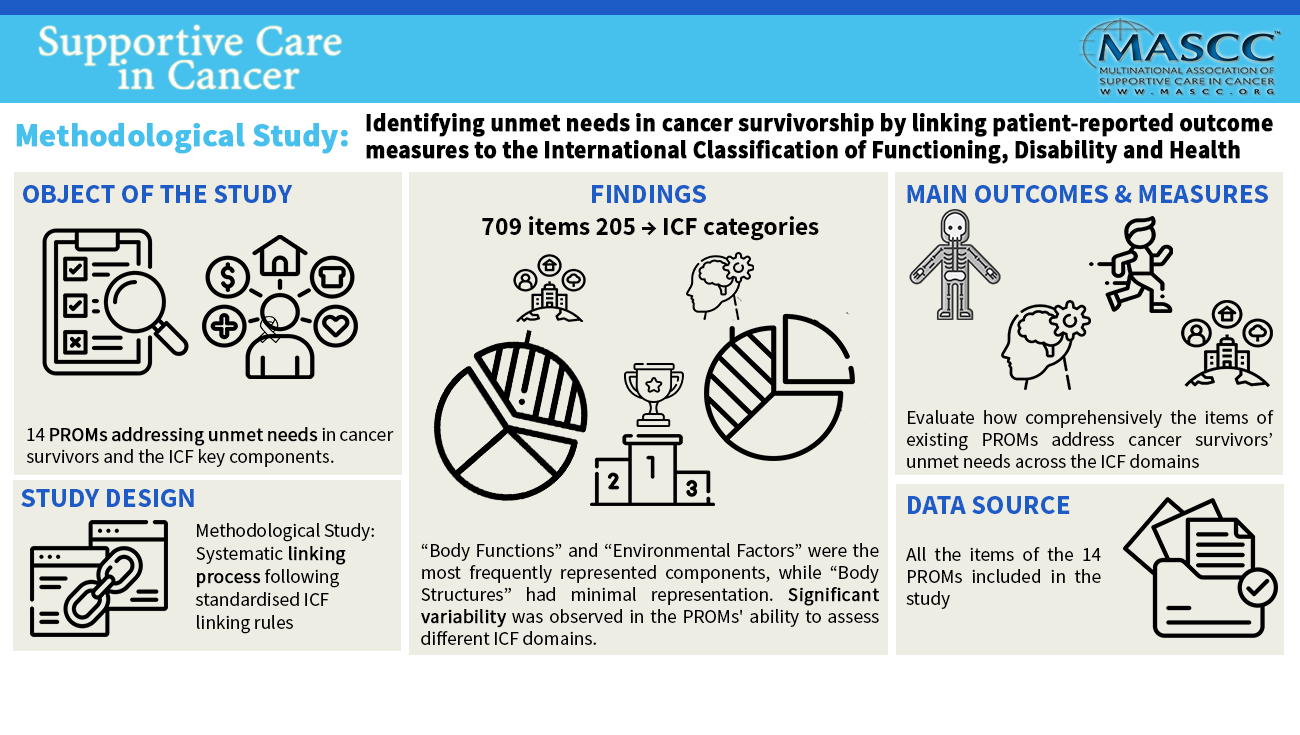
    Cancer survivorship care is an emerging field in oncology, necessitating evidence-based interventions to address the complex, long-term needs of cancer survivors (CSs). Survivorship Care Plans (SCPs) are crucial, providing a roadmap for ongoing care that includes self-management strategies and professional follow-up. This thesis contributes to the development of comprehensive, context-specific SCPs, based on CSs’ needs. A mixed-methods approach was employed to define the domains of unmet needs for CSs and to identify reliable assessment tools for those needs in the context of the study.

    Methods

    This study employed a four-phase design:

    1. Systematic overview of reviews and psychometric evaluation of Patient-Reported Outcome Measures (PROMs) for assessing CSs’ unmet needs.

    2. Linkage of identified PROMs to the International Classification of Functioning, Disability and Health (ICF) framework.

    3. Qualitative exploration of CSs’ experiences through focus groups and semi-structured interviews.

    4. Evaluation of PROMs completeness against expressed unmet needs of CSs using thematic analysis and content validity assessment.

    Results

    The overview identified 14 PROMs meeting inclusion criteria, with heterogeneous psychometric properties. Significant variability was observed across PROMs in ICF health domain coverage, revealing their own specificity in capturing different nuances of apparently similar problems. Qualitative analysis revealed four key themes related to unmet needs among CSs: dignity and respect, the desire for normality, control over one’s life, and existential frailty, underscoring the necessity for tailored, patient-centred interventions. Integration of quantitative and qualitative findings resulted in the identification of 35 ICF core categories of unmet needs. These categories demonstrated significant interconnectedness, with particular emphasis on domains of physical activity, emotional well-being, and healthcare navigation. The Cancer Rehabilitation Evaluation System (CARES) was identified as the most suitable PROM, covering 94.3% of these categories. The developed methodology for PROM selection emphasises context-sensitivity, considering treatment history, individual characteristics and preferences, ensuring chosen PROMs are both psychometrically robust and relevant to specific CS populations.

    Conclusion

    This thesis provides a methodologically rigorous framework for integrating evidence-based PROMs with patient-centred insights, offering practical guidance for healthcare systems to develop a comprehensive SCP that can improve CS outcomes. Limitations include the focus on the Italian healthcare context, potentially limiting generalisability. Future research should focus on testing and implementing a context-specific SCP and assessing its long-term effectiveness in improving well-being of CSs. This work contributes to cancer survivorship by offering a structured approach to assessing and addressing unmet needs, emphasising the importance of targeted, multidisciplinary, and individualised care in improving long-term outcomes for CSs.

    REFERENCES

    Mokkink LB, Prinsen CAC, Patrick DL, et al. COSMIN methodology for systematic reviews of Patient‐Reported Outcome Measures (PROMs) user manual. Amsterdam, the Netherlands: 2018.

    Contri, A.; Paltrinieri, S.; Torreggiani, M.; Chiara Bassi, M.; Mazzini, E.; Guberti, M.; Campanini, I.; Ghirotto, L.; Fugazzaro, S.; Costi, S. Patient-Reported Outcome Measure to Implement Routine Assessment of Cancer Survivors’ Unmet Needs: An Overview of Reviews and COSMIN Analysis. Cancer Treatment Reviews 2023, 102622, https://doi.org/10.1016/j.ctrv.2023.102622

    Schiavi M, Costi S, Contri A, et al. Identifying unmet needs in cancer survivorship by linking patient-reported outcome measures to the International Classification of Functioning, Disability and Health. Support Care Cancer. 2024;32:835, 1007/s00520-024-09019-8

    Vaz-Luis I, Masiero M, Cavaletti G, et al. ESMO Expert Consensus Statements on Cancer Survivorship: promoting high-quality survivorship care and research in Europe. Annals of Oncology. 2022;33:1119-1133.

  • Dall’infortunio al ritorno allo sport: riabilitazione dopo chirurgia a seguito di lesione tendinea in un giocatore di rugby professionista

    Dall’infortunio al ritorno allo sport: riabilitazione dopo chirurgia a seguito di lesione tendinea in un giocatore di rugby professionista

    From injury to sport: a rehabilitation program after hamstrings tendon surgery repair in a professional rugby player: a case report

    Autori

    De Marco Gianluca (Department of Biomedical and Neuromotor Sciences (DIBINEM), Alma Mater Studiorum University of Bologna, Bologna, Italy)

    Giordano Arena (private practitioner)

    Michele Margelli (Department of Human Neuroscience, University of Rome“Sapienza” , Rome, Italy)

    Introduction to clinical case

    Currently, there is no established consensus or guideline on the most appropriate rehabilitation program following surgical reconstruction of the biceps femoris tendon in professional athletes. Consequently, rehabilitation interventions, outcome measures, and timelines remain unclear, therefore, the aim of this case report is to provide an accurate description of the programme and timeline about rehabilitation in a 25 year old elite rugby player who underwent surgery following distal lesion of biceps femoris tendon.

    Methods

    This case report was conducted in accordance with the CARE guidelines to ensure transparency and completeness in reporting. The rehabilitation process, including clinical reasoning, intervention strategies, outcomes and timeline was documented in detail throughout the patient’s recovery and return to sport.

    Results

    Rehabilitation was divided into phases according to the objectives identified with the patient using specific outcome measures: the first rehabilitation phase (protection and healing; 1-8 week) aimed to maintain gait pattern, knee’s rom, except full extension, activation of the legs muscles (isometric contraction). After that the second phase (function; 9-12 week) goal to achieve the full function of the knee and the leg through a full recovery of the knee’s rom, comparable strength between the principal leg muscles, a normal gait, introduces run and jump exercises.

    In the third phase (performance; 13-16 week) all the functions were empower, like increasing the strength of both legs by 10%, increasing running distance and speed (4-5 Km, speed >20km/h) and enhancing some cognitive tasks in a movement tailored contest. Finally the last phase (return to sport and play; week 17-24) focuses on controlled sport-specific skill movement and chaos sport-specific skills, achievement of 60′ continuous running and high speed running exercises ( > 25 km/h), and perform sport contest task like contact, suddenly change of directions, receiving and managing ball. At the end of the rehabilitation the athlete achieved a complete recovery of strength, running ability and excellent performance in all the outcome measures used.

    Discussion and clinical relevance

    In absence of clear guidelines for the rehabilitation after surgical reconstruction of the biceps femoris tendon, this case report aimed to provide a useful timetable, program and outcome measures from disability to return to sport in professional athletes. Further studies, including randomized controlled trials, are needed to provide clinicians with a clearer understanding of effective treatment methods for this type of myotendinous injury.

    REFERENCES

    Azzopardi C, Beale D, James SL, Botchu R. Isolated Complete Distal Biceps Femoris Tendon Tears: Case Series and Literature Review. Indian J Radiol Imaging. 2022 Jan 10;31(4):998-1001. doi: 10.1055/s-0041-1741106. PMID: 35136515; PMCID: PMC8817825.

    Lempainen L, Sarimo J, Mattila K, Heikkilä J, Orava S, Puddu G. Distal tears of the hamstring muscles: review of the literature and our results of surgical treatment. Br J Sports Med. 2007 Feb;41(2):80-3; discussion 83. doi: 10.1136/bjsm.2006.031211. Epub 2006 Nov 30. PMID: 17138628; PMCID: PMC2658938.

    Kusma M, Seil R, Kohn D. Isolated avulsion of the biceps femoris insertion-injury patterns and treatment options: a case report and literature review. Arch Orthop Trauma Surg. 2007 Nov;127(9):777-80. doi: 10.1007/s00402-006-0216-4. Epub 2006 Sep 14. PMID: 16972058.

    Marín Fermín T, Aminake G, Vasiliadis AV, Kalifis G, Grabowski R, Macchiarola L, Al-Dolaymi AA. Surgical treatment of distal hamstring tendon injuries yield a higher return-to-sports rate: A systematic review. Knee Surg Sports Traumatol Arthrosc. 2024 Mar;32(3):763-776. doi: 10.1002/ksa.12075. Epub 2024 Feb 12. PMID: 38344882.

    Houdane A, Othman RK, Javaid HA, Taha AM, Ahmmed IM, Maklad AE. Traumatic Isolated Avulsion Rupture of the Distal Semitendinosus Tendon in a Non-athlete. Cureus. 2023 Sep 12;15(9):e45141. doi: 10.7759/cureus.45141. PMID: 37842392; PMCID: PMC10570402.

  • Affrontare la carenza di personale in fisioterapia: Una revisione narrativa critica della letteratura

    Affrontare la carenza di personale in fisioterapia: Una revisione narrativa critica della letteratura

    Addressing workforce shortages in physiotherapy: A critical narrative review

    Autori

    Tedoldi Nicola (Fondazione Teresa Camplani, Casa di Cura Domus Salutis, Brescia, Italy)

    Rossettini Giacomo (Department of Physiotherapy, Faculty of Medicine, Health and Sports, Universidad Europea de Madrid, Villaviciosa de Odón, Spain)

    Da Ros Alessandra (Management Department, University of Verona, Verona, Italy)

    Background and aims

    The availability of physiotherapists is a critical determinant of healthcare quality and system performance. Their presence ensures timely access to rehabilitation and contributes to improved patient outcomes [1]. However, global health systems are increasingly facing a mismatch between the supply and demand of physiotherapists. A projected shortfall of 18 million health workers by 2030 signals a pressing need for action – physiotherapists included [2]. This imbalance poses significant risks to the continuity, accessibility, and quality of physiotherapy services. Addressing this challenge through evidence-based and targeted strategies is essential to meet current and future health system demands [3].

    Methods

    To support this aim, we conducted a critical narrative review, following international guidelines and the SANRA (Scale for the Assessment of Narrative Review Articles) reporting standards [4]. The review sought to explore key factors influencing the physiotherapy workforce by: (a) identifying an appropriate theoretical framework to understand the phenomenon; (b) critically analyzing existing literature on known determinants; and (c) outlining implications for healthcare policy and future research directions.

    Results

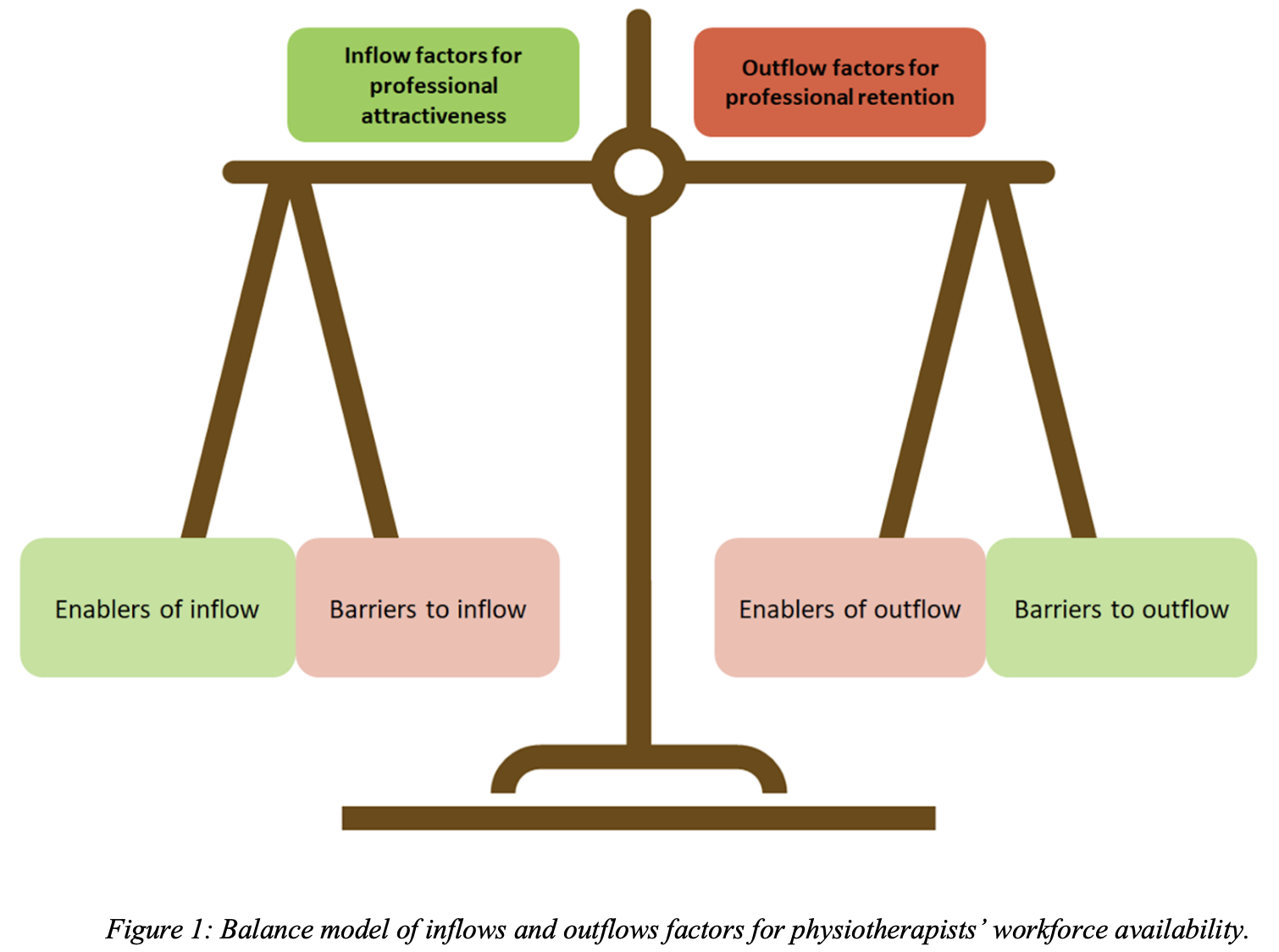
    A total of 29 studies were included: 16 primary studies and 13 secondary studies. The selected studies originated from a variety of countries and healthcare systems, reflecting a broad range of organisational, economic, and policy contexts. We adopted the supply-demand model – the most widely used framework in health workforce planning – as the conceptual foundation of our analysis [5]. We focused specifically on the supply side of the physiotherapy workforce, viewed as a balance between two opposing flows: inflow and outflow (Fig. 1). Inflow factors include mechanisms that increase the number of active physiotherapists, such as graduation, immigration, or professional re-entry. In contrast, outflow factors reduce workforce availability through retirement, emigration, or attrition from the profession. To integrate the evidence, we classified these factors across three levels of influence: macro (health system), meso (organizational), and micro (individual professional) (Fig. 2).

    Conclusion

    Our critical narrative review underscores the urgency of implementing strategic interventions to sustain a resilient physiotherapy workforce. Managerial measures may include expanding educational capacity, enhancing retention, and promoting work-life balance. In light of ongoing innovation and technological transformation in healthcare, future research should also explore how emerging trends impact workforce dynamics – an area that remains under-investigated. While the proposed framework offers broad applicability, effective implementation must be context-sensitive, accounting for national variations in economic conditions, labor markets, and healthcare system structures.

    REFERENCES

    1. Nwankwo ONO, Auer C, Oyo-Ita A, Eyers J, Wyss K, Fink G, Bosch-Capblanch X (2024) Human resources for health: a framework synthesis to put health workers at the centre of healthcare. BMJ Glob Health.
    2. WHO Regional Office for Europe (2022) Health and care workforce in Europe: time to act.
    3. Cieza A (2019) Rehabilitation the Health Strategy of the 21st Century, Really? Arch Phys Med Rehabil 100:2212–2214
    4. Baethge C, Goldbeck-Wood S, Mertens S (2019) SANRA—a scale for the quality assessment of narrative review articles. Res Integr Peer Rev 4:1–7
    5. Lopes MA, Almeida ÁS, Almada-Lobo B (2015) Handling healthcare workforce planning with care: where do we stand? Hum Resour Health.
  • Circuito task-oriented ad alta intensità supportato da teleriabilitazione: efficacia e fattibilità in soggetti con sclerosis multipla e disabilità lieve-moderata del cammino.

    High-intensity task-oriented circuit training empowered with telerehabilitation: effectiveness and feasibility in people with multiple sclerosis and mild-to-moderate walking impairment.

    Autori

    Baroni Andrea (Department of Neuroscience and Rehabilitation, University of Ferrara, Ferrara, Italy)

    Perachiotti Gabriele (Department of Neuroscience and Rehabilitation, University of Ferrara, Ferrara, Italy)

    Carpineto Andrea (Department of Neuroscience and Rehabilitation, University of Ferrara, Ferrara, Italy)

    Presti Carmelo Pio (School of Physiotherapy, University of Ferrara, Ferrara, Italy)

    Straudi Sofia (Department of Neuroscience and Rehabilitation, University of Ferrara, Ferrara, Italy)

    Background and aims

    Mobility and balance disorders are frequent in people with Multiple Sclerosis (PwMS) (1) and are present from the earliest stages of the disease. Physical exercise plays a crucial role in improving motor function and reducing fatigue in PwMS, particularly when performed at high intensity (2). Task-oriented circuit training (TOCT) allows to combine the features of exercise training with motor control skills (3). This study aims to evaluate feasibility and effects of a high intensity (TOCT) in PwMS and mild-to-moderate gait impairment, followed by a three-month asynchronous telerehabilitation intervention.

    Methods

    We planned to recruit 18 PwMS with EDSS  6. All subjects received 10 one-hour TOCT sessions where they performed 2 rounds of five exercise stations targeting specific motor skills: walking (speed and adaptability), supine-to-stand, stepping, stair climbing. Stations were graded across 10 difficulty levels to permit progression of exercise. Perceived exertion, technical challenge and stability were assessed after each station. At the end of the in-hospital rehabilitation, each subject received three months of asynchronous telerehabilitation. Mobility, balance, walking function, fatigue and patient-reported outcome measures (PROMs) were evaluated before (T0) and after (T1) in-hospital treatment, after telerehabilitation intervention (T2) and at three-month follow-up. Acceptability of the intervention was evaluated at T1.

    Results

    Fifteen PwMS completed the in-hospital protocol (6 male, median age 51y, median EDSS 4.5). During each session, every subject performed a median of: 257 meters at the highest possible speed in the walking speed station; 67 meters in the walking adaptability station; 18 repetitions in supine-to-stand station; 165 repetitions in the stepping station; 54 steps in the stair climbing station. All subjects significantly improved in mobility (Timed Up and Go Test -0.71s, p<0.05), walking speed (Timed 25-Foot Walk test -0.36s, p<0.05), walking endurance (6-Minute Walk Test +52m, p<0.05), dynamic balance (Dynamic Gait Index +4pts, p<0.05). No significant changes were observed in fatigue and PROMs. Nine subjects completed the telerehabilitation treatment and retained improvement at T2. Retention was observed for 6 subjects at T3. Despite high exertion and balance challenge levels, the intervention was rated acceptable (5/5), safe (5/5) and appropriate (5/5). No adverse events were observed.

    Conclusion

    Our preliminary results showed that a high intensity TOCT seems to be effective for improving mobility, balance and walking function in PwMS and mild-to-moderate gait impairment. Our protocol was safe and well accepted. A higher number of subjects may confirm our findings.

    REFERENCES

    1. Parsaei M, Amanollahi M, TaghaviZanjani F, Khanmohammadi S, Jameie M, Naser Moghadasi A. Effects of non-pharmacological interventions on gait and balance of persons with Multiple Sclerosis: A narrative review. Mult Scler Relat Disord. 2024;82:105415. doi:10.1016/j.msard.2023.105415
    2. Callesen J, Cattaneo D, Brincks J, Kjeldgaard Jørgensen ML, Dalgas U. How do resistance training and balance and motor control training affect gait performance and fatigue impact in people with multiple sclerosis? A randomized controlled multi-center study. Mult Scler. 2020;26(11):1420-1432. doi:10.1177/1352458519865740
    3. Cardini R, Corrini C, Bertoni R, Anastasi D, Cattaneo D, Gervasoni E. Exploring the effectiveness of circuit training rehabilitation on balance, gait, and fatigue in multiple sclerosis: a systematic review and meta-analysis. Physiotherapy. 2024;125:101413. doi:10.1016/j.physio.2024.101413
  • Valutazione delle capacità motorie in acqua nel bambino: sviluppo e validità di contenuto di una scala ICF-correlata

    Valutazione delle capacità motorie in acqua nel bambino: sviluppo e validità di contenuto di una scala ICF-correlata

    CHILDREN MOTOR SKILLS ASSESSMENT IN WATER: DEVELOPMENT AND CONTENT VALIDITY OF A NEW SCALE

    Autori

    Granelli Giulia, pt MsC, [Rehabilitation Service, Casa di Cura Villa Erbosa, Bologna]

    Bottarelli Daniela, ppt, [Pediatric Area Service, Fondazione Teresa Camplani Domus Salutis, Brescia]

    Cerboneschi Margherita, pt MsC [Rehabilitation Service. Meyer Children Hospital IRCCS. Firenze]

    Coppola Lucia, pt, MsC [President Aquatic Therapeutic Exercise Association, Health Professional Department Azienda Ospedale Università Padova]

    Background and aims

    Thanks to its intrinsic properties, water represents for children with several pathologies a playful and rewarding experience, which contributes to the improvement of  motor functions. This rehabilitation setting has beneficial effects on the general state of health, provides psychomotor development and creates a positive impact on the quality of life of the whole family. 

    Many studies demonstrate that children’s motor repertoire is  assessed pre- and post-treatment, using outcome measures and rating scales administered “on land”. In Italy, there isn’t a standardised instrument that measures and monitors changes in motor performance in the paediatric population directly in the water environment. Therefore the aim of this study is to update and develop the ‘Scale for assessing a child’s motor skills in water’, drawn up in 2020 by a colleague physiotherapist, and to verify its content and face validity.

    Methods

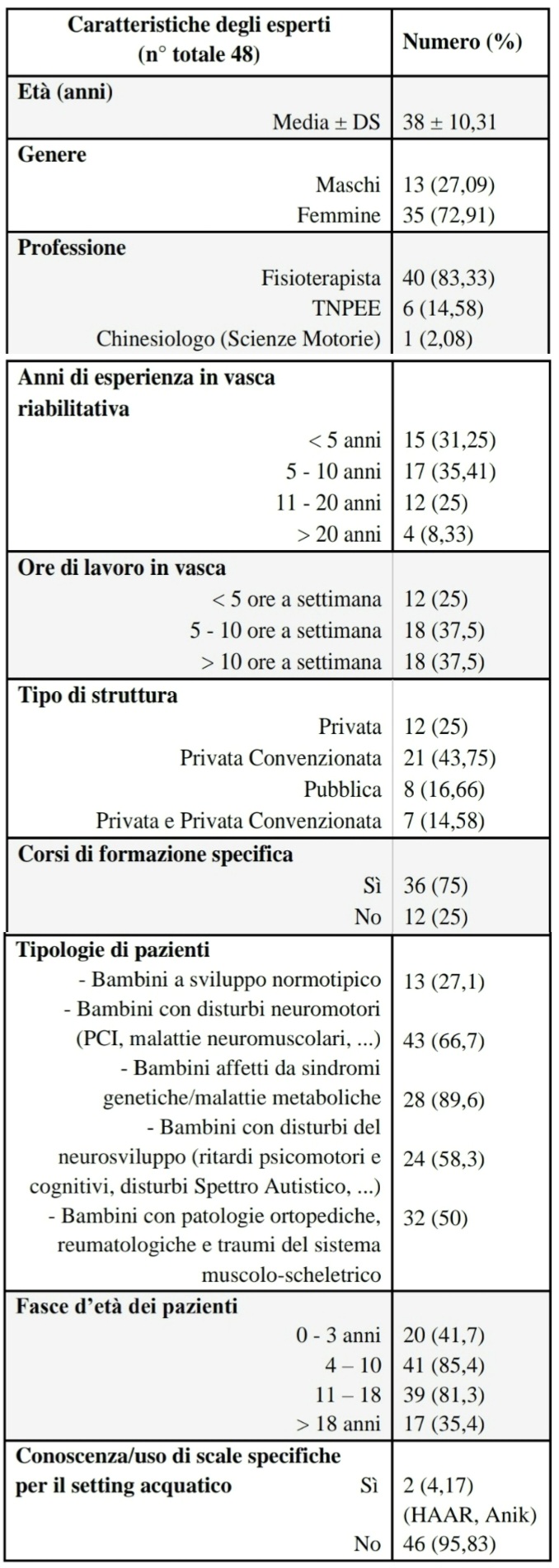
    A critical literature review and a series of focus groups among physiotherapists, psychomotricity and kinesiologists experts in aquatic physiotherapy, guided the revision and updating of the first version of the scale.  Then, through an online survey, the panel of professionists assessed the items via four content validity indicators (relevance, relevance to the purpose of the scale, clarity, appropriateness of scores) and provided narrative feedback (fig 1 an item and fig 2 the panel). The content validity of the instrument was determined by calculating the Content Validity Index (CVI) at item (I-CVI) and scale (S-CVI/Ave) level, the Content Validity Ratio (CVR) and Fleiss’ Kappa statistical coefficient.

    In the design and planning phase, the Paediatric GIS of Associazione di Fisioterapia was consulted, particularly in the choice of statistics used.

    Results

    Forty-eight expert professionals participated in the study. According to I-CVI (≥ 0.78) and S-CVI (≥ 0.90) values, content validity was assessed as moderate on all scale items for relevance, clarity and adequacy of scores. Adequate relevance indices (CVR ≥ 0.29) were achieved for all the items, except for four revisable ones; the calculation of Fleiss’s Kappa showed a slight, non-random degree of agreement between the assessors. The qualitative comments provided by the experts highlighted the opportunity to make the scale clearer and more comprehensive for the next steps of the research. 

    Conclusion

    The results of this study confirm that the new version of the scale is valid, relevant and adequate for detecting and monitoring the child’s motor skills in the aquatic setting. This research needs more studies to optimize the instrument and continue the validation process.

    REFERENCES

    • ICF:    World Health Organization, International Classification of Functioning, Disability and Health: Children & Youth Version, Geneva, Switzerland, 2007.
    • Yusoff M., “ABC of Content Validation and Content Validity Index Calculation”, Education in Medicine Journal, 11. 49-54.
    • www.aquatea.it 
    • Karastamati C., Chandolias K., Grammatikou G., Hristara-Papadopoulou A., “The Effectiveness of Hydrotherapy-Halliwick Concept in Children With Juvenile Idiopathic Arthritis: Assessment and Treatment”, The Journal of Aquatic Physical Therapy, 2021, 29(2):35-39.
    • Shariat A., Najafabadi M., Kelly dos Santos I., Anastasio A., Milajerdi H., Hassanzadeh G., Nouri E., “The Effectiveness of Aquatic Therapy on Motor and Social Skill as Well as Executive Function in Children With Neurodevelopmental Disorder: A Systematic Review and Meta-analysis”, Archives of Physical Medicine and Rehabilitation, 2023.


  • Riabilitazione combinata motoria e cognitiva: l’impatto sulla performance motoria nei pazienti con Mild Cognitive Impairment. Revisione sistematica e meta-analisi

    Combined Motor and Cognitive Rehabilitation: The Impact on Motor Performance in Patients with Mild Cognitive Impairment. Systematic Review and Meta-Analysis

    Autori

    Kiper Pawel [IRCCS San Camillo Hospital, Venice, Italy]

    Richard Michelle [LUNEX University, Differdange, Luxembourg]

    Stefanutti Françoise [LUNEX University, Differdange, Luxembourg]

    Pierson-Poinsignon Romain [LUNEX University, Differdange, Luxembourg]

    Cacciante Luisa [IRCCS San Camillo Hospital, Venice, Italy]

    Perin Cecilia [University of Milano-Bicocca, Milan, Italy]

    Mazzucchelli Miryam [University of Milano-Bicocca, Milan, Italy]

    Viganò Barbara [University of Milano-Bicocca, Milan, Italy]

    Meroni Roberto [LUNEX University, Differdange, Luxembourg]

    Background and aims

    While cognitive stimulation and physical exercise have been individually proposed as effective non-pharmacological interventions, the combined effect of physical and cognitive training (PCT) on motor performance in MCI remains underexplored. This systematic review and meta-analysis aimed to evaluate whether PCT can improve motor function and activities of daily living (ADL) in individuals with MCI.

    Methods

    A comprehensive electronic search was conducted across five databases (PubMed, Scopus, Embase, Web of Science, and Cochrane Library), according to PRISMA guidelines. Studies were included if they were randomized controlled trials (RCTs) comparing PCT versus physical training alone or no intervention, and if they assessed motor outcomes. Nine studies met inclusion criteria, of which six were eligible for meta-analysis. Risk of bias was assessed using the Cochrane RoB2 tool. Meta-analyses were performed using Review Manager 5.3 software, applying random or fixed-effects models depending on heterogeneity.

    Results

    The meta-analysis revealed that PCT significantly improved balance compared to physical training alone (SMD = 0.56; 95% CI 0.07 to 1.06; I² = 59%; 160 participants). A significant improvement in mobility (Timed Up and Go Test) was observed when PCT was compared to no intervention (MD = −1.80; 95% CI −2.70 to −0.90; I² = 0%; 81 participants). However, PCT did not demonstrate significant effects on gait speed, ADL, or quality of life when compared to control groups. Considerable heterogeneity was noted in intervention types and outcome measures across studies.

    Conclusion

    Combined motor and cognitive training appears to be a promising intervention for improving specific motor outcomes, particularly balance and mobility in individuals with mild cognitive impairment. While no significant benefits were observed for gait speed, activities of daily living, or quality of life, the positive effects on balance suggest that integrating cognitive tasks into physical rehabilitation may enhance motor control through dual-task mechanisms. These findings highlight the potential of PCT as a feasible, non-pharmacological strategy to delay functional decline in this population. However, the current evidence is constrained by methodological heterogeneity and limited sample sizes. Future research should focus on well-powered, standardized trials with long-term follow-up to better understand the efficacy, optimal structure, and sustainability of combined training programs for people with MCI.

    REFERENCES

    Kiper, P.; Richard, M.; Stefanutti, F.; Pierson-Poinsignon, R.; Cacciante, L.; Perin, C.; Mazzucchelli, M.; Viganò, B.; Meroni, R. Combined Motor and Cognitive Rehabilitation: The Impact on Motor Performance in Patients with Mild Cognitive Impairment. Systematic Review and Meta-Analysis. J. Pers. Med. 2022, 12, 276. https://doi.org/10.3390/jpm12020276

  • Traduzione del profilo delle competenze del fisioterapista acquatico, documento ufficiale dell’International Organisation of Acquatic Physiotherapists (IOAPT)

    Traduzione del profilo delle competenze del fisioterapista acquatico, documento ufficiale dell’International Organisation of Acquatic Physiotherapists (IOAPT)

    Translation of the Aquatic Physiotherapist’s skills profile, an official document of International Organisation of Aquatic Physiotherapists (IOAPT)

    Autori

    Manuel Rocco, Pt, MSc, master’s degree “idrokinesiterapia”, Milano, NIS Fisioterapia in Acqua, Italia

    Adriano Coladonato, Pt, MSc, Fisiogruppo Roma, NIS Fisioterapia in Acqua, Italia

    Background and aims

    Aquatic physiotherapy is a growing specialty within physiotherapy that requires a distinct set of advanced competencies for safe and effective practice. To support the development and recognition of this field, the Aquatic Physiotherapist’s Skills Profile was developed by the International Organisation of Aquatic Physiotherapists (IOAPT). The document outlines the competencies, roles, and training requirements of physiotherapists practicing in aquatic environments, aiming to establish a globally accepted standard of education and practice.

    Methods

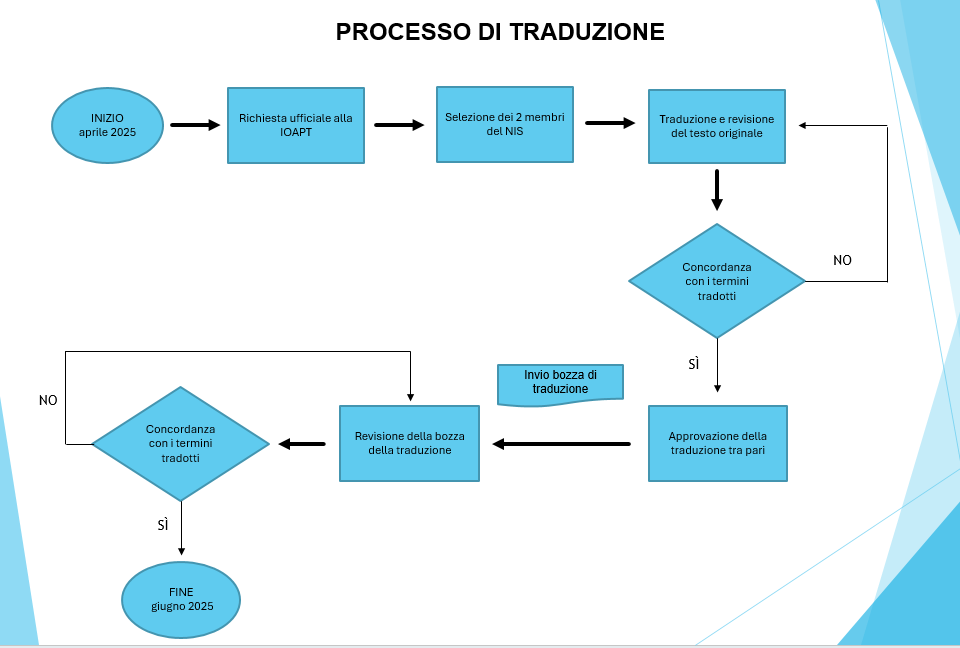
    This document was created through collaboration between international experts and based on educational frameworks and clinical practice models from IOAPT member countries. It details knowledge and skill sets across academic levels and clinical roles, including entry-level and advanced training, ethical responsibilities, and research engagement. To make these standards accessible in Italy, the Network di Interesse Specialistico (NIS Fisioterapia in acqua), a National Scientific Group on Aquatic Physiotherapy, requested authorization from IOAPT to translate the document. Following approval, a working group of two physiotherapists members translated and reviewed the text through peer collaboration. A second review phase, lasting one month and involving all NIS members, ensured accuracy and consensus before submission to IOAPT for final approval, resolving any inconsistencies in the vocabulary (Fig.1).

    Results

    The document identifies aquatic physiotherapy as a distinct professional practice requiring both foundational physiotherapy education and additional specialty-specific skills. These include the application of hydrodynamic principles, clinical reasoning in aquatic environments, patient assessment and safety management, and the ability to design and implement individualized aquatic programs. It outlines competencies required for practice in diverse settings (e.g., hospitals, community pools, private clinics) and includes academic and non-academic training pathways with structured progression from basic to advanced levels. The document also emphasizes the importance of research, ethical standards, and interprofessional collaboration.

    Conclusion

    The Skills Profile represents a significant advancement in the formal recognition of aquatic physiotherapy as a specialty. It provides an essential reference for institutions, educators, and clinicians seeking to align training and practice with international standards. The rigorous, multi-phase translation process carried out by the NIS ensures the Italian version maintains the integrity and applicability of the original. This initiative supports the professional development of aquatic physiotherapists in Italy and encourages the integration of global benchmarks into national educational and clinical frameworks, ultimately enhancing the quality of care and safety for patients across aquatic rehabilitation contexts.

    REFERENCES

    1. Sá C, Dixon J, Humaran Martinez Y, Molares Soler K, Aravena Okuinghttons G, Chandolias K, So B. Aquatic Physiotherapist’s Skills Profile, 22 March 2025.
    2. Bielli S, Bozzolan M, Cortini S, Galantini P, Giacobazzi M, Montevecchi V, Spada M. La formazione Core del fisioterapista.
    3. Binetti l, Valente D. Tradizione e innovazione nella formazione Universitaria delle professioni sanitarie: Il Core curriculum, dal core contents al core competence. Società editrice Universo, Roma, 2003.
    4. Irion JM, Brody LT (2009) Introduction and historical overview. In Aquatic Exercise for Rehabilitation and Training, Brody LT, Geigle PR, eds. Human Kinetics, USA, pp. 3-25.
    5. Becker BE (2009) Aquatic therapy: scientific foundations and clinical rehabilitation applications. PM R. 2009 Sep;1(9):859-72.
  • SVAS, un progetto di prevenzione per la scuola primaria. Indagine sulle opinioni e la soddisfazione degli insegnanti coinvolti nel progetto.

    SVAS, un progetto di prevenzione per la scuola primaria. Indagine sulle opinioni e la soddisfazione degli insegnanti coinvolti nel progetto.

    SVAS, a prevention project for primary schools: exploring opinions and satisfaction of teachers involved in the project.

    Autori

    D’Urso Alina [Azienda Sanitaria Locale Cn2, Alba (CN), Italy]

    Galante Ambra [GIS Fisioterapia Pediatrica – AIFI, Rome, Italy]

    Tusoni Francesca [Università degli studi dell’Aquila, L’Aquila, Italy]

    Background and aims

    ‘La schiena va a scuola’ (SVAS) is a project aimed at promoting the spinal health of primary schoolchildren. The project is carried out by specially trained physiotherapists registered with the Italian physiotherapy association (AIFI). The project includes two training meetings for pupils (in classroom) and an online training webinar for parents and teachers. Each project is supervised by a teacher, who is responsible for its implementation. The purpose of this study was to explore teachers’ perspectives on the project and to gather their feedback to improve it.

    Methods

    All the teachers that supervised the project in 2025 were invited to complete an ad-hoc questionnaire. The questionnaire was designed to investigate teachers’ opinions and satisfaction with the project (9 items), collecting feedback on changes in students’ or parents’ behaviour (2 items) and gather suggestions to improve the project (2 items). To ensure anonymity and prevent response bias, we did not collect personal data and used a QR code to share the link to the Google Form. We performed a descriptive analysis of the collected data (frequencies and percentages), by using the software R. Open questions were coded and analysed as categorical variables.

    Results

    257 teachers from 14 regions in Italy completed the questionnaire. The majority of respondents found the project content useful and addressed in a comprehensive and, at the same time, engaging way for the pupils. The methods and timing of the project were deemed appropriate to the project content, and to the teaching and organisational needs of the school (fig.1).

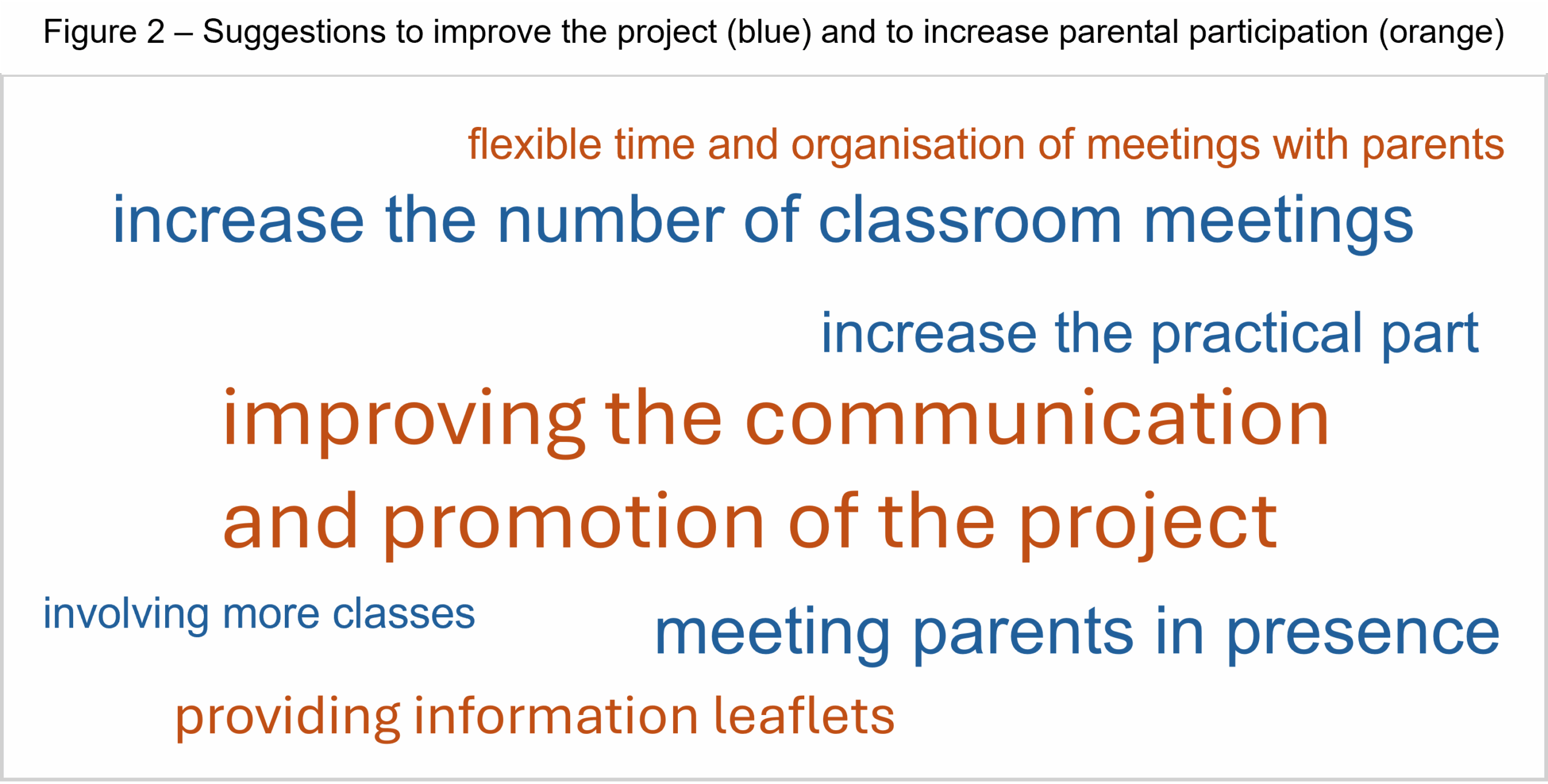
    Regarding adherence to the project, less than 20% of the teachers reported that their class were able to perform the proposed exercises regularly, while almost 60% reported that the class performed them occasionally. Most of the teachers observed a fair change in pupils’ habits (73.1%), particularly regarding posture and backpack management. However, they reported perceiving a less marked change in parents’ habits (46.3%). Teachers also provided useful suggestion to improve the project and to increase parental participation in the proposed training (fig.2).

    Over 70% of respondents were very satisfied with the project, assigning it a high global score (5/5). All teachers reported they would recommend the project to other classes (fig.3).

    Conclusion

    Overall, the project was highly appreciated by the participating teachers. It proved to be quite effective in changing children’s habits. Future research should explore the validity of the changes proposed by the teachers to improve the project outcomes.

    REFERENCES

    1. ‘La schiena va a scuola’ official website, available at https://schiena.aifi.net/


  • Revisione dei Dati Normativi per il CKCUEST: uno Studio Comparativo tra Giocatori di Pallavolo Dilettanti e Professionisti

    Revisione dei Dati Normativi per il CKCUEST: uno Studio Comparativo tra Giocatori di Pallavolo Dilettanti e Professionisti

    Revisiting Normative Data for the CKCUEST: A Comparative Study of Amateur and Professional Volleyball Players

    Autori

    Baldasarre Francesco

    Background and aims

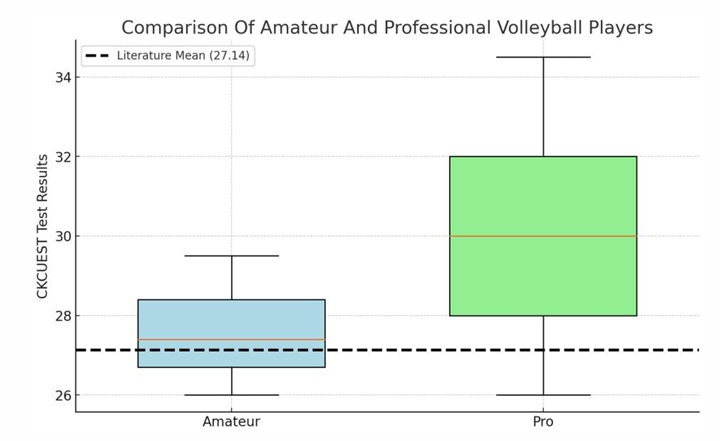
    The Closed Kinetic Chain Upper Extremity Stability Test (CKCUEST) is a validated and widely used test for upper extremity assessment in both clinical and field settings. However, the applicability of normative data (27,14 touches) to specific populations, such as both amateur and professional volleyball players, remains uncertain. In this study, 50 volleyball players were recruited and divided into two groups with the aim of administering the functional test to the two groups and comparing the results with the normative data to verify its applicability.

    Methods

    26 amateur athletes were selected through collaboration with sports clubs playing in Serie D and Serie B and evaluated using the CKCUEST. The tests were conducted on the playing fields of the respective clubs. Data regarding 24 professional athletes were obtained through collaboration with Serie A1 sports clubs, which provided their own assessment results. Once the groups were formed, a comparison was made with normative data in literature.

    Results

    The results showed that the amateur group enacted a similar performance compared to the normative data (27, 744 touches), thus not presenting a statistically significant difference (p=0.477). However, in contrast, the group of professional athletes performed higher than the other two groups (32,250 touches), with significant difference (p<0.01), probably due to the remarkable difference in functional demand of their level of play.

    Conclusion

    The results suggest as much as the CKCUEST is validated as an effective tool for assessment, it is worth considering that some top-level athletes need to express levels of strength and control far greater than those so far examined by other papers in literature. This is of great importance when one wants to use the test as a criterion for decision making in return to sport after a shoulder injury, as the athlete may not be ready to sustain his performance demands safely. More research in this direction is therefore needed in order to use the test more critically, especially when it is to be used for return-to-sport decisions in elite sport settings.

    REFERENCES

    1. Declève, P., Van Cant, J., & Cools, A. M. (2021). Reliability of the Modified CKCUEST and correlation with shoulder strength in adolescent basketball and volleyball players. Brazilian Journal of Physical Therapy, 25(5), 536-543.

    2. Guirelli, A. R., Dos Santos, J. M., Cabral, E. M. G., Pinto, J. P. C., De Lima, G. A., & Felicio, L. R. (2021). Relationship between upper limb physical performance tests and muscle strength of scapular, shoulder and spine stabilizers: A cross-sectional study. Journal of Bodywork and Movement Therapies, 27, 612-619.

    3. Borms, D., & Cools, A. (2018). Upper-extremity functional performance tests: Reference values for overhead athletes. International Journal of Sports Medicine, 39(6), 433-441.

    4. Torabi, T. P., Bencke, J., & van den Tillaar, R. (2024). The Closed Kinetic Chain Upper Extremity Stability Test (CKCUEST) performance in elite team handball players playing with shoulder pain, previous pain, or no pain. The International Journal of Sports Physical Therapy.

    5. Taylor, J. B., Wright, A. A., Smoliga, J. M., DePew, J. T., & Hegedus, E. J. (2016). Upper-extremity physical-performance tests in college athletes. Journal of Sport Rehabilitation, 25(2), 146-154.