Categoria: congresso-2025

  • Accesso diretto in Fisioterapia per disturbi muscoloscheletrici: una Scoping Review su efficacia clinica, costi e sicurezza

    Accesso diretto in Fisioterapia per disturbi muscoloscheletrici: una Scoping Review su efficacia clinica, costi e sicurezza

    Direct Access to Physiotherapy for musculoskeletal disorders: a Scoping Review on clinical effectiveness, costs and safety

    Autori

    Di Dio Antonio [Università di Messina, Messina, Italia]

    Cavallaro Filippo [Università di Messina, Messina, Italia]

    Sposito Francesca [Università di Messina, Messina, Italia]

    Di Marco Giada [Università di Messina, Messina, Italia]

    Saraceno Silvia [Università di Messina, Messina, Italia]

    Bonanno Francesco [Università di Messina, Messina, Italia]

    Background and aims

    Direct access to physiotherapy allows patients to consult physiotherapists without prior medical referral, recognising their autonomy in assessment, treatment, and referral when needed. This model, adopted in several countries, shows clinical outcomes comparable or superior to traditional pathways[1], with reduced costs and faster recovery [2]. Early intervention can prevent chronicity, particularly in conditions like low back pain. Importantly, this approach supports multidisciplinary care, with physiotherapists trained to identify red flags and refer to physicians appropriately. This scoping review aims to analyse the literature on direct access in physiotherapy, focusing on clinical outcomes, economic impact, and safety.

    Methods

    The electronic databases PubMed, Scopus, Cochrane Library were investigated, using the following keywords, which were combined to achieve maximum search strategy sensitivity: “direct access” AND “physiotherapy”. First, articles were screened by title and abstract, using the following inclusion criteria for selection: (1) randomized controlled trials (RCTs); (2) written in English language; (3) published on indexed journals from 2015 to 2025. The exclusion criteria were: (1) non-randomized trials; (2) reviews; (3) papers written in other languages than English. Second, the full texts of the selected articles were screened with further exclusions according to the previously described criteria. A PRISMA flowchart of the selection and screening method is provided in Figure 1.

    Results

    Table 1 summaries the principal key point of each article analyzed. All of the authors pointed out that direct access to physiotherapy for musculoskeletal conditions leads to a reduction in overall healthcare costs, fewer unnecessary medical visits and diagnostic investigations, and less use of prescribed drugs, while maintaining comparable clinical outcomes but with shorter treatment times, without compromising safety and quality of care.

    Conclusion

    The literature reviewed confirms that direct access to physiotherapy is an effective, safe, and sustainable model for managing musculoskeletal conditions, with benefits in terms of clinical outcomes, costs, and accessibility. Promoting health policies that facilitate their implementation, with a view to multidisciplinary collaboration, is a strategic step towards a more efficient and patient-centred care system.

    REFERENCES

    1. Ojha HA, Snyder RS, Davenport TE. Direct access compared with referred physical therapy episodes of care: a systematic review. Phys Ther. 2014 Jan;94(1):14-30. doi: 10.2522/ptj.20130096. Epub 2013 Sep 12. PMID: 24029295.
    2. Moore, J. H., & McMillian, D. J. (2020). The effectiveness of direct access to physical therapy in the treatment of musculoskeletal disorders: a meta-analysis. Journal of Orthopaedic & Sports Physical Therapy, 50(5), 252-259.
  • Efficacia degli esercizi di forza nel trattamento della kinesiofobia in soggetti con chronic low back pain: revisione della letteratura

    Efficacia degli esercizi di forza nel trattamento della kinesiofobia in soggetti con chronic low back pain: revisione della letteratura

    Effectiveness of Strength Training in Reducing Kinesiophobia in Individuals with Chronic Low Back Pain: A Systematic Review

    Autori

    Galeotti Alessio [Department of Neurosciences, Rehabilitation, Ophthalmology, Genetics, Maternal and Child Health, University of Genova, Campus of Savona, Savona, Italy]

    Testa Marco [Department of Neurosciences, Rehabilitation, Ophthalmology, Genetics, Maternal and Child Health, University of Genova, Campus of Savona, Savona, Italy]

    Gambugini Riccardo [Department of Neurosciences, Rehabilitation, Ophthalmology, Genetics, Maternal and Child Health, University of Genova, Campus of Savona, Savona, Italy]

    Buzzatti Luca [School of Allied Health, Anglia Ruskin University, CB1 1PT Cambridge, UK]

    Background and aims

    Background: Kinesiophobia is a key psychological factor in the chronification of low back pain (LBP) and represents a significant barrier to functional recovery. Strength exercises are commonly recommended for chronic low back pain, yet their specific impact on kinesiophobia remains unclear.
    Aim: To evaluate, through a systematic literature review, the effectiveness of lumbar strengthening exercises in reducing kinesiophobia in individuals with chronic non-specific low back pain (CLBP).

    Methods

    Methods: A systematic review was conducted in accordance with PRISMA 2020 and PERSiST guidelines. Only randomized controlled trials (RCTs) published since 2000 were included, involving adults with CLBP undergoing lumbar strengthening interventions. Primary outcomes were assessed using the Tampa Scale of Kinesiophobia (TSK) and/or the Fear Avoidance Beliefs Questionnaire (FABQ).

    Results

    Results: Out of 673 initially identified records, only 3 RCTs (n = 110 participants) met the eligibility criteria. Results indicate a reduction in kinesiophobia in the experimental groups, although high heterogeneity (I² = 94%) and non-significant overall effect (p = 0.12) limit the robustness of the findings.

    Conclusion

    Conclusion: Lumbar strengthening exercises may offer potential benefits in reducing kinesiophobia among individuals with CLBP, but current evidence is scarce and methodologically limited. Further high-quality RCTs are needed to clarify the specific role of strength training in this context.

    REFERENCES

    1. Harts, C. C., Helmhout, P. H., de Bie, R. A., & Staal, J. B. (2008). A high-intensity lumbar extensor strengthening program is little better than a low-intensity program or a waiting list control group for chronic low back pain: a randomised clinical trial. The Australian journal of physiotherapy, 54(1), 23–31.
    2.  Vincent, H. K., George, S. Z., Seay, A. N., Vincent, K. R., & Hurley, R. W. (2014). Resistance exercise, disability, and pain catastrophizing in obese adults with back pain. Medicine and science in sports and exercise, 46(9), 1693–1701.
    3. Nambi, G., Basuodan, R. M., Alwhaibi, R. M., Ebrahim, E. E., Verma, A., Syed, S., Pakkir Mohamed, S. H., Aldhafian, O. R., Nwihadh, N. A., & Saleh, A. K. (2023). Clinical and Endocrinological Responses to Different Exercise Training Methods in Chronic Low Back Pain: A Randomized Controlled Trial. Endocrine, metabolic & immune disorders drug targets, 23(6), 801–810.
  • La Realtà Virtuale come Approccio Terapeutico per le Neuropatie da Intrappolamento: Scoping Review

    La Realtà Virtuale come Approccio Terapeutico per le Neuropatie da Intrappolamento: Scoping Review

    Virtual Reality as a Therapeutic Approach for Entrapment Neuropathies: A Scoping Review

    Autori

    Giacomello Matteo [University of Padova, Padova, Italy]

    Lando Alex [Department of Biomedical and Neuromotor Sciences (DIBINEM), Alma Mater Studiorum University of Bologna, Bologna, Italy]

    Lazzaretti Eleonora [Department of Rehabilitation, Ulss 7 Pedemontana, Bassano del Grappa, Italy]

    Background and aims

    Over the past decade, advanced digital technologies have reshaped rehabilitation by enabling highly customisable, immersive interventions that engage both motor and sensory pathways. Virtual reality (VR) systems, ranging from fully immersive headsets to motion-tracking gamified platforms, have shown efficacy in enhancing motor control and reducing pain in both neurological and musculoskeletal conditions. VR also supports brain plasticity and activates the mirror neuron system. Entrapment neuropathies (EN), such as carpal tunnel syndrome (CTS), continue to impose chronic pain, sensory disturbances, and functional impairments, which are not always resolved by conservative or surgical treatments. Despite the success of VR in related domains, its specific application in EN rehabilitation remains unclear. This scoping review therefore aims to comprehensively map the current landscape of VR-based interventions for EN, detailing intervention types, dosing protocols, and clinical as well as engagement outcomes, to guide future research and clinical integration.

    Methods

    Following the Joanna Briggs Institute methodology and PRISMA-ScR guidelines, we registered our protocol a priori on Figshare (DOI: 10.6084/m9.figshare.28009196.v1). MEDLINE, Cochrane Central, CINAHLComplete, Scopus, and PEDro were searched from inception to January 2025, without restrictions on study design or publication status. Only English-language records were included. Grey literature sources (i.e., Google Scholar) and reference lists were also screened. Two reviewers independently screened title/abstract and full-text using Ryann QRCI software, with conflicts resolved by a third reviewer. Data were extracted into a standardised form, including study design, VR modality, intervention dose, and outcome measures. Results were synthesised in tabular and narrative formats.


    Results

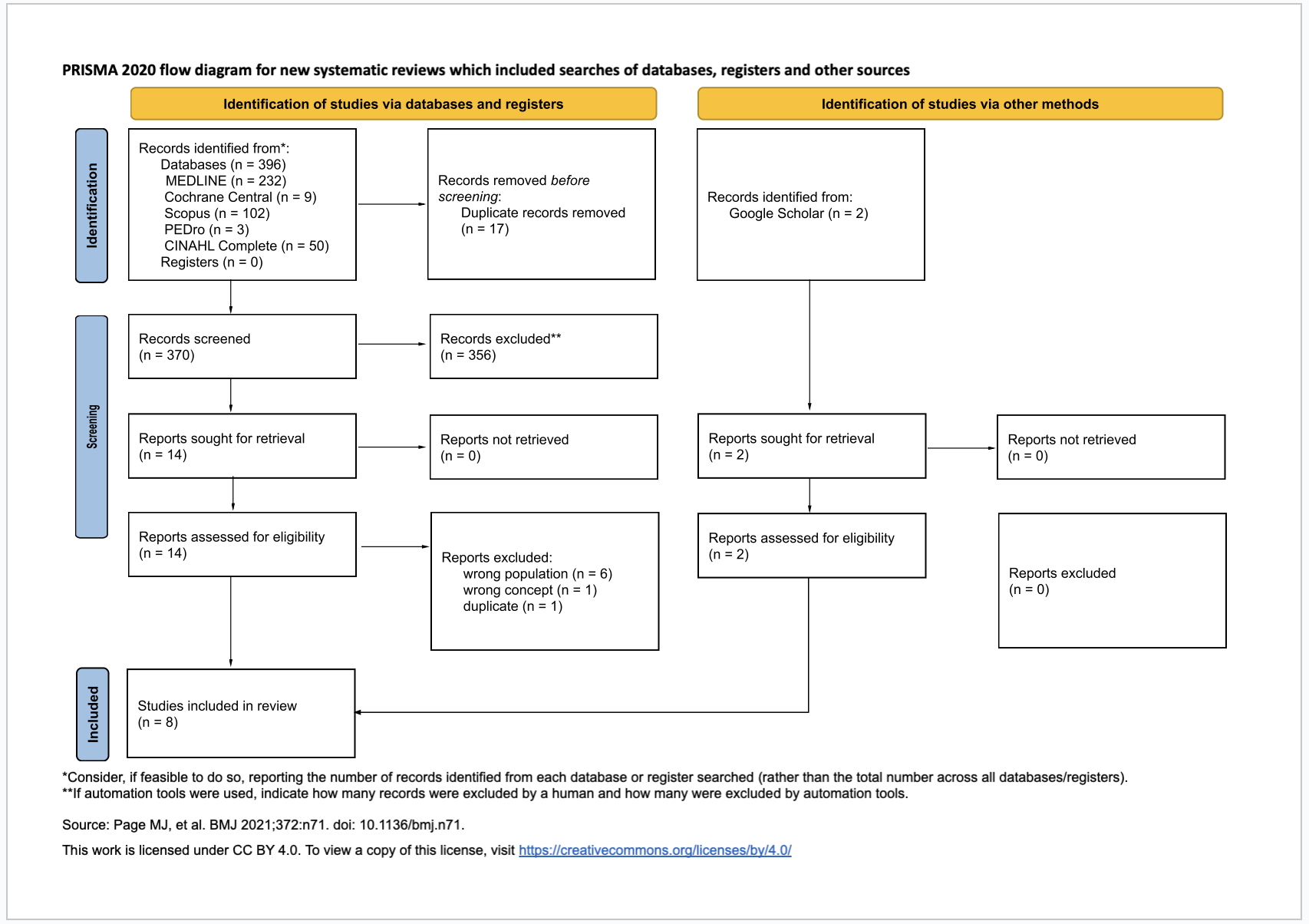
    Of 372 records retrieved, 7 studies met inclusion criteria, all targeting VR-based rehabilitation for CTS. Publication years spanned 2006-2025. Study designs included two randomized controlled trials, one pilot study, one qualitative study, one narrative review, one book chapter, and one conference proceeding. VR interventions ranged from immersive headsets to semi-immersive gamified tasks and motion-capture exercises. Intervention doses varied from single sessions to multi-week protocols. Primary outcomes assessed included symptom severity (pain intensity, paresthesia), functional status (grip strength, dexterity, range of motion), and patient engagement (usability, motivation scales). Across studies, VR interventions were associated with clinically meaningful reductions in pain, improvements in sensory and motor function, and high levels of adherence and user satisfaction.


    Conclusion

    Preliminary evidence suggests that VR is a feasible, engaging, and beneficial adjunct to standard care for individuals with EN. Future large-scale, methodologically rigorous trials should refine dosing, assess long-term outcomes, and expand to other EN types.


    REFERENCES

    • Girach A, Julian TH, Varrassi G, Paladini A, Vadalouka A, Zis P. Quality of Life in Painful Peripheral Neuropathies: A Systematic Review. Pain Res Manag. 2019 May 23;2019:2091960. doi: 10.1155/2019/2091960. PMID: 31249636; PMCID: PMC6556282.
    • Padua L, Cuccagna C, Giovannini S, Coraci D, Pelosi L, Loreti C, Bernabei R, Hobson-Webb LD. Carpal tunnel syndrome: updated evidence and new questions. Lancet Neurol. 2023 Mar;22(3):255-267. doi: 10.1016/S1474-4422(22)00432-X. Epub 2022 Dec 13. PMID: 36525982.
    • Rutkowski S, Kiper P, Cacciante L, Cieślik B, Mazurek J, Turolla A, Szczepańska-Gieracha J. Use of virtual reality-based training in different fields of rehabilitation: A systematic review and meta-analysis. J Rehabil Med. 2020 Nov 19;52(11):jrm00121. doi: 10.2340/16501977-2755. PMID: 33073855.
    • Ahmadpour N, Randall H, Choksi H, Gao A, Vaughan C, Poronnik P. Virtual Reality interventions for acute and chronic pain management. The International Journal of Biochemistry & Cell Biology. 2019 Sep;114:105568.
    • Tricco AC, Lillie E, Zarin W et al. (2018) PRISMA Extension for Scoping Reviews (PRISMA-ScR): Checklist and Explanation. Ann Intern Med, 169(7): 467-473. doi: 10.7326/M18-0850.
  • Dalla valutazione alla partecipazione: appropriatezza del percorso riabilitativo nella Sindrome di Pallister-Killian.

    Dalla valutazione alla partecipazione: appropriatezza del percorso riabilitativo nella Sindrome di Pallister-Killian.

    From assessment to participation: appropriateness of the rehabilitation pathway in Pallister-Killian Syndrome.

    Autori

    Moscato Francesca [Life s.r.l. Centro di riabilitazione Estensiva, Isola di Capo Rizzuto KR, Italia]

    Castiglione Chiara [SCDO Medicina Fisica – Neuroriabilitazione, Azienda Ospedaliero-Universitaria San Luigi Gonzaga, Torino, Italia]

    Inzitari Maria Teresa [Medicina Fisica e Riabilitativa, Azienda Ospedaliero-Universitaria “Renato Dulbecco”, Catanzaro, Italia][Medicina Fisica e Riabilitativa, Dipartimento di Scienze Mediche e Chirurgiche, Università degli Studi “Magna Graecia”, Catanzaro, Italia]

    Background and aims

    Pallister-Killian syndrome (PKS) is a rare genetic disorder caused by tetrasomy of chromosome 12p, characterised by intellectual disability, hypotonia, and various craniofacial and multisystem anomalies [1]. It requires an individualised, multidisciplinary rehabilitation approach. This study aimed to assess adaptive functioning in PKS patients using the Vineland Adaptive Behaviour Scales, Second Edition (Vineland-II).

    Methods

    The project was approved by the Ethics Committee of the Calabria Region. It was included paediatric subjects aged 3 to 16 years diagnosed with Pallister-Killian Syndrome. Adaptive functioning was evaluated using the Vineland Adaptive Behaviour Scales, Second Edition (Vineland-II), which assesses four domains: Communication, Daily Living Skills, Socialisation, and Motor Skills, each with specific subscales [2]. Items are scored from 0 to 2 based on independence and activity frequency [3]. Raw scores for each subscale were calculated, and the total score allowed comparison of functional abilities across domains at a single time point.

    Results

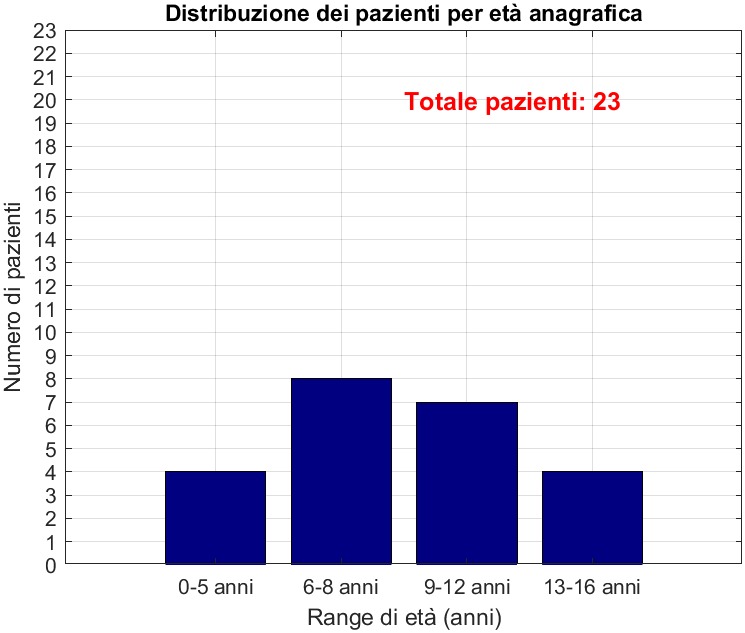
    A total of 23 patients were recruited. Analysis of the raw scores indicated that the most developed skills were communication (C–Receptive: 28.26%) and socialisation (S–Interpersonal Relationships: 17.5%). The most critical areas included writing (C–Written: 6.95%), and domestic and community living skills (DLS–Domestic: 5.07%; DLS–Community: 5.08%). Motor skill (MS), both fine (FineMS: 15.57%) and gross (GrossMS: 15.27%), showed balanced development, but with considerable potential for improvement.

    Conclusion

    The results indicate a heterogeneous functional profile in subjects with Pallister-Killian Syndrome. The Vineland-II is valid tool for tailoring therapy and determining the level of support needed in home, school, and social settings. Further research is needed to guide and design tailored rehabilitation interventions for this population and to ensure continuity of care, and enhance support systems for families.

    REFERENCES

    [1] Izumi, Kosuke, and Ian D Krantz. “Pallister-Killian syndrome.” American journal of medical genetics. Part C, Seminars in medical genetics vol. 166C,4 (2014).

    [2] Sparrow, S.S., Balla, D.A., Cicchetti, D.V. Vineland Adaptive Behavior Scales, Second Edition. Pearson Assessments.

    [3] Balboni, G., Belacchi, C., Bonichini, S., Coscarelli, A. Vineland-II. Vineland Adaptive Behavior Scale Second Edition. Survey forms. Firenze: Giunti O.S., (2016).

  • La riabilitazione nel Parkinson e il protocollo LSVT: un approccio interdisciplinare. Una revisione della letteratura

    Parkinson rehabilitation and LSVT protocol: toward an interdisciplinary approach. A narrative review

    Autori

    Bonanno Francesco (Università degli studi di Messina, Messina, Italia)

    Cavallaro Filippo (Università degli studi di Messina, Messina, Italia)

    Lizio Alice (Università degli studi di Catania, Catania, Italia)

    Di Dio Antonio (Università degli studi di Messina, Messina, Italia)

    Sposito Francesca (Università degli studi di Messina, Messina, Italia)

    Saraceno Silvia (Università degli studi di Messina, Messina, Italia)

    Rizzo Vincenzo (Dipartimento di Medicina Clinica e Sperimentale, Università degli studi di Messina, Messina, Italia)

    Background and aims

    Rehabilitative interventions play a crucial role in all progressive neurological diseases, such as Parkinson’s disease (PD). PD impairs speech, swallowing, limb function, gait, balance, and activities of daily living. For this reason, an interdisciplinary rehabilitative approach can be very useful to improve health outcomes, motor and non-motor functioning. A clear example of interdisciplinary rehabilitation for PD is represented by the Lee Silverman Voice Treatment (LSVT), a treatment protocol addressed to patients with PD. It is possible to distinguish LSVT LOUD and LSVT BIG. The first is a standardized, research-based speech treatment protocol consisting of exercises aimed at voice enhancement and voice perception. The LSVT BIG is a set of exercises based on speed-amplitude regulation to overcome bradykinesia. With this project, we want to highlight the efficacy of LSVT LOUD and LSVT BIG related to an interdisciplinary context.

    Methods

    Authors searched for English articles published from 2005 to 2025 in the electronic database PubMed using the following search string: (“Parkinson’s disease”) AND (“Parkinson rehabilitation” AND (“LSVT”). Articles were screened by title and abstract, using the following inclusion criteria for selection: (1) randomized controlled trials; (2) written in English; (3) published in indexed journals; and (4) dealing with Parkinson rehabilitation and LSVT protocols. The exclusion criteria were (1) non-randomized trials; (2) reviews; (3) papers written in languages other than English; and (4) other rehabilitative approaches. 8 articles were included in this study.

    Results

    Of these 8 articles, 3 showed the efficacy of LSVT LOUD for speech and voice disorders in patients with PD, while 4 papers analysed the use of LSVT BIG for gait, balance, and movement disorders. Only one article highlighted how, with a combined use of LSVT LOUD and LSVT BIG protocols, patients with PD could improve their motor, non-motor, and psychological functions.

    Conclusion

    Nowadays, despite the scientific community well knowing the importance of an interdisciplinary team for the management of pathologies (such as PD), we realized that there is still little scientific literature on this topic. Further studies are needed to strengthen this concept. With this work, we want to raise a small critical issue about the rehabilitation management of chronic degenerative diseases. There are still a few articles in which it is possible to observe an interdisciplinary management of the patients. LSVT is only an example we used to raise this discrepancy. Ours is a call for a future in which there can be a true collaboration between multiple healthcare professionals.

    REFERENCES

    Fox C et al. LSVT LOUD and LSVT BIG: Behavioral Treatment Programs for Speech and Body Movement in Parkinson Disease

  • Parole che curano o che feriscono: il potere del linguaggio nella percezione del dolore – Una revisione narrativa

    Healing or hurting words: the Power of Language in Pain Perception – A Narrative Review

    Autori

    Bonanno Francesco (Università degli Studi di Messina, Messina, Italia)

    Leonardi Giulia (Department of Physical and Rehabilitation Medicine, University Hospital “G. Martino”, Messina, Italia)

    Cucinotta Carmen (Università degli Studi di Messina, Messina, Italia)

    Di Dio Antonio (Università degli Studi di Messina, Messina, Italia)

    Poli Elisa (Università degli Studi di Messina, Messina, Italia)

    Saraceno Silvia (Università degli Studi di Messina, Messina, Italia)

    Cavallaro Filippo (Università degli Studi di Messina, Messina, Italia)

    Alito Angelo ((Department of Physical and Rehabilitation Medicine, University Hospital “G. Martino”, Messina, Italia))

    Background and aims

    Pain is a complex experience with both sensory and emotional components1. Language plays a crucial role in pain perception, interpretation, and communication2. In clinical settings, particularly in rehabilitation, verbal communication plays a key role in modulating pain perception. Verbal suggestions—whether positive, negative, or neutral— can influence both pain intensity and the efficacy of therapeutic interventions. This narrative review aims to provide an overview of the current literature on the link between pain and word processing.

    Methods

    The authors searched PubMed for English articles published within the last ten years using the keywords: “pain”, “acute pain”, “chronic pain”, “musculoskeletal pain”, “neuropathic pain”, “psychogenic pain”, “word processing”, “language”, “semantics”, “cognition”, “NLP”, “pain neuroscience education” and “pain perception”.

    Results

    The articles included analysed the impact of language on pain perception. They emphasised several key points, such as the role of words in Pain Neuroscience Education. They suggested that a multimodal approach may be necessary to achieve broader effects on the psychological and functional aspects of pain. They also discussed the influence of verbal suggestions and showed that vocal cues can elicit empathic responses and reduce perceived pain. Finally, they highlighted the connection between pain and cognition. They demonstrated how positive expectations, shaped by language prior to a painful stimulus, can trigger nocebo effects.

    Conclusion

    Pain has a dual nature, involving both physical-biological and mental-cognitive dimensions, both influenced by language. Approaches such as Pain Neuroscience Education use language to educate patients about the neurophysiological basis of pain, helping to reshape their understanding and alleviate the emotional burden of chronic pain. Physiotherapists, as pivotal figures in pain management, can utilize both verbal and non-verbal communication strategies to improve treatment outcomes, enhance placebo effects, and reduce nocebo responses.

    REFERENCES

    1. Pain terms: a list with definitions and notes on usage. Recommended by the IASP Subcommittee on Taxonomy. Pain. 1979 Jun;6(3):249.
    2. Swannell ER, Brown CA, Jones AK, Brown RJ. Some Words Hurt More Than Others: Semantic Activation of Pain Concepts in Memory and Subsequent Experiences of Pain. J Pain. 2016 Mar;17(3):336-49. doi: 10.1016/j.jpain.2015.11.004. Epub 2015 Dec 8
  • Fisioterapia e oltre: come i fattori contestuali influenzano il dolore e gli outcomes terapeutici?

    “Physiotherapy and beyond: how Contextual Factors Influence Pain and Rehabilitation Outcomes?”

    Autori

    Francesco Bonanno (Università degli Studi di Messina, Messina, Italia)

    Leonardi Giulia (Department of Physical and Rehabilitation Medicine, University Hospital “G. Martino”, Messina, Italia)

    Garofalo Alfio (Università degli Studi di Messina, Messina, Italia)

    Di Dio Antonio (Università degli Studi di Messina, Messina, Italia)

    Sposito Francesca (Università degli Studi di Messina, Messina, Italia)

    Saraceno Silvia (Università degli Studi di Messina, Messina, Italia)

    Cucinotta Carmen (Università degli Studi di Messina, Messina, Italia)

    Cavallaro Filippo (Università degli Studi di Messina, Messina, Italia)

    Alito Angelo (Department of Physical and Rehabilitation Medicine, University Hospital “G. Martino”, Messina, Italia)

    Background and aims

    Contextual factors (CFs) are increasingly recognized as integral components in the modulation of pain perception and the potentiation of both pharmacological and non-pharmacological treatment effects. These factors exert bidirectional influences on both patients and healthcare providers, originating from prior experiences and the interpersonal dynamics established during clinical encounters. CFs encompass multiple domains, including patient-specific characteristics, treatment attributes, the therapeutic alliance, and the broader clinical environment. Their influence may manifest as either placebo-induced analgesia or nocebo-induced hyperalgesia, thereby significantly shaping clinical outcomes. In light of the multifactorial nature of pain and its management, this narrative review synthesizes current evidence regarding the role of CFs within rehabilitation settings, with a focus on their mechanisms of action and their impact on pain perception and therapeutic efficacy.

    Methods

    The authors searched PubMed for English articles published within the last ten years using the keywords:   “pain”, “acute pain”, “chronic pain”, “musculoskeletal pain”, “neuropathic pain”, “psychogenic pain”, “contextual factors”, “placebo effect”, “healthcare setting”, “verbal communication”, “non-verbal communication”, “patient-physiotherapist relationship”, and “physiotherapy”.

    Results

    The selected articles consistently highlight the significant influence of CFs on pain management. Notably, nocebo effects in musculoskeletal pain can be mitigated by creating a supportive therapeutic environment, personalizing treatment, managing patient expectations, and fostering effective communication between the patient and physiotherapist. Furthermore, accurately interpreting patients’ non-verbal pain cues is essential for optimizing clinical outcomes. Equally important is the therapeutic alliance, which—through active listening, bidirectional communication, and mutual understanding grounded in patients’ lived experiences and social contexts—plays a crucial role in enhancing pain relief.

    Conclusion

    This review underscores the pivotal role of contextual factors (CFs) in the rehabilitation process, influencing both the patient and the physiotherapist throughout the course of care. Patients are the main beneficiaries of improvements in these areas, so these should be systematically addressed and incorporated into the core training programmes of rehabilitation professionals to foster a better understanding of their impact on clinical outcomes. Increasing awareness of the impact of CFs on clinical outcomes is essential for fostering more effective, patient-centered care. While the evidence highlights the relevance of CFs in enhancing pain management and overall therapeutic effectiveness, the review is limited by the relatively small number and size of the included studies. An important question remains: to what extent are these factors currently and systematically integrated into everyday clinical practice by physiotherapists?

    REFERENCES

    1) Raja SN, Carr DB, Cohen M, Finnerup NB, Flor H, Gibson S, Keefe FJ, Mogil JS, Ringkamp M, Sluka KA, Song XJ, Stevens B, Sullivan MD, Tutelman PR, Ushida T, Vader K. The revised International Association for the Study of Pain definition of pain: concepts, challenges, and compromises. Pain. 2020 Sep 1;161(9):1976-1982. doi: 10.1097/j.pain.0000000000001939. PMID: 32694387; PMCID:PMC7680716.

    2) Rossettini G, Carlino E, Testa M. Clinical relevance of contextual factors as triggers of placebo and nocebo effects in musculoskeletal pain. BMC Musculoskelet Disord. 2018 Jan 22;19(1):27. doi: 10.1186/s12891-018-1943-8. PMID: 29357856; PMCID: PMC5778801.

  • Translation and cross-cultural adaptation of the Italian version of the Pain-Invalidation Scale (IT-P-IS) in patients with fibromyalgia

    Translation and cross-cultural adaptation of the Italian version of the Pain-Invalidation Scale (IT-P-IS) in patients with fibromyalgia

    Autori

    Bisconti Mattia (Department of Human Neurosciences, Sapienza University of Rome, Rome, Italy)

    Caterina Caroli (Department of Human Neurosciences, Sapienza University of Rome, Rome, Italy)

    Leonardo Pellicciari (IRCCS Istituto delle Scienze Neurologiche di Bologna, Bologna, Italy)

    Domenico Angilecchia (Department of Human Neurosciences, Sapienza University of Rome, Rome, Italy)

    Piercarlo Sarzi Puttini (Department of Biomedical and Clinical Sciences, University of Milan, Milan, Italy)

    Giuseppina Fabio (Vice President Italian Association Fibromyalgia Syndrome, Milano)

    Filippo Maselli (Department of Human Neurosciences, Sapienza University of Rome, Rome, Italy)

    Giuseppe Giovannico (Department of Medicine and Health Science “Vincenzo Tiberio”, University of Molise, Campobasso, Italy)

    Massimo Esposto (Department of Physical and Rehabilitation Medicine, Fondazione Policlinico Universitario Campus Bio-Medico, Rome, Italy)

    Background and aims

    Patients with fibromyalgia (FMS) frequently report feeling dismissed or invalidated by healthcare professionals, close others, and even themselves. These experiences undermine the legitimacy of their pain, reduce self-efficacy, and may exacerbate disability. Invalidation—encompassing disbelief, stigma, and overprotection—is a specific psychosocial stressor that can be more harmful than the absence of social support. The Pain-Invalidation Scale (P-IS) assesses the invalidation and includes 24 items across four domains: self-invalidation, invalidation by immediate others, healthcare professionals, and over-attentive others. Each domain contains six items rated on a 7-point Likert scale (score range: 6–42 points). Despite its clinical relevance, the P-IS is not available in Italian. This study aimed to translate and cross-culturally adapt the Pain-Invalidation Scale (P-IS) into Italian and to test its psychometric properties.

    Methods

    This COSMIN compliant validation study received ethical approval from the University of Molise (Prot n. 06/2024).

    The P-IS was translated into Italian using Beaton’s guidelines: forward translation, synthesis, back-translation, and expert review.

    Adults (≥18 years) with medically diagnosed FMS and fluent in Italian were recruited through the Italian Associationn Fibromyalgic Syndrome national newsletter. Participants completed the Italian Pain Invalidation Scale (IT-P-IS) and other specific and generic measurement instruments. A subsample (n=30) completed the IT-P-IS again after five days to assess test-retest reliability.

    The statistical plan followed the COSMIN recommendation. Structural validity was examined using confirmatory factor analysis (CFA); model fit was defined as CFI/TLI≥0.95, RMSEA≤0.06, and SRMR≤0.08. Internal consistency was assessed via Cronbach’s α; test-retest reliability via intraclass correlation coefficient (ICC); measurement error via minimal detectable change (MDC95). Construct validity was evaluated via hypothesis testing through Spearman’s correlations with other measurement instruments. Feasibility was assessed through floor/ceiling effects (>15%).

    Results

    Between 15 May 2024 and 30 April 2025, 164 individuals (94.5% female) completed the IT-P-IS. CFA supported a four-factor structure (CFI=0.992, TLI=0.991, RMSEA=0.047, SRMR=0.061). Internal consistency was excellent across all sections (α=0.885–0.961). Test-retest reliability in a subsample of 30 participants showed good to excellent ICC values (0.809–0.967). The MDC95 values indicated a low measurement error (11.3–5.4 points across sections). Construct validity was satisfactory, with over 75% of correlations confirming a priori hypotheses. No ceiling effects were observed; a floor effect was noted in SectionC.

    Conclusion

    The IT-P-IS demonstrated strong psychometric properties, including excellent internal consistency and test-retest reliability, as well as satisfactory construct validity. These results support the use of the IT-P-IS as a reliable and valid tool for assessing pain invalidation in Italian populations with fibromyalgia.

    REFERENCES

    1. Nicola M, Correia H, Ditchburn G, Drummond PD. The pain-invalidation scale: measuring patient perceptions of invalidation toward chronic pain. J Pain. 2022;23(11):1912-1922.
    2. Beaton DE, Bombardier C, Guillemin F, Ferraz MB. Guidelines for the process of cross-cultural adaptation of self-report measures. Spine (Phila Pa 1976). 2000;25(24):3186-3191. doi:10.1097/00007632-200012150-00014
    3. Ghavidel-Parsa B, Bidari A. Two sides on the fibromyalgia coin: physical pain and social pain (invalidation). Clin Rheumatol. 2021Mar;40(3):841-848.
    4. Gagnier JJ, Lai J, Mokkink LB, Terwee CB. COSMIN reporting guideline for studies on measurement properties of patient-reported outcome measures. Quality of Life Research. 2021;30:2197-2218.
    5. World Medical Association. (2013). WMA Declaration of Helsinki – Ethical Principles for Medical Research Involving Human Subjects. Retrieved from https://www.wma.net/policies-post/wma-declaration-of-helsinki-ethical-principles-for-medical-research-involving-human-subjects
  • Attività di co-contrazione muscolare durante percezione visiva alterata della mano: un caso clinico su un paziente post-ictus durante compiti di raggiungimento e prensione in realtà virtuale

    Attività di co-contrazione muscolare durante percezione visiva alterata della mano: un caso clinico su un paziente post-ictus durante compiti di raggiungimento e prensione in realtà virtuale

    Muscle co-contraction activity in altered visual perception of the hand: a case report on a stroke patient in virtual rehabilitation-guided reaching and grasping tasks

    Autori

    Pagano Alessandro [Department of Experimental and Clinical Medicine – University Politecnica delle Marche, Ancona, Italy]

    Tigrini Andrea [Department of Information Engineering – Università Politecnica delle Marche, Ancona, Italy]

    Bonci Viviana [Department of Experimental and Clinical Medicine – Università Politecnica delle Marche, Ancona, Italy]

    Capriotti Alessandro [Department of Mental and Physical Health – Unicampania, Naples, Italy]

    Ceravolo Maria Gabriella [Department of Experimental and Clinical Medicine – Università Politecnica delle Marche, Ancona, Italy]

    Burattini Laura [Department of Information Engineering – Università Politecnica delle Marche, Ancona, Italy]

    Capecci Marianna [Department of Experimental and Clinical Medicine – Università Politecnica delle Marche, Ancona, Italy]

    Introduction to clinical case

    Visuomotor adaptation (VMA) is a form of motor learning that enables individuals to adjust their movements in response to visual distortions [1]. This adaptive process is often compromised in post-stroke patients due to motor and sensory deficits, including abnormal co-contraction of agonist and antagonist muscles and altered body representation. Immersive virtual reality (VR) offers new possibilities to study and promote neuroplasticity, with promising effects on motor control and VMA [2]. However, no studies have yet examined how VR-induced modifications of internal body representation affect VMA. This study investigates whether visually altering hand size in a virtual environment can influence VMA, potentially informing new strategies for motor rehabilitation in stroke survivors.

    Methods

    Surface electromyographic (sEMG) activity was recorded using the FREEEMG system (BTS Bioengineering) from eight upper limb muscles: adductor pollicis (AP), flexor and extensor carpi radialis (FC, EC), finger extensor (ED), biceps brachii (BB), triceps brachii (TB), anterior deltoid (DA), and upper trapezius (TS). Participants performed reaching and grasping tasks in a virtual environment while viewing a visual representation of their hand with either enlarged or reduced dimensions. The same tasks were repeated in two control conditions: a real-world setting and a virtual environment with no hand-size alteration. EMG signals were band-pass filtered (20–450 Hz), rectified, and envelope-extracted. An on–off detection algorithm was used to segment EMG activity across repetitions [3]. The co-contraction index (CCI) [4] was calculated for each agonist-antagonist muscle pair. Statistical comparisons between conditions (modified hand-size vs normal size) were made using the Wilcoxon rank-sum test (p < 0.05).

    Results

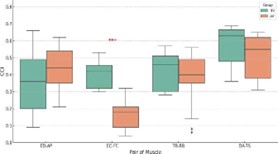
    A significant difference was observed for the EC–FC muscle pair, with a lower CCI found during tasks involving altered hand size (median 0.18) compared to tasks with normal hand size (0.42, p < 10⁻⁴). Although not statistically significant, consistent decreases in CCI were also observed for the DA–TS (0.55 vs. 0.63) and TB–BB (0.40 vs. 0.46) pairs under altered visual conditions. Interestingly, the ED–AP pair was the only case showing a higher median CCI in the altered hand size condition (0.44) compared to the normal one (0.36), though this difference also did not reach statistical significance (p > 0.05).

    Discussion and clinical relevance

    These preliminary findings suggest that altered visual feedback in VR may reduce pathological muscle co-contraction, promoting more efficient and synergistic movements. Further research on larger post-stroke populations is needed to confirm these effects and explore their clinical potential.

    REFERENCES

    [1] E. Tzvi, S. Loens, et al. Cerebellum. (2022): 306–313

    [2] F. Amin, A. Waris et al. IEEE Trans Neural Syst Rehabil Eng. (2024): 32:2060-2069

    [3] Rashid, Usman, et al. Journal of Electromyography and Kinesiology 48 (2019): 103-111.

    [4] Unnithan, V. B., et al. Electromyography and clinical neurophysiology 36.8 (1996): 487-494.