Categoria: congresso-2025

  • Il tipo di frattura conta? Confronto tra pattern del cammino in pazienti con frattura intertrocanterica e del collo femorale

    Il tipo di frattura conta? Confronto tra pattern del cammino in pazienti con frattura intertrocanterica e del collo femorale

    Does the fracture type matter? Comparison of gait patterns in patients after intertrochanteric and femoral neck hip fractures

    Autori

    Giardini Marica (Istituti Clinici Scientifici Maugeri IRRCS, Department of Physical and Rehabilitation Medicine Unit, Institute of Veruno, Italy)

    Libiani Gianluca (Istituti Clinici Scientifici Maugeri IRRCS, Department of Physical and Rehabilitation Medicine Unit, Institute of Veruno, Italy)

    Arcolin Ilaria (Istituti Clinici Scientifici Maugeri IRRCS, Department of Physical and Rehabilitation Medicine Unit, Institute of Veruno, Italy)

    Corna Stefano (Istituti Clinici Scientifici Maugeri IRRCS, Department of Physical and Rehabilitation Medicine Unit, Institute of Veruno, Italy)

    Godi Marco (Istituti Clinici Scientifici Maugeri IRRCS, Department of Physical and Rehabilitation Medicine Unit, Institute of Veruno, Italy)

    Background and aims

    Low-impact hip fractures are heterogeneous, with intertrochanteric fractures (ITFs) typically affecting frailer patients compared to femoral neck fractures (FNFs). Although the type of hip fracture does not influence functional recovery in older and more dependent patients, it does have an impact in younger or more functionally independent individuals at the start of rehabilitation [1]. Specifically, patients with ITF require longer rehabilitation to achieve functional gains comparable to FNF [1]. Previous studies included patients with several levels of autonomy at discharge, limiting specific analysis of gait recovery—although up to 90% of these patients lose independence in daily walking [2]. This study aimed to compare the gait patterns of independent inpatients with ITFs and FNFs at the time of discharge.

    Methods

    75 walking inpatients with FNF (82±6 years, 24% male) and 93 with ITF (82±7 years, 20% male), who were admitted to a rehabilitation institute and underwent individualized rehabilitation programs, were assessed at discharge by the instrumented Timed Up and Go (iTUG) Test, using their own walking aid. The iTUG test is an enhanced version of the traditional test, thanks to the addition of an inertial lumbar sensor; 21 variables, proven to be reliable in patients with femur fracture, were analysed [3]. Moreover, outcome measures (at admission and discharge) included length of stay (LOS), Functional Independence Measure (FIM) subscores and total score, Functional Ambulation Classification (FAC), 30s Sit-to-Stand (30s STS), and pain at rest and during mobilization.

    Results

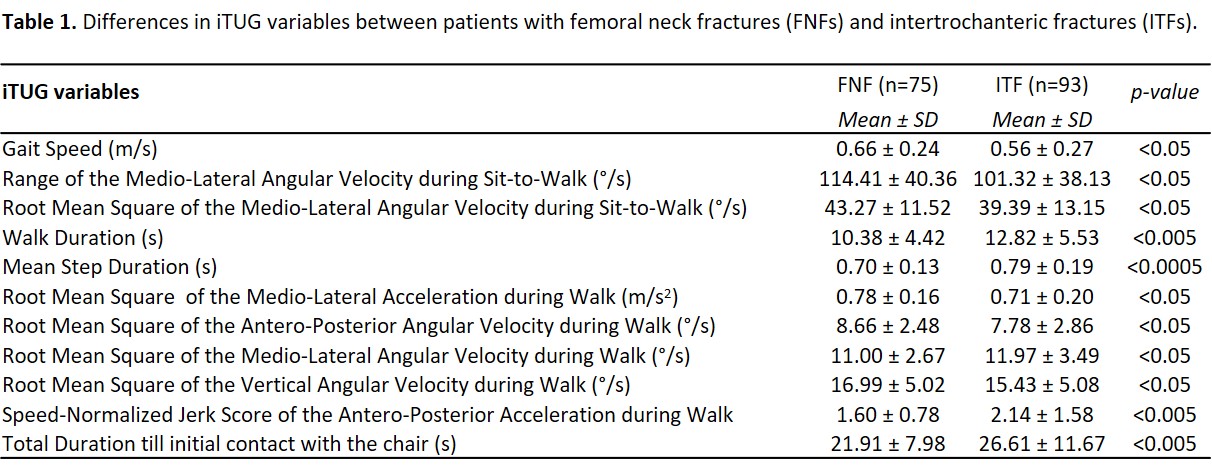
    11/21 iTUG variables were different between ITF and FNF groups (at least, p<0.05), as showed in Table 1. No significant differences, neither at admission and at discharge, were observed between groups in LOS, 30s STS, FAC, pain at rest, subscores and total FIM scores. However, patients with ITF reported higher pain during mobilization (p<0.005 at admission; p<0.05 at discharge).

    Conclusion

    Results suggest that autonomous walking patients with different hip fractures, despite comparable scores in conventional clinical assessments, showed specific impairments in sensor-based mobility parameters, pointing to limitations in traditional measures to fully capture functional complexity. ITF patients exhibited altered temporal parameters, corresponding to a slower walking speed—10 cm/s lower than FNF patients. Moreover, the increased jerk and Root Mean Squares values are indicative of greater movement irregularity and instability, suggesting impaired gait control [4]. Also, pain results as a key factor to consider. These results confirm previous studies in the general hip fracture population, underscoring the need for fracture-specific rehabilitation strategies, particularly in ITF [1,5].

    REFERENCES

    [1] Arcolin I, et al. Injury. 2021;52(8):2373-2378. doi: 10.1016/j.injury.2021.04.001.

    [2] Thingstad P, et al. Osteoporos. Int. 2016;27:933-942. doi: 10.1007/s00198-015-3313-9.

    [3] Giardini M, et al. Gait Posture. In press.

    [4] Antonelli M, et al. Appl. Sci. 2024;14(2):911. doi: 10.3390/app14020911.

    [5] Dakhil S, et al. PloS one 2023;18(3):e02835515. doi: 10.1371/journal.pone.0283551.

  • Responsività e interpretabilità della Knee Outcome Survey − Activities of Daily Living Scale (KOS-ADLS) in pazienti con dolore al ginocchio

    Responsiveness and interpretability of the Knee Outcome Survey − Activities of Daily Living Scale (KOS-ADLS) in patient with knee pain

    Autori

    Roberta La Marca [Department of Medicine and Health Science “Vincenzo Tiberio”, University of Molise, Campobasso, Italy]

    Emanuele Tortoli [Department of Medicine and Health Science “Vincenzo Tiberio”, University of Molise, Campobasso, Italy]

    Alessandro Ugolini [Independent researcher, Empoli (FI), Italy]

    Leonardo Pellicciari [IRCCS Istituto delle Scienze Neurologiche di Bologna, Bologna, Italy]

    Background and aims

    Knee pain accounts for about one-third of musculoskeletal complaints in primary care, significantly

    impacting function and quality of life. Effective treatment evaluation requires instruments

    responsive to meaningful changes over time. The Knee Outcome Survey-Activities of Daily Living

    Scale (KOS-ADLS) is a reliable, knee-specific patient-reported outcome measure used globally to

    assess physical function in daily activities. However, limited studies have examined its

    responsiveness and interpretability by means of the minimal important change (MIC) according to

    COSMIN guidelines. This study evaluates the responsiveness and MIC in patients with various knee

    disorders, including surgical and non-surgical cases, from both patient and clinician perspectives,

    following COSMIN recommendation.

    Methods

    115 (60 non-surgical, 55 surgical) adult patients with knee injuries, recruited from three

    physiotherapy clinics, were included in this clinimetric study. KOS-ADLS and other specific and

    generic measures were administered to each patient at baseline and after physiotherapy treatment.

    After the treatment, a 15-point global rating of change (GROC) scale were administered to patients

    and physiotherapy to assess the perceived improvement by patients’ and physiotherapists’

    pespective. Responsiveness was assessed by formulating 12 a-priori hypotheses, and MIC was

    calculated by dividing the samples into “clinically improved” and “not clinically improved”

    according to the GROC results. All analyses were performed separately for the total, surgery and

    no-surgery samples.

    Results

    The KOS-ADLS demonstrated satisfactory responsiveness (11 out of 12 hypotheses were met),

    with large effect size (ES=0.90) and standardized response mean (SRM=1.03) values in the total

    sample, with higher values in the surgical group (ES=1.25, SRM=1.40) compared to the non-

    surgical group (ES=0.76, SRM=0.81). The AUC was higher than 0.70 across samples and patients’

    and physiotherapists’ perspectives. The MIC ranged from 8.5 to 18 points, varying between the

    sample and patients’ and physiotherapists’ perspectives, with the highest values in surgical patients

    and from the physiotherapist’s perspective.

    Conclusion

    This study demonstrated satisfactory responsiveness of the KOS-ADLS according to COSMIN

    standards in patients with a wide range of knee pathologies, especially in surgical patients. Both

    patient and physiotherapist assessments showed higher responsiveness in clinically improved

    individuals, with MIC values ranging from 8.5 to 18 points, generally higher in surgical sample and

    from the physiotherapist’s perspective. Physiotherapists reported slightly greater changes than

    patients, reflecting differences in recovery perception. MIC discrepancies between patients and

    clinicians highlight the need for clear communication during rehabilitation. Study limitations

    include short follow-up and limited generalizability beyond Italian clinical settings.

    REFERENCES

    Irrgang JJ, Snyder-Mackler L, Wainner RS, Fu FH, Harner CD. Development of a patient-reported

    measure of function of the knee. J Bone Joint Surg Am. 1998;80(8):1132-1145.

    doi:10.2106/00004623-199808000-00006

    Revicki D, Hays RD, Cella D, Sloan J. Recommended methods for determining responsiveness and

    minimally important differences for patient-reported outcomes. J Clin Epidemiol. 2008;61(2):102-

    109. doi:10.1016/j.jclinepi.2007.03.012

    Terwee CB, Bot SDM, de Boer MR, et al. Quality criteria were proposed for measurement properties

    of health status questionnaires. J Clin Epidemiol. 2007;60(1):34-42.

    doi:10.1016/j.jclinepi.2006.03.012

    Tortoli E, Passigli S, Scrimitore A, Raschi A, Depalma A, Giovannico G, Pellicciari L. Translation,

    cross-cultural adaptation and validation of the Italian version of the knee outcome survey – activities

    of daily living scale. Musculoskelet Sci Pract. 2023 Feb;63:102716. doi:

    10.1016/j.msksp.2023.102716. Epub 2023 Jan 3. PMID: 36630780.

  • Responsività e interpretabilità della Knee Outcome Survey − Activities of Daily Living Scale (KOS- ADLS) in pazienti con dolore al ginocchio

    Responsiveness and interpretability of the Knee Outcome Survey − Activities of Daily Living Scale (KOS-ADLS) in patients with knee pain

    Autori

    La Marca Roberta [Department of Medicine and Health Science “Vincenzo Tiberio”, University of Molise, Campobasso, Italy]

    Tortoli Emanuele [Department of Medicine and Health Science “Vincenzo Tiberio”, University of Molise, Campobasso, Italy]

    Ugolini Alessandro [Independent researcher, Empoli (FI), Italy]

    Pellicciari Leonardo[IRCCS Istituto delle Scienze Neurologiche di Bologna, Bologna, Italy]

    Background and aims

    Knee pain accounts for about one-third of musculoskeletal complaints in primary care, significantly

    impacting function and quality of life. Effective treatment evaluation requires instruments

    responsive to meaningful changes over time. The Knee Outcome Survey-Activities of Daily Living

    Scale (KOS-ADLS) is a reliable, knee-specific patient-reported outcome measure used globally to

    assess physical function in daily activities. However, limited studies have examined its

    responsiveness and interpretability by means of the minimal important change (MIC) according to

    COSMIN guidelines. This study evaluates the responsiveness and MIC in patients with various knee

    disorders, including surgical and non-surgical cases, from both patient and clinician perspectives,

    following COSMIN recommendation.

    Methods

    115 (60 non-surgical, 55 surgical) adult patients with knee injuries, recruited from three

    physiotherapy clinics, were included in this clinimetric study. KOS-ADLS and other specific and

    generic measures were administered to each patient at baseline and after physiotherapy treatment.

    After the treatment, a 15-point global rating of change (GROC) scale were administered to patients

    and physiotherapy to assess the perceived improvement by patients’ and physiotherapists’

    pespective. Responsiveness was assessed by formulating 12 a-priori hypotheses, and MIC was

    calculated by dividing the samples into “clinically improved” and “not clinically improved”

    according to the GROC results. All analyses were performed separately for the total, surgery and

    no-surgery samples.

    Results

    The KOS-ADLS demonstrated satisfactory responsiveness (11 out of 12 hypotheses were met),

    with large effect size (ES=0.90) and standardized response mean (SRM=1.03) values in the total

    sample, with higher values in the surgical group (ES=1.25, SRM=1.40) compared to the non-

    surgical group (ES=0.76, SRM=0.81). The AUC was higher than 0.70 across samples and patients’

    and physiotherapists’ perspectives. The MIC ranged from 8.5 to 18 points, varying between the

    sample and patients’ and physiotherapists’ perspectives, with the highest values in surgical patients

    and from the physiotherapist’s perspective.

    Conclusion

    This study demonstrated satisfactory responsiveness of the KOS-ADLS according to COSMIN

    standards in patients with a wide range of knee pathologies, especially in surgical patients. Both

    patient and physiotherapist assessments showed higher responsiveness in clinically improved

    individuals, with MIC values ranging from 8.5 to 18 points, generally higher in surgical sample and

    from the physiotherapist’s perspective. Physiotherapists reported slightly greater changes than

    patients, reflecting differences in recovery perception. MIC discrepancies between patients and

    clinicians highlight the need for clear communication during rehabilitation. Study limitations

    include short follow-up and limited generalizability beyond Italian clinical settings.

    REFERENCES

    Irrgang JJ, Snyder-Mackler L, Wainner RS, Fu FH, Harner CD. Development of a patient-reported

    measure of function of the knee. J Bone Joint Surg Am. 1998;80(8):1132-1145.

    doi:10.2106/00004623-199808000-00006

    Revicki D, Hays RD, Cella D, Sloan J. Recommended methods for determining responsiveness and

    minimally important differences for patient-reported outcomes. J Clin Epidemiol. 2008;61(2):102-

    109. doi:10.1016/j.jclinepi.2007.03.012

    Terwee CB, Bot SDM, de Boer MR, et al. Quality criteria were proposed for measurement properties

    of health status questionnaires. J Clin Epidemiol. 2007;60(1):34-42.

    doi:10.1016/j.jclinepi.2006.03.012

    Tortoli E, Passigli S, Scrimitore A, Raschi A, Depalma A, Giovannico G, Pellicciari L. Translation,

    cross-cultural adaptation and validation of the Italian version of the knee outcome survey – activities

    of daily living scale. Musculoskelet Sci Pract. 2023 Feb;63:102716. doi:

    10.1016/j.msksp.2023.102716. Epub 2023 Jan 3. PMID: 36630780.

  • Dietro lo specchio: rilevanza clinica e neuroradiologica dei movimenti mirror nel disturbo comportamentale del sonno REM idiopatico

    Behind the mirror: clinical and neuroradiological significance of mirror movements in idiopathic REM sleep behavior disorder

    Autori

    Elisabetta Sarasso (Neuroimaging Research Unit, Division of Neuroscience, IRCCS San Raffaele Scientific Institute, Milan, Italy; Neurotech Hub, Vita-Salute San Raffaele University, Milan, Italy; Department of Neuroscience, Rehabilitation, Ophthalmology, Genetics and Maternal Child Health, University of Genoa, Genoa, Italy)

    Roberta Balestrino (Neurorehabilitation Unit, IRCCS San Raffaele Scientific Institute, Milan, Italy, Neurology Unit, IRCCS San Raffaele Scientific Institute, Milan, Italy)

    Silvia Basaia (Neuroimaging Research Unit, Division of Neuroscience, IRCCS San Raffaele Scientific Institute, Milan, Italy; Neurotech Hub, Vita-Salute San Raffaele University, Milan, Italy)

    Andrea Gardoni (Neuroimaging Research Unit, Division of Neuroscience, IRCCS San Raffaele Scientific Institute, Milan, Italy; Neurotech Hub, Vita-Salute San Raffaele University, Milan, Italy)

    Saverio Sangermano (Vita-Salute San Raffaele University, Milan, Italy)

    Sara Marelli (Sleep Disorders Center, Division of Neuroscience, IRCCS San Raffaele Scientific Institute, Milan, Italy)

    Alessandra Castlenuovo (Sleep Disorders Center, Division of Neuroscience, IRCCS San Raffaele Scientific Institute, Milan, Italy)

    Andrea Grassi (Neuroimaging Research Unit, Division of Neuroscience, IRCCS San Raffaele Scientific Institute, Milan, Italy; Neurotech Hub, Vita-Salute San Raffaele University, Milan, Italy)

    Elisa Canu (Neuroimaging Research Unit, Division of Neuroscience, IRCCS San Raffaele Scientific Institute, Milan, Italy; Neurotech Hub, Vita-Salute San Raffaele University, Milan, Italy) – Luigi Ferini-Strambi (Sleep Disorders Center, Division of Neuroscience, IRCCS San Raffaele Scientific Institute, Milan, Italy; Vita-Salute San Raffaele University, Milan, Italy)

    Massimo Filippi (Neuroimaging Research Unit, Division of Neuroscience, IRCCS San Raffaele Scientific Institute, Milan, Italy; Neurology Unit, IRCCS San Raffaele Scientific Institute, Milan, Italy; Neurorehabilitation Unit, IRCCS San Raffaele Scientific Institute, Milan, Italy; Neurophysiology Service, IRCCS San Raffaele Scientific Institute, Milan, Italy; Neurotech Hub, Vita-Salute San Raffaele University, Milan, Italy) – Federica Agosta (Neuroimaging Research Unit, Division of Neuroscience, IRCCS San Raffaele Scientific Institute, Milan, Italy; Neurology Unit, IRCCS San Raffaele Scientific Institute, Milan, Italy; Neurotech Hub, Vita-Salute San Raffaele University, Milan, Italy)

    Background and aims

    Idiopathic REM Sleep Behavior Disorder (iRBD) is a recognized prodromal stage of synucleinopathies such as Parkinson’s disease (PD). Mirror movements (MM), involuntary contralateral mirroring of voluntary motor actions, are paraphysiological phenomena present in childhood and minimally in elder healthy subjects. Their re-emergence is documented in a wide range of diseases such as stroke, multiple sclerosis and movement disorders. They have been observed in PD, where they may reflect a compensatory cortical activation. In this context, MM appear as an epiphenomenon, whose expression is amplified by impaired interhemispheric inhibition. To our knowledge their presence and significance in iRBD have not been explored.

    Methods

    We enrolled 49 polysomnography-confirmed iRBD patients, divided into MM-positive (n=33) and MM-negative (n=16) groups. MM were phenotyped as monolateral (n=10) or bilateral (n=23). All underwent neurological, cognitive (MMSE, FAB, Rey and Benson figures, Rey Word List, Corsi, Token Test), motor (UPDRS I–III, 9HPT, 5TSTS, 10MWT), and MRI evaluations. FLAIR, 3DT1, 3DT2 sequences were used to assess hyperintense lesions (juxtacortical lesions, deep grey matter (DGM) lesions, periventricular lesions, infratentorial lesion) via volumetric and lesion count analyses. This study was funded from the Italian Ministero della Salute (grant number RF-2018-12366746).

    Results

    MM-positive patients showed lower upper limb dexterity (9HPT: 24.16±3.38 s vs 22.43±3.05 s, p=0.029) and reduced visuospatial-executive function (Corsi: 4.97±0.64 vs 5.63±1.03, p=0.004; Rey copy: 32.58±2.41 vs 34.13±1.71, p=0.01). Monolateral MM had younger age and more pronounced cognitive impairment in visuospatial, memory, and language tasks. Bilateral MM presented significantly increased DGM lesion volume (32.00±39.28 mm³ vs 11.00±19.00 in monolateral MM, p=0.049) and lesion number (1.45±1.64 vs 0.22±0.44, p=0.029), as well as greater periventricular hyperintense lesions burden (p=0.071 trend). Correlation analyses revealed that periventricular lesion volume and number were significantly associated with worse visuospatial performance (e.g. Rey copy: p=0.002, r=–0.668), mood symptoms (BDI-II: p=0.013, r=0.572), and gait impairment (N° of steps at 10MWT: p=0.014, r=0.555).

    Conclusion

    MM are common in iRBD but display distinct clinical and radiological profiles. Monolateral MM may reflect more closely early neurodegenerative processes and initial cognitive changes, while bilateral MM may reflect a more aspecific pattern, potentially driven by vascular burden. MM assessment may help identifying subgroups with different trajectories and risk profiles in the prodromal phase of synucleinopathies: longitudinal analysis is warranted to explore this hypothesis.

    REFERENCES

    Cox BC, Cincotta M, Espay AJ. Mirror movements in movement disorders: a review. Tremor Other Hyperkinet Mov (N Y). 2012;2:tre-02-59-398-1. doi: 10.7916/D8VQ31DZ. Epub 2012 Apr 16. PMID: 23440079; PMCID: PMC3569961.

    Poisson A, Ballanger B, Metereau E, Redouté J, Ibarolla D, Comte JC, Bernard HG, Vidailhet M, Broussolle E, Thobois S. A functional magnetic resonance imaging study of pathophysiological changes responsible for mirror movements in Parkinson’s disease. PLoS One. 2013 Jun 25;8(6):e66910. doi: 10.1371/journal.pone.0066910. PMID: 23825583; PMCID: PMC3692538.


  • Connettività funzionale alterata nei network sensorimotori, emotivi e cognitivi e cambiamenti nei volumi cerebellari nei disordini funzionali del movimento

    Altered functional connectivity in sensorimotor, emotional, and cognitive networks and changes of cerebellar volumes in Functional Movement Disorders

    Autori

    Elisabetta Sarasso (Neuroimaging Research Unit, Division of Neuroscience, IRCCS San Raffaele Scientific Institute, Milan, Italy; Neurotech Hub, Vita-Salute San Raffaele University, Milan, Italy; Department of Neuroscience, Rehabilitation, Ophthalmology, Genetics and Maternal Child Health, University of Genoa, Genoa, Italy) – Andrea Gardoni (Neuroimaging Research Unit, Division of Neuroscience, IRCCS San Raffaele Scientific Institute, Milan, Italy; Neurotech Hub, Vita-Salute San Raffaele University, Milan, Italy) – Marialuisa Gandolfi (University of Verona, Verona, Italy) – Silvia Basaia (Neuroimaging Research Unit, Division of Neuroscience, IRCCS San Raffaele Scientific Institute, Milan, Italy; Neurotech Hub, Vita-Salute San Raffaele University, Milan, Italy)

    Elisa Canu (Neuroimaging Research Unit, Division of Neuroscience, IRCCS San Raffaele Scientific Institute, Milan, Italy; Neurotech Hub, Vita-Salute San Raffaele University, Milan, Italy) – Elisa Sibilla (Neuroimaging Research Unit, Division of Neuroscience, IRCCS San Raffaele Scientific Institute, Milan, Italy; Neurotech Hub, Vita-Salute San Raffaele University, Milan, Italy) – Chiara Tripodi (Neuroimaging Research Unit, Division of Neuroscience, IRCCS San Raffaele Scientific Institute, Milan, Italy; Neurotech Hub, Vita-Salute San Raffaele University, Milan, Italy) – Angela Sandri (Azienda Ospedaliera Universitaria Integrata Verona, Verona, Italy)

    Ilaria Antonella Di Vico (Azienda Ospedaliera Universitaria Integrata Verona, Verona, Italy) – Mirta Fiorio (University of Verona, Verona, Italy) – Giulia Pedrotti (University of Verona, Verona, Italy) – Anna Policelli (Azienda Ospedaliera Universitaria Integrata Verona, Verona, Italy)

    Paolo Barone (University of Salerno, Salerno, Italy) – Maria Teresa Pellecchia (University of Salerno, Salerno, Italy) – Roberto Erro (University of Salerno, Salerno, Italy) – Sofia Cuoco (Neurological Clinic, AOU San Giovanni di Dio e Ruggi d’Aragona, Salerno, Italy)

    Immacolata Carotenuto (Neurological Clinic, AOU San Giovanni di Dio e Ruggi d’Aragona, Salerno, Italy) – Claudia Vinciguerra (Neurological Clinic, AOU San Giovanni di Dio e Ruggi d’Aragona, Salerno, Italy) – Annibale Botto (Department of Neuroradiology, AOU San Giovanni di Dio e Ruggi d’Aragona, Salerno, Italy) – Marianna Amboni (Neurological Clinic, AOU San Giovanni di Dio e Ruggi d’Aragona, Salerno, Italy)

    Michela Russo (Neurological Clinic, AOU San Giovanni di Dio e Ruggi d’Aragona, Salerno, Italy; Dipartimento di Ingegneria Elettrica e delle Tecnologie dell’Informazione, Università degli Studi di Napoli FEDERICO II, Naples, Italy) – Giancarlo Mansueto (University of Verona, Verona, Italy) – Francesca Benedetta Pizzini (University of Verona, Verona, Italy) – Marco Barillari (University of Verona, Verona, Italy)

    Matteo Francesco Lauriola (Azienda Ospedaliera Universitaria Integrata Verona, Verona, Italy) – Maria Chiara Tozzi (Azienda Ospedaliera Universitaria Integrata Verona, Verona, Italy) – Francesca Rusciano (Azienda Ospedaliera Universitaria Integrata Verona, Verona, Italy) – Christian Geroin (University of Verona, Verona, Italy)

    Melania Fasoli (University of Verona, Verona, Italy) – Angela Marotta (University of Verona, Verona, Italy) – Emanuela Pizzolla (University of Verona, Verona, Italy) – Francesca Salaorni (University of Verona, Verona, Italy)

    Irene Lozzi (University of Verona, Verona, Italy) – Federica Bombieri (University of Verona, Verona, Italy) – Giovanna Maddalena Squintani (Azienda Ospedaliera Universitaria Integrata Verona, Verona, Italy) – Sara Mariotto (Azienda Ospedaliera Universitaria Integrata Verona, Verona, Italy) – Stefano Tamburin (University of Verona, Verona, Italy) – Fabio Paio (University of Verona, Verona, Italy) – Giuseppe De Biasi (Neurological Clinic, AOU San Giovanni di Dio e Ruggi d’Aragona, Salerno, Italy) – Giuseppe Piscosquito (Neurological Clinic, AOU San Giovanni di Dio e Ruggi d’Aragona, Salerno, Italy)

    Michele Tinazzi (University of Verona, Verona, Italy) – Massimo Filippi (Neuroimaging Research Unit, Division of Neuroscience, IRCCS San Raffaele Scientific Institute, Milan, Italy, Neurotech Hub, Vita-Salute San Raffaele University, Milan, Italy, Neurology Unit, IRCCS San Raffaele Scientific Institute, Milan, Italy, Neurorehabilitation Unit, IRCCS San Raffaele Scientific Institute, Milan, Italy, Neurophysiology service, IRCCS San Raffaele Scientific Institute, Milan, Italy) – Federica Agosta (Neuroimaging Research Unit, Division of Neuroscience, IRCCS San Raffaele Scientific Institute, Milan, Italy, Neurotech Hub, Vita-Salute San Raffaele University, Milan, Italy, Neurology Unit, IRCCS San Raffaele Scientific Institute, Milan, Italy)

    Background and aims

    FMD remains a poorly understood phenomenon, characterized by inconsistent limb weakness, tremors, dystonia, and gait disturbances [1]. Preliminary evidence suggested that these symptoms might result from faulty neural processing, where disruptions in circuits integrating interoception, exteroception, and motor control lead to altered sensorimotor awareness [2]. The identification of neuroimaging biomarkers could enable earlier diagnosis and more effective management of FMD symptoms. This study aims to investigate alterations in brain functional connectivity (FC) and deep gray matter volume in patients with Functional Movement Disorders (FMD) compared to healthy controls. Specifically, it examines changes in resting-state FC networks and GM volume of areas involved in motor, exteroceptive and interoceptive domains.

    Methods

    Fifty-seven patients with FMD and 60 age- and sex-matched healthy controls underwent brain MRI. Brain MRI analyses included functional connectivity (FC) of the main resting-state networks using independent component analysis (MELODIC), cerebellar volumes using SUIT, and deep gray matter (GM) volumes using FMRIB’s Integrated Registration and Segmentation Tool and FreeSurfer. The study is funded by the European Union – Next Generation EU – NRRP M6C2 – Investment 2.1 Enhancement and strengthening of biomedical research in the NHS (PNRR-MAD-2022-12376826).

    Results

    FMD patients relative to healthy subjects exhibited an increased FC of bilateral putamen and caudate, right insula and inferior frontal gyrus within the basal ganglia network, an increased FC of bilateral precuneus within the ventral default-mode network, an increased FC of left cerebellum crus I within the primary visual network, and an increased FC of middle cingulate cortex in the precuneus network. Moreover, FMD patients showed increased volume of vermis crus II, VIIIa/b, and left lobules VIIIa/b.

    Conclusion

    The observed alterations of cerebellar volumes and of FC in the basal ganglia, default-mode, precuneus and primary visual networks may represent a mismatch between sensorimotor, emotional, and cognitive systems, leading to impaired self-awareness and motor intention, heightened attention to bodily signals, and compromised voluntary movement control mechanisms. These results support the neural basis of FMD, confirming that distinct mechanisms underlie the symptoms of this complex disorder.

    REFERENCES

    Tinazzi M, Morgante F, Marcuzzo E, Erro R, Barone P, Ceravolo R, Mazzucchi S, Pilotto A, Padovani A, Romito LM, Eleopra R, Zappia M, Nicoletti A, Dallocchio C, Arbasino C, Bono F, Pascarella A, Demartini B, Gambini O, Modugno N, Olivola E, Di Stefano V, Albanese A, Ferrazzano G, Tessitore A, Zibetti M, Calandra-Buonaura G, Petracca M, Esposito M, Pisani A, Manganotti P, Stocchi F, Coletti Moja M, Antonini A, Defazio G, Geroin C. Clinical Correlates of Functional Motor Disorders: An Italian Multicenter Study. Mov Disord Clin Pract. 2020 Sep 22;7(8):920-929. doi: 10.1002/mdc3.13077. PMID: 33163563; PMCID: PMC7604660.

    Hallett M, Aybek S, Dworetzky BA, McWhirter L, Staab JP, Stone J. Functional neurological disorder: new subtypes and shared mechanisms. Lancet Neurol. 2022 Jun;21(6):537-550. doi: 10.1016/S1474-4422(21)00422-1. Epub 2022 Apr 14. Erratum in: Lancet Neurol. 2022 Jun;21(6):e6. doi: 10.1016/S1474-4422(22)00179-X. PMID: 35430029; PMCID: PMC9107510.
  • DISPOSIZIONALISMO CAUSALE E PRATICA CLINICA PSICOLOGICAMENTE INFORMATA COMBINATA CON LA TERAPIA MANUALE IN UNA PAZIENTE CON NECK PAIN CRONICO

    DISPOSIZIONALISMO CAUSALE E PRATICA CLINICA PSICOLOGICAMENTE INFORMATA COMBINATA CON LA TERAPIA MANUALE IN UNA PAZIENTE CON NECK PAIN CRONICO

    CAUSAL DISPOSITIONALIST PSYCHOLOGICALLY-INFORMED PRACTICE COMBINED WITH MANUAL THERAPY IN A PATIENT WITH PERSISTENT NONSPECIFIC NECK PAIN (NS-NP): A CASE REPORT

    Autori

    Celso Andrea [Azienda sanitaria Friuli Occidentale, Pordenone, Italy]

    Introduction to clinical case

    Neck pain is one of the most common musculoskeletal disorders and is a major problem in modern society.

    It can be considered a multifactorial disease with a point prevalence of between 10% and 40% of population that will experience symptoms in any one year.

    In the following case report are shown the results of a combined physiotherapy treatment, merging manual therapy and functional rehabilitation with a psychologically-informed practice framework guided by a causal dispositionalist lens, including Motivational Interviewing (MI), Mindfulness-based Therapy with Acceptance and Commitment Therapy (ACT).

    Methods

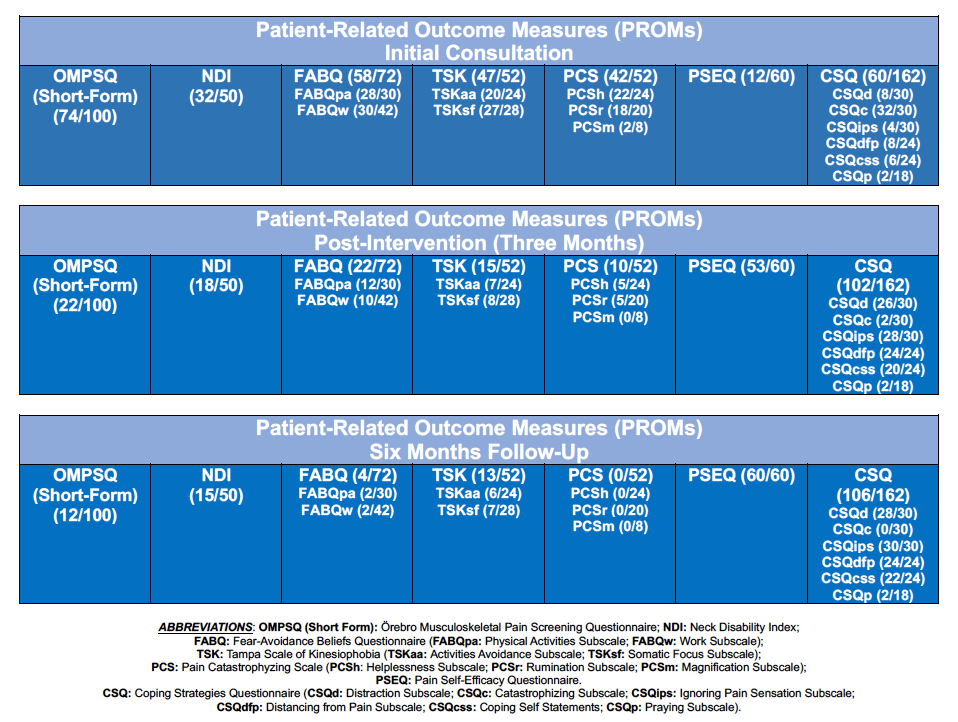
    n 1 female, 58-years-old industry secretary, with a one year history of persistent nonspecific neck pain was treated in three months period and evaluated with initial, post-intervention screening and one-year follow-up, with administration of Patient-Related Outcome Measures such as Örebro Musculoskeletal Pain Screening Questionnaire (OMPSQ) and consequent further functional, and psychosocial assessment with Neck Disability Index (NDI), Fear-Avoidance Beliefs Questionnaire (FABQ), Tampa Scale of Kinesiophobia (TSK), Pain Catastrophizing Scale (PCS), Coping Strategies Questionnaire (CSQ) and Pain Self Efficacy Questionnaire (PSEQ), as measures to evaluate patient’s clinical profile, engagement in treatment and self-management strategies learning.

    The therapeutic encounters were characterized by the implementation of specific manual techniques addressed to the cervical and thoracic spine merged with therapeutic exercise to reduce pain hypersensitivity and restore functional movements.


    Results

    A dispositionalist patient-centred and psychologically informed practice clinical reasoning framework guided the therapeutical journey, where specific manual techniques Motivational Interviewing (MI), Mindfulness and ACT principles enabled to improve psychological flexibility and enhance personal engagement and self-management activation at the end of therapeutic program and at one-year follow-up, at outcomes re-evaluation comparing to baseline.


    Discussion and clinical relevance

    In persistent pain states the therapeutic pathway should be shaped towards a multidimensional framework whose the main objective is to reach meaning(s) of pain experience, where the uniqueness of single clinical presentation can be effectively met and managed. Further, be acquainted in Mindfulness and ACT’s core principles, directly reduces avoidance and promote openness, bringing the possibility to build present-focused awareness, and coordinate greater engagement in goal-oriented and values-based activities, representing a good viaticum that prompt patient’s recovery and thrive.


    REFERENCES

    1. Sterling, Michele. Neck pain: much more than a psychosocial condition. JOSPT. 2009;39(5):309-311.
    2. Bernal-Utrera C, Gonzalez-Gerez JJ, Anarte-Lazo E, Rodriguez-Blanco C. Manual therapy versus therapeutic exercise in non-specific chronic neck pain: a randomized controlled trial.Trials. 2020;21, 1-10.
    3. Worsfold C. Functional rehabilitation of the neck. Phys Ther Rev. (2020);25(2):61-72.
    4. Anjum RL, Copeland S, Rocca, E. Rethinking causality, complexity and evidence for the unique patient: A CauseHealth resource for healthcare professionals and the clinical encounter. Springer 2020.
    5. Main CJ, Simon CB, Beneciuk JM, Greco CM, George SZ, Ballengee LA. The psychologically informed practice consultation roadmap: a clinical implementation strategy.Phys Ther. 2023;103(7), pzad048.
  • Curricula in ambito geriatrico nei corsi di laurea triennale in fisioterapia: un sondaggio nazionale

    Curricula in ambito geriatrico nei corsi di laurea triennale in fisioterapia: un sondaggio nazionale

    Entry-level physical therapist curricula in geriatric care: an Italian national survey study

    Autori

    Dal Ben Sara (Istituto AltaVita-IRA, Padua – Italy; School of Physiotherapy, University of Padua, Padua – Italy; Geriatric Physiotherapy Specialist Interest)

    Bucchi Francesco (CIDAS Social Cooperative, Ferrara – Italy; Geriatric Physiotherapy Specialist Interest Group, Italian Physiotherapy Association)

    Culcasi Antonio (Nursing, Technical and Rehabilitative Assistance Service, IRCCS Istituto Ortopedico Rizzoli, Bologna – Italy; School of Physiotherapy, Alma Mater Studiorum, University of Bologna, Bologna – Italy; Geriatric Physiotherapy Specialist Interest Group, Italian Physiotherapy Association)

    Lecora Stefano (Private Practitioner, Naples – Italy; Geriatric Physiotherapy Specialist Interest Group, Italian Physiotherapy Association)

    Tedeschi Roberto (Independent Researcher, Bologna – Italy)

    Da Roit Marco (Quality Service, AULSS1 Dolomiti, Belluno – Italy, AULSS1, Dolomiti – Italy; Geriatric Physiotherapy Specialist Interest Group, Italian Physiotherapy Association)

    Background and aims

    To address the health needs of the aging population, it is necessary to map entry-level curricula for health professionals.

    This survey investigated geriatric-related content in entry-level physical therapist (PT) curricula offered by Italian universities.

    Methods

    A cross-sectional observational study was conducted using the CROSS checklist. A 66 questions survey was developed and sent via e-mail to all entry-level PT program directors of the Italian universities.

    Results

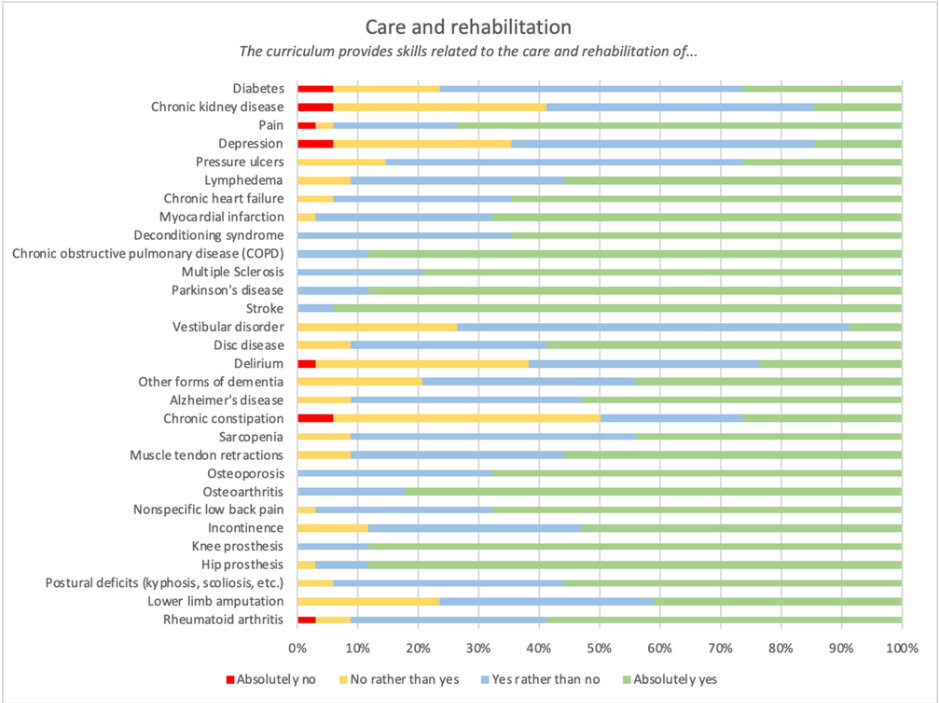
    A total of 34 physical therapist undergraduate course directors out of 62 completed the survey, yielding a 54.8% response rate. These results highlight the need for greater emphasis on health promotion and prevention. Although essential competencies such as the promotion of an active lifestyle and fall prevention appear to be well covered, other aspects remain underrepresented. Relevant gaps were also noted in the care and rehabilitation of some common chronic conditions (e.g., constipation, depression, and diabetes), as well as in therapeutic education. Greater attention to these topics could help align training with the emerging needs of the healthcare system. However, 11.76% of Italian PT programs do not include specific modules or courses dedicated to geriatric rehabilitation. Overall, there is considerable variability in teaching hours, topic coverage, and depth.

    Conclusion

    This study provides meaningful insights for updating the current PT curricula in geriatric care. This survey could represent a tool for future longitudinal research on mapping curricula over time in response to the aging population.

    REFERENCES

    The International Association for Physiotherapists Working with Older People (IPTOP). 2021. Standards of Clinical Practice: Revised Edition. 2021.

    Geriatrics Section APTA. Essential Competencies in the Careof Older Adults at the Completion of the Entry-level Physical Therapist Professional Program of Study. 2017.

    Perez CDA. Integration of geriatric content in entry-level physical therapy education in the Philippines: a pilot study. The Philippine Journal of Physical Therapy. 2022;1(2). Accessed October 28, 2024.

    Sharma A, Minh Duc NT, Luu Lam Thang T, et al. A Consensus- Based Checklist for Reporting of Survey Studies (CROSS). J Gen Intern Med. 2021;36(10):3179-3187.

    Almarwani M. Does ageism exist among multidisciplinary rehabilitation students? Predictors of attitudes toward older adults. J Multidiscip Healthc. 2023;16:181-189.


  • Consapevolezza e riscontro della pratica clinica nella metodologia della ricerca: una Survey tra Studenti e Professionisti in ambito sanitario

    Consapevolezza e riscontro della pratica clinica nella metodologia della ricerca: una Survey tra Studenti e Professionisti in ambito sanitario

    The Role of Clinical Practice in Research Methodology: A Survey of Healthcare Student and Professional Insights

    Autori

    FICHERA WALTER ANGELO (Presidio Ospedaliero “Santa Marta e Santa Venera”- U.O.C. Recupero e Riabilitazione, Acireale (CT), Italia)

    DI FATTA ELEONORA (IRCCS Associazione Oasi Maria SS, TROINA (EN), Italia)

    Background and aims

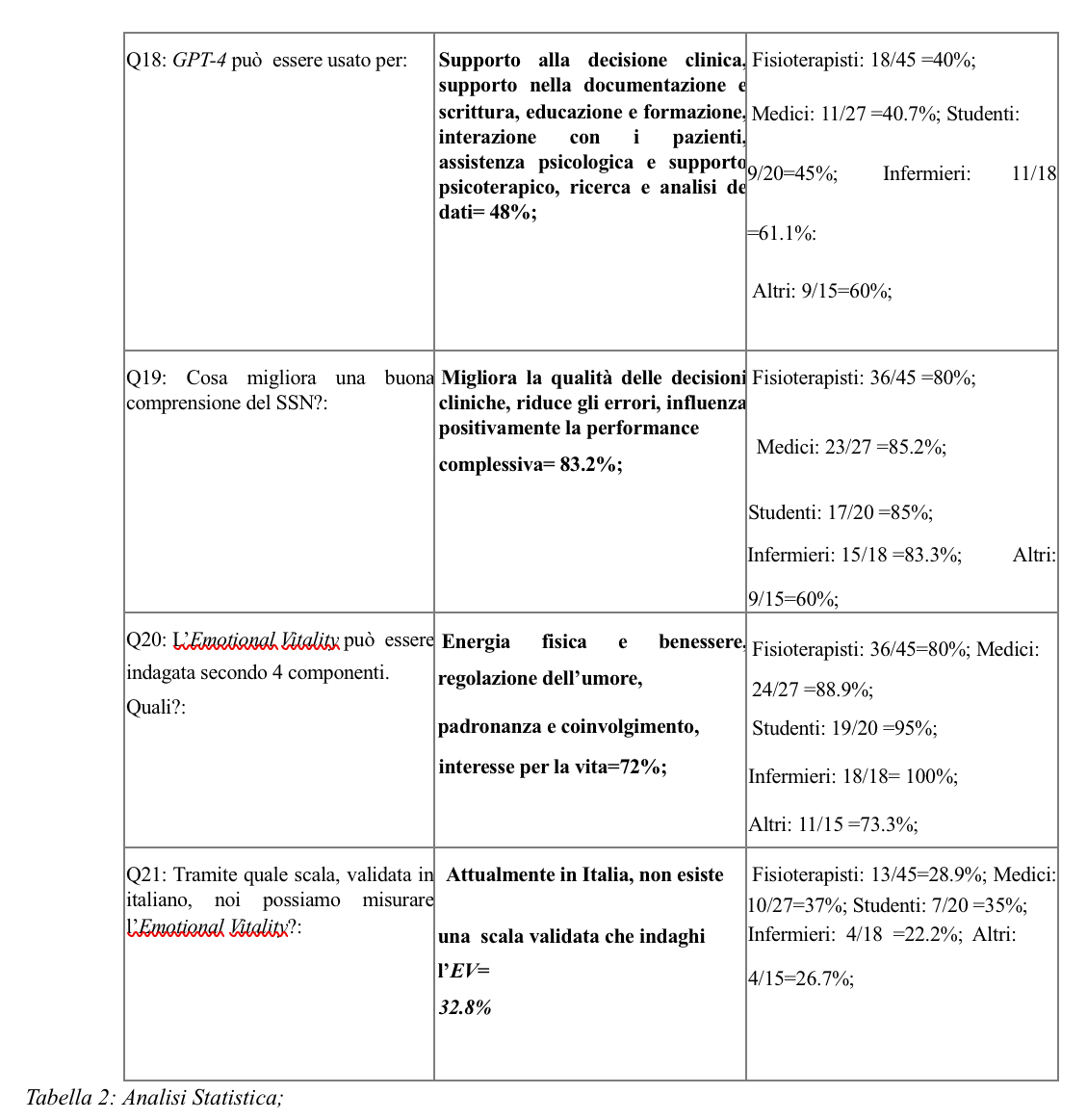
    This thesis aims to explore the level of knowledge and awareness that Healthcare Professionals (including Physicians, Physicians in managerial roles) and finalyear Students enrolled in Healthcare Profession Degree Courses and the Medicine and Surgery Degree Course have regarding six specific variables (trust in the organization and the workgroup, organizational and workgroup support, Psychosomatic Disorders, GPT-4 usage, knowledge of the NHS, and Emotional Vitality) present in both the literature and professional practice.

    Methods

    To this end, a descriptive cross-sectional study was conducted involving Italian Healthcare Professionals, Physicians, and Students (enrolled in their final year of Healthcare Profession Degree Courses and the Medicine and Surgery Degree Course) who regularly use social media or electronic devices. An online survey was used to collect data, which was analyzed descriptively.

    Results

     A total of 125 participants completed the survey. The most represented target group was Physiotherapists (n=45), followed by Physicians (n=27), Nurses (n=20), and Students (n=20). For statistical analysis purposes, all other categories of Healthcare Professionals (n=33) were grouped into a single target group (Other). The results indicate that among the investigated variables, across all target groups, the least known were: knowledge of the elements that define trust in organizational contexts, organizational support, the difference between Burnout and Compassion Fatigue, and knowledge of an Italian-validated scale for EV (Emotional Vitality).

    Conclusion

    Despite the small sample size, this study offers important insights. Further research will be necessary to evaluate the knowledge of Healthcare Professionals, Physicians, and students of Healthcare Profession Degree Courses regarding the investigated variables present in both the literature and everyday professional and working life. Furthermore, there is a need for more in-depth training programs, both during and after university studies, for the recognition of these useful variables in the healthcare setting.


    Key words: Research Methodology, Survey, Healthcare Professionals, Trust and Support,GPT-4, Emotional Vitality, Burnout, Compassion Fatigue, Validation of the scale.

    REFERENCES

    (1) Sackett, D.L., Rosenberg, W.M., Gray, J.A., Haynes, R.B. et al. (1996). Evidence-based medicine: What it is and what it isn’t. BMJ, 312(7023), 71-72.

    (2) Wright, K.B. (2005). Researching internet-based populations: Advantages and disadvantages of online survey research, online questionnaire authoring software packages, and web survey services. Jounral of Computer-Mediated Communication, 10(3).

    (3) Di Stefano, G., Venza, G., Cascio, G. E Gaudino, M. (2018). Il ruolo della fiducia e del supporto organizzativo sul benessere al lavoro. Med Lav; 109(6), 459-470.

    (4) Sacco, T., et al. (2015). Compassione fatigue, burnout and compassion satisfaction among healthcare workers: A review of the literature. Journal of Nursing Scholarship, 47(5), 400-406.

    (5) Laura, D., e Kubzansky, L. (2007). Emotional vitality and incident coronary heart disease. Arch Gen. Psychiatry, 64(12), 1393-1401.

  • Diversi approcci riabilitativi per il recupero della paralisi facciale: una serie di casi

    Different rehabilitation approaches to the recovery of facial palsy: a case series

    Autori

    Di Dio Antonio (Università di Messina, Messina, Italy)

    Saraceno Silvia (Università di Messina, Messina, Italy)

    Sposito Francesca (Università di Messina, Messina, Italy)

    Di Marco Giada (Università di Messina, Messina, Italy)

    Cavallaro Filippo (Università di Messina, Messina, Italy)

    Bonanno Francesco (Università di Messina, Messina, Italy)

    Background and aims

    The idiopathic facial paralysis, also called Bell’s palsy, is an acute unilateral peripheral facial paralysis, due to an alteration of the facial nerve. It causes muscle weakness on one side of the face, leading to asymmetry, inability to close the eye or mouth, and drooping of the brow or mouth corner, leading to difficulties in daily activities like seeing, speaking, and eating [1]. Rehabilitation is an important issue in peripheral facial nerve palsy management. Different approaches have been applied, but nowadays there is no evidence that any particular technique is better than others. This work highlights the potential benefits of Cognitive Therapeutic Exercises (CTE) in the non-pharmacological management of facial palsy, despite limited literature evidence.

    Methods

    A total of 4 patients (2 males and 2 females) between 2017 and 2022, with a mean age of 35 were included in our study. All the patients presented a grade IV in the House-Brackmann classification. A canal wall down mastoidectomy was performed in all the patients, followed by partial facial nerve decompression.

    All the patients followed a rehabilitation program performing CTE exercises with the supervision of a physiotherapist. The length and number of sessions depended on the patient’s response to the exercises proposed. CTE exercises consisted in:

    – Recognition of Lego bricks (different in length and thickness) and makeup brushes (with different bristles) in areas affected by the sensorimotor deficit (lip, cheek, eyelid and forehead);

    – Recognition of tongue depressors (from 1 to 5) placed between teeth or lips;

    – Recognition of the direction of disturbance (up, down, right or left) on a balloon held between the lips.

    Results

    The exercises having as unit of action the neuromuscular compartmentalization and acting on the neuromuscular plate, determine a recovery of the impaired function. In addition, the attention that patients put in place leads to a conscientization of the area affected by the pathology accelerating the recovery process.

    Each patients was evaluated at the first session (T0) and after every 10 sessions (although in each session the physiotherapist assessed and monitored the patient’s clinical condition).

    After 20 sessions all the patients showed an improvement in in House-Brackmann score (from grade IV to grade III).

    Conclusion

    In literature there is not a unique rehabilitation methods about the treatment of this pathology. This work demonstrate how CTE exercises can be very useful for the recovery of the patients affected by facial palsy. Further studies are needed to confirm its efficacy.

    REFERENCES

    1. Nakano H et al Physical therapy for peripheral facial palsy: A systematic review and meta-analysis. Auris Nasus Larynx. 2024 Feb

  • Intervento fisioterapico nei disturbi motori degli esiti da prolungata esposizione alle elevate temperature che hanno portato al “collasso da calore”

    Physiotherapeutic intervention in motor disorders due to a prolonged exposure to high temperatures

    Autori

    Di Dio Antonio [Università di Messina, Messina, Italia]

    Cavallaro Filippo [Università di Messina, Messina, Italia]

    Sposito Francesca [Università di Messina, Messina, Italia]

    Signorino Amelia [Università di Messina, Messina, Italia]

    Di Marco Giada [Università di Messina, Messina, Italia]

    Saraceno Silvia [Università di Messina, Messina, Italia]

    Bonanno Francesco [Università di Messina, Messina, Italia]

    Introduction to clinical case

    “Rossana was unconscious on the ground in her room on the first floor of the house surrounded by flames, we don’t know if she realized about the fire….”.  It was 25 July when relatives found her unconscious, tried to cool her down, and called for help. Rossana had been exposed to the heat for more than 10 hours before being taken to hospital. She was admitted in isolation to neurology for suspected encephalitis. After three weeks, the family asks why she is not proposed physiotherapy. They find no answer and call a trusted physiotherapist.

    Methods

    The physiotherapist, after the anamnesis, decides to give some common sense physiotherapy advice. First of all to hydrate the body, because the activity of any living being or structure needs water. After that, he assessed her free movements, that are minimal and not very fluid, and her muscular hypotrophy. The skin was dry and the muscles were stiff. The physiotherapist, guided by clinical reasoning, performed a slowly and safety axial roll on the bed, and suggests to the patient to touch actively parts of her body with her hands. Having ascertained that the vital parameters are good, a change from supine to sitting posture, trunk check exercises, verticalization and walking training were proposed.

    Results

    After 3 weeks of physiotherapy, thanks to active-assisted kinesis and several exercises of control and proprioception, the patient showed an improvement in skin status, muscle elasticity and active range of motion (AROM). The body tissues conditions were the goal for the recovery of elasticity, trophism and muscle tone.

    Discussion and clinical relevance

    The patient showed a unique condition due to the prolonged exposure to high temperature that has dehydrated every body structure. For these clinical cases there are no physiotherapy or rehabilitation intervention guidelines. Every decision is made relying on discussion with colleagues and patients, in order to perform slow interventions with long periods of rest, only verifying the possibility of execution without requiring activity against resistance. This case report highlights how sometimes physiotherapists face realities and patients far from the classical rehabilitation fields. For this reason we suggest to implement rehabilitation intervention practices for these “outsiders”.

    REFERENCES

    Mario Lizza – la fatica di essere sani – Seusi