CANCER SURVIVORS: THE CHALLENGE OF CHRONICITY IN PHYSIOTHERAPY AND THE NEW FRONTIER OF ASSISTED SELF-CARE
Autori
Angela Contri (Clinical and Experimental Medicine Program – University of Modena and Reggio Emilia)
Isabella Campanini (LAM-Motion Analysis Laboratory, S. Sebastiano Hospital, Neuromotor and Rehabilitation Department, Azienda USL-IRCCS di Reggio Emilia, Correggio, Italy)
Barbara Bressi (Research and EBP Unit, Health Professions Department, Azienda Unità Sanitaria Locale-IRCCS di Reggio Emilia, Reggio Emilia, Italy)
Stefania Costi (Research and EBP Unit, Health Professions Department, Azienda Unità Sanitaria Locale-IRCCS di Reggio Emilia, Reggio Emilia, Italy; Department of Surgical, Medical, Dental and Morphological Sciences Related to Transplant, Oncology and Regenerative Medicine, University of Modena and Reggio Emilia, Modena , Italy
Background and aims
Cancer survivorship care is an emerging field in oncology, necessitating evidence-based interventions to address the complex, long-term needs of cancer survivors (CSs). Survivorship Care Plans (SCPs) are crucial, providing a roadmap for ongoing care that includes self-management strategies and professional follow-up. This thesis contributes to the development of comprehensive, context-specific SCPs, based on CSs’ needs. A mixed-methods approach was employed to define the domains of unmet needs for CSs and to identify reliable assessment tools for those needs in the context of the study.
Methods
This study employed a four-phase design:
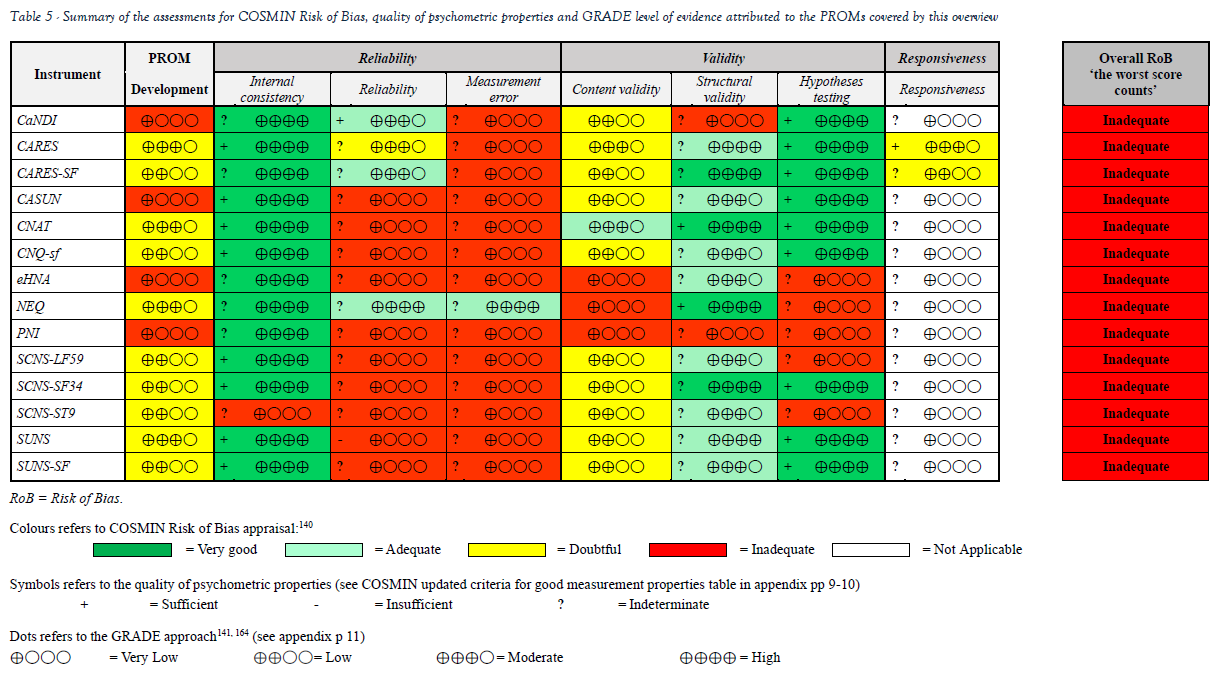
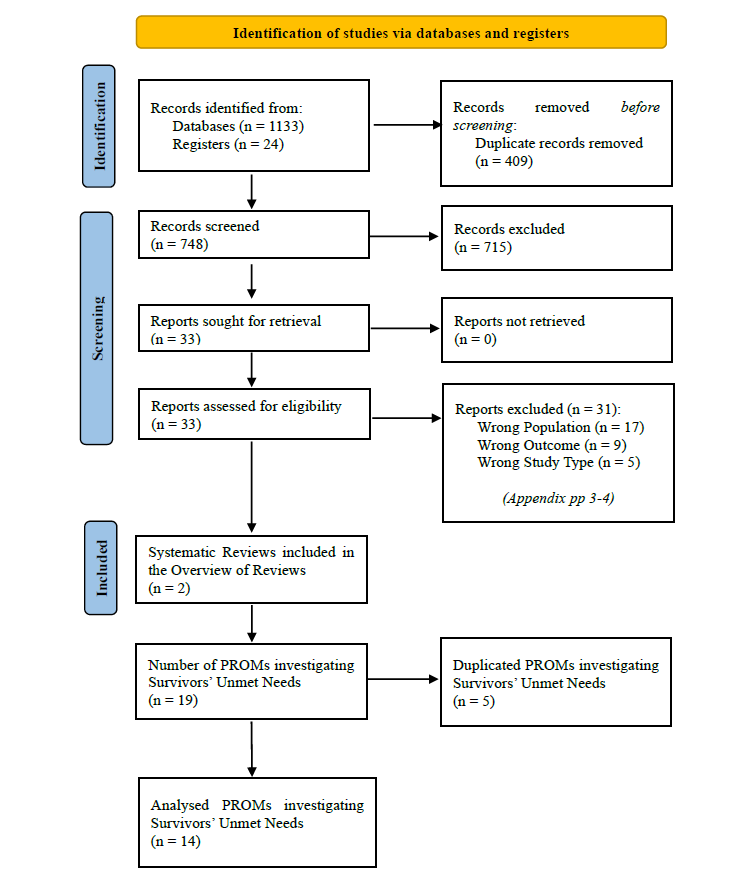
1. Systematic overview of reviews and psychometric evaluation of Patient-Reported Outcome Measures (PROMs) for assessing CSs’ unmet needs.
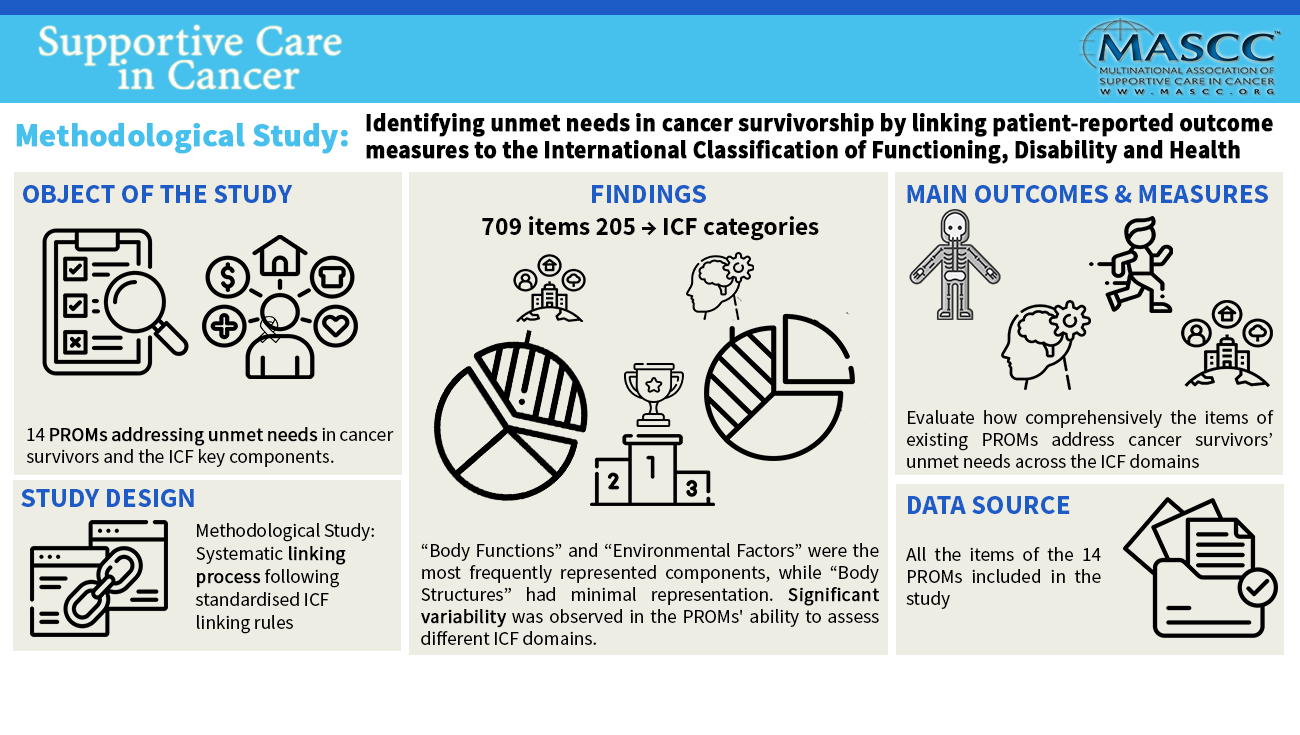
2. Linkage of identified PROMs to the International Classification of Functioning, Disability and Health (ICF) framework.
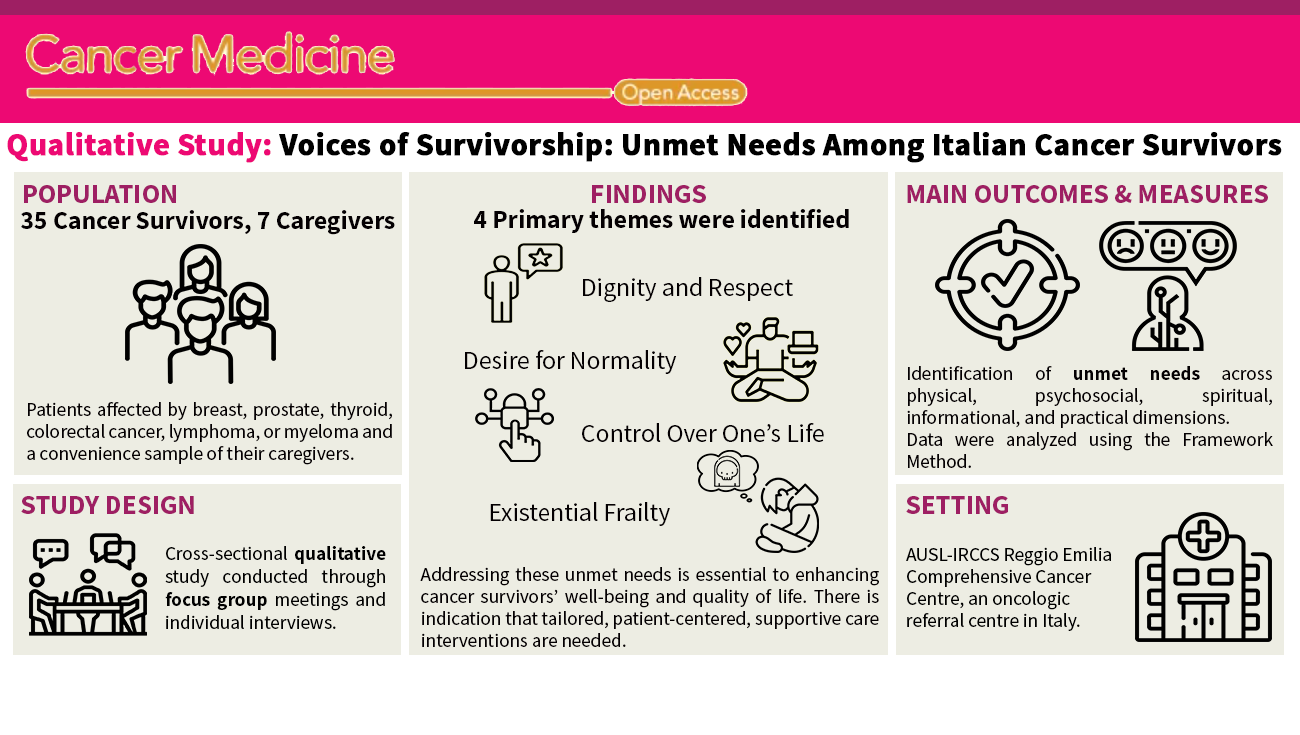
3. Qualitative exploration of CSs’ experiences through focus groups and semi-structured interviews.
4. Evaluation of PROMs completeness against expressed unmet needs of CSs using thematic analysis and content validity assessment.
Results
The overview identified 14 PROMs meeting inclusion criteria, with heterogeneous psychometric properties. Significant variability was observed across PROMs in ICF health domain coverage, revealing their own specificity in capturing different nuances of apparently similar problems. Qualitative analysis revealed four key themes related to unmet needs among CSs: dignity and respect, the desire for normality, control over one’s life, and existential frailty, underscoring the necessity for tailored, patient-centred interventions. Integration of quantitative and qualitative findings resulted in the identification of 35 ICF core categories of unmet needs. These categories demonstrated significant interconnectedness, with particular emphasis on domains of physical activity, emotional well-being, and healthcare navigation. The Cancer Rehabilitation Evaluation System (CARES) was identified as the most suitable PROM, covering 94.3% of these categories. The developed methodology for PROM selection emphasises context-sensitivity, considering treatment history, individual characteristics and preferences, ensuring chosen PROMs are both psychometrically robust and relevant to specific CS populations.
Conclusion
This thesis provides a methodologically rigorous framework for integrating evidence-based PROMs with patient-centred insights, offering practical guidance for healthcare systems to develop a comprehensive SCP that can improve CS outcomes. Limitations include the focus on the Italian healthcare context, potentially limiting generalisability. Future research should focus on testing and implementing a context-specific SCP and assessing its long-term effectiveness in improving well-being of CSs. This work contributes to cancer survivorship by offering a structured approach to assessing and addressing unmet needs, emphasising the importance of targeted, multidisciplinary, and individualised care in improving long-term outcomes for CSs.
REFERENCES
Mokkink LB, Prinsen CAC, Patrick DL, et al. COSMIN methodology for systematic reviews of Patient‐Reported Outcome Measures (PROMs) user manual. Amsterdam, the Netherlands: 2018.
Contri, A.; Paltrinieri, S.; Torreggiani, M.; Chiara Bassi, M.; Mazzini, E.; Guberti, M.; Campanini, I.; Ghirotto, L.; Fugazzaro, S.; Costi, S. Patient-Reported Outcome Measure to Implement Routine Assessment of Cancer Survivors’ Unmet Needs: An Overview of Reviews and COSMIN Analysis. Cancer Treatment Reviews 2023, 102622, https://doi.org/10.1016/j.ctrv.2023.102622
Schiavi M, Costi S, Contri A, et al. Identifying unmet needs in cancer survivorship by linking patient-reported outcome measures to the International Classification of Functioning, Disability and Health. Support Care Cancer. 2024;32:835, 1007/s00520-024-09019-8
Vaz-Luis I, Masiero M, Cavaletti G, et al. ESMO Expert Consensus Statements on Cancer Survivorship: promoting high-quality survivorship care and research in Europe. Annals of Oncology. 2022;33:1119-1133.