Autore: CNTNGL28

  • Prevalence and characteristics of idiopathic scoliosis in dancers

    Prevalence and characteristics of idiopathic scoliosis in dancers

    Prevalence and characteristics of idiopathic scoliosis in dancers

    Prevalence and characteristics of idiopathic scoliosis in dancers

    Autori

    Angela Contri (Clinical and Experimental Medicine Program, University of Modena and Reggio Emilia, Italy)

    Sara Muccioli (Institute for Social Security, Repubblica di San Marino)

    Francesca Castagnoli (Fondazione Alma Mater, Alma Mater Studiorum, University of Bologna, Italy)

    Omar De Bartolomeo (Istituto Ortopedico Gaetano Pini and La Scala Opera House, Milano, Italy)

    Introduction

    Purpose:
    To investigate the prevalence of idiopathic scoliosis (IS) in dancers, the diagnostic and classification procedures used, and to identify potential predictors.
    Background:
    The prevalence of IS is 2–3% in the general population. The presence of a hump can be detected clinically, but only X-rays can confirm the diagnosis. Early detection and treatment can prevent IS progression and complications.
    There is a lack of knowledge about the true prevalence and predictors of IS in dancers.

    Methods

    Design: Prevalence systematic review with meta-analysis.
    PubMed, Embase, Scopus, CINAHL Plus databases and the Cochrane Central Register of Controlled Trials were searched up to November 2023.
    Original research involving dancers who had received a diagnosis of IS and reporting a measure of its prevalence, or sufficient data to calculate it, were included. Two authors independently performed study selection, data extraction, and risk of bias assessment of the included studies using the Joanna Briggs Institute checklists. A third reviewer assisted in case of disagreement.
    Data Synthesis: Random-effects model meta-analysis. The certainty of evidence was assessed using the GRADE approach.

    Results

    Fifteen studies, comprising 5709 dancers aged 8–41 years, were included in the analysis. The overall prevalence of IS was 15.8% (10-22%).
    When X-rays were not taken, clinical examination alone biased the prevalence, making it appear 48.1-73.4% higher.
    Evidence suggests that IS may be associated with several physical, behavioural, and hormonal characteristics, common to dancers, such as generalised joint hypermobility, flexibility, and the RED-S syndrome.

    Discussion and Conclusion

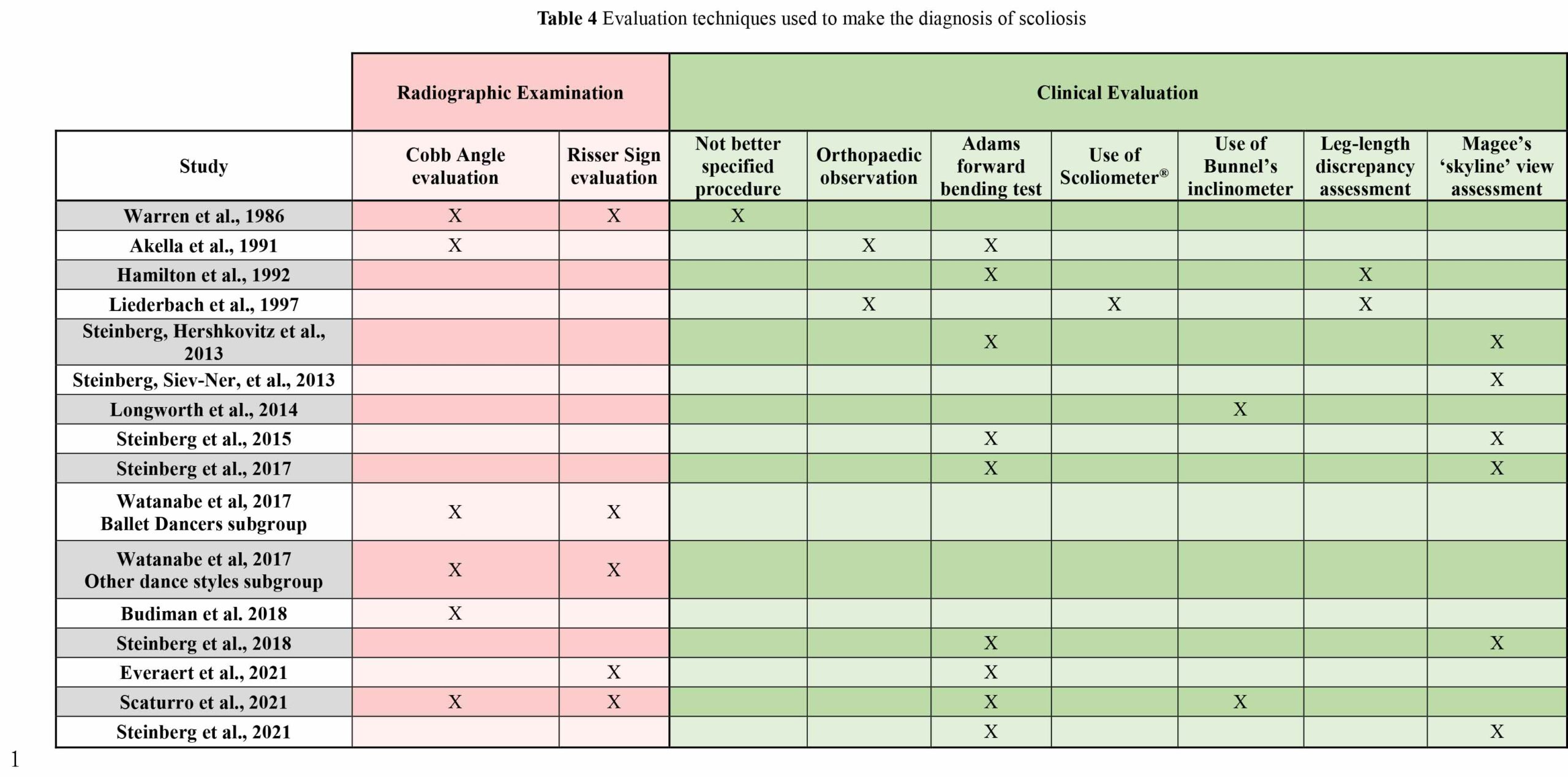
    The prevalence of IS in dancers, regardless of the level of training or age, has been found to be at least triple that of general population. The reasons for this discrepancy remain unclear, but it is known that early diagnosis and treatment can help manage this condition, by influencing the scoliotic curve progression and reducing the likelihood of surgery and complications. In the context of dance medicine, it is still common to diagnose IS purely clinically, mainly using the Adam forward bending test, sometimes with the additional use of a scoliometer to assess the angle of trunk rotation.
    Only X-rays should be used to diagnose IS, but we believe that the use of a screening tool for dancers, with standardised testing procedures, should be encouraged; to make referrals, improve their health, and provide research tools to better understand the problem, with the aim of developing dance-specific preventative training and treatments. identified associated factors may help to recognise young dancers at risk of developing the condition.

    REFERENCES

    Newman M, Hannink E, Barker KL. Associations Between Physical Activity and Adolescent Idiopathic Scoliosis: A Systematic Review and Meta-analysis. Archives of Physical Medicine and Rehabilitation. 2023;doi:https://dx.doi.org/10.1016/j.apmr.2023.01.019

    Wong AYL, Chan C, Hiller C, et al. Is Scoliosis Associated with Dance Injury in Young Recreational Dancers? A Large-Scale Cross-Sectional Epidemiological Study. Journal of dance medicine & science : official publication of the International Association for Dance Medicine & Science. 2022;26(1):41-49. doi:https://dx.doi.org/10.12678/1089-313X.031522f

    Negrini A, Donzelli S, Vanossi M, Poggio M, Cordani C, Zaina F, et al. Sports participation reduces the progression of idiopathic scoliosis and the need for bracing. An observational study of 511 adolescents with Risser 0-2 maturation stage. European journal of physical and rehabilitation medicine. 2023 Apr;59(2):222-7.

    Mousavi L, Seidi F, Minoonejad H, Nikouei F. Prevalence of idiopathic scoliosis in athletes: a systematic review and meta-analysis. BMJ Open Quality. 2022;11(3):001312. doi:https://dx.doi.org/10.1136/bmjoq-2022-001850
  • THE UNMET NEEDS OF CANCER SURVIVORS IN THE AUSL IRCCS REGGIO EMILIA: A QUALITATIVE STUDY

    THE UNMET NEEDS OF CANCER SURVIVORS IN THE AUSL IRCCS REGGIO EMILIA: A QUALITATIVE STUDY

    THE UNMET NEEDS OF CANCER SURVIVORS IN THE AUSL IRCCS REGGIO EMILIA: A QUALITATIVE STUDY

    THE UNMET NEEDS OF CANCER SURVIVORS IN THE AUSL IRCCS REGGIO EMILIA: A QUALITATIVE STUDY

    Autori

    Angela Contri (Clinical and Experimental Medicine Program, University of Modena and Reggio Emilia, Italy)

    Luca Ghirotto (Psycho-Oncology Unit, Azienda USL – IRCCS Reggio Emilia, Italy)

    Stefania Costi (Physical Medicine and Rehabilitation Unit, Azienda USL– IRCCS Reggio Emilia, Italy; Department of Surgical, Medical, Dental and Morphological Sciences Related to Transplant, Oncology and Regenerative Medicine, University of Modena and Reggio Emilia, Modena, Italy)

    Introduction

    The growing number of cancer survivors worldwide highlights the importance of providing services that address their specific unmet needs. Individuals are identified as ‘cancer survivors’ (CS) from the moment of diagnosis throughout their lifetime.

    CS face a range of physical, psychological, informational and practical challenges that often result in unmet needs that go unrecognised and unaddressed.

    Understanding and measuring the unmet needs of CS is critical to identifying gaps in their care experience and providing opportunities for patient-centred care. Unmet needs may be closely linked to contextual factors such as socio-economic and cultural factors. Therefore, this issue and the provision of patient-centred services should be explored in the context of application.

    The aim of this qualitative study is to explore the unmet needs perceived by CSs in our context (AUSL-IRCCS Reggio Emilia, Italy), in order to identify areas for redesign and improvement of services aimed at patient outcomes.

    Methods

    A cross-sectional, qualitative study was conducted from April 2023 to March 2024 through focus groups and individual interviews, as part of a sequential mixed-methods design.

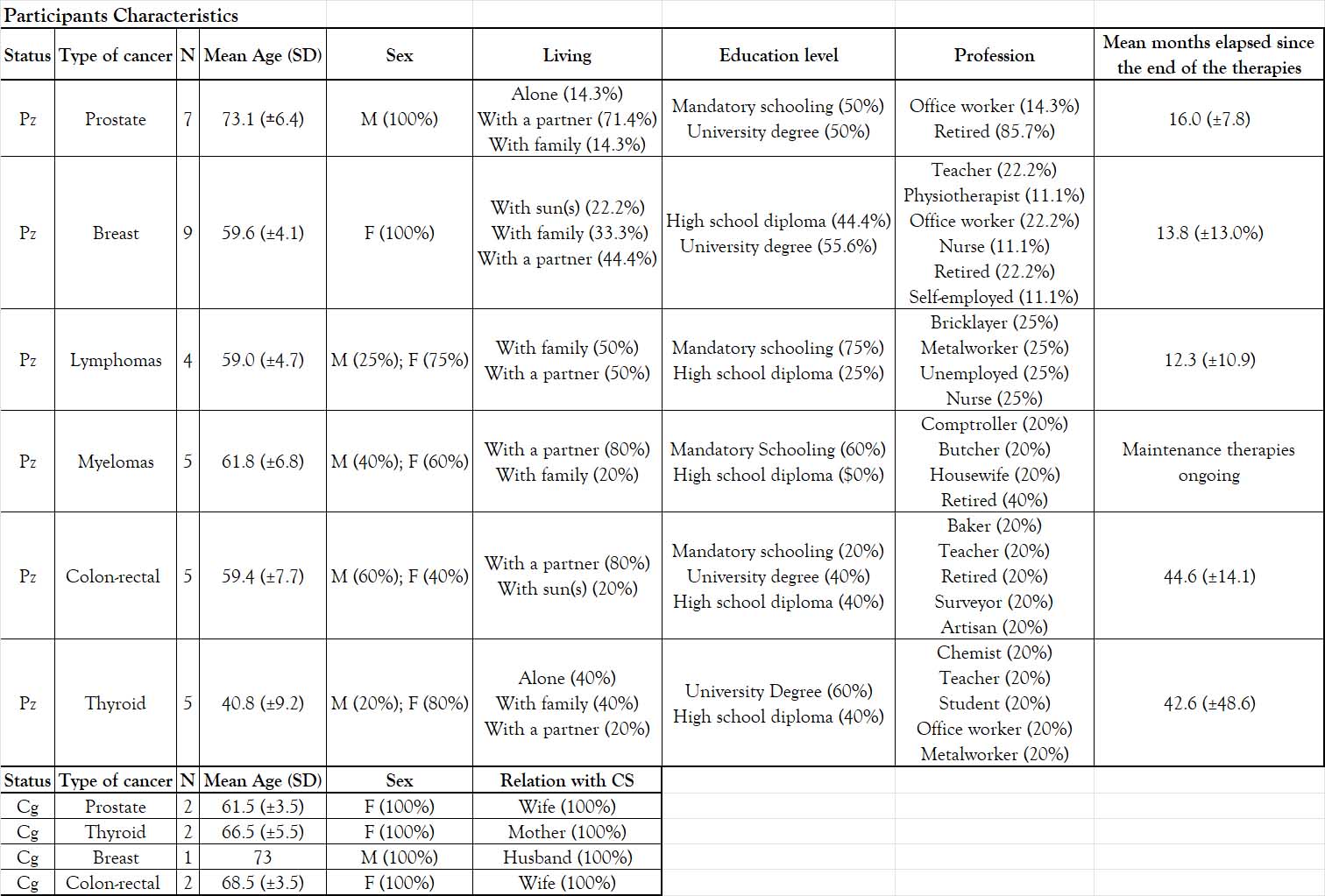
    Patients were invited to participate if were ≥18 years of age, had a diagnosis of cancer (not skin-related) with a 5-year survival of at least 65%, and had completed the acute phase of treatment at the Reggio Emilia Oncology Centre.

    Caregivers were invited to participate if identified as caregivers by the contacted patients.

    Caregivers with oncological disease in active treatment were excluded.

    Thematic framework analysis was employed to examine the perspectives of patients and caregivers on the unmet needs of CSs. An inductive framework guided the processing of data coming from the pre-interview material, while a deductive one guided the analysis of data gathered during interviews and focus groups.

    The protocol of this study was registered on ClinicalTrials.gov (ID NCT06236373).

    Results

    We collected data from 42 participants, comprising 35 patients and 7 caregivers.

    The top three needs in terms of perceived frequency resulted to be: managing the sexual sphere, managing drugs and therapies side effects, and realising one’s spiritual sphere. When CSs were asked about the importance they attributed to those needs, regardless of whether they experienced them or not, the order of importance was completely disrupted from the frequency-based one. The top three in the importance-based order were: managing lack of memory and/or concentration, managing aspects of movement and exercise, and managing drugs and therapies side effects.

    Four primary themes were identified, encompassing 16 sub-themes.

    The main themes were: ‘sense of dignity and respect’, ‘desire for normality’, ‘sense of control over one’s life’, and ‘sense of existential frailty’. These overarching themes encapsulate the underlying significance of the unmet needs articulated by the participants.

    Discussion and Conclusion

    This research has enabled us to identify which unmet needs are perceived by our patients to be the most common and the most urgent.

    Living as a CS entails integrating the experience of illness into one’s life narrative and cultivating a fulfilling life despite illness. This journey involves overcoming and adapting to the challenges of the illness, managing its impact on the mind and body, and ultimately empowering CS to thrive and flourish.

    Analysis of this data will help identify patterns and needs across all cancer patients, enabling organisations to prioritise, and thus address, the most pressing ones.

    It is essential for the healthcare system to foster a culture of continuous improvement.  By understanding and addressing the unmet needs of cancer patients, healthcare services can implement a patient-centred approach that not only improves patient satisfaction, but also contributes to the overall well-being of all individuals.

    REFERENCES

    Gale NK, Heath G, Cameron E, Rashid S, Redwood S. Using the framework method for the analysis of qualitative data in multi-disciplinary health research. BMC medical research methodology. 2013;13:117-117.

    Xiao J, Ng MSN, Yan T, Chow KM, Chan CWH. How patients with cancer experience dignity: An integrative review. Psychooncology. 2021;30:1220-1231.

    Tong A, Sainsbury P, Craig J. Consolidated criteria for reporting qualitative research (COREQ): a 32-item checklist for interviews and focus groups. Int J Qual Health Care. 2007;19:349-357.

    Fitch MI, Lockwood G, Nicoll I. Physical, emotional, and practical concerns, help-seeking and unmet needs of rural and urban dwelling adult cancer survivors. European Journal of Oncology Nursing. 2021;53:101976.

    MacDonald C, Theurer JA, Doyle PC. “Cured” but not “healed”: The application of principles of palliative care to cancer survivorship. Social Science & Medicine. 2021;275:113802.

  • BALANCE ASSESSMENT IN DANCE AND ITS CONNECTION WITH INJURY REDUCTION

    BALANCE ASSESSMENT IN DANCE AND ITS CONNECTION WITH INJURY REDUCTION

    BALANCE ASSESSMENT IN DANCE AND ITS CONNECTION WITH INJURY REDUCTION

    BALANCE ASSESSMENT IN DANCE AND ITS CONNECTION WITH INJURY REDUCTION

    Autori

    Angela Contri (Clinical and Experimental Medicine Program, University of Modena and Reggio Emilia, Italy)

    Valentina Erta

    Erasmo Galeno

    Introduction

    Dance demands high levels of balance ability, which is a fundamental aspect of dancers’ training and professional career. Therefore, balance assessment is often included in preseason screenings for dancers.

    The purpose of this Systematic Review is to examine the literature in Dance Medicine with the aim of identifying the methods used for assessing dancers’ balance and to analyze whether they can effectively identify increased susceptibility to injury.

    Methods

    A systematic literature search was conducted using the following databases: Medline, Embase, CINAHL Plus, PEDro, Web of Science, Scopus, and the Cochrane Central Register of Controlled Trials, Medrixiv, Biorxiv, and Clinical Trials.

    We included studies involving professional or pre-professional dancers aged ≤35 years who underwent clinical or instrumental assessment of static and/or dynamic balance, with at least one measurable outcome related to musculoskeletal injuries.

    There were no restrictions on study type.

    Two independent authors performed study selection, assessed the level of evidence and extracted the data.

    Results

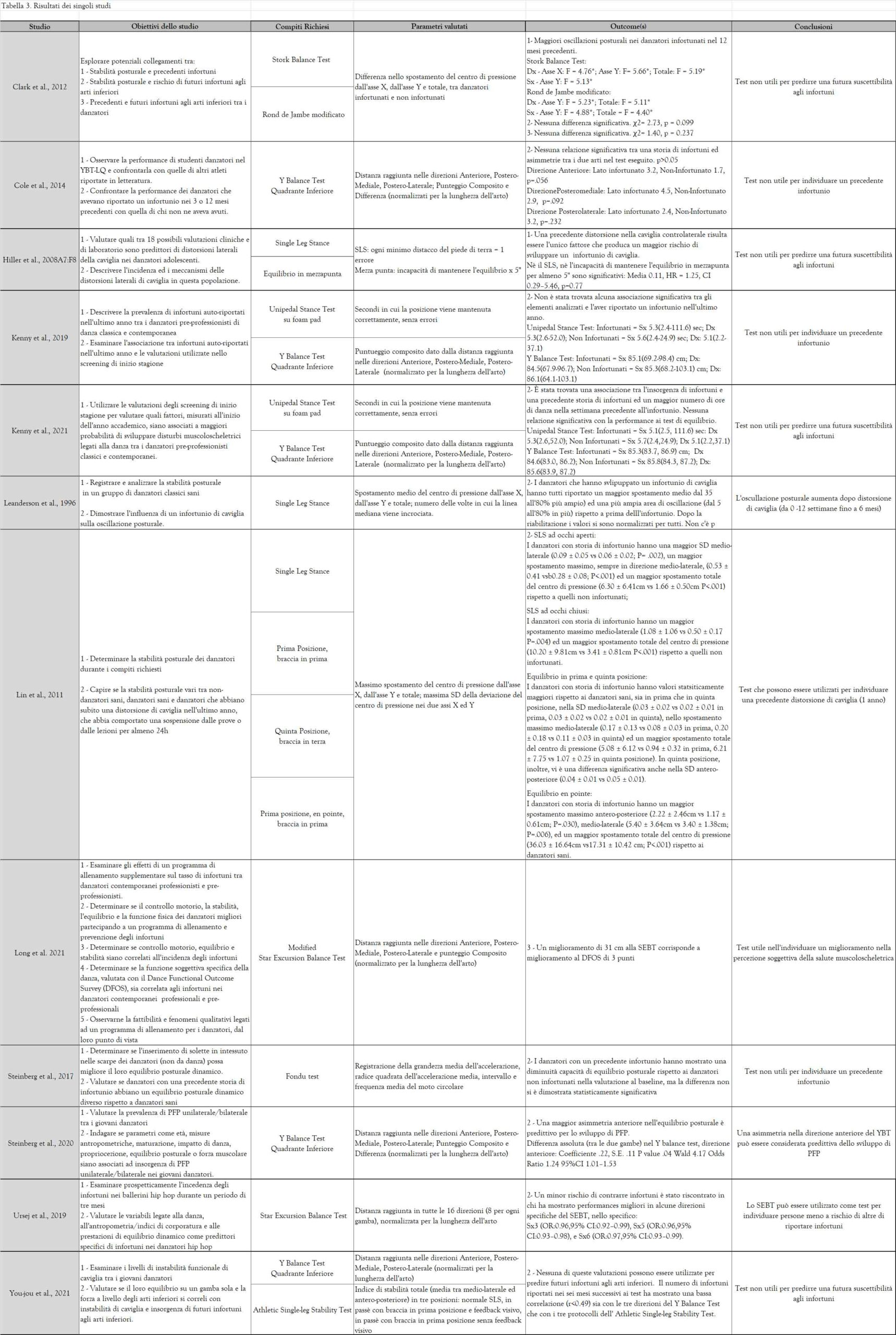
    Twelve studies were included, involving a total of 970 participants.

    Overall, 12 different methods of balance assessment were used, including 5 with specific instrumentation and 7 using simple clinical tests.

    The most frequently used assessment method was the Y balance score, used by 6 studies.

    Only 3 studies employed clinical tests specifically designed for dancers: the “modified rond de jambe,” balance maintained for at least 15 seconds in three specific dance positions (first, fifth, and first en pointe), and the fondu test.

    Only 4 studies demonstrated a relationship between the assessment tools and injuries: 2 were able to identify previous lower extremity problems (the Single Leg Stance and the battery of static balances maintained in the three specific dance positions), and two were able to identify future injury susceptibility (the Star Excursion Balance Test and the Y Balance Test).

    Discussion and Conclusion

    The balance assessment methods in the literature revealed extensive diversity in performance and interpretation, hindering evidence synthesis and/or clinical application. Furthermore, the functional demands specific to dancers require more specific tests, but further studies are necessary to properly interpret the results of these assessments and successfully incorporate them into injury prevention and surveillance programs.

    REFERENCES

    Armstrong, R.; Relph, N. Screening Tools as a Predictor of Injury in Dance: Systematic Literature Review and Meta-analysis. Sports Med Open 2018, 4, 33, doi:10.1186/s40798-018-0146-z.

    Batson, G. Validating a Dance-specific Screening Test for Balance: Preliminary Results from Multisite Testing. Medical Problems of Performing Artists 2010, 25, 110-115.

    McBride, C.; Bronner, S. Injury characteristics in professional modern dancers: A 15-year analysis of work-related injury rates and patterns. Journal of sports sciences 2022, 40, 821-837, doi:10.1080/02640414.2021.2021030.

    Clarke, F.; Koutedakis, Y.; Wilson, M.; Wyon, M. Balance in Theatrical Dance Performance: A Systematic Review. Medical problems of performing artists 2018, 33, 275-285, doi:10.21091/mppa.2018.4041.

  • CANCER SURVIVORS: THE CHALLENGE OF CHRONICITY IN PHYSIOTHERAPY AND THE NEW FRONTIER OF ASSISTED SELF-CARE

    CANCER SURVIVORS: THE CHALLENGE OF CHRONICITY IN PHYSIOTHERAPY AND THE NEW FRONTIER OF ASSISTED SELF-CARE

    CANCER SURVIVORS: THE CHALLENGE OF CHRONICITY IN PHYSIOTHERAPY AND THE NEW FRONTIER OF ASSISTED SELF-CARE

    Autori

    Angela Contri (Clinical and Experimental Medicine Program – University of Modena and Reggio Emilia)

    Isabella Campanini (LAM-Motion Analysis Laboratory, S. Sebastiano Hospital, Neuromotor and Rehabilitation Department, Azienda USL-IRCCS di Reggio Emilia, Correggio, Italy)

    Barbara Bressi (Research and EBP Unit, Health Professions Department, Azienda Unità Sanitaria Locale-IRCCS di Reggio Emilia, Reggio Emilia, Italy)

    Stefania Costi (Research and EBP Unit, Health Professions Department, Azienda Unità Sanitaria Locale-IRCCS di Reggio Emilia, Reggio Emilia, Italy; Department of Surgical, Medical, Dental and Morphological Sciences Related to Transplant, Oncology and Regenerative Medicine, University of Modena and Reggio Emilia, Modena , Italy

    Background and aims

    Cancer survivorship care is an emerging field in oncology, necessitating evidence-based interventions to address the complex, long-term needs of cancer survivors (CSs). Survivorship Care Plans (SCPs) are crucial, providing a roadmap for ongoing care that includes self-management strategies and professional follow-up. This thesis contributes to the development of comprehensive, context-specific SCPs, based on CSs’ needs. A mixed-methods approach was employed to define the domains of unmet needs for CSs and to identify reliable assessment tools for those needs in the context of the study.

    Methods

    This study employed a four-phase design:

    1. Systematic overview of reviews and psychometric evaluation of Patient-Reported Outcome Measures (PROMs) for assessing CSs’ unmet needs.

    2. Linkage of identified PROMs to the International Classification of Functioning, Disability and Health (ICF) framework.

    3. Qualitative exploration of CSs’ experiences through focus groups and semi-structured interviews.

    4. Evaluation of PROMs completeness against expressed unmet needs of CSs using thematic analysis and content validity assessment.

    Results

    The overview identified 14 PROMs meeting inclusion criteria, with heterogeneous psychometric properties. Significant variability was observed across PROMs in ICF health domain coverage, revealing their own specificity in capturing different nuances of apparently similar problems. Qualitative analysis revealed four key themes related to unmet needs among CSs: dignity and respect, the desire for normality, control over one’s life, and existential frailty, underscoring the necessity for tailored, patient-centred interventions. Integration of quantitative and qualitative findings resulted in the identification of 35 ICF core categories of unmet needs. These categories demonstrated significant interconnectedness, with particular emphasis on domains of physical activity, emotional well-being, and healthcare navigation. The Cancer Rehabilitation Evaluation System (CARES) was identified as the most suitable PROM, covering 94.3% of these categories. The developed methodology for PROM selection emphasises context-sensitivity, considering treatment history, individual characteristics and preferences, ensuring chosen PROMs are both psychometrically robust and relevant to specific CS populations.

    Conclusion

    This thesis provides a methodologically rigorous framework for integrating evidence-based PROMs with patient-centred insights, offering practical guidance for healthcare systems to develop a comprehensive SCP that can improve CS outcomes. Limitations include the focus on the Italian healthcare context, potentially limiting generalisability. Future research should focus on testing and implementing a context-specific SCP and assessing its long-term effectiveness in improving well-being of CSs. This work contributes to cancer survivorship by offering a structured approach to assessing and addressing unmet needs, emphasising the importance of targeted, multidisciplinary, and individualised care in improving long-term outcomes for CSs.

    REFERENCES

    Mokkink LB, Prinsen CAC, Patrick DL, et al. COSMIN methodology for systematic reviews of Patient‐Reported Outcome Measures (PROMs) user manual. Amsterdam, the Netherlands: 2018.

    Contri, A.; Paltrinieri, S.; Torreggiani, M.; Chiara Bassi, M.; Mazzini, E.; Guberti, M.; Campanini, I.; Ghirotto, L.; Fugazzaro, S.; Costi, S. Patient-Reported Outcome Measure to Implement Routine Assessment of Cancer Survivors’ Unmet Needs: An Overview of Reviews and COSMIN Analysis. Cancer Treatment Reviews 2023, 102622, https://doi.org/10.1016/j.ctrv.2023.102622

    Schiavi M, Costi S, Contri A, et al. Identifying unmet needs in cancer survivorship by linking patient-reported outcome measures to the International Classification of Functioning, Disability and Health. Support Care Cancer. 2024;32:835, 1007/s00520-024-09019-8

    Vaz-Luis I, Masiero M, Cavaletti G, et al. ESMO Expert Consensus Statements on Cancer Survivorship: promoting high-quality survivorship care and research in Europe. Annals of Oncology. 2022;33:1119-1133.

  • Patient-Reported Outcome Measures per implementare la valutazione di routine dei bisogni insoddisfatti dei cancer survivors: una overview di reviews ed analisi COSMIN

    Patient-Reported Outcome Measures to implement routine assessment of cancer survivors’ unmet needs: an overview of reviews and COSMIN analysis

    Introduction

    The number of cancer survivors (CSs) is increasing worldwide and is expected to reach 75 million by 2030 thanks to advances in treatments, screening techniques, and the ageing of the population.

    Cancer care has traditionally focussed on diagnosis and life-saving treatments. However, research has shown that focusing on helping CSs cope with life beyond their acute treatment, i.e. cancer survivorship care, is just as important.

    CSs experience a range of physical, psychosocial, spiritual, informational, and practical issues that may result in unmet needs, which are often neither identified nor addressed. Providing services relevant to their specific, unmet needs is crucial.

    Patient-reported outcome measures (PROMs) are standardized, validated tools that give value to the information that comes from patients. There are currently various PROMs whose aim is to identify the unmet needs of CSs. Still, limited guidance supports choosing the most appropriate ones for this purpose.

    Methods

    An Overview of Reviews was conducted to analyse systematic reviews (SRs) focusing on the psychometric properties of PROMs created to identify the unmet needs of adult CSs suffering from non-cutaneous cancer with a 5-year survival of ≥ 65% and an incidence of ≥ 5%.

    A literature search was performed on the MEDLINE, EMBASE, Cochrane Database of Systematic Reviews, and CINAHL databases to identify SRs published between 2012 and January 2023.

    The quality assessment of the included SRs was conducted by two independent reviewers using the AMSTAR-2 checklist and that of the primary studies using the COSMIN Risk of Bias checklist; the psychometric properties of all identified PROMs were evaluated according to the COSMIN updated quality criteria for good measurement properties.

    These findings were then summarised, and their quality graded by means of the modified GRADE approach for grading the quality of the evidence in SRs of PROMs.

    Results

    Two SRs, one of “moderate” and one of “low” quality according to the AMSTAR-2, were included. They covered 14 PROMs targeting our population of interest, described in 19 different articles, and tested on 19151 patients.

    The methodological quality used to develop all the PROMs was rated as “inadequate”, primarily for not calculating measurement error (93% of the PROMs), since COSMIN Risk of Bias score applies the ‘worst score count’ rule.

    Primary studies were inconsistent in reporting the psychometric properties of PROMs. However, those that did were judged positively, resulting “insufficient” in only 3% of the cases.

    According to the GRADE approach, the level of evidence ranged from “very low” to “low”, with better grading for the Cancer Rehabilitation Evaluation System, followed by its short form (CARES-SF), and the Needs Evaluation Questionnaire.

    Discussion and Conclusion

    To exhaustively clarify the quality of psychometric properties of these PROMs, further studies are needed to investigate their incomplete aspects. However, the use of these PROMs in clinical practice and research is supported for those psychometric properties for which we have reliable reporting.

    However, we recognize that the selection of the most appropriate PROMs to assess a domain of interest should be informed by the psychometric properties but should go beyond statistics, considering above all the context in which they will be applied.

    Context refers not only to the pathology stage and environmental factors, but also to the geographical location, age, language, educational and socioeconomic level, and cultural background of the target population. The present descriptions of the contexts in which these tools have been developed and validated provides additional support in selecting specific PROMs based on content comparison.

    REFERENCES

    Rimmer B, Crowe L, Todd A, Sharp L. Assessing unmet needs in advanced cancer patients: a systematic review of the development, content, and quality of available instruments. J Cancer Surviv. 2021.

    Tian L, Cao X, Feng X. Evaluation of psychometric properties of needs assessment tools in cancer patients: A systematic literature review. PLoS ONE. 2019;14.

    Prinsen CAC, Mokkink LB, Bouter LM, Alonso J, Patrick DL, de Vet HCW, et al. COSMIN guideline for systematic reviews of patient-reported outcome measures. Quality of life research. 2018;27:1147-57.

    Cieza A, Fayed N, Bickenbach J, Prodinger B. Refinements of the ICF Linking Rules to strengthen their potential for establishing comparability of health information. Disabil Rehabil. 2019;41:574-83.

    Di Maio M, Basch E, Denis F, Fallowfield LJ, Ganz PA, Howell D, et al. The role of patient-reported outcome measures in the continuum of cancer clinical care: ESMO Clinical Practice Guideline. Ann Oncol. 2022;33:878-92.

  • Mappatura dei PROMs utilizzati per identificare i bisogni insoddisfatti dei sopravvissuti al cancro in base alla classificazione internazionale del funzionamento, della disabilità e della salute (ICF)

    Mapping Patient-Reported Outcome Measures Used to Identify the Unmet Needs of Cancer Survivors onto the International Classification of Functioning, Disability and Health (ICF)

    Introduction

    As the number of cancer survivors (CSs) is increasing worldwide, providing services relevant to their specific, unmet needs is essential. There are currently various patient-reported outcome measures (PROMs) whose aim is to identify the unmet needs of CSs. Still, limited guidance supports healthcare providers in choosing the most appropriate PROMs for this purpose.

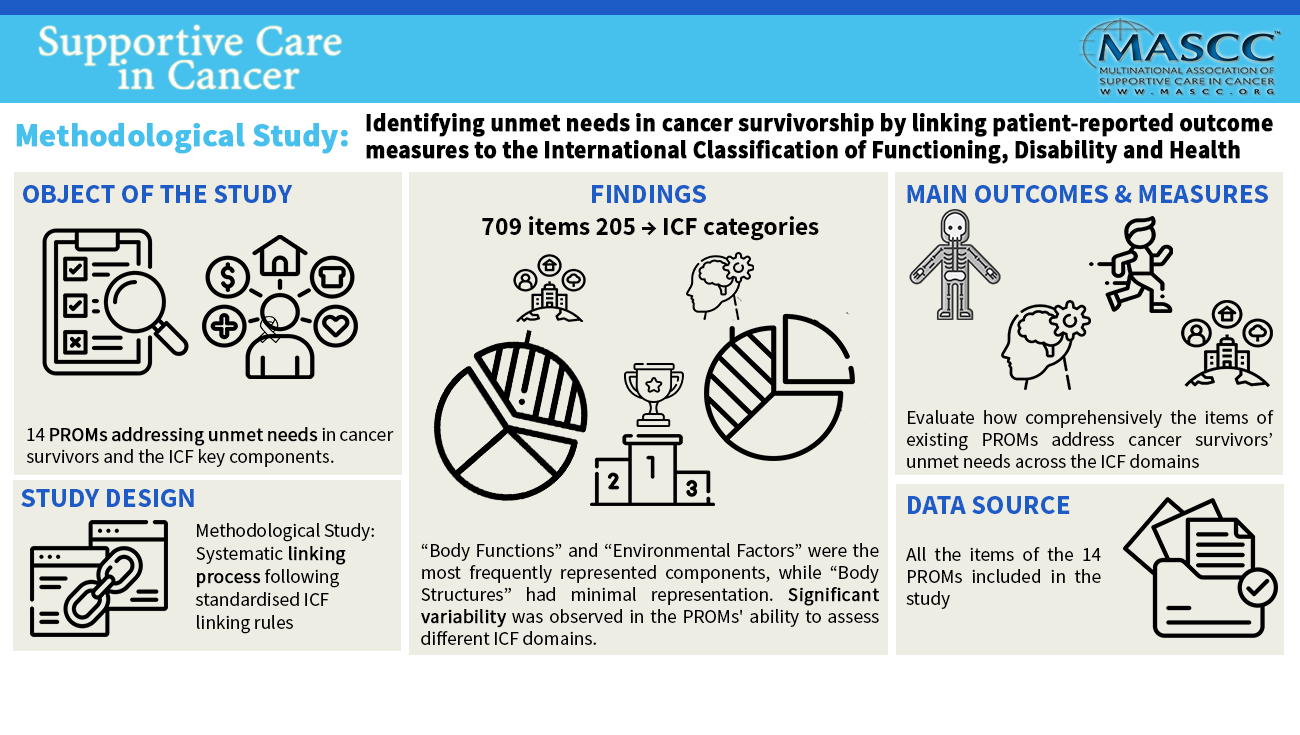
    An International Classification of Functioning, Disability, and Health (ICF)–based analysis of existing PROMs may facilitate reliable identification of the areas of impact on health encompassed by them, providing a basis for the selection of a specific PROM based on content comparison.

    The objective of this study was to assess the content and evaluation constructs of the PROMs used to identify the unmet needs of adult CSs suffering from non-cutaneous cancers with a 5-year survival of ≥ 65% and an incidence of ≥ 5%.

    Methods

    A mapping exercise was performed to evaluate the degree to which the PROMs used to identify the unmet needs of adult CSs covered the spectrum of health-related states, outcomes and determinants described by the WHO ICF.

    The materials for the analysis were 14 PROMs whose aim is to identify the unmet needs of our population of interest.

    Each item of all the PROMs was extracted and linked, word by word, to the ICF by two independent reviewers using the Cieza et al. updated procedure of linking rules. Where disagreements occurred, these were resolved through discussion and consultation with a third reviewer. The ICF was used to determine to which chapter of its hierarchical structure each item of the analysed PROMs could be categorized to represent body structures, body functions, activity and participation, or environmental factors.

    The ICF-linked PROMs were then further screened to obtain an overall framework on how comprehensively they covered ICF categories.

    Results

    The study is ongoing. Mapping has been completed, and the data analysis is under way.

    We expect to have the principal results ready to be presented at the AIFI International Scientific Congress “Tailored Physiotherapy. Una strategia per il futuro” in November 2023.

    Preliminary results show that, despite a wide range of variability, each of the 14 PROMs covered the ICF components of body functions, activity and participation, and environmental factors in different proportions, thus revealing their own specificity in capturing different nuances of apparently similar problems.

    Discussion and Conclusion

    The ICF, created by the World Health Organization, provides an internationally recognized framework, definitions and coding language to describe the impact of health conditions on body functioning, activities limitation and restrictions in participation.

    The linking rules enhance the comparability of PROMs by providing a comprehensive overview of the content of the same, the context in which the measurements take place, the perspectives adopted and the types of response options.

    Linking the PROM domains to ICF components enables the adoption of a universal language. This facilitates reliable identification of the areas of impact on health encompassed by these PROMs, revealing their own specificity in capturing different nuances of apparently similar problems and providing a basis for the selection of the most suitable based on content comparison in clinical practice and research.

    REFERENCES

    World Health Organization. Towards a common language for functioning, disability, and health: ICF. The international classification of functioning, disability and health. 2002.

    Cieza A, Geyh S, Chatterji S, Kostanjsek N, Ustün B, Stucki G. ICF linking rules: an update based on lessons learned. J Rehabil Med. 2005;37:212-8.

    Cieza A, Fayed N, Bickenbach J, Prodinger B. Refinements of the ICF Linking Rules to strengthen their potential for establishing comparability of health information. Disabil Rehabil. 2019;41:574-83.

    Cieza A, Brockow T, Ewert T, Amman E, Kollerits B, Chatterji S, et al. Linking health-status measurements to the international classification of functioning, disability and health. J Rehabil Med. 2002;34:205-10.

    World Health O. International classification of functioning, disability and health : ICF. Geneva: World Health Organization; 2001.