BALANCE ASSESSMENT IN DANCE AND ITS CONNECTION WITH INJURY REDUCTION
BALANCE ASSESSMENT IN DANCE AND ITS CONNECTION WITH INJURY REDUCTION
Autori
Angela Contri (Clinical and Experimental Medicine Program, University of Modena and Reggio Emilia, Italy)
Valentina Erta
Erasmo Galeno
Introduction
Dance demands high levels of balance ability, which is a fundamental aspect of dancers’ training and professional career. Therefore, balance assessment is often included in preseason screenings for dancers.
The purpose of this Systematic Review is to examine the literature in Dance Medicine with the aim of identifying the methods used for assessing dancers’ balance and to analyze whether they can effectively identify increased susceptibility to injury.
Methods
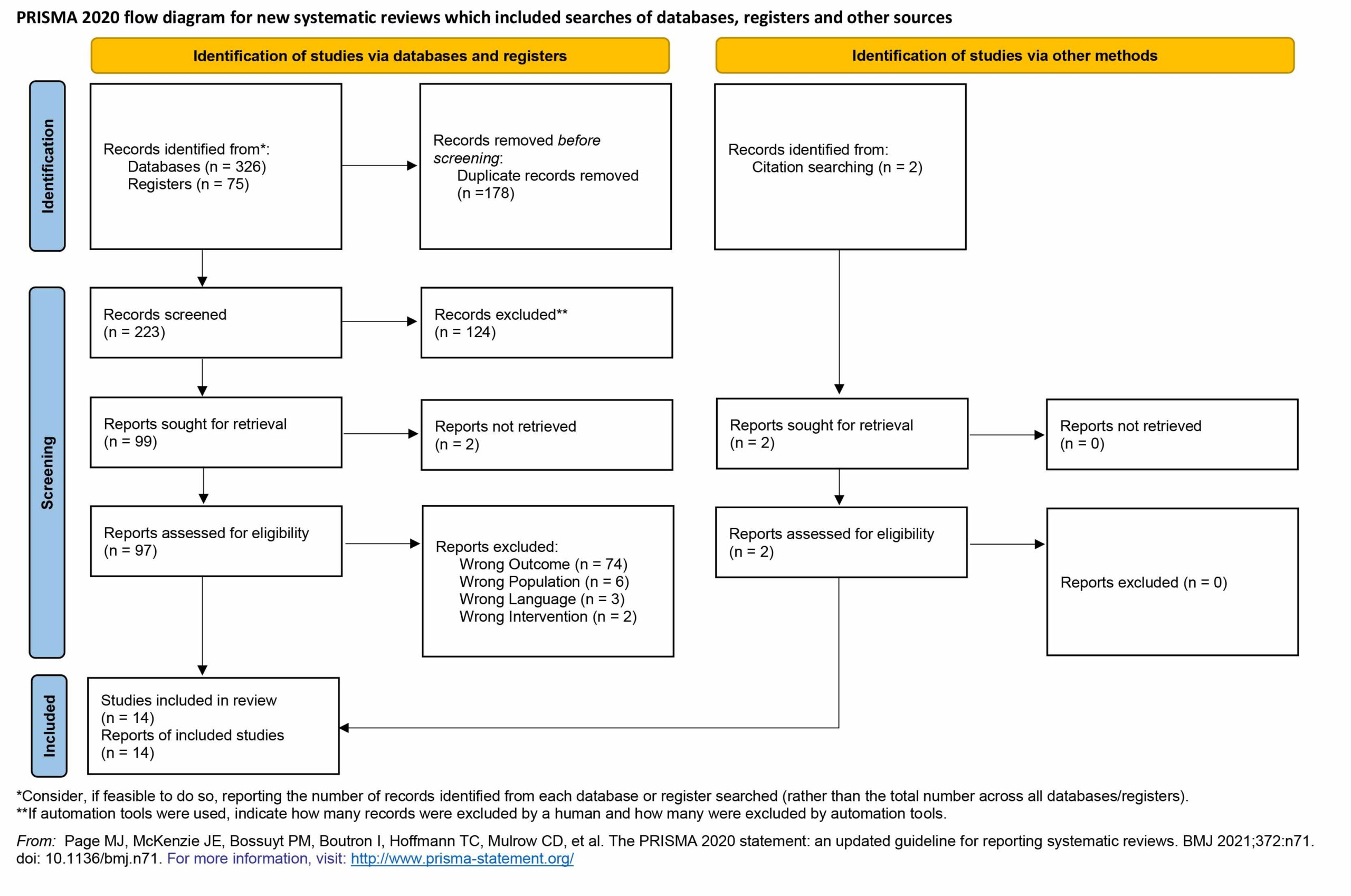
A systematic literature search was conducted using the following databases: Medline, Embase, CINAHL Plus, PEDro, Web of Science, Scopus, and the Cochrane Central Register of Controlled Trials, Medrixiv, Biorxiv, and Clinical Trials.
We included studies involving professional or pre-professional dancers aged ≤35 years who underwent clinical or instrumental assessment of static and/or dynamic balance, with at least one measurable outcome related to musculoskeletal injuries.
There were no restrictions on study type.
Two independent authors performed study selection, assessed the level of evidence and extracted the data.
Results
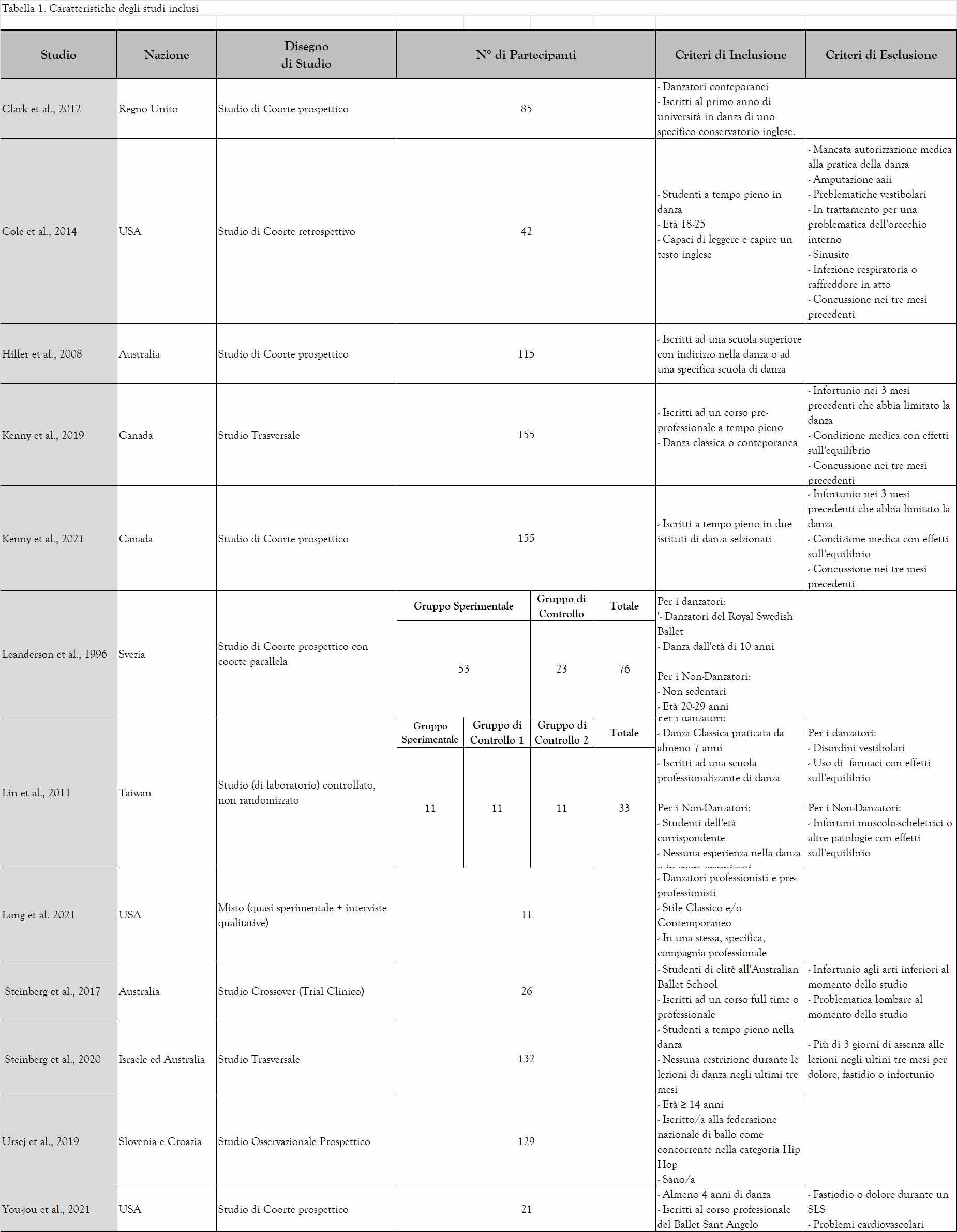
Twelve studies were included, involving a total of 970 participants.
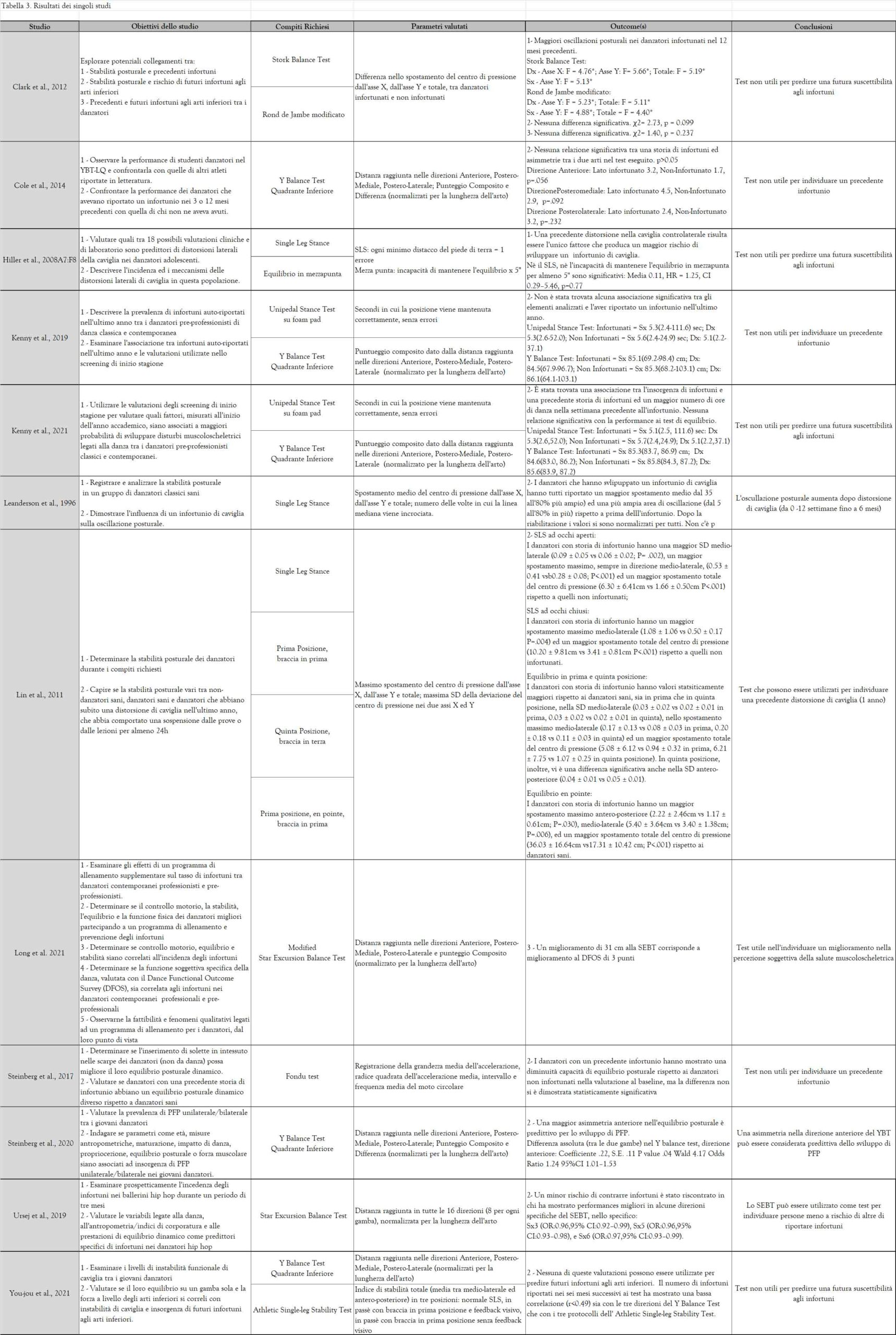
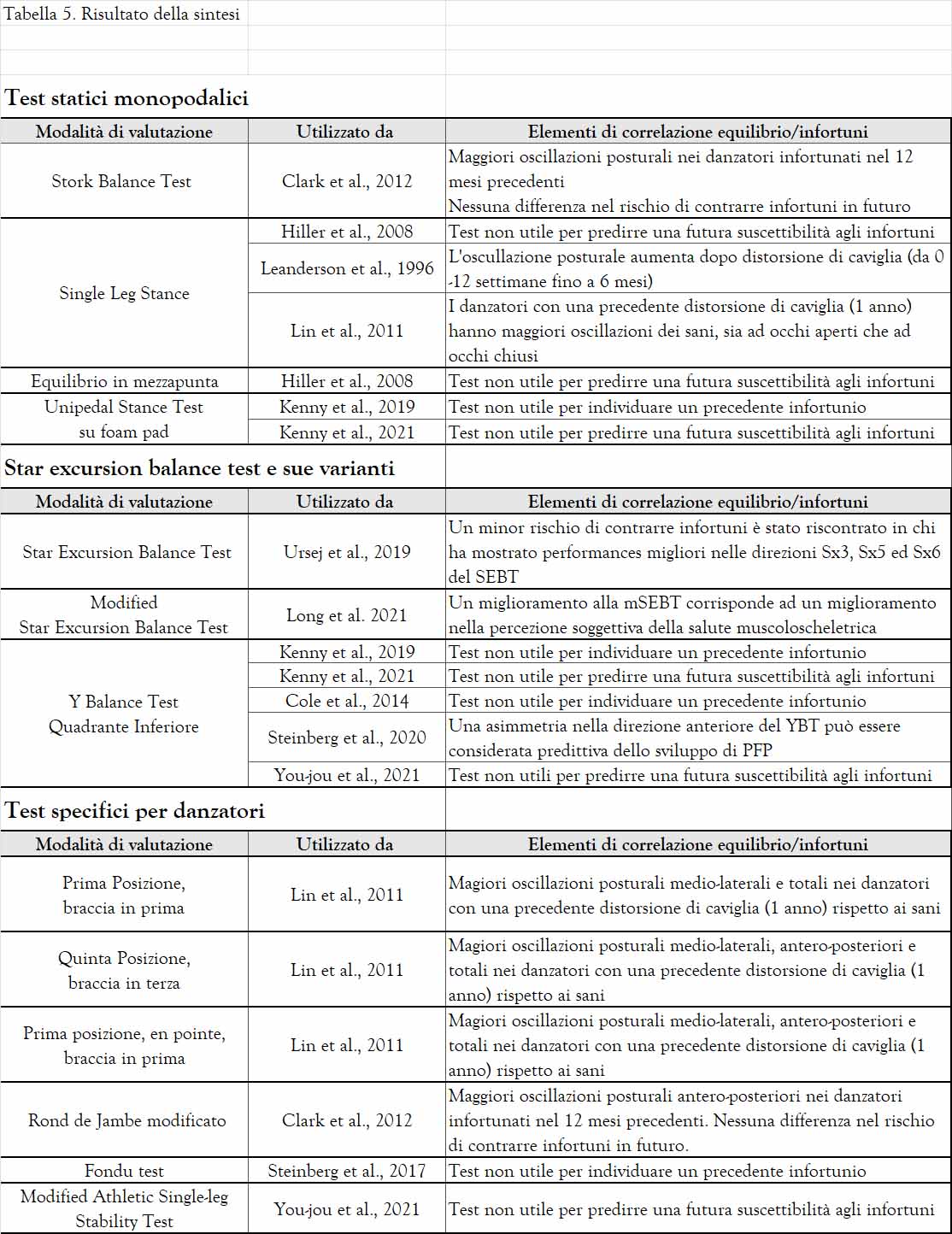
Overall, 12 different methods of balance assessment were used, including 5 with specific instrumentation and 7 using simple clinical tests.
The most frequently used assessment method was the Y balance score, used by 6 studies.
Only 3 studies employed clinical tests specifically designed for dancers: the “modified rond de jambe,” balance maintained for at least 15 seconds in three specific dance positions (first, fifth, and first en pointe), and the fondu test.
Only 4 studies demonstrated a relationship between the assessment tools and injuries: 2 were able to identify previous lower extremity problems (the Single Leg Stance and the battery of static balances maintained in the three specific dance positions), and two were able to identify future injury susceptibility (the Star Excursion Balance Test and the Y Balance Test).
Discussion and Conclusion
The balance assessment methods in the literature revealed extensive diversity in performance and interpretation, hindering evidence synthesis and/or clinical application. Furthermore, the functional demands specific to dancers require more specific tests, but further studies are necessary to properly interpret the results of these assessments and successfully incorporate them into injury prevention and surveillance programs.
REFERENCES
Armstrong, R.; Relph, N. Screening Tools as a Predictor of Injury in Dance: Systematic Literature Review and Meta-analysis. Sports Med Open 2018, 4, 33, doi:10.1186/s40798-018-0146-z.
Batson, G. Validating a Dance-specific Screening Test for Balance: Preliminary Results from Multisite Testing. Medical Problems of Performing Artists 2010, 25, 110-115.
McBride, C.; Bronner, S. Injury characteristics in professional modern dancers: A 15-year analysis of work-related injury rates and patterns. Journal of sports sciences 2022, 40, 821-837, doi:10.1080/02640414.2021.2021030.
Clarke, F.; Koutedakis, Y.; Wilson, M.; Wyon, M. Balance in Theatrical Dance Performance: A Systematic Review. Medical problems of performing artists 2018, 33, 275-285, doi:10.21091/mppa.2018.4041.