Mapping Patient-Reported Outcome Measures Used to Identify the Unmet Needs of Cancer Survivors onto the International Classification of Functioning, Disability and Health (ICF)
Introduction
As the number of cancer survivors (CSs) is increasing worldwide, providing services relevant to their specific, unmet needs is essential. There are currently various patient-reported outcome measures (PROMs) whose aim is to identify the unmet needs of CSs. Still, limited guidance supports healthcare providers in choosing the most appropriate PROMs for this purpose.
An International Classification of Functioning, Disability, and Health (ICF)–based analysis of existing PROMs may facilitate reliable identification of the areas of impact on health encompassed by them, providing a basis for the selection of a specific PROM based on content comparison.
The objective of this study was to assess the content and evaluation constructs of the PROMs used to identify the unmet needs of adult CSs suffering from non-cutaneous cancers with a 5-year survival of ≥ 65% and an incidence of ≥ 5%.
Methods
A mapping exercise was performed to evaluate the degree to which the PROMs used to identify the unmet needs of adult CSs covered the spectrum of health-related states, outcomes and determinants described by the WHO ICF.
The materials for the analysis were 14 PROMs whose aim is to identify the unmet needs of our population of interest.
Each item of all the PROMs was extracted and linked, word by word, to the ICF by two independent reviewers using the Cieza et al. updated procedure of linking rules. Where disagreements occurred, these were resolved through discussion and consultation with a third reviewer. The ICF was used to determine to which chapter of its hierarchical structure each item of the analysed PROMs could be categorized to represent body structures, body functions, activity and participation, or environmental factors.
The ICF-linked PROMs were then further screened to obtain an overall framework on how comprehensively they covered ICF categories.
Results
The study is ongoing. Mapping has been completed, and the data analysis is under way.
We expect to have the principal results ready to be presented at the AIFI International Scientific Congress “Tailored Physiotherapy. Una strategia per il futuro” in November 2023.
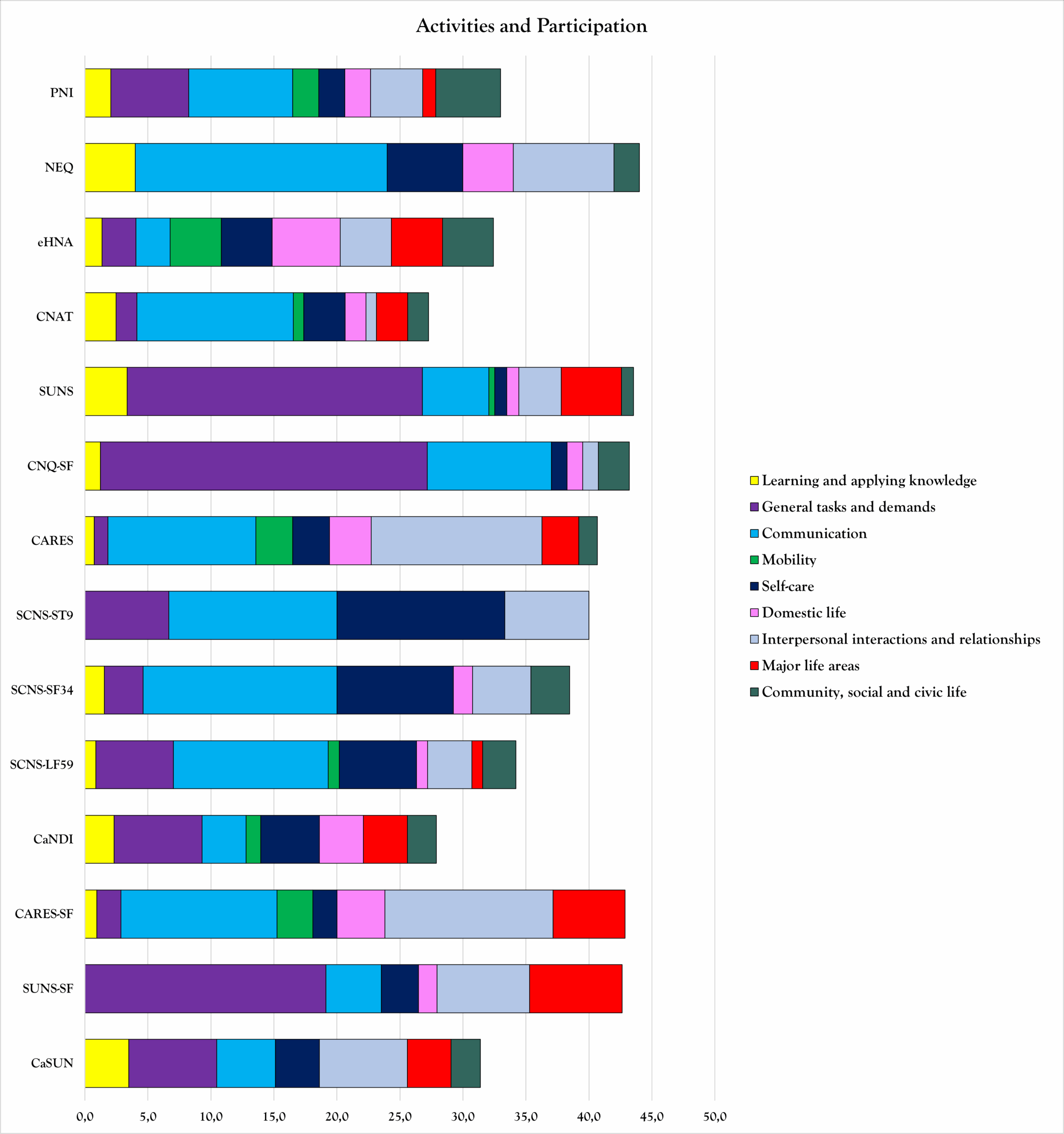
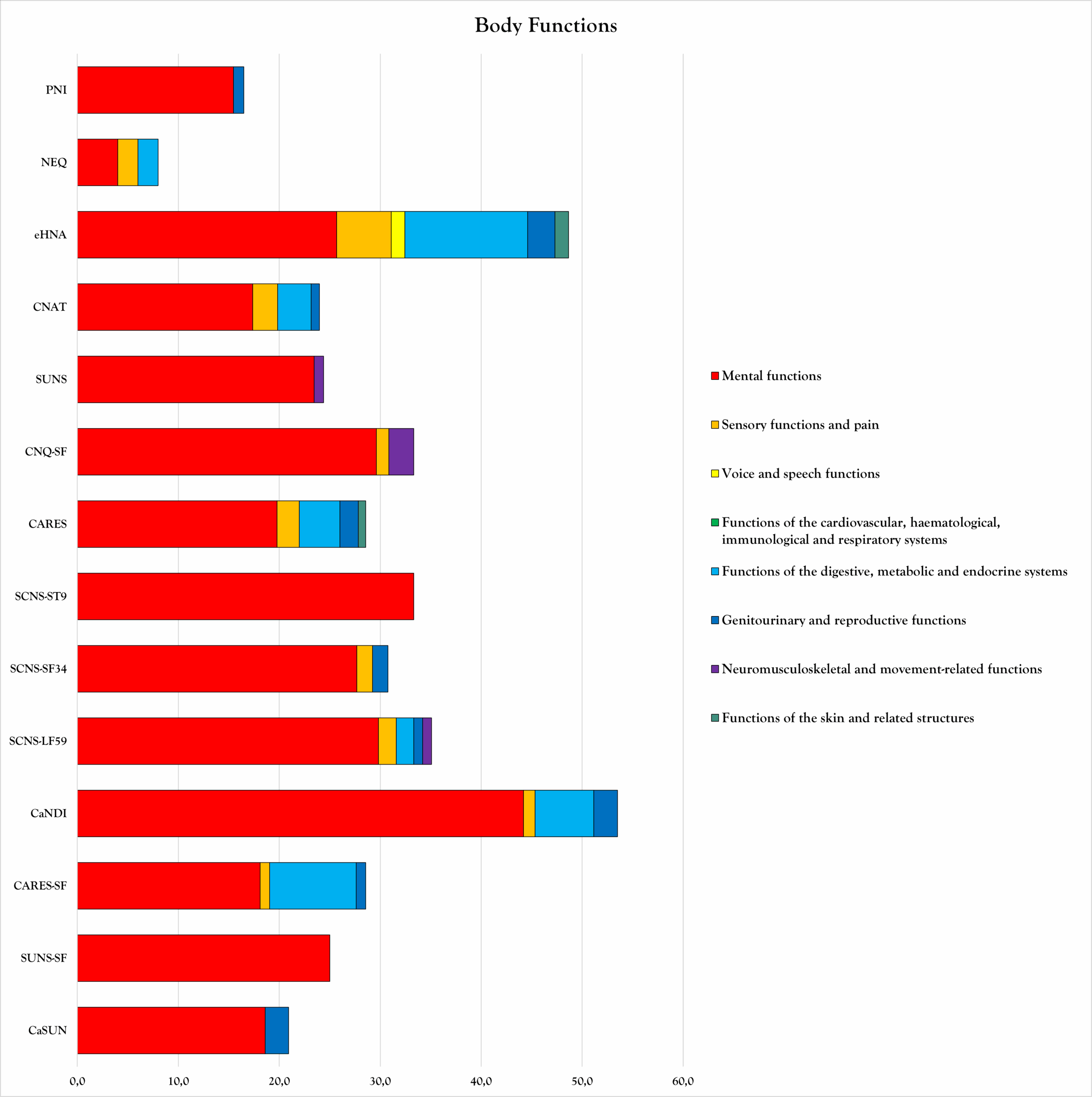
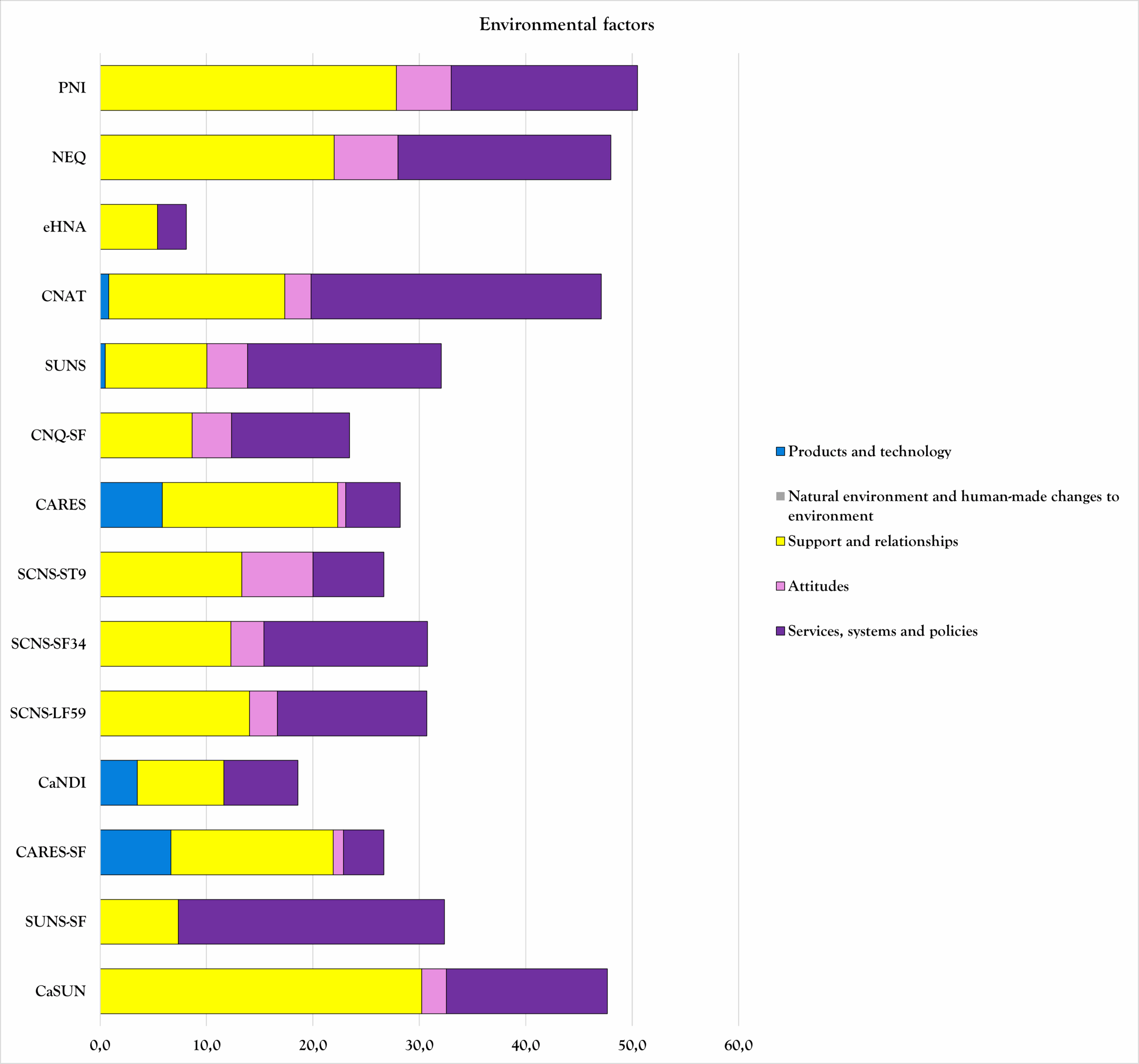
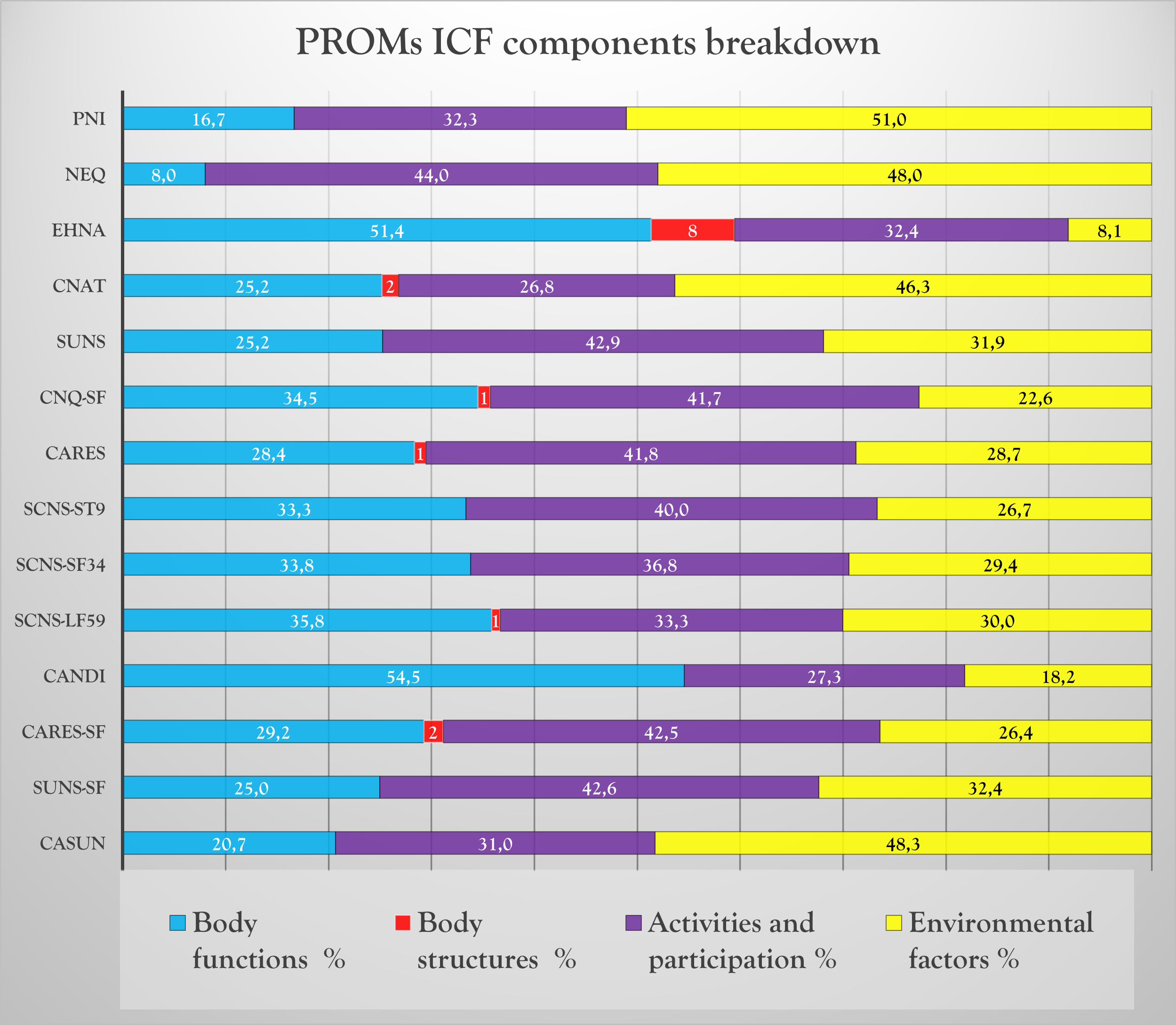
Preliminary results show that, despite a wide range of variability, each of the 14 PROMs covered the ICF components of body functions, activity and participation, and environmental factors in different proportions, thus revealing their own specificity in capturing different nuances of apparently similar problems.
Discussion and Conclusion
The ICF, created by the World Health Organization, provides an internationally recognized framework, definitions and coding language to describe the impact of health conditions on body functioning, activities limitation and restrictions in participation.
The linking rules enhance the comparability of PROMs by providing a comprehensive overview of the content of the same, the context in which the measurements take place, the perspectives adopted and the types of response options.
Linking the PROM domains to ICF components enables the adoption of a universal language. This facilitates reliable identification of the areas of impact on health encompassed by these PROMs, revealing their own specificity in capturing different nuances of apparently similar problems and providing a basis for the selection of the most suitable based on content comparison in clinical practice and research.
REFERENCES
World Health Organization. Towards a common language for functioning, disability, and health: ICF. The international classification of functioning, disability and health. 2002.
Cieza A, Geyh S, Chatterji S, Kostanjsek N, Ustün B, Stucki G. ICF linking rules: an update based on lessons learned. J Rehabil Med. 2005;37:212-8.
Cieza A, Fayed N, Bickenbach J, Prodinger B. Refinements of the ICF Linking Rules to strengthen their potential for establishing comparability of health information. Disabil Rehabil. 2019;41:574-83.
Cieza A, Brockow T, Ewert T, Amman E, Kollerits B, Chatterji S, et al. Linking health-status measurements to the international classification of functioning, disability and health. J Rehabil Med. 2002;34:205-10.
World Health O. International classification of functioning, disability and health : ICF. Geneva: World Health Organization; 2001.