Categoria: Congresso 2024

  • La Psychologically Informed Practice nella gestione del paziente con cervicalgia aspecifica; stato dell’arte e indicazioni per i terapisti manuali

    La Psychologically Informed Practice nella gestione del paziente con cervicalgia aspecifica; stato dell’arte e indicazioni per i terapisti manuali

    Psychologically Informed Practice in the management of patients with non-specific neck pain; state of the art and indications for manual therapists

    Autori

    Cinzia D’Orsi, Private Practitioner, Travedona, Varese,Italia.

    Marta Palma, Private Practitioner, Milano, Italia.

    Luca Falsiroli Maistrello, Department of Neuroscience – Physical Medicine and Rehabilitation, ULSS8, S. Bortolo Hospital. 36100 Vicenza, Italy

    Introduction

    Pain is a multidimensional perceptual phenomenon that spans multiple dimensions, involving physical, emotional, cognitive and psychological aspects. Pain can have a significant impact on social relationships and can cause disability with major limitations in activities of daily living.
    It is essential to adopt a multidimensional and flexible clinical reasoning model that allows the clinician to identify the different psychosocial factors that may negatively impact the patient’s recovery.
    Psychologically Informed Physical Therapy (PIPT) is an innovative approach that goes beyond the mere recognition and treatment of the physical cause but also expands to the assessment of factors that lead to disability resulting from activity avoidance. Although research to date has mainly focused on the application of PIPT in patients with Low Back Pain, it is possible to extend this approach to many other musculoskeletal conditions, including Neck Pain.

    Methods

    In this Perspective, through a literature review, the basic concepts of treatment strategies through the application of PIPT were summarised and integrated into a framework, which can guide the clinician in the management of the Neck Pain patient.

    Results

    The designed multidimensional clinical reasoning starts with an interview to identify relevant psychosocial factors, followed by the objective examination. In the last step, useful techniques are described to assist the physiotherapist in the clinical application of PIPT in the Neck Pain patient.

    Discussion and Conclusion

    The guidance provided should be considered as a general resource, characterised by a certain degree of flexibility to be adapted to individual differences, thus allowing the creation of customised treatments.

    REFERENCES

    1. Foster NE, Delitto A. Embedding psychosocial perspectives within clinical management of low back pain: integration of psychosocially informed management principles into physical therapist practice–challenges and opportunities. Phys Ther. maggio 2011;91(5):790–803.
    2. Main CJ, George SZ. Psychologically informed practice for management of low back pain: future directions in practice and research. Phys Ther. maggio 2011;91(5):820–4.
    3. Verwoerd MJ, Wittink H, Goossens MEJB, Maissan F, Smeets RJEM. Physiotherapists’ knowledge, attitude and practice behavior to prevent chronification in patients with non-specific, non-traumatic, acute- and subacute neck pain: A qualitative study. Musculoskelet Sci Pract. febbraio 2022;57:102493.
    4. George SZ. Beliefs, Behavior, and Back Pain: Insights into Psychologically Informed Management. N C Med J. 2017;78(5):333–4.
    5. Main CJ, Ballengee LA, George SZ, Beneciuk JM, Greco CM, Simon CB. Psychologically Informed Practice: The Importance of Communication in Clinical Implementation. Phys Ther. 1 luglio 2023;103(7):pzad047.
    6. Beneciuk JM, George SZ, Greco CM, Schneider MJ, Wegener ST, Saper RB, et al. Targeted interventions to prevent transitioning from acute to chronic low back pain in high-risk patients: development and delivery of a pragmatic training course of psychologically informed physical therapy for the TARGET trial. Trials. 6 maggio 2019;20(1):256.
    7. Veehof MM, Trompetter HR, Bohlmeijer ET, Schreurs KMG. Acceptance- and mindfulness-based interventions for the treatment of chronic pain: a meta-analytic review. Cogn Behav Ther. 2016;45(1):5–31.
    8. Coronado RA, Brintz CE, McKernan LC, Master H, Motzny N, Silva FM, et al. Psychologically informed physical therapy for musculoskeletal pain: current approaches, implications, and future directions from recent randomized trials. Pain Rep. 2020;5(5):e847.
    9. Foster NE, Hill JC, O’Sullivan P, Hancock M. Stratified models of care. Best Pract Res Clin Rheumatol. ottobre 2013;27(5):649–61.
    10. Chou R, Deyo R, Friedly J, Skelly A, Hashimoto R, Weimer M, et al. Noninvasive Treatments for Low Back Pain. Rockville (MD): Agency for Healthcare Research and Quality (US); 2016. (AHRQ Comparative Effectiveness Reviews).
    11. Melzack R, Wall PD. Pain mechanisms: a new theory. Science. 19 novembre 1965;150(3699):971–9.
    12. Melzack R. Evolution of the neuromatrix theory of pain. The Prithvi Raj Lecture: presented at the third World Congress of World Institute of Pain, Barcelona 2004. Pain Pract Off J World Inst Pain. giugno 2005;5(2):85–94.
    13. Fordyce WE, Company MCV. Behavioral methods for chronic pain and illness: Pain. giugno 1977;3(3):291–2.
    14. Conrad A, Roth WT. Muscle relaxation therapy for anxiety disorders: it works but how? J Anxiety Disord. 2007;21(3):243–64.
    15. Hadjistavropoulos T, Craig KD, Duck S, Cano A, Goubert L, Jackson PL, et al. A biopsychosocial formulation of pain communication. Psychol Bull. novembre 2011;137(6):910–39.
    16. Main CJ, George SZ. Psychosocial Influences on Low Back Pain: Why Should You Care? Phys Ther. 1 maggio 2011;91(5):609–13.
    17. Archer KR, Coronado RA, Wegener ST. The Role of Psychologically Informed Physical Therapy for Musculoskeletal Pain. Curr Phys Med Rehabil Rep. 1 marzo 2018;6(1):15–25.
    18. Thompson DP, Oldham JA, Woby SR. Does adding cognitive-behavioural physiotherapy to exercise improve outcome in patients with chronic neck pain? A randomised controlled trial. Physiotherapy. giugno 2016;102(2):170–7.
    19. Bennell KL, Ahamed Y, Jull G, Bryant C, Hunt MA, Forbes AB, et al. Physical Therapist-Delivered Pain Coping Skills Training and Exercise for Knee Osteoarthritis: Randomized Controlled Trial. Arthritis Care Res. maggio 2016;68(5):590–602.
    20. Hunt MA, Keefe FJ, Bryant C, Metcalf BR, Ahamed Y, Nicholas MK, et al. A physiotherapist-delivered, combined exercise and pain coping skills training intervention for individuals with knee osteoarthritis: a pilot study. The Knee. marzo 2013;20(2):106–12.
    21. Sterling M, Smeets R, Keijzers G, Warren J, Kenardy J. Physiotherapist-delivered stress inoculation training integrated with exercise versus physiotherapy exercise alone for acute whiplash-associated disorder (StressModex): a randomised controlled trial of a combined psychological/physical intervention. Br J Sports Med. ottobre 2019;53(19):1240–7.
    22. Nicholas MK, George SZ. Psychologically informed interventions for low back pain: an update for physical therapists. Phys Ther. maggio 2011;91(5):765–76.
    23. O’Sullivan P, Caneiro JP, O’Keeffe M, O’Sullivan K. Unraveling the Complexity of Low Back Pain. J Orthop Sports Phys Ther. novembre 2016;46(11):932–7.
    24. Linton SJ, Nicholas M, MacDonald S. Development of a short form of the Örebro Musculoskeletal Pain Screening Questionnaire. Spine. 15 ottobre 2011;36(22):1891–5.
    25. Hill JC, Dunn KM, Lewis M, Mullis R, Main CJ, Foster NE, et al. A primary care back pain screening tool: identifying patient subgroups for initial treatment. Arthritis Rheum. 15 maggio 2008;59(5):632–41.
    26. Lentz TA, Beneciuk JM, Bialosky JE, Zeppieri G, Dai Y, Wu SS, et al. Development of a Yellow Flag Assessment Tool for Orthopaedic Physical Therapists: Results From the Optimal Screening for Prediction of Referral and Outcome (OSPRO) Cohort. J Orthop Sports Phys Ther. maggio 2016;46(5):327–43.
    27. Hill JC, Fritz JM. Psychosocial influences on low back pain, disability, and response to treatment. Phys Ther. maggio 2011;91(5):712–21.
    28. Walton DM, Elliott JM. A new clinical model for facilitating the development of pattern recognition skills in clinical pain assessment. Musculoskelet Sci Pract. agosto 2018;36:17–24.
    29. Nicholas MK, Linton SJ, Watson PJ, Main CJ, «Decade of the Flags» Working Group. Early identification and management of psychological risk factors («yellow flags») in patients with low back pain: a reappraisal. Phys Ther. maggio 2011;91(5):737–53.
    30. Stearns ZR, Carvalho ML, Beneciuk JM, Lentz TA. Screening for Yellow Flags in Orthopaedic Physical Therapy: A Clinical Framework. J Orthop Sports Phys Ther. settembre 2021;51(9):459–69.
    31. Vitoula K, Venneri A, Varrassi G, Paladini A, Sykioti P, Adewusi J, et al. Behavioral Therapy Approaches for the Management of Low Back Pain: An Up-To-Date Systematic Review. Pain Ther. giugno 2018;7(1):1–12.
    32. Godfrey E, Wileman V, Galea Holmes M, McCracken LM, Norton S, Moss-Morris R, et al. Physical Therapy Informed by Acceptance and Commitment Therapy (PACT) Versus Usual Care Physical Therapy for Adults With Chronic Low Back Pain: A Randomized Controlled Trial. J Pain. 2020;21(1–2):71–81.
    33. Craske MG, Hermans D, Vervliet B. State-of-the-art and future directions for extinction as a translational model for fear and anxiety. Philos Trans R Soc Lond B Biol Sci. 19 marzo 2018;373(1742):20170025.
    34. Leeuw M, Goossens MEJB, van Breukelen GJP, Boersma K, Vlaeyen JWS. Measuring perceived harmfulness of physical activities in patients with chronic low back pain: the Photograph Series of Daily Activities–short electronic version. J Pain. novembre 2007;8(11):840–9.
    35. Macedo LG, Smeets RJEM, Maher CG, Latimer J, McAuley JH. Graded activity and graded exposure for persistent nonspecific low back pain: a systematic review. Phys Ther. giugno 2010;90(6):860–79.
    36. O’Sullivan PB, Caneiro JP, O’Keeffe M, Smith A, Dankaerts W, Fersum K, et al. Cognitive Functional Therapy: An Integrated Behavioral Approach for the Targeted Management of Disabling Low Back Pain. Phys Ther. 1 maggio 2018;98(5):408–23.
    37. Caneiro JP, Smith A, Rabey M, Moseley GL, O’Sullivan P. Process of Change in Pain-Related Fear: Clinical Insights From a Single Case Report of Persistent Back Pain Managed With Cognitive Functional Therapy. J Orthop Sports Phys Ther. settembre 2017;47(9):637–51.
    38. Miller WR, Rollnick S. Ten things that motivational interviewing is not. Behav Cogn Psychother. marzo 2009;37(2):129–40.
    39. Miller WR. Motivational interviewing: research, practice, and puzzles. Addict Behav. 1996;21(6):835–42.
    40. Hall K, Gibbie T, Lubman DI. Motivational interviewing techniques – facilitating behaviour change in the general practice setting. Aust Fam Physician. settembre 2012;41(9):660–7.
    41. Nijs J, Wijma AJ, Willaert W, Huysmans E, Mintken P, Smeets R, et al. Integrating Motivational Interviewing in Pain Neuroscience Education for People With Chronic Pain: A Practical Guide for Clinicians. Phys Ther. 18 maggio 2020;100(5):846–59.
    42. Main CJ, Simon CB, Beneciuk JM, Greco CM, George SZ, Ballengee LA. The Psychologically Informed Practice Consultation Roadmap: A Clinical Implementation Strategy. Phys Ther. 1 luglio 2023;103(7):pzad048.
    43. Safiri S, Kolahi AA, Hoy D, Buchbinder R, Mansournia MA, Bettampadi D, et al. Global, regional, and national burden of neck pain in the general population, 1990-2017: systematic analysis of the Global Burden of Disease Study 2017. BMJ. 26 marzo 2020;368:m791.
    44. Guzman J, Hurwitz EL, Carroll LJ, Haldeman S, Côté P, Carragee EJ, et al. A new conceptual model of neck pain: linking onset, course, and care: the Bone and Joint Decade 2000-2010 Task Force on Neck Pain and Its Associated Disorders. Spine. 15 febbraio 2008;33(4 Suppl):S14-23.
    45. Bogduk N. The anatomy and pathophysiology of neck pain. Phys Med Rehabil Clin N Am. agosto 2011;22(3):367–82, vii.
    46. Vasseljen O, Woodhouse A, Bjørngaard JH, Leivseth L. Natural course of acute neck and low back pain in the general population: the HUNT study. Pain. agosto 2013;154(8):1237–44.
    47. Falsiroli Maistrello L, Zanconato L, Palese A, Geri T, Turolla A, Gianola S, et al. Perceptions and Experiences of Individuals With Neck Pain: A Systematic Critical Review of Qualitative Studies With Meta-Summary and Meta-Synthesis. Phys Ther. 4 agosto 2022;102(8):pzac080.
    48. Ariëns GA, van Mechelen W, Bongers PM, Bouter LM, van der Wal G. Psychosocial risk factors for neck pain: a systematic review. Am J Ind Med. febbraio 2001;39(2):180–93.
    49. Carroll LJ, Hogg-Johnson S, van der Velde G, Haldeman S, Holm LW, Carragee EJ, et al. Course and prognostic factors for neck pain in the general population: results of the Bone and Joint Decade 2000-2010 Task Force on Neck Pain and Its Associated Disorders. Spine. 15 febbraio 2008;33(4 Suppl):S75-82.
    50. Côté P, Wong JJ, Sutton D, Shearer HM, Mior S, Randhawa K, et al. Management of neck pain and associated disorders: A clinical practice guideline from the Ontario Protocol for Traffic Injury Management (OPTIMa) Collaboration. Eur Spine J Off Publ Eur Spine Soc Eur Spinal Deform Soc Eur Sect Cerv Spine Res Soc. luglio 2016;25(7):2000–22.
    51. Silva Guerrero AV, Maujean A, Campbell L, Sterling M. A Systematic Review and Meta-Analysis of the Effectiveness of Psychological Interventions Delivered by Physiotherapists on Pain, Disability and Psychological Outcomes in Musculoskeletal Pain Conditions. Clin J Pain. settembre 2018;34(9):838–57.
    52. Wilson S, Cramp F. Combining a psychological intervention with physiotherapy: A systematic review to determine the effect on physical function and quality of life for adults with chronic pain. Phys Ther Rev. 10 luglio 2018;23:1–13.
    53. Keefe FJ, Main CJ, George SZ. Advancing Psychologically Informed Practice for Patients With Persistent Musculoskeletal Pain: Promise, Pitfalls, and Solutions. Phys Ther. 1 maggio 2018;98(5):398–407.
    54. Kim R, Wiest C, Clark K, Cook C, Horn M. Identifying risk factors for first-episode neck pain: A systematic review. Musculoskelet Sci Pract. febbraio 2018;33:77–83.
    55. Kazeminasab S, Nejadghaderi SA, Amiri P, Pourfathi H, Araj-Khodaei M, Sullman MJM, et al. Neck pain: global epidemiology, trends and risk factors. BMC Musculoskelet Disord. 3 gennaio 2022;23(1):26.
    56. Diagnostic and Statistical Manual of Mental Disorders (5th ed.) (DSM-5). American Psychiatric Association.; 2013.
    57. Singer, H. S., & Walkup, J. T. «Tourette syndrome and other tic disorders.» Diagnosis, treatment, and research. JAMA. 1991;(265(5)):745–9.
    58. Abramowitz, J. S., & Jacoby, R. J. Obsessive-compulsive disorder in adults. N Engl J Med. (373(27)):2656–63.
    59. Jankovic, J. Parkinson’s disease: clinical features and diagnosis. Ournal Neurol Neurosurg Psychiatry. 2002;73(Suppl 1):i9–15.
    60. Fink M, Taylor MA. The catatonia syndrome: forgotten but not gone. Arch Gen Psychiatry. novembre 2009;66(11):1173–7.
    61. Klockgether T. Sporadic ataxia with adult onset: classification and diagnostic criteria. Lancet Neurol. gennaio 2010;9(1):94–104.
    62. Fordyce WE, Fowler RS, Lehmann JF, Delateur BJ, Sand PL, Trieschmann RB. Operant conditioning in the treatment of chronic pain. Arch Phys Med Rehabil. settembre 1973;54(9):399–408.
  • Efficacia degli approcci comportamentali della Psychologically Informed Physical Therapy (PIPT) in soggetti con Low Back Pain: una revisione sistematica

    Efficacia degli approcci comportamentali della Psychologically Informed Physical Therapy (PIPT) in soggetti con Low Back Pain: una revisione sistematica

    Effectiveness of Psychologically Informed Physical Therapy (PIPT) behavioral approaches in subjects with Low Back Pain: a systematic review

    Autori

    Cappelletti Sonia [Università degli Studi di Firenze, Firenze, Italia]

    Di Bari Mauro [Università degli Studi di Firenze, Firenze, Italia]

    Borghi Sara [Università degli Studi di Firenze, Firenze, Italia]

    Introduction

    Low Back Pain (LBP) is the most common and important clinical, social
    and economic problem of all musculoskeletal disorders. Several factors, including
    biological, psychological, social, genetic, may contribute to the persistence of pain and
    disability of LBP. NICE guidelines promote the use of conservative treatment that
    incorporates pain self-management, therapeutic exercise, manual therapy.
    Psychologically Informed Physical Therapy (PIPT) represents a multimodal
    rehabilitation approach to treating pain that incorporates behavioral strategies from the
    mental health realm into the physical therapist’s practice. The aim of this study is to
    investigate the effectiveness of behavioral PIPT approaches in patients with
    musculoskeletal LBP.

    Methods

    A systematic review was conducted in PubMed, Embase, Cochrane Library,
    CINAHL, Scopus, PEDro, PsycInfo and Web of Science. RCTs that met the eligibility
    criteria of the present research were included. The studies were assessed by blinded
    reviewers using standardized tables. The assessment of the methodological quality of the
    studies was carried out using the Risk of Bias 2.0 tool.

    Results

    11 RCTs that met the inclusion/exclusion criteria were included. 8 studies had a
    high risk of bias, 3 studies had a moderate risk of bias. The sample size of the included
    studies varies from 30 participants to 248. Only one RCT investigates subacute LBP, the
    remaining trials include only patients with chronic LBP. The results showed that
    behavioral PIPT approaches, associated or not with other interventions, are effective
    compared to active or passive control groups in the outcome of fear-avoidance, anxiety
    and depression and in the quality of life both post-intervention and to follow-up.

    Discussion and Conclusion

    The results of this systematic review suggest that there is limited and
    inconsistent evidence on the effectiveness of behavioral PIPT interventions in patients
    with LBP. Further research will be necessary to produce clinical trials with
    greater methodological quality and standardization of procedures.

    REFERENCES

    1. Burton AK, Balagué F, Cardon G, Eriksen HR, Henrotin Y, Lahad A, et al. Chapter 2. European guidelines for prevention in low back pain : November 2004. Eur Spine J Off Publ Eur Spine Soc Eur Spinal Deform Soc Eur Sect Cerv Spine Res Soc. marzo 2006;15 Suppl 2(Suppl 2):S136-168.

    2. Violante FS, Mattioli S, Bonfiglioli R. Low-back pain. Handb Clin Neurol. 2015;131:397–410.
    3. Halonen JI, Shiri R, Magnusson Hanson LL, Lallukka T. Risk and Prognostic Factors of Low Back Pain: Repeated Population-based Cohort Study in Sweden. Spine. 1 settembre 2019;44(17):1248–55.

    4. Blyth FM, Briggs AM, Schneider CH, Hoy DG, March LM. The Global Burden of Musculoskeletal Pain-Where to From Here? Am J Public Health. gennaio 2019;109(1):35–40.
    5. GBD 2021 Low Back Pain Collaborators. Global, regional, and national burden of low back pain, 1990-2020, its attributable risk factors, and projections to 2050: a systematic analysis of the Global Burden of Disease Study 2021. Lancet Rheumatol. giugno 2023;5(6):e316–29.

    6. Artus M, Holt TA, Rees J. The painful shoulder: an update on assessment, treatment, and referral. Br J Gen Pract. settembre 2014;64(626):e593–5.
    7. Klintberg IH, Cools AMJ, Holmgren TM, Holzhausen ACG, Johansson K, Maenhout AG, et al. Consensus for physiotherapy for shoulder pain. Int Orthop. aprile 2015;39(4):715–20.

    8. Adamson J, Ebrahim S, Dieppe P, Hunt K. Prevalence and risk factors for joint pain among men and women in the West of Scotland Twenty‐07 study. Ann Rheum Dis. aprile 2006;65(4):520–4.
    9. GBD 2019 Diseases and Injuries Collaborators. Global burden of 369 diseases and injuries in 204 countries and territories, 1990-2019: a systematic analysis for the Global Burden of Disease Study 2019. Lancet Lond Engl. 17 ottobre 2020;396(10258):1204–22.

    10. Overview | Low back pain and sciatica in over 16s: assessment and management | Guidance | NICE [ Internet ]. NICE; 2016 [citato 3 dicembre 2023]. Disponibile su: https://www.nice.org.uk/guidance/ng59
    11. Main CJ, George SZ. Psychologically informed practice for management of low back pain: future directions in practice and research. Phys Ther. maggio 2011;91(5):820–4.

    12. Coronado RA, Brintz CE, McKernan LC, Master H, Motzny N, Silva FM, et al. Psychologically informed physical therapy for musculoskeletal pain: current approaches, implications, and future directions from recent randomized trials. Pain Rep. 2020;5(5):e847.

    13. O’Sullivan PB, Caneiro JP, O’Keeffe M, Smith A, Dankaerts W, Fersum K, et al. Cognitive Functional Therapy: An Integrated Behavioral Approach for the Targeted Management of Disabling Low Back Pain. Phys Ther. 1 maggio 2018;98(5):408–23.

    14. Pincus T, Kent P, Bronfort G, Loisel P, Pransky G, Hartvigsen J. Twenty-five years with the biopsychosocial model of low back pain-is it time to celebrate? A report from the twelfth international forum for primary care research on low back pain. Spine. 15 novembre 2013;38(24):2118–23.

    15. Arnold LM, Hudson JI, Keck PE, Auchenbach MB, Javaras KN, Hess EV. Comorbidity of fibromyalgia and psychiatric disorders. J Clin Psychiatry. agosto 2006;67(8):1219–25.
    16. Generaal E, Vogelzangs N, Penninx BWJH, Dekker J. Insomnia, Sleep Duration, Depressive Symptoms, and the Onset of Chronic Multisite Musculoskeletal Pain. Sleep. 1 gennaio 2017;40(1).

    17. Leung L. Pain catastrophizing: an updated review. Indian J Psychol Med. luglio 2012;34(3):204–17.
    18. Eisenberger NI. The pain of social disconnection: examining the shared neural underpinnings of physical and social pain. Nat Rev Neurosci. 3 maggio 2012;13(6):421–34.

    19. Sturgeon JA, Dixon EA, Darnall BD, Mackey SC. Contributions of physical function and satisfaction with social roles to emotional distress in chronic pain: a Collaborative Health Outcomes Information Registry (CHOIR) study. Pain. dicembre 2015;156(12):2627–33.

    20. Ballengee LA, Zullig LL, George SZ. Implementation of Psychologically Informed Physical Therapy for Low Back Pain: Where Do We Stand, Where Do We Go? J Pain Res. 2021;14:3747–57.
    21. Wood L, Hendrick PA. A systematic review and meta-analysis of pain neuroscience education for chronic low back pain: Short-and long-term outcomes of pain and disability. Eur J Pain Lond Engl. febbraio 2019;23(2):234–49.

    22. Ma X, Chen R, Li W, Huang P. A systematic review and meta-analysis of pain neuroscience education for chronic low back pain: short-term outcomes of pain and disability. Physiother Theory Pract. 3 luglio 2023;1–20.
    23. Shin S, Kim H. Carryover Effects of Pain Neuroscience Education on Patients with Chronic Lower Back Pain: A Systematic Review and Meta-Analysis. Med Kaunas Lith. 7 luglio 2023;59(7):1268.

    24. Devonshire JJ, Wewege MA, Hansford HJ, Odemis HA, Wand BM, Jones MD, et al. Effectiveness of Cognitive Functional Therapy for Reducing Pain and Disability in Chronic Low Back Pain: A Systematic Review and Meta-analysis. J Orthop Sports Phys Ther. maggio 2023;53(5):244–85.

    25. Miki T, Kondo Y, Kurakata H, Buzasi E, Takebayashi T, Takasaki H. The effect of cognitive functional therapy for chronic nonspecific low back pain: a systematic review and meta-analysis. Biopsychosoc Med. 21 maggio 2022;16(1):12.
    26. Hall A, Richmond H, Copsey B, Hansen Z, Williamson E, Jones G, et al. Physiotherapist-delivered cognitive-behavioural interventions are effective for low back pain, but can they be replicated in clinical practice? A systematic review. Disabil Rehabil. gennaio 2018;40(1):1–9.

    27. Yang J, Lo WLA, Zheng F, Cheng X, Yu Q, Wang C. Evaluation of Cognitive Behavioral Therapy on Improving Pain, Fear Avoidance, and Self-Efficacy in Patients

    with Chronic Low Back Pain: A Systematic Review and Meta-Analysis. Pain Res Manag. 2022;2022:4276175.
    28. Page MJ, McKenzie JE, Bossuyt PM, Boutron I, Hoffmann TC, Mulrow CD, et al. The PRISMA 2020 statement: an updated guideline for reporting systematic reviews. BMJ. 29 marzo 2021;372:n71.
    29. Ouzzani M, Hammady H, Fedorowicz Z, Elmagarmid A. Rayyan—a web and mobile app for systematic reviews. Syst Rev. 5 dicembre 2016;5(1):210.
    30. Sterne JAC, Savović J, Page MJ, Elbers RG, Blencowe NS, Boutron I, et al. RoB 2: a revised tool for assessing risk of bias in randomised trials. BMJ. 28 agosto 2019;366:l4898.
    31. McGuinness LA, Higgins JPT. Risk-of-bias VISualization (robvis): An R package and Shiny web app for visualizing risk-of-bias assessments. Res Synth Methods. gennaio 2021;12(1):55–61.
    32. Storheim K, Brox JI, Holm I, Koller AK, Bø K. Intensive group training versus cognitive intervention in sub-acute low back pain: short-term results of a single-blind randomized controlled trial. J Rehabil Med. maggio 2003;35(3):132–40.
    33. Vibe Fersum K, O’Sullivan P, Skouen JS, Smith A, Kvåle A. Efficacy of classification-based cognitive functional therapy in patients with non-specific chronic low back pain: a randomized controlled trial. Eur J Pain Lond Engl. luglio 2013;17(6):916–28.
    34. Khan M, Akhter S, Soomro RR, Ali SS. The effectiveness of Cognitive Behavioral Therapy (CBT) with general exercises versus general exercises alone in the management of chronic low back pain. Pak J Pharm Sci. luglio 2014;27(4 Suppl):1113– 6.
    35. Magalhães MO, Muzi LH, Comachio J, Burke TN, Renovato França FJ, Vidal Ramos LA, et al. The short-term effects of graded activity versus physiotherapy in patients with chronic low back pain: A randomized controlled trial. Man Ther. agosto 2015;20(4):603–9.
    36. Aliyu FY, Wasiu AA, Bello B. Effects of a combined lumbar stabilization exercise and cognitive behavioral therapy on selected variables of individuals with non- specific low back pain: A randomized clinical trial. Fisioterapia. 1 settembre 2018;40(5):257–64.
    37. Vibe Fersum K, Smith A, Kvåle A, Skouen JS, O’Sullivan P. Cognitive functional therapy in patients with non-specific chronic low back pain-a randomized controlled trial 3-year follow-up. Eur J Pain Lond Engl. settembre 2019;23(8):1416–24. 38. Godfrey E, Wileman V, Galea Holmes M, McCracken LM, Norton S, Moss- Morris R, et al. Physical Therapy Informed by Acceptance and Commitment Therapy (PACT) Versus Usual Care Physical Therapy for Adults With Chronic Low Back Pain: A Randomized Controlled Trial. J Pain. 2020;21(1–2):71–81.
    39. Khodadad B, Letafatkar A, Hadadnezhad M, Shojaedin S. Comparing the Effectiveness of Cognitive Functional Treatment and Lumbar Stabilization Treatment on Pain and Movement Control in Patients With Low Back Pain. Sports Health. 2020;12(3):289–95.
    40. Bagheri R, Hedayati R, Ehsani F, Hemati-Boruojeni N, Abri A, Taghizadeh Delkhosh C. Cognitive Behavioral Therapy With Stabilization Exercises Affects Transverse Abdominis Muscle Thickness in Patients With Chronic Low Back Pain: A Double-Blinded Randomized Trial Study. J Manipulative Physiol Ther. giugno 2020;43(5):418–28.

    41. Akodu AK, Akindutire OM. The effect of stabilization exercise on pain-related disability, sleep disturbance, and psychological status of patients with non-specific chronic low back pain. Korean J Pain. luglio 2018;31(3):199–205.
    42. Aneis M, Shaker H, Fahmy E, Yousef K. EFECT OF COGNITIVE BEHAVIOR THERAPY IN PATIENTS WITH CHRONIC NONSPECIFIC LOW BACK PAIN. Türk Fiz Ve Rehabil DergisiTurkish J Physiother Rehabil. 10 luglio 2021;32.

    43. Cherkin DC, Sherman KJ, Balderson BH, Cook AJ, Anderson ML, Hawkes RJ, et al. Effect of Mindfulness-Based Stress Reduction vs Cognitive Behavioral Therapy or Usual Care on Back Pain and Functional Limitations in Adults With Chronic Low Back Pain: A Randomized Clinical Trial. JAMA. 22 marzo 2016;315(12):1240–9.

    44. Hadley G, Novitch MB. CBT and CFT for Chronic Pain. Curr Pain Headache Rep. 1 aprile 2021;25(5):35.
    45. O’Keeffe M, O’Sullivan P, Purtill H, Bargary N, O’Sullivan K. Cognitive functional therapy compared with a group-based exercise and education intervention for chronic low back pain: a multicentre randomised controlled trial (RCT). Br J Sports Med. luglio 2020;54(13):782–9.

    46. Baez S, Hoch MC, Hoch JM. Evaluation of Cognitive Behavioral Interventions and Psychoeducation Implemented by Rehabilitation Specialists to Treat Fear- Avoidance Beliefs in Patients With Low Back Pain: A Systematic Review. Arch Phys Med Rehabil. 1 novembre 2018;99(11):2287–98.

    47. Hughes LS, Clark J, Colclough JA, Dale E, McMillan D. Acceptance and Commitment Therapy (ACT) for Chronic Pain: A Systematic Review and Meta- Analyses. Clin J Pain. giugno 2017;33(6):552.
    48. Sanabria-Mazo JP, Colomer-Carbonell A, Borràs X, Castaño-Asins JR, McCracken LM, Montero-Marin J, et al. Efficacy of Videoconference Group Acceptance and Commitment Therapy (ACT) and Behavioral Activation Therapy for Depression (BATD) for Chronic Low Back Pain (CLBP) Plus Comorbid Depressive Symptoms: A Randomized Controlled Trial (IMPACT Study). J Pain. 1 agosto 2023;24(8):1522–40.

    49. Vlaeyen JW, Haazen IW, Schuerman JA, Kole-Snijders AM, van Eek H. Behavioural rehabilitation of chronic low back pain: comparison of an operant treatment, an operant-cognitive treatment and an operant-respondent treatment. Br J Clin Psychol. febbraio 1995;34(1):95–118.

    50. Woods MP, Asmundson GJG. Evaluating the efficacy of graded in vivo exposure for the treatment of fear in patients with chronic back pain: a randomized controlled clinical trial. Pain. giugno 2008;136(3):271–80.

  • L’efficacia dell’esercizio terapeutico nel trattamento della cervicalgia aspecifica. Focus sul training dei flessori cervicali profondi: una revisione sistematica.

    L’efficacia dell’esercizio terapeutico nel trattamento della cervicalgia aspecifica. Focus sul training dei flessori cervicali profondi: una revisione sistematica.

    L’efficacia dell’esercizio terapeutico nel trattamento della cervicalgia aspecifica. Focus sul training dei flessori cervicali profondi: una revisione sistematica.

    Effectiveness of exercise therapy in nonspecific neck pain. Focus on training of deep neck flexors: a systematic review.

    Autori

    Dott. Angaroni Martino [Alma Mater Studiorum, Bologna, Italy]

    Prof. Romeo Antonio [Alma Mater Studiorum, Bologna, Italy]

    Introduction

    Nonspecific neck pain is one of the most prevalent, disabling, and onerous musculoskeletal condition (1) so that it challenges both clinicians and sanitary systems. Exercise therapy is emerging among the multiplicity of treatment types, especially the motor control exercise for deep neck flexors, which are often defective and associated with neck pain (2). Nonetheless, the effectiveness compared to other treatments remains unclear.
    The purpose of this work was to systematically review the scientific literature in order to evaluate the effectiveness of motor control exercise aimed at stabilizing neck muscles on pain intensity and disability in people suffering from idiopathic neck pain.

    Methods

    Six databases (Pubmed/MEDLINE, PEDro, CINAHL, Web of Science, Scopus, Sportdiscus) were searched from inception to April 2023. Only randomized controlled trials that studied use of therapeutic exercise in adults with nonspecific neck pain were included. Every type of comparison was admitted, also other categories of exercise. Then the selected studies were classified by exercise category. Two reviewers independently selected the studies; only one extracted the results. Data extraction was conducted only for neuromuscular training of deep neck flexors. The articles were qualitatively assessed based on the PEDro Scale.

    Results

    Initially, 75 articles were included, of which 17 were about deep muscle training. The total number of subjects studied was 877, the majority of whom were female. Ten out of seventeen papers support the greater efficacy of craniocervical flexion compared to other treatments. Four studies found no significant differences from other rehabilitation programs. In only one study, exercise was less effective than manual therapy. Another study showed significant difference with the control group only for pain and not for disability. Nine studies were of moderate quality and eight were of good quality. The average at the PEDro scale was 6/10.

    Discussion and Conclusion

    Consistent with other reviews (3), the results of this work support the use of therapeutic exercise aimed at the motor control of deep cervical flexor muscles, with or without biofeedback, to reduce pain intensity and disability in patients with nonspecific neck pain. Low-load craniocervical flexion exercise seems to be more effective than other types of intervention. Physioterapists should consider it within a multimodal-treatment approach. However, the superiority over some categories of exercise such as proprioceptive training or isotonic strengthening of superficial flexors remains uncertain. The review has several limitations: the small size of the total sample, the absence of high-quality studies, the presence of a single reviewer at some points of the process.

    REFERENCES

    (1) Hoy D, March L, Woolf A, Blyth F, Brooks P, Smith E, et al. The global burden of neck pain: estimates from the Global Burden of Disease 2010 study. Ann Rheum Dis. 1 luglio 2014;73(7):1309–15.

    (2) Falla D, Farina D. Neuromuscular adaptation in experimental and clinical neck pain. J Electromyogr Kinesiol. 1 aprile 2008;18(2):255–61.

    (3) Martin-Gomez C, Sestelo-Diaz R, Carrillo-Sanjuan V, Navarro-Santana MJ, Bardon-Romero J, Plaza-Manzano G. Motor control using cranio-cervical flexion exercises versus other treatments for non-specific chronic neck pain: A systematic review and meta-analysis. Musculoskelet Sci Pract. luglio 2019;42:52–9.

  • Data mining versus manual screening to select papers for inclusion in systematic reviews: a novel method to increase efficiency

    Data mining versus manual screening to select papers for inclusion in systematic reviews: a novel method to increase efficiency

    Data mining versus manual screening to select papers for inclusion in systematic reviews: a novel method to increase efficiency

    Data mining versus manual screening to select papers for inclusion in systematic reviews: a novel method to increase efficiency

    Autori

    Elena Ierardi [Glasgow Caledonian University, Glasgow, United Kingdom; Azienda Unità Sanitaria Locale Piacenza, Piacenza, Italy]

    Prof. J Chris Eilbeck [School of Mathematical and Computer Sciences and Maxwell Institute, Heriot-Watt University, Edinburgh, United Kingdom]

    Prof. Frederike van Wijck [School of Health and Life Sciences, Glasgow Caledonian University, Glasgow, United Kingdom]

    Dr. Myzoon Ali [NMAHP Research Unit, Glasgow Caledonian University, Glasgow, United Kingdom]

    Fiona Coupar [Department of Occupational Therapy, and Human Nutrition and Dietetics, Glasgow Caledonian University, Glasgow, United Kingdom]

    Introduction

    Systematic reviews are a well-established research method in healthcare, which aim to synthesise the best evidence to answer a specific research question, by using validated systematic methods [1]. Given their complex nature, systematic reviews are challenging due to the time, rigour and expertise needed [2]. Therefore, a reduction of workload and acceleration of screening for systematic reviews are the two main priorities [2].

    Several studies have explored the applications of semi-automated tools to the screening of systematic search results, which involve searching through large amounts of data for specific information and are defined as ‘data mining’ [3]. We aimed to develop and validate a data mining-based method to facilitate screening of potentially eligible studies for an exemplar systematic review on upper limb motor impairment after stroke [4], and compare this with a standard method in terms of accuracy, eligibility, and decision time.

    Methods

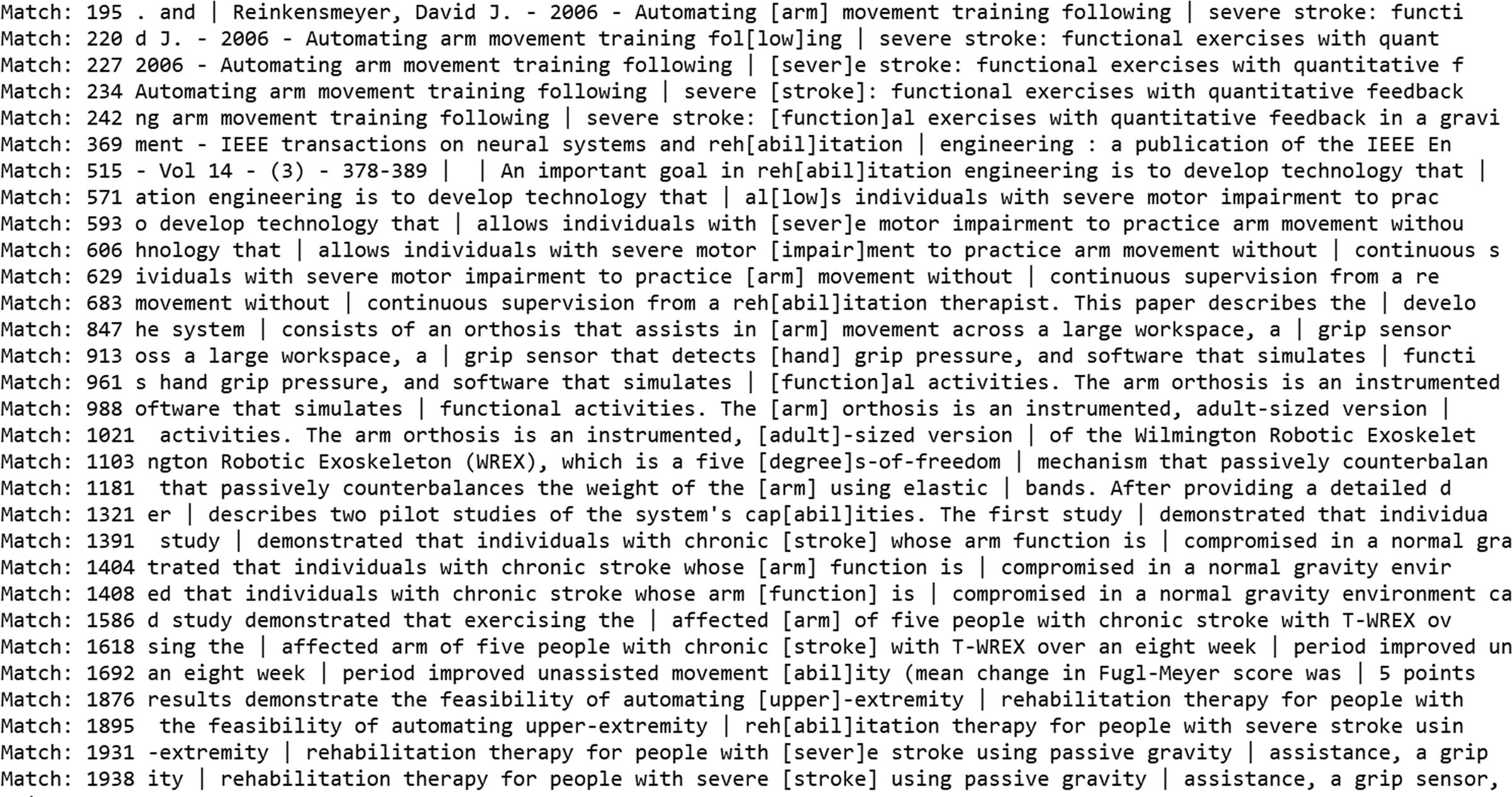
    We developed a Python algorithm for keyword identification (text mining) within papers for a systematic review of upper limb motor impairment after stroke [4]. The algorithm was designed to be flexible so the keywords could be changed based on different eligibility criteria. It searched for given keywords in entire, previously identified PDF files and generated a text file (.txt) (output) including relevant information to make a decision regarding abstract eligibility (figure 1) [5]. The standard method involved manually reading each abstract for keywords. We firstly compared both methods in terms of keyword accuracy, eligibility, and decision time. Next, we undertook an external validation by adapting the algorithm for a different review and comparing studies included via the standard method with those included via the algorithm.

    Results

    Both methods identified the same 610 studies for inclusion. For the exemplar systematic review, the algorithm failed to generate outputs on 72 out of 2,789 documents processed (2.6%). Reasons were: password-protected files (2.4% of scanned documents), image PDFs (0.1%), entire journal issues (0.1%). Based on a sample of 21 randomly selected abstracts, the standard screening took 1.58 ± 0.26 min. per abstract. Computer output screening took 0.43 ± 0.14 min. per abstract. The mean difference between the two methods was 1.15 min. (P < 0.0001), saving 73% of time per abstract. For the external validation, use of the algorithm resulted in the same studies being identified except for one which we excluded based on the interpretation of the comparison intervention. We made our algorithm freely available on GitHub for the purpose of future replications or improvements [6].

    Discussion and Conclusion

    We designed and tested a purpose-built text mining algorithm by comparing it with the standard screening method in terms of accuracy in identifying correct keywords and eligible abstracts, as well as decision time. For external validation, we compared studies, identified as eligible using the algorithm, with those included in another review. Findings indicated that our novel text mining-based algorithm is a valid method for abstract screening and can significantly reduce timescale when undertaking systematic reviews. The algorithm is flexible and can be applied to other systematic reviews on any topic. It can be used, and improved, in the future – not only for authors but also for reviewers and editors.

    REFERENCES

    [1] Higgins JPT, Thomas J, Chandler J, Cumpston M, Li T, Page MJ, et al. Cochrane handbook for systematic reviews of interventions 6.4 (updated August 2023). Cochrane, 2023. Available from www.training.cochrane.org/handbook. [Accessed 28 June 2024]

    [2] Bastian H, Glasziou P, Chalmers I. Seventy-five trials and eleven systematic  reviews a day: how will we ever keep up? PLoS Med 2010; 7:e1000326.

    [3] O’Mara-Eves A, Thomas J, McNaught J, Miwa M, Ananiadou S. Using text mining for study identification in systematic reviews: a systematic review of current approaches. Syst Rev 2015; 4. doi: 10.1186/2046-4053-4-5

    [4] Ierardi E, Coupar F, Ali M, van Wijck F. A systematic review of descriptors of levels of severity of upper limb activity limitation and impairment after stroke 2019. https://www.crd.york.ac.uk/prospero/display_record.php?RecordID=226244. [Accessed 28 June 2024]

    [5] Ierardi E, Eilbeck JC, van Wijck F, Ali M, Coupar F. Data mining versus manual screening to select papers for inclusion in systematic reviews: a novel method to increase efficiency. Int J Rehabil Res. 2023;46(3):284-292. doi:10.1097/MRR.0000000000000595

    [6] ceilbeck/key_wd_PDF_search: searches a directory of PDF files to look for key words, and prints out results. n.d. https://github.com/ceilbeck/key_wd_PDF_search. [Accessed 28 June 2024]

  • Valutazione della stabilità posturale, della simmetria e della fluidità del cammino in persone con disequilibrio posturale percettivo persistente

    Valutazione della stabilità posturale, della simmetria e della fluidità del cammino in persone con disequilibrio posturale percettivo persistente

    Dynamic postural stability, symmetry, and smoothness of gait assessment in people with persistent postural-perceptual dizziness

    Autori

    Diego Piatti [Laboratory of Neuromotor Physiology, IRCCS Santa Lucia Foundation, 00179, Rome, Italy]

    Laura Casagrande Conti [Laboratory of Neuromotor Physiology, IRCCS Santa Lucia Foundation, 00179, Rome, Italy]

    Gianluca Paolocci [Laboratory of Neuromotor Physiology, IRCCS Santa Lucia Foundation, 00179, Rome, Italy; Department of Biomedical and Dental Sciences and Morphofunctional Imaging, University of Messina, 98125, Messina, Italy]

    Elena Bergamini [Department of Management, Information and Production Engineering, University of Bergamo, 24044, Dalmine, BG, Italy]

    Leonardo Manzari [MSA ENT Academy Center, 03043, Cassino, Italy]

    Giuseppe Attanasio [Head and Neck Department, Policlinico Umberto I, 00161 Rome, Italy]

    Iole Indovina [[Laboratory of Neuromotor Physiology, IRCCS Santa Lucia Foundation, 00179, Rome, Italy; Department of Biomedical and Dental Sciences and Morphofunctional Imaging, University of Messina, 98125, Messina, Italy]

    Marco Tramontano [Department of Biomedical and Neuromotor Sciences (DIBINEM), Alma Mater University of Bologna, 40138, Bologna, Italy; Unit of Occupational Medicine, IRCCS Azienda Ospedaliero-Universitaria di Bologna, 40138, Bologna, Italy]

    Introduction

    Persistent postural-perceptual dizziness (PPPD) is a chronic functional disorder characterised by persistent dizziness, instability and non-rotational vertigo, often induced by visual stimuli (1,2). While peripheral vestibular conditions are common triggers of PPPD, other conditions including vestibular migraine, vestibular disorders and mild traumatic brain injuries can also precipitate PPPD (3). The development of changes of gait in patients with PPPD following precipitating illnesses is poorly understood. The first aim of this study is to compare parameters of gait in patients with PPPD or subacute unilateral vestibulopathies (sAUVP) to healthy controls (HC). The second aim is to verify the correlation between gait parameters and Patients-Reported Outcome Measure in patients with PPPD.

    Methods

    This cross-sectional study involved 9 patients with PPPD, 10 patients with sAUVP and 11 HC. All participants completed the 10 Meters Walk Test (10MWT) and the Fukuda Stepping Test (FST). During these motor tasks participants were equipped with five inertial measurement units (IMUs) (128 Hz, Opal, APDM, Portland, OR, USA): three IMUs were located on the occipital cranium bone, near the lambdoid suture of the head, at the centre of the sternum, and at L4/L5 level, just above the pelvis, and were used to quantify parameters of stability (normalized Root Mean Square), symmetry (improved Harmonic Ratio), and smoothness (Log dimensionless jerk) of gait, while the other two were located slightly above lateral malleoli and used to perform stride and step segmentation. Parameters of gait were compared among groups and correlated with Dizziness Handicap Inventory scores for PPPD group.

    Results

    During the 10MWT the stability index at pelvis level along the medio-lateral (ML) axis was significantly higher for PPPD and sAUVP patients than HC. Simmetry of gait was lower for PPPD patients compared to HC group. Instead, during the FST, the simmetry index along the ML axis was significantly lower in sAUVP patients compared to PPPD patients and HC group. Smoothness of gait was significantly lower along the cranio-caudal axis in both patients groups with respect to HC group. Positive correlations were found between the self-assessed severity of dizziness symptoms and postural stability along the antero-posterior axis at head level in patients with PPPD.

    Discussion and Conclusion

    Patients with PPPD exhibit objective alterations, assessed through a sensor-based evaluation, of postural stability compared with HC. Remarkably, in the absence of visual information PPPD performed better than sAUVP patients concerning the gait symmetry, implying an altered visual sensitivity. Positive correlations were found between the self-assessed severity of dizziness symptom and normalized Root Mean Square at head level for PPPD patients, suggesting the combined use of Patient-Reported Outcome Measure and instrumental assessments in clinical practice. The observed differences between sAUVP and PPPD patients in maintaining postural stability enable rehabilitative professionals to consider new treatment paradigms, based on the necessity of patients with PPPD to overcome visual sensitivity.

    REFERENCES

    1. Indovina I, Passamonti L, Mucci V, Chiarella G, Lacquaniti F, Staab JP. Brain correlates of persistent postural-perceptual dizziness: A review of neuroimaging studies. Vol. 10, Journal of Clinical Medicine. 2021.
    2. Staab JP. Chronic subjective dizziness. Vol. 18, CONTINUUM Lifelong Learning in Neurology. 2012.
    3. Staab JP, Eckhardt-Henn A, Horii A, Jacob R, Strupp M, Brandt T, et al. Diagnostic criteria for persistent postural-perceptual dizziness (PPPD): Consensus document of the committee for the Classification of Vestibular Disorders of the Bárány Society. J Vestib Res. 2017;27(4):191–208.
  • Studio dell’inizio del cammino: indicazioni riabilitative

    Studio dell’inizio del cammino: indicazioni riabilitative

    Studio dell’inizio del cammino: indicazioni riabilitative

    Gait initiation and rehabilitative indications

    Autori

    Maurizio Petrarca (Movement Analysis and Robotics laboratory (MARlab), Bambino Gesù Children’s Hospital, IRCCS, Rome Italy)

    Martina Favetta (Movement Analysis and Robotics laboratory (MARlab), Bambino Gesù Children’s Hospital, IRCCS, Rome Italy(

    Azzurra Speroni (Movement Analysis and Robotics laboratory (MARlab), Bambino Gesù Children’s Hospital, IRCCS, Rome Italy)

    Iacopo lovalè (Movement Analysis and Robotics laboratory (MARlab), Bambino Gesù Children’s Hospital, IRCCS, Rome Italy)

    Paolo Tavassi (Movement Analysis and Robotics laboratory (MARlab), Bambino Gesù Children’s Hospital, IRCCS, Rome Italy)

    Gessica Della Bella (Movement Analysis and Robotics laboratory (MARlab), Bambino Gesù Children’s Hospital, IRCCS, Rome Italy)

    Donatella Lettori (Movement Analysis and Robotics laboratory (MARlab), Bambino Gesù Children’s Hospital, IRCCS, Rome Italy)

    Introduction

    In the control of the interactions between the body and the ground, the control variable is the Centre of Pressure (CoP), while the controlled variable is the Centre of Mass (CoM) [1]. In other words, variations in the centre of pressure on the ground govern the movement of the body’s centre of mass. However, this depends on the task and context. The redundancy of the organism’s dynamic solutions allows this role to be reversed [2]. But what are the differences in individuals with CNS pathologies?

    Methods

    It is necessary to analyse other variables: the ground reaction vector and electromyography. In this initial phase of the study, we proceeded using a graphical method. We graphed, using MATLAB (USA), the displacement of the CoP, and the displacement of the CoM along with the ground reaction vector in healthy subjects and people with neurological pathologies using data from the VICON system (UK).

    Results

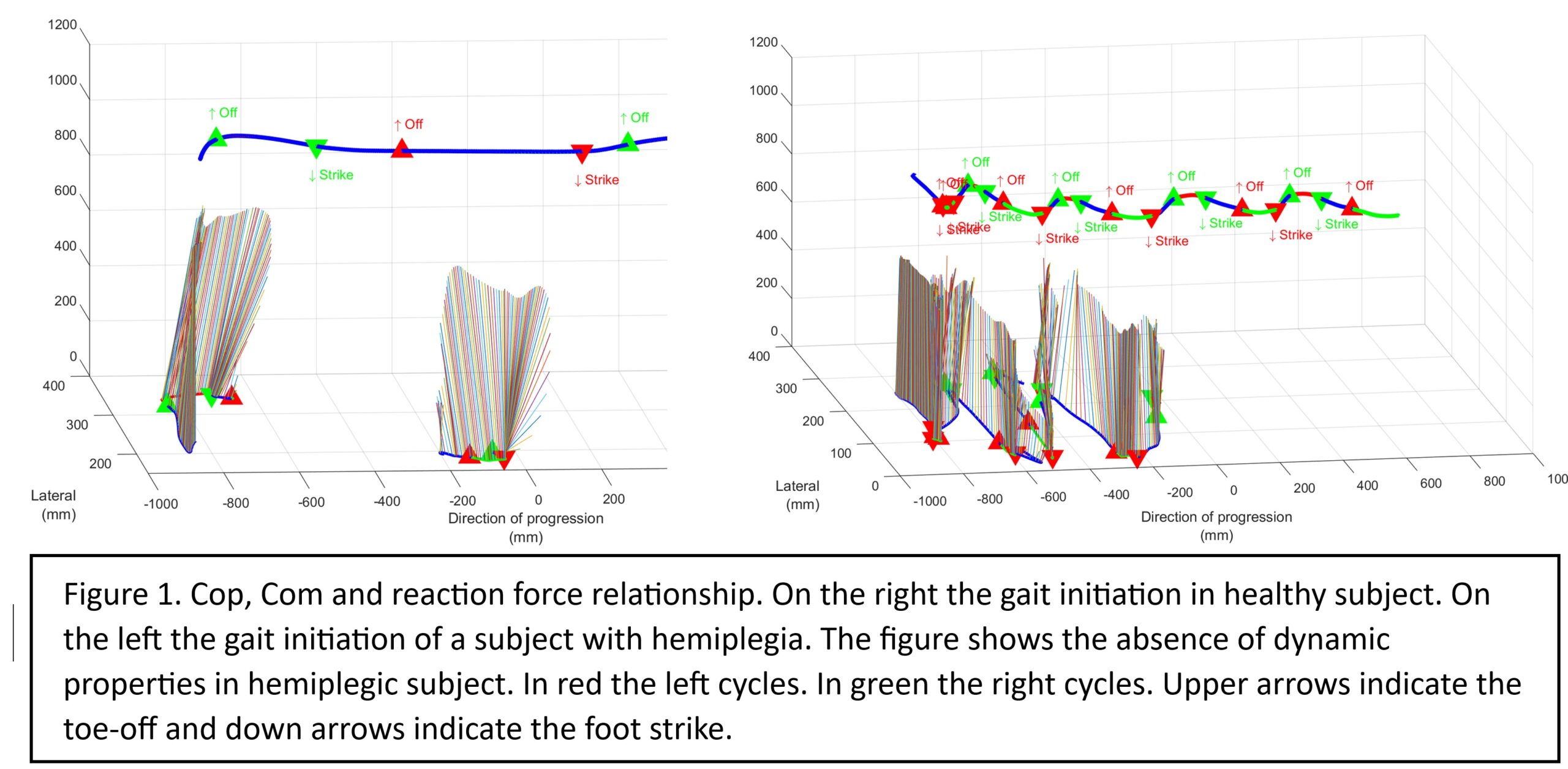
    The longitudinal projection of the ground reaction vector is well-known in walking, but much information is contained in the other two projections. The Centre of mass is directed towards the contralateral side from a push of the hindfoot of the leg that is about to swing. The CoM is simultaneously accelerated forward. To govern this trajectory, the CoP transfers under the supporting foot while the ground reaction vector continues to point at the CoM, until the double support phase when the control is transferred to the contralateral leg. Dynamically speaking, the CoM is never outside the base of support but is constantly controlled by the dynamic pushes exerted by the ground reaction vector. Co-activation of lower limb muscles responsible for the initial push is observed. The movement initiation is determined by their resultant, leading to a push on the ground with the hindfoot. In hemiplegic patients, a lack of push and load transfer is observed, CoM variations are used to keep the CoP within the base of support, contrary to healthy individuals [3]. (Figure 1) The hemiplegic who cannot implement this alternative solution is the one who does not walk.

    Discussion and Conclusion

    In conclusion, load transfer is an alternative solution for governing the upright stance immediately available when is no longer feasible the dynamic push strategy. This alternative is immediately available thanks to the redundancy of the organism’s dynamic solutions. Practising load transfer is a training activity for a pathological condition that should be conducted after verifying that there are no conditions for restoring dynamic function.

    REFERENCES

    [1] P. G. Morasso, G. Spada, R. Capra. Human Movement Science. doi.org/10.1016/S0167-9457(99)00039-1

    [2] J. P. Scholz et al. Exp Brain Res. doi: 10.1007/s00221-006-0848-1

    [3] M. Petrarca. In book: Progress in Motor Control, Springer, DOI:10.1016/B978-0-443-23987-8.00001-8

  • Recupero dello sbilanciamento durante il cammino

    Recupero dello sbilanciamento durante il cammino

    Recupero dello sbilanciamento durante il cammino

    Recovery of gait perturbation

    Autori

    Maurizio Petrarca (Movement Analysis and Robotics Laboratory (MARlab), Bambino Gesù Children’s Hospital, IRCCS, Rome, Italy)

    Martina Favetta (Movement Analysis and Robotics Laboratory (MARlab), Bambino Gesù Children’s Hospital, IRCCS, Rome, Italy)

    Sacha Carniel (Movement Analysis and Robotics Laboratory (MARlab), Bambino Gesù Children’s Hospital, IRCCS, Rome, Italy)

    Simone Gazellini (Movement Analysis and Robotics Laboratory (MARlab), Bambino Gesù Children’s Hospital, IRCCS, Rome, Italy)

    Azzurra Speroni (Movement Analysis and Robotics Laboratory (MARlab), Bambino Gesù Children’s Hospital, IRCCS, Rome, Italy)

    Gessica della Bella (Movement Analysis and Robotics Laboratory (MARlab), Bambino Gesù Children’s Hospital, IRCCS, Rome, Italy)

    Lettori Donatella (Movement Analysis and Robotics Laboratory (MARlab), Bambino Gesù Children’s Hospital, IRCCS, Rome, Italy)

    Susanna Summa (Movement Analysis and Robotics Laboratory (MARlab), Bambino Gesù Children’s Hospital, IRCCS, Rome, Italy)

    Alain Berthoz (Laboratoire de Physiologie de la Perception et de l’Action, Collège de France, 11, rue Marcelin Berthelot, 75005 Paris, France)

    Introduction

    Walking is characterised by the ability to adapt the function to dynamical events derived from internal and external body perturbations. Gait perturbations could arise from irregular terrain, leading to expected or unexpected disturbances which are compensated by Anticipatory, Predictive and Reactive strategies [1]. Compensation abilities are compromised in pathological conditions [2], meanwhile, they are still developing in children. The purpose was to detect gait strategies and the key joints involved in the counter-reacting perturbation.

    Methods

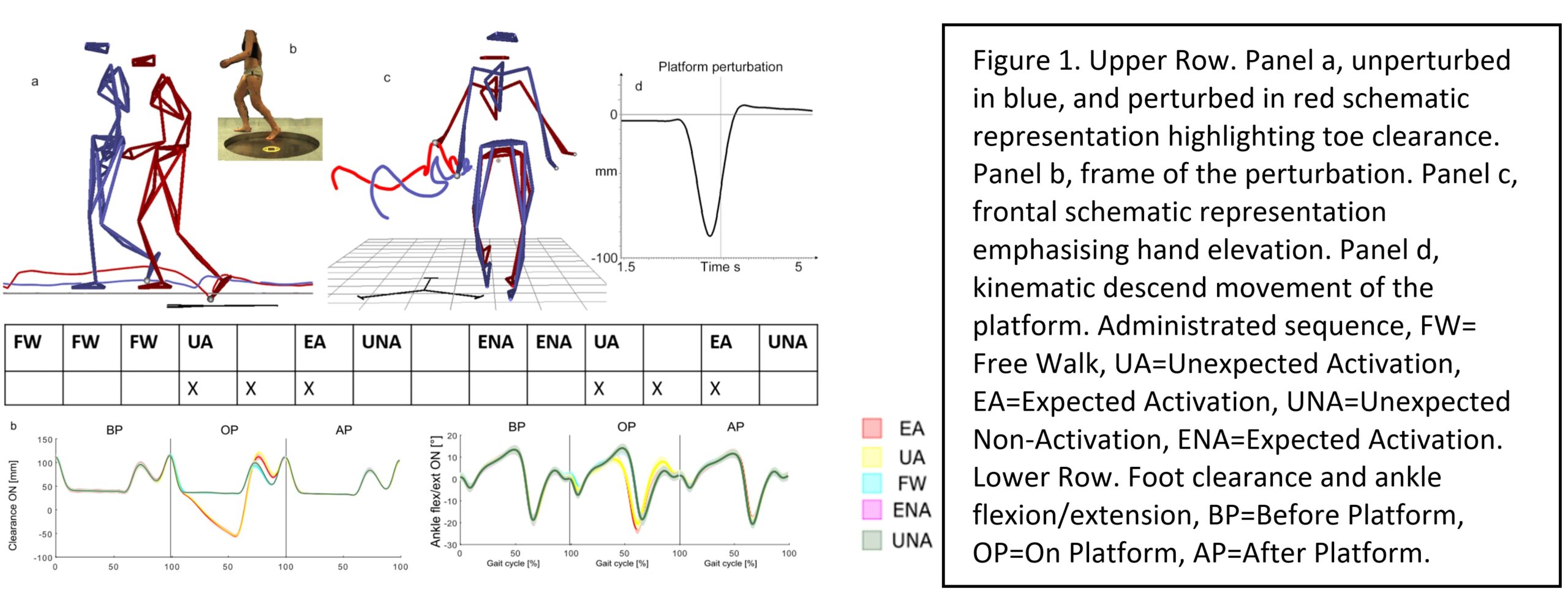
    To address this question, we developed an ad-hoc robotized platform (Mufy, IT) for inducing perturbations during walking [3]. We recruited ten healthy young adults (3 males and 7 females, with a mean age of 31 ± 7 years). Participants walked along a path where the upper plate of a Stewart Platform was camouflaged. A control in force moved the platform vertically downward when participants stepped on it. The fall down of the platform was normalized based on the leg length and mass of the participants personalizing the stiffness of the simulated spring. The platform descended 10% of the leg length. The sequence repetition to induce expected or unexpected conditions was defined (See Figure 1, Upper Row). Each sequence was repeated with both legs. We conducted a full body 3D gait analysis of three strides before, on, and after the platform using an optoelectronic system with 12 cameras (Vicon, UK) to gather kinematics data.

    Results

    Statistical analysis was performed using one-dimensional Statistical Parametric Mapping to compare perturbed conditions (both expected or unexpected) to normal walking. The main findings revealed alterations in spatiotemporal parameters (p<0.0001), increased clearance (p<0.02 expected perturbation, p<0.01 unexpected perturbation, p<0.009 for unexpected non-activation), and increased dorsiflexion of the ankle (p<0.001) (see Figure 1, Lower Row), with minor effects on knee and hip flexion, hands elevation and anteversion of pelvis and trunk.

    Discussion and Conclusion

    In summary, our observations indicated an overlap between Anticipatory and Predictive strategies. Nevertheless, we find evidence of Anticipatory strategies looking at the increased foot clearance during the unexpected absence of perturbation and signs of Predictive strategies looking at hand elevation during the presence of perturbation. The perturbations were mainly absorbed at the ankle level raising the importance of focusing on this joint to assess the residual ability for gait compensation.

    REFERENCES

    [1] Patla, A. EEE Eng in Med and Biology Magazine, 22(2), 48-52 (2003).

    [2] Pacilli, A. et al. Gait Posture 42, S4–S5 (2015).

    [3] Summa, S. et.al. Sensors, 19, 3402 (2019).

  • Reintegro della funzione di cammino dopo rimozione della causa disfunzionale: cinque anni di storia in una popolazione di giovani con obesità

    Reintegro della funzione di cammino dopo rimozione della causa disfunzionale: cinque anni di storia in una popolazione di giovani con obesità

    Reintegro della funzione di cammino dopo rimozione della causa disfunzionale: cinque anni di storia in una popolazione di giovani con obesità

    Function recovery and obesity: five years of gait recovery

    Autori

    Martina Favetta (Movement Analysis and Robotics Laboratory (MARlab), Neurorehabilitation Unit, Bambino Gesù Children’s Hospital, IRCCS, Rome, Italy)

    Susanna Summa(Movement Analysis and Robotics Laboratory (MARlab), Neurorehabilitation Unit, Bambino Gesù Children’s Hospital, IRCCS, Rome, Italy)

    Domenico Ottavio Adorisio (Pediatric Surgery Unit, Bambino Gesù Children’s Hospital, IRCCS, Rome, Italy)

    Francesco De Peppo (Pediatric Surgery Unit, Bambino Gesù Children’s Hospital, IRCCS, Rome, Italy)

    Romina Caccamo (Pediatric Surgery Unit, Bambino Gesù Children’s Hospital, IRCCS, Rome, Italy)

    Gessica Della Bella (Movement Analysis and Robotics Laboratory (MARlab), Neurorehabilitation Unit, Bambino Gesù Children’s Hospital, IRCCS, Rome, Italy)

    Maurizio Petrarca (Movement Analysis and Robotics Laboratory (MARlab), Neurorehabilitation Unit, Bambino Gesù Children’s Hospital, IRCCS, Rome, Italy)

    Introduction

    This work is a completion of the study of Summa et al.  [1] that showed several gait alterations in obese adolescents 1-year (T1) after the Laparoscopic Sleeve Gastrectomy (LSG) surgery. We studied the gait pattern after five years (T5) from LSG surgery to evaluate if the gait pattern has normalized

    Methods

    Thirteen patients with a Body Mass Index (BMI) < 30 (Normal Weight Group=GNW group); 4 females and 9 males; age 20.9 ± 2.4; weight 79.6 ± 10.2 kg, BMI 26 ± 2.4 kg/m2, participated in the study. Eight patients with a Body Mass Index (BMI) > 30 (Overweight Group=GOW group); 6 females and 2 males; age 21 ± 3.2; weight 94.2 ± 12 kg, and the averaged BMI was 35.5 ± 3.4 kg/m2, participated in the study. These groups were acquired 5 years after the intervention. A control group of 10 healthy subjects (GH) was introduced as a benchmark of “normal gait” (7 female and 3 males; age 18.7 ± 4.9; weight 57.3 ± 11.5 kg; BMI 21.7 ± 2.0 Kg/m2). 3D gait analysis was conducted using an optoelectronic system with twelve cameras (Vicon MX, UK) and two force plates (AMTI, Or-6, US). We evaluated kinematics and kinetics while walking. We looked at the differences between the gait pattern at T5 of GNW and GOW vs the gait pattern of GH.

    Results

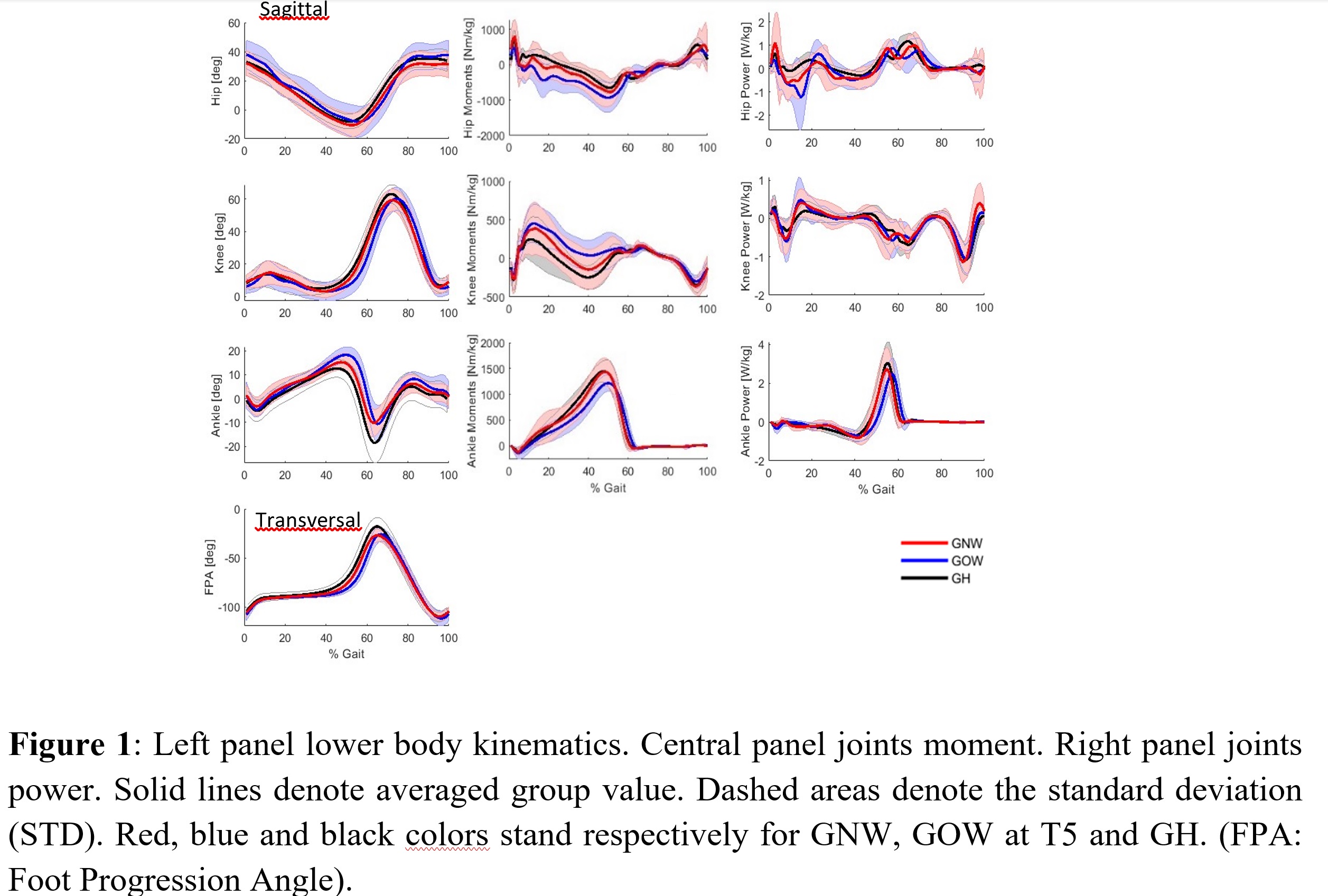
    Five years after surgery the averaged total weight loss of GNW was 44.7 ± 12.2 kg, the averaged total change in BMI was 16.7 ± 2 kg/m2. For the GOW the averaged total weight loss was 19.5 ± 3.7 kg, the averaged total change in BMI was 9 ± 0.1 kg/m2. At T5 GNW compared to GH showed a normalization of several kinematics alterations at pelvis, hip, and knee levels. Instead, the ankle still showed an increase of maximum dorsiflexion and a reduction of maximum plantar flexion. GOW compared to GH still showed several alterations above all at knee and ankle levels. Indeed, we highlighted an increase of hip extension moment, a reduction of knee extension moment, an increase of ankle maximum dorsiflexion, a reduction of ankle dorsal moment. See figure 1.

    Discussion and Conclusion

    The bulk of the masses, during the patient’s growth, affects the gait pattern once they are removed. After 5 years some alterations persist in some dynamic gait components. Gait recovery also required time and experience of motor function in daily life. The results encourage an individualized rehabilitative intervention of sensory-motor re-education for restoring dynamic gait components after a patient-specific assessment.

    REFERENCES

    [1] S. Summa, et al. Surg. Obes. Relat. Dis. 15 (2019) 374–381.

  • Conoscenza, percezioni, barriere e utilizzo degli Artificial Intelligence Chatbots negli Studenti di Fisioterapia Italiani: uno studio cross-sectional

    Conoscenza, percezioni, barriere e utilizzo degli Artificial Intelligence Chatbots negli Studenti di Fisioterapia Italiani: uno studio cross-sectional

    Knowledge, Perceptions, Barriers and Use of Artificial Intelligence Chatbots in Italian Physiotherapy Students: a cross-sectional study

    Autori

    Tortella Fabio (Azienda Ospedaliera Universitaria Integrata di Verona, Verona, Italy)

    Gianola Silvia (Unit of Clinical Epidemiology, IRCCS Istituto Ortopedico Galeazzi, Milano, Italy)

    Turolla Andrea (Department of Biomedical and Neuromotor Sciences-DIBINEM, Alma Mater Studiorum Università di Bologna, Bologna, Italy)

    Greta Castellini (Unit of Clinical Epidemiology, IRCCS Istituto Ortopedico Galeazzi, Milano, Italy)

    Pillastrini Paolo (Department of Biomedical and Neuromotor Sciences, University of Bologna, Bologna, Italy)

    Palese Alvisa (Department of Medicine, University of Udine, Udine, Italy)

    Landuzzi Maria Gabriella (Department of Human Sciences, University of Verona, Verona, Italy)

    Corradi Federica (University of Verona, School of Speech Therapy, Verona, Italy)

    Rossettini Giacomo (Department of Physiotherapy, Faculty of Sport Sciences, Universidad Europea de Madrid, Calle Tajo s/n, Villaviciosa de Odón 28670, Spain)

    Introduction

    Artificial Intelligence (AI) chatbots, like ChatGPT, Microsoft Bing, and Google Bard, emulate human interaction through multimodal communication. In physiotherapy, these chatbots assist in clinical reasoning and treatment decisions by suggesting symptoms to investigate, tests to perform, and more. In education, they enhance learning experiences and student engagement through intelligent feedback and tutoring. Understanding physiotherapy students’ knowledge and perceptions of AI chatbots is essential for their effective implementation in education and training. This study aims to investigate the knowledge, perceptions, use and barriers of AI chatbots among Italian physiotherapy students.

    Methods

    An online survey was distributed to physiotherapy students from 9 universities across Italy, by using Survey Monkey, from 21 February 2024, collecting responses through a self-assessment questionnaire of 24 questions on chatbot knowledge, use, perceptions, and barriers. The questionnaire was constructed in accordance with the Checklist for Reporting Results of Internet E-Surveys (CHERRIES) and STrengthening the Reporting of OBservational Studies in Epidemiology guidelines (STROBE).  Descriptive and frequency statistics analyzed the responses. This study is still ongoing.

    Results

    Currently, a total of 552 students participated, averaging 22.4 ± 4 years old, with n=231 (40.7%) females. Of these, n=459 (94.4%) had heard of AI chatbots, primarily through social media, and n=256 (52.7%) had used them for academic purposes. Common uses included learning support (n=179, 36.8%), text summarization (n=81, 16.67%), translation (n=62, 12.76%), and problem-solving (n=62, 12.76%). Only 5% (n=24) used chatbots during internships. Students recognized limitations in handling complex tasks (n=294, 60.5%) and potential inaccuracies (n=282, 58%). The perceived benefits included time savings (n=299, 63.3%) and accessibility (n=278, 58.9%), while barriers included impairment of critical thinking (n=256, 55%) and misinformation risks (n=282, 60.6%).

    Discussion and Conclusion

    The results of this study are preliminary as it is still ongoing. Most Italian physiotherapy students are aware of and use AI chatbots for academic purposes, recognizing their benefits and limitations. Rather than banning their use, developing guidelines and providing training for both faculty and students are recommended to ensure the proper application of chatbots in the university setting.

    REFERENCES

    • Sallam M. (2023). ChatGPT Utility in Healthcare Education, Research, and Practice: Systematic Review on the Promising Perspectives and Valid Concerns. Healthcare (Basel, Switzerland), 11(6), 887. https://doi.org/10.3390/healthcare11060887
    • Rossettini, G. (2023). Pros and cons of using artificial intelligence Chatbots for musculoskeletal rehabilitation management. The Journal of orthopaedic and sports physical therapy, 1–17. Advance online publication. https://doi.org/10.2519/jospt.2023.12000
    • Firat M (2023).What ChatGPT means for universities: Perceptions of scholars and students. JOUR. 10.37074/jalt.2023.6.1.22
    • Yilmaz H(2023). Student Attitudes towards ChatGPT: A Tecnology Acceptance Model Survey. International Educational Review. Volume 1, Issue 1, April 2023, pp. 57-83. https://doi.org/10.58693/ier.114 
    • Abdaljaleel, M. et. al (2024). A multinational study on the factors influencing university students’ attitudes and usage of ChatGPT. Scientific reports, 14(1), 1983. https://doi.org/10.1038/s41598-024-52549-8


  • Effetti neurofisiologici e clinici di trattamenti farmacologici e non farmacologici nell’emicrania

    Effetti neurofisiologici e clinici di trattamenti farmacologici e non farmacologici nell’emicrania

    Effetti neurofisiologici e clinici di trattamenti farmacologici e non farmacologici nell’emicrania

    Neurophysiological and Clinical effects of Non-pharamacological and Pharmacological Treatments on Habituation and Sensitization outcomes in Migraine

    Autori

    Manuela Deodato (Department of Medical, Surgical and Health Sciences, University of Trieste, Trieste, Italy )

    Introduction

    Migraine represents a common neurologic condition that leads to adverse effects on physical/cognitive functioning and to a considerable socioeconomic burden among many countries1.  On the one side, part of this burden is due to multiple comorbidities that increased the headache-related disability2. On the other side, part of this burden is due to its complex physiopathology that is still an object of studies for a better understanding of underlying mechanisms and for a better choice of its treatments3. Neurophysiology studies have established that migraine is “a brain state of altered excitability” in a “migraine brain” genetically predisposed3,4. In fact, migraine people present a general increase response to sensory stimuli due to two opposing processes: lack of habituation and sensitization4. The aim of this PhD project was to investigate the effects of two emerging pharmacological and non-pharmacological treatments with respect to habituation and sensitization outcomes.

    Methods

    Three studies were conducted. In each study, the same neurophysiologic and clinical habituation and sensitization outcomes were used:  Algometer assessment, Transcranial Magnetic stimulation, Neuropsychological tests on executive functions, the Migraine Disability Assessment Scale and headache diary.  

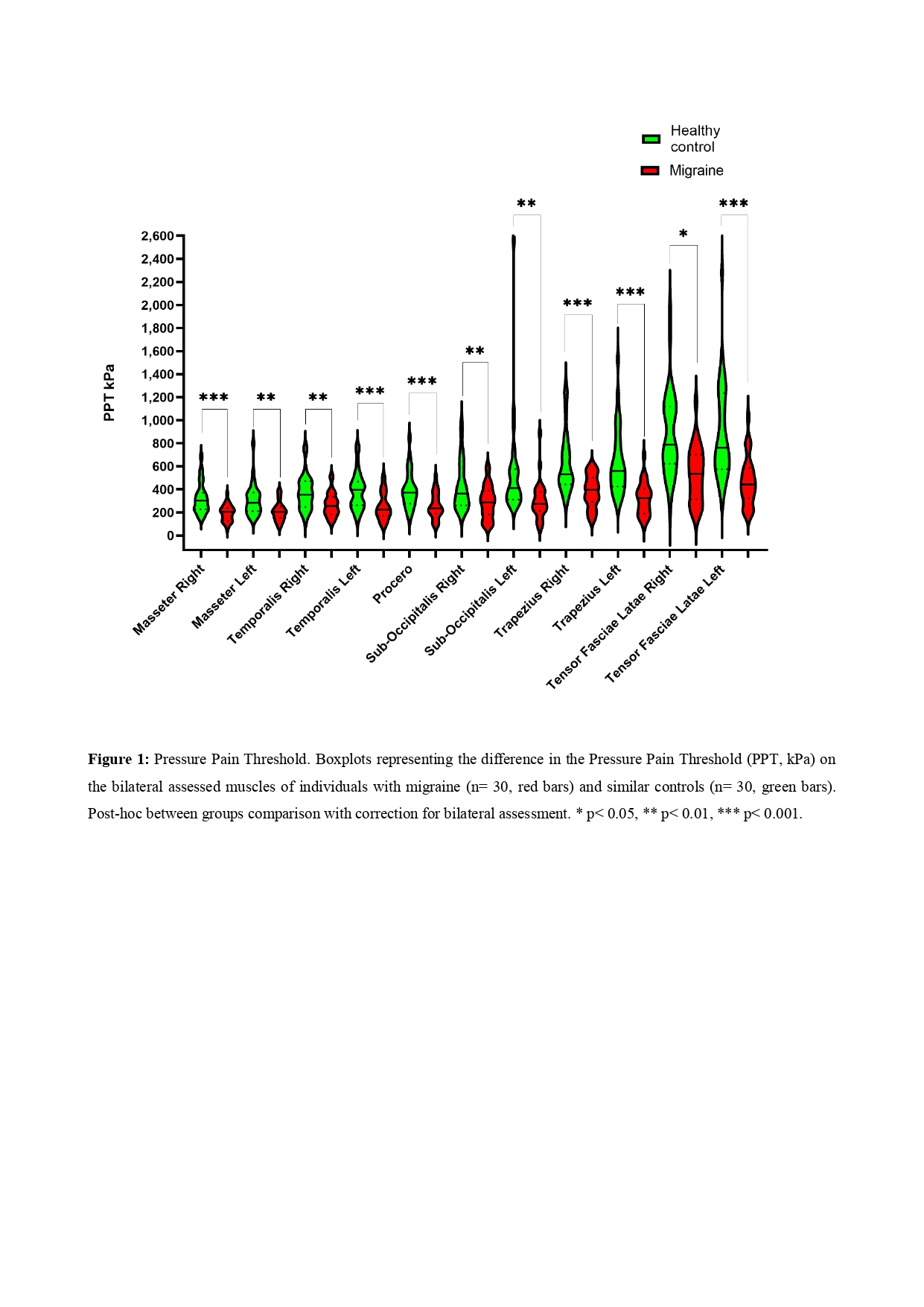
    1) Study 1, a cross sectional study, compared habituation and sensitization outcomes in 30 migraine people with respect to 30 healthy controls.

    2) Study 2, a randomized control trial, compared the dual task protocol in migraine people with active exercise only and with cognitive training only, concerning habituation and sensitization outcomes (3 months of each treatments plus 1-month follow-up).

    3) Study 3, an observational study, compared the two emerging pharmacological and non-pharmacological treatments, respectively, monoclonal antibody and dual task protocol, on habituation and sensitization outcomes (3 months of each treatments plus 1-month follow-up).


    Results

    Study 1 reported that people with migraine were characterized by a statistically significant alteration of all habituation/sensitization neurophysiological and clinical outcomes with respect to healthy controls. Study 2 suggested that active exercise was useful in sensitization outcomes, while cognitive training in habituation outcomes. As a consequence, the Dual task protocol resulted more useful than two monotherapies, active exercise and cognitive training alone, through a more evident effects on habituation and sensitization outcomes. Finally, Study 3 shows similar general peripheral and central effects of both dual task protocol and monoclonal antibody treatments in patients with migraine. However, monoclonal antibody therapy seems to be more useful for some sensitization outcomes (reduction of drug intake, migraine frequency and migraine responders rates) while dual task protocol seems to be more useful for habituation outcomes (improvement in intracortical inhibition).


    Discussion and Conclusion

    Taken together, the findings from these three studies suggest the coexistence of both central and peripheral adaptive neurophysiological mechanisms in people with migraine that can be objectively measured with validated techniques5. Such techniques can also be useful to evaluate the efficacy of different therapies: our preliminary results suggest that non-pharmacological interventions, such as physiotherapy, can significantly improve habituation and sensitization outcomes in this patients’ population. Particularly, a dual task protocol, active exercise with concomitant cognitive training, may up-regulate the cortical connectivity related to cognitive task due to an activity-dependent learning that increase the synaptic strength and promote the associative learning and neuroplasticity6. Future studies could include the effect of the combination of both monoclonal antibody and dual task protocols on habituation and sensitization outcomes.


    REFERENCES

    1. GBD 2019 Diseases and Injuries Collaborators. Global burden of 369 diseases and injuries in 204 countries and territories, 1990-2019: A systematic analysis for the Global Burden of Disease Study 2019. Lancet, 2020
    2. Caponnetto V, Deodato M, Robotti M, et al. Comorbidities of primary headache disorders: a literature review with meta-analysis. J Headache Pain, 2021
    3. Goadsby PJ, Holland PR, Martins-Oliveira, et al. Pathophysiology of Migraine: A Disorder of Sensory Processing. Physiological Reviews, 2017
    4. Coppola G, Di Lorenzo C, Schoenen J et al. Habituation and sensitization in primary headaches. The Journal of Headache and Pain, 2023
    5. Deodato M, Granato A, Martini M, et al. Neurophysiological and Clinical Outcomes in Episodic Migraine Without Aura: A Cross-Sectional Study. J Clin Neurophysiol, 2024
    6. Deodato M, Granato A, Buoite Stella A. et al. Efficacy of a dual task protocol on neurophysiological and clinical outcomes in migraine: a randomized control trial. Neurol Sci, 2024