Categoria: Congresso 2024

  • Percezione, conoscenza, atteggiamenti, limiti e barriere all’uso di AIChatbots nella comunità fisioterapica italiana: uno studio in corso.

    Percezione, conoscenza, atteggiamenti, limiti e barriere all’uso di AIChatbots nella comunità fisioterapica italiana: uno studio in corso.

    Perception knowledge, attitudes, limitations and barriers of the use of AIChatbots in the Italian physiotherapy community: an ongoing study.

    Autori

    Sabot Raffaele (School of Physiotherapy, Department of Medical, Surgical and Health Sciences, University of Trieste, Trieste, Italy)

    Mihailov Catalin Irinarh (School of Physiotherapy, Department of Medical, Surgical and Health Sciences, University of Trieste, Trieste, Italy)

    Francesco Boninsegna (School of Physiotherapy, University of Verona, Verona, Italy.)

    Andrea Turolla (Department of Biomedical and Neuromotor Sciences, Alma Mater University of Bologna, Bologna, Italy. )

    Paolo Pillastrini (Department of Biomedical and Neuromotor Sciences, Alma Mater University of Bologna, Bologna, Italy. )

    Gianola Silvia (Unit of Clinical Epidemiology, IRCCS Istituto Ortopedico Galeazzi, Milano, Lombardia, Italy.)

    Castellini Greta (Unit of Clinical Epidemiology, IRCCS Istituto Ortopedico Galeazzi, Milano, Lombardia, Italy.)

    Giacomo Rossettini (School of Physiotherapy, University of Verona, Verona, Italy.)

    Manuela Deodato (School of Physiotherapy, Department of Medical, Surgical and Health Sciences, University of Trieste, Trieste, Italy)

    Introduction

    Artificial intelligence (AI) represents a branch of advanced technology aimed to perform tasks usually required of human intelligence1,2. Recent evidence has examined the potential support of AIChatbots in the physiotherapist clinical practice: 1) administrative and clinical workflow activities 2) clinical reasoning /decision making 3) treatments and 4) patients education1,3. However, there are also some limitations/risks in their use. On one side, the use of AIChatbots may increase the risk of the plagiarism and copyrights/privacy violation, provide incorrect or superficial answer from inaccurate sources/references, on the other side the use of AIChatbots may automate, dehumanize and threaten the physiotherapist professional identity that require a wide range of relational, cognitive and physical skills not replicable for machines3. The main aim of this study is to investigate the perception, knowledge, attitudes, limitations and barriers in the Italian physiotherapy community.

    Methods

    A quantitative cross-sectional survey was conducted on 252 Italian Physiotherapists, in accordance with the Checklist for Reporting Results of Internet E-Surveys (CHERRIES)guidelines4 and STrengthening the Reporting of OBservational Studies in Epidemiology5. Participants were physiotherapists regularly registered in the national register of physiotherapy FNOFI (Federazione Nazionale Ordini Fisioterapisti) and member of the national scientific association of physiotherapy AIFI. The questionnaire was composed of four sections: 1) Characteristics of the sample with 11 questions; 2) knowledge and attitudes to use AIChatbots with seven closed multiple-choice questions 3) perception with two questions closed multiple-choice questions 4) limitations and barriers with one closed multiple-choice questions. Survey Monkey online survey was chased to collect the data. The survey started on 27th March 2024 and it is still ongoing. The mailing list of AIFI was used to contact the participants.

    Results

    The study sample includes 252 physiotherapists (104 males, 43.33%; 134 females, 55.83%) with an average of 10 years of work experience. With regard to the “knowledge and attitudes” regarding the use of AI Chatbots of them 92.24% have heard of AI Chatbots, but the 79.74% have never used it in clinical practice. Nevertheless, the 71.55 % of the physiotherapists interviewed highlighted a positive attitude in future use.  Regarding “perception” in the use of Chatbots in clinical practice, the 49.77 % of the sample believe that it was be useful in clinical practice: the major number of positive responses were relative to management patients medical records (76.7%), creation online content for patients home exercise (87.91 %) and for social media posts (86%). Finally, “limitations and barriers”, the physiotherapists reported the following rate of risks: patients self-treatment (80.4%), spread of false information or misinformation (76.5 %), reduction of human interactions (67.2 %).

    Discussion and Conclusion

    Previous study evaluated perception, knowledge and attitudes regarding the use of AIChatbots among healthcare professionals, our study, at the first time, investigate the perception, knowledge, attitudes limitations and barriers regarding the use of AIChatbots among the Italian physiotherapy community. The first set of questions sought to determine the “knowledge and attitudes”, despite the major of the sample have never used AIChatbots, they expressed a positive attitude to use it in future. One interesting finding was that the physiotherapists interviewed highlighted a general positive perception regarding the potential benefit of AIChatbots, especially to assist them in creating on-line content to improve patients education and to generate ideas for social media posts. Nevertheless, they recognise potential risks related to automatization and dehumanization of physiotherapy practice that require a wide range of relational, cognitive and physical skills not replicable for machines.

    REFERENCES

    1. Abuzaid MM, Elshami W, Hegazy F, et al. The Impact of Artificial Intelligence (AI) in Physiotherapy Practice: A Study of Physiotherapist Willingness and Readiness. Journal of Hunan University Natural Sciences 2022.
    2. Sallam M. ChatGPT Utility in Healthcare Education, Research, and Practice: Systematic Review on the Promising Perspectives and Valid Concerns. Healthcare (Switzerland) 2023.
    3. Rossettini G, Cook C, Palese A, et al. Pros and Cons of Using Artificial Intelligence Chatbots for Musculoskeletal Rehabilitation Management. Journal of Orthopaedic and Sports Physical Therapy 2023.
    4. Eysenbach G. Improving the quality of web surveys: The Checklist for Reporting Results of Internet E-Surveys (CHERRIES). Journal of Medical Internet Research 2004.
    5. von Elm E, Altman DG, Egger M, et al. The strengthening the reporting of observational studies in epidemiology (STROBE) statement: Guidelines for reporting observational studies. International Journal of Surgery 2014.
  • Immersive Virtual Reality for Treatment of Unilateral Spatial Neglect via Eye-Tracking Biofeedback: RCT Protocol and Usability Testing

    Immersive Virtual Reality for Treatment of Unilateral Spatial Neglect via Eye-Tracking Biofeedback: RCT Protocol and Usability Testing

    Immersive Virtual Reality for Treatment of Unilateral Spatial Neglect via Eye-Tracking Biofeedback: RCT Protocol and Usability Testing

    Autori

    Alex Martino Cinnera (IRCSS Sanata Lucia Foundation, 00179, Rome)

    Valeria Verna (IRCSS Sanata Lucia Foundation, 00179, Rome)

    Aurora Tavernese (IRCSS Sanata Lucia Foundation, 00179, Rome)

    Luisa Magnotti (IRCSS Sanata Lucia Foundation, 00179, Rome)

    Alessandro Matano (IRCSS Sanata Lucia Foundation, 00179, Rome)

    Viviana Betti (IRCSS Sanata Lucia Foundation, 00179, Rome)

    Stefano Paolucci (IRCSS Sanata Lucia Foundation, 00179, Rome)

    Matteo Marucci (Braintrends Limited, Applied Neuroscience, 00192 Rome)

    Giovanni Morone (Department of Life, Health and Environmental Sciences, university of L’Aqiola, 67100 L’Aquila , Italy)

    Marco Tramontano (Unit of Occupational Medicine, IRCSS Azienda Ospedaliero-Universitaria di Bologna, 40138 Bologna, Italy)

    Introduction

    About one-third of stroke survivors present unilateral spatial neglect (USN) that
    negatively impacts the rehabilitation outcome. We reported the study protocol and usability results
    of an eye-tracking (ET) biofeedback immersive virtual reality (iVR) protocol. Healthy controls and
    stroke patients with and without USN underwent a single session of the three iVR tasks. The
    system usability scale (SUS), adverse events (AEs), and ET data were collected and analyzed via
    parametric analysis. Twelve healthy controls (six young adults and six older adults) and seven
    patients with a diagnosis of single ischemic stroke (four without USN and three with confirmed
    diagnosis of USN) completed the usability investigation. SUS results showed good acceptability of
    the system for healthy controls and stroke patients without USN. ET results showed a lower
    performance for patients with USN concerning healthy controls and stroke patients without USN, in
    particular in the exploration of the left visual field. The results showed that the proposed iVR-ET
    biofeedback protocol is a safe and well-tolerated technique in patients with USN. The real-time
    feedback can induce a performance response supporting its investigation such as a treatment
    approach.

    Methods

    We reported the study protocol and usability results of an eye-tracking (ET) biofeedback immersive virtual reality (iVR) protocol. Healthy controls and stroke patients with-and-without USN underwent a single session of the three iVR tasks. The system usability scale (SUS), adverse events (AEs) and ET data were collected and analysed via parametric analysis.

    Results

    12 healthy controls (6 young and 6 adults) and 7 patients with diagnosis of single ischemic stroke (4 without USN and 3 with confirmed diagnosis of USN) completed the usability investigation. Only one patient with USN reported minor AEs (neck stiffness). SUS results showed a good acceptability of the system for healthy controls and stroke patients without USN, and marginal for USN patients without statistical differences [F(3)=1.33, p=0.4]. ET results showed a lower performance for patients with USN with respect to controls and stroke patients without USN (TASK 1, p<0.001 with respect to each other group and TASK 2, p=0.05 and p=0.03, with respect to young and adult healthy controls, respectively), in particular in the exploration of left visual field (p<0.001 with respect to each other group).

    Discussion and Conclusion

    The usability and ET results of the present study suggested that proposed ET biofeedback iVR protocol is a safe and well tolerated technique for the treatment of USN. Despite a single case of neck stiffness due to seating discomfort, no major or minor AEs were encountered. The differences recorded in the ET results across healthy control and stroke patients with-and-without USN support the efficiency of ET biofeedback to induce a performance response and a top-down stimulation of the central nervous system. Finally, ET data can be used also to measure the progress in VF exploration like in usual clinical tools.


    REFERENCES

    Albert ML. A simple test of visual neglect. Neurology. 1973 Jun;23(6):658-64. doi: 10.1212/wnl.23.6.658. PMID: 4736313.


    Azouvi P, Jacquin-Courtois S, Luauté J. Rehabilitation of unilateral neglect: Evidence-based medicine. Ann Phys Rehabil Med. 2017 Jun;60(3):191-197. doi: 10.1016/j.rehab.2016.10.006. Epub 2016 Dec 13. PMID: 27986428.


    Bangor A., Kortum P. T., Miller J. T. (2008). An empirical evaluation of the System Usability Scale. International Journal of Human-Computer Interaction, 24(6), 574–594. 10.1080/10447310802205776.


    Blattgerste, J., Behrends, J., & Pfeiffer, T. (2022). A Web-Based Analysis Toolkit for the System Usability Scale (Version 1.0.0) [Computer software]. https://github.com/jblattgerste/sus-analysis-toolkit.


    Carlesimo GA, Caltagirone C, Gainotti G. The Mental Deterioration Battery: normative data, diagnostic reliability and qualitative analyses of cognitive impairment. The Group for the Standardization of the Mental Deterioration Battery. Eur Neurol. 1996;36(6):378-84. doi: 10.1159/000117297. PMID: 8954307.


    Chen P, Hreha K, Fortis P, Goedert KM, Barrett AM. Functional assessment of spatial neglect: a review of the Catherine Bergego scale and an introduction of the Kessler foundation neglect assessment process. Top Stroke Rehabil. 2012;19(5):423-435. doi:10.1310/tsr1905-423.


    Chen P, Hreha K, Kong Y, Barrett AM. Impact of spatial neglect on stroke rehabilitation: evidence from the setting of an inpatient rehabilitation facility. Arch Phys Med Rehabil. 2015 Aug;96(8):1458-66. doi: 10.1016/j.apmr.2015.03.019. Epub 2015 Apr 8. PMID: 25862254; PMCID: PMC4519421.


    Choi HS, Shin WS, Bang DH. Application of digital practice to improve head movement, visual perception and activities of daily living for subacute stroke patients with unilateral spatial neglect: Preliminary results of a single-blinded, randomized controlled trial. Medicine (Baltimore). 2021 Feb 12;100(6):e24637. doi: 10.1097/MD.0000000000024637. PMID: 33578583; PMCID: PMC7886475.


    Fasotti L, van Kessel M. Novel insights in the rehabilitation of neglect. Front Hum Neurosci. 2013 Nov 15;7:780. doi: 10.3389/fnhum.2013.00780. PMID: 24298249; PMCID: PMC3828556.


    Fugl-Meyer AR, Jääskö L, Leyman I, Olsson S, Steglind S. The post-stroke hemiplegic patient. 1. a method for evaluation of physical performance. Scand J Rehabil Med. 1975;7(1):13-31. PMID: 1135616.


    Giggins OM, Persson UM, Caulfield B. Biofeedback in rehabilitation. J Neuroeng Rehabil. 2013 Jun 18;10:60. doi: 10.1186/1743-0003-10-60. PMID: 23777436; PMCID: PMC3687555.


    Katan M, Luft A. Global Burden of Stroke. Semin Neurol. 2018 Apr;38(2):208-211. doi: 10.1055/s-0038-1649503. Epub 2018 May 23. PMID: 29791947.


    Krishnamurthi RV, Ikeda T, Feigin VL. Global, Regional and Country-Specific Burden of Ischaemic Stroke, Intracerebral Haemorrhage and Subarachnoid Haemorrhage: A Systematic Analysis of the Global Burden of Disease Study 2017. Neuroepidemiology. 2020;54(2):171-179. doi: 10.1159/000506396. Epub 2020 Feb 20. PMID: 32079017.


    Lewis, James. (2018). The System Usability Scale: Past, Present, and Future. International Journal of Human-Computer Interaction. 1-14. 10.1080/10447318.2018.1455307.


    Lundin RM, Yeap Y, Menkes DB. Adverse Effects of Virtual and Augmented Reality Interventions in Psychiatry: Systematic Review. JMIR Ment Health. 2023 May 5;10:e43240. doi: 10.2196/43240. PMID: 37145841; PMCID: PMC10199391.


    Lupo A, Cinnera AM, Pucello A, Iosa M, Coiro P, Personeni S, Gimigliano F, Iolascon G, Paolucci S, Morone G. Effects on balance skills and patient compliance of biofeedback training with inertial measurement units and exergaming in subacute stroke: a pilot randomized controlled trial. Funct Neurol. 2018 Jul/Sept;33(3):131-136. PMID: 30457965.


    Lutz O, Burmeister C, dos Santos L, Morkisch N, Dohle C, Krüger J. Application of head-mounted devices with eye-tracking in virtual reality therapy. Current Directions in Biomedical Engineering. 2017;3(1): 53-56. doi: 10.1515/cdbme-2017-0012.


    Martino Cinnera A, Bisirri A, Chioccia I, Leone E, Ciancarelli I, Iosa M, Morone G, Verna V. Exploring the Potential of Immersive Virtual Reality in the Treatment of Unilateral Spatial Neglect Due to Stroke: A Comprehensive Systematic Review. Brain Sci. 2022 Nov 20;12(11):1589.


    Massetti T, da Silva TD, Crocetta TB, Guarnieri R, de Freitas BL, Bianchi Lopes P, Watson S, Tonks J, de Mello Monteiro CB. The Clinical Utility of Virtual Reality in Neurorehabilitation: A Systematic Review. J Cent Nerv Syst Dis. 2018 Nov 27;10:1179573518813541. doi: 10.1177/1179573518813541. PMID: 30515028; PMCID: PMC6262495.


    Massironi M, Antonucci G, Pizzamiglio L, Vitale MV, Zoccolotti P. The Wundt-Jastrow illusion in the study of spatial hemi-inattention. Neuropsychologia. 1988;26(1):161-6. doi: 10.1016/0028-3932(88)90039-5. Erratum in: Neuropsychologia 1989;27(2):271. PMID: 3242500.


    Mesulam MM. Spatial attention and neglect: parietal, frontal and cingulate contributions to the mental representation and attentional targeting of salient extrapersonal events. Philos Trans R Soc Lond B Biol Sci. 1999 Jul 29;354(1387):1325-46. doi: 10.1098/rstb.1999.0482. Erratum in: Philos Trans R Soc Lond B Biol Sci 1999 Dec 29;354(1352):2083. PMID: 10466154; PMCID: PMC1692628.


    Peter W. Halligan , Janet Cockburn & Barbara A. Wilson (1991) The hbehavioural assessment of visual neglect, Neuropsychological Rehabilitation, 1:1, 5-32, DOI: 10.1080/09602019108401377.


    Ting DS, Pollock A, Dutton GN, Doubal FN, Ting DS, Thompson M, Dhillon B. Visual neglect following stroke: current concepts and future focus. Surv Ophthalmol. 2011 Mar-Apr;56(2):114-34. doi: 10.1016/j.survophthal.2010.08.001. PMID: 21335145.


    Williams LS, Weinberger M, Harris LE, Clark DO, Biller J. Development of a stroke-specific quality of life scale. Stroke. 1999 Jul;30(7):1362-9. doi: 10.1161/01.str.30.7.1362. PMID: 10390308.


    Painter DR, Norwood MF, Marsh CH, Hine T, Harvie D, Libera M, Bernhardt J, Gan L, Zeeman H. Immersive virtual reality gameplay detects visuospatial atypicality, including unilateral spatial neglect, following brain injury: a pilot study. J Neuroeng Rehabil. 2023 Nov 23;20(1):161. doi: 10.1186/s12984-023-01283-9. PMID: 37996834; PMCID: PMC10668447.


    Perez-Marcos D, Ronchi R, Giroux A, Brenet F, Serino A, Tadi T, Blanke O. An immersive virtual reality system for ecological assessment of peripersonal and extrapersonal unilateral spatial neglect. J Neuroeng Rehabil. 2023 Mar 18;20(1):33. doi: 10.1186/s12984-023-01156-1. PMID: 36934277; PMCID: PMC10024837.


    Salatino A, Zavattaro C, Gammeri R, Cirillo E, Piatti ML, Pyasik M, Serra H, Pia L, Geminiani G, Ricci R. Virtual reality rehabilitation for unilateral spatial neglect: A systematic review of immersive, semi-immersive and non-immersive techniques. Neurosci Biobehav Rev. 2023 Sep;152:105248. doi: 10.1016/j.neubiorev.2023.105248. Epub 2023 May 27. PMID: 37247829.


    Kaufmann BC, Cazzoli D, Pflugshaupt T, Bohlhalter S, Vanbellingen T, Müri RM, Nef T, Nyffeler T. Eyetracking during free visual exploration detects neglect more reliably than paper-pencil tests. Cortex. 2020 Aug;129:223-235. doi: 10.1016/j.cortex.2020.04.021. Epub 2020 May 12. PMID: 32512414.


    Hougaard BI, Knoche H, Jensen J, Evald L. Spatial Neglect Midline Diagnostics From Virtual Reality and Eye Tracking in a Free-Viewing Environment. Front Psychol. 2021 Nov 29;12:742445. doi: 10.3389/fpsyg.2021.742445. PMID: 34912268; PMCID: PMC8667868.


    Moon SJ, Park CH, Jung SI, Yu JW, Son EC, Lee HN, Jeong H, Jang S, Park E, Jung TD. Effects of an Eye-Tracking Linkage Attention Training System on Cognitive Function Compared to Conventional Computerized Cognitive Training System in Patients with Stroke. Healthcare (Basel). 2022 Feb 28;10(3):456. doi: 10.3390/healthcare10030456. PMID: 35326934; PMCID: PMC8953431.


    Cox JA, Aimola Davies AM. Keeping an eye on visual search patterns in visuospatial neglect: A systematic review. Neuropsychologia. 2020 Sep;146:107547. doi: 10.1016/j.neuropsychologia.2020.107547. Epub 2020 Jun 28. PMID: 32610098.


    Baheux K, Yoshizawa M, Seki K, Handa Y. Virtual reality pencil and paper tests for neglect: a protocol. Cyberpsychol Behav. 2006 Apr;9(2):192-5. doi: 10.1089/cpb.2006.9.192. PMID: 16640478.


  • CONFRONTO TRA RIABILITAZIONE HIGH-TECH COGNITIVA E MOTORIA ISOLATA E COMBINATA NEI PAZIENTI CON SCLEROSI MULTIPLA.

    CONFRONTO TRA RIABILITAZIONE HIGH-TECH COGNITIVA E MOTORIA ISOLATA E COMBINATA NEI PAZIENTI CON SCLEROSI MULTIPLA.

    ISOLATED VERSUS COMBINED COGNITIVE AND MOTOR HIGH-TECH REHABILITATION IN PATIENTS WITH MULTIPLE SCLEROSIS.

    Autori

    Righetti Anna [Neuromotor and Cognitive Rehabilitation Research Center (CRRNC), Department of Neuroscience, Biomedicine and Movement Sciences, University of Verona, Italy.]

    Carletto Alessia [Neuromotor and Cognitive Rehabilitation Research Center (CRRNC), Department of Neuroscience, Biomedicine and Movement Sciences, University of Verona, Italy.]

    Varalta Valentina [Neuromotor and Cognitive Rehabilitation Research Center (CRRNC), Department of Neuroscience, Biomedicine and Movement Sciences, University of Verona, Italy; U.O.C. Neuroriabilitazione, Azienda Ospedaliera Universitaria Integrata of Verona, Italy.]

    Picelli Alessandro [Neuromotor and Cognitive Rehabilitation Research Center (CRRNC), Department of Neuroscience, Biomedicine and Movement Sciences, University of Verona, Italy; U.O.C. Neuroriabilitazione, Azienda Ospedaliera Universitaria Integrata of Verona, Italy; Canadian Advances in Neuro‐ Orthopedics for Spasticity Congress (CANOSC), Kingston, Canada.]

    Rotundo Giorgia [Neuromotor and Cognitive Rehabilitation Research Center (CRRNC), Department of Neuroscience, Biomedicine and Movement Sciences, University of Verona, Italy.]

    Evangelista Elisa [Neuromotor and Cognitive Rehabilitation Research Center (CRRNC), Department of Neuroscience, Biomedicine and Movement Sciences, University of Verona, Italy.]

    Ziccardi Stefano [Department of Neuroscience, Biomedicine and Movement Sciences, Section of Neurology, University of Verona, Italy]

    Calabrese Massimiliano [Department of Neuroscience, Biomedicine and Movement Sciences, Section of Neurology, University of Verona, Italy.]

    Smania Nicola [Neuromotor and Cognitive Rehabilitation Research Center (CRRNC), Department of Neuroscience, Biomedicine and Movement Sciences, University of Verona, Italy; U.O.C. Neuroriabilitazione, Azienda Ospedaliera Universitaria Integrata of Verona, Italy.]

    Introduction

    Multiple sclerosis (MS), a chronic disease of the central nervous system, is the leading cause of disability in young people, with early onset of motor and cognitive symptoms. Along with cognitive rehabilitation and combined cognitive-motor trainings, there is evidence suggesting that motor rehabilitation alone may have a beneficial impact on cognitive deficits in people with MS. However, the mechanisms underlying this effect are only partially understood [1][2]. The open challenge is to find the optimal combination of motor and cognitive training [3]. The use of technologies allows for intensive, personalized and standardized neurorehabilitation programs [4,5]. This study aims to investigate the effects of three high-tech neurorehabilitation interventions (cognitive, motor and combined) on motor and cognitive functions in MS subjects and to identify the cognitive and motor profiles that benefit most from these rehabilitative interventions.

    Methods

    Patients with relapsing-remitting MS are included (Expanded Disability Status Scale score between 3 and 6). Participants have objective cognitive deficits (neuropsychological tests below the clinical cut-off score, 5th percentile) and no visual/auditory deficits that could compromise treatment. Eligible subjects will be randomly assigned to 3 groups: cognitive [60minutes (min) of cognitive training with the Neurotablet®], motor (60min of robot-assisted gait training (RAGT) with the G-EO System) and combined (30min of cognitive training + 30min RAGT). Each intervention will last 24 sessions, 3 times a week. Participants will be evaluated before (T0) and after (T1) treatment and at a 3-month follow-up (T2) by motor outcomes [Time Up and Go Test (TUG), Motor Dual Task TUG, Cognitive Dual Task TUG, 2 Minutes Walking Test, spatiotemporal parameters by Gait Analysis with Vicon Motion Analysis System Ltd] and cognitive outcomes (The Brief Repeatable Battery and computerized tests).

    Results

    The protocol was approved by the local Ethics Committee (Prog. CESC n° 4257CESC).

    In the first six months, 16 participants (15 females and 1 male) were recruited, with an average age of 48.4 ±12.4 years and an average education level of 12.9 ±3.12 years. 5 subjects have been randomized in the cognitive group, 6 in the motor group and 5 in the combined group. All 16 randomized participants underwent T0 assessment. Seven participants underwent T1 assessment, and the remaining are carrying out the rehabilitation interventions.

    Discussion and Conclusion

    The current research aims to examine the effects of three high-tech neurorehabilitation interventions on subjects with multiple sclerosis (MS), using cognitive, motor, and combined approaches. The primary objective is to assess the impact of these interventions on participants’ cognitive and motor functions. To date, the limited sample that has finished the rehabilitation protocol hampers any statistical analysis. New recruitments are underway that will allow for results worthy of discussion in the coming months.

    REFERENCES

    1. Motl RW et al. Exercise training and cognitive rehabilitation: a symbiotic approach for rehabilitating walking and cognitive functions in multiple sclerosis? Neurorehab and Neural Rep 2016; 30(6):499–511.
    2. Barbarulo AM et al. Integrated cognitive and neuromotor rehabilitation in multiple sclerosis: a pragmatic study. Front Behav Neurosci 2018; 12:196.
    3. Deluca J et al. Treatment and management of cognitive dysfunction in patients with multiple sclerosis. Nat Rev Neurol 2020; 16:319–32.
    4. Rosti-Otajärvi EM et al. Neuropsychological rehabilitation for multiple sclerosis. Coch Datab of Syst Rev 2014;2:CD009131
    5. Munari D et al. Effects of robot-assisted gait training combined with virtual reality on motor and cognitive functions in patients with multiple sclerosis: A pilot, single-blind, randomized controlled trial.Restor Neurol Neurosci 2020;38:151-64
  • Efficacia della Preabilitazione nei pazienti oncologici: Revisione sistematica di RCT con meta-analisi

    Efficacia della Preabilitazione nei pazienti oncologici: Revisione sistematica di RCT con meta-analisi

    Efficacia della Preabilitazione nei pazienti oncologici: Revisione sistematica di RCT con meta-analisi

    Efficacy of Prehabilitation in cancer patients: systematic review of RCTs with meta-analysis

    Autori

    Daniele Gennuso [Fisioterapista ASL Roma 3, UOC Riabilitazione e Centro Spinale, Centro Paraplegici Ostia, 00122 Roma, Italia]

    Angela Baldelli [Fisioterapista, Fisiomedical s.r.l., 06100 Perugia, PG, Italia]

    Loredana Gigli [Dirigente delle Professioni Sanitarie, ASL ROMA 3, 00122 Roma, Italia]

    Ilaria Ruotolo [Dipartimento di Neuroscienze Umane, Università La Sapienza, Roma, Italia]

    Giovanni Galeoto [Dipartimento di Neuroscienze Umane, Università La Sapienza, Roma, Italia; IRCCS Neuromed, Pozzilli, Italia]

    Daniela Gaburri [Dipartimento di Medicina e Chirurgia, Corso di Laurea Magistrale in Scienze Riabilitative delle Professioni Sanitarie, Università di Perugia, Perugia, Italia]

    Giovanni Sellitto [Dipartimento di Neuroscienze Umane, Università La Sapienza, Roma, Italia; MS Center, Ospedale Sant’ Andrea, Università La Sapienza, Roma, Italia]

    Introduction

    Patients with cancer (PwC) who undergo specific treatments, such as surgery, chemotherapy or radiotherapy, report greater fatigue and reduced functional capacity as predominant outcomes, compromising their QoL during and following the treatment [1]. Prehabilitation intervention, provided after diagnosis and before treatments, is to optimize the physiological reserve and address modifiable risk factors before surgery or chemotherapy in order to improve post-treatment results [2].

    The main purpose of this study is to integrate the results of empirical studies to provide an aggregate summary of the results, in order to obtain statistically precise and accurate conclusions on the effectiveness of this type of treatment. The secondary outcome is to assess methodological quality of the studies in order to support Pre-habilitation in the anti-tumor therapy guidelines, evaluating all the effects that it can produce in PwC.

    Methods

    This systematic review with meta-analysis was conducted from September to February 2024, in accordance with PRISMA guidelines.
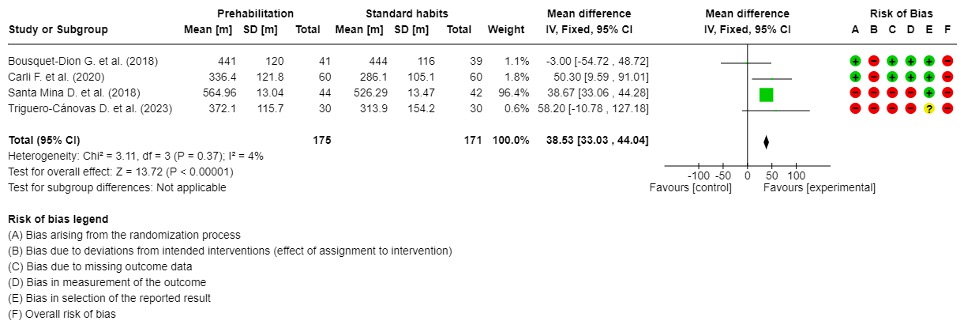
    The databases consulted were Medline, Scopus, Web of Science, and CINAHL. All available studies which included the keywords “prehabilitation” OR “prehab” OR “pre-operative rehabilitation” OR “peri-operative rehabilitation” AND “oncology patients” OR “cancer patients” OR “patients with cancer” OR “cancer” AND “randomized controlled trial” OR “randomized controlled trial” OR “rct” have been included. Eligibility criteria included randomized controlled trials related to Prehabilitation interventions on cancer patients. The methodological quality of the included studies was assessed through the RoB2 Cochrane tool and the PEDro scale. The meta-analysis was conducted on studies that reported comparable follow-ups for comparable outcomes (reported as mean and standard deviation) and at least two studies were combined where possible. Data analysis was carried out with RevMan Web, a software developed by the Cochrane Collaboration, a free statistical software.

    Results

    The research on PubMed, CINHAL, Web of Science and Scopus databases, identified 584 articles; after removing duplicate items, 410 articles were found. 41 studies were included within the systematic review, 13 of which were found to be includable in the meta-analysis. The results of the studies were diverse, with the experimental groups reporting reduced postoperative hospital stay, improved endurance, muscle strength, respiratory function, quality of life, and urinary incontinence. The critical analysis of the articles using the PEDro scale revealed 27 RCTs with a good rating, 9 with a fair rating and 5 with a poor rating; instead the critical analysis of the articles using the Cochrane RoB2 tool revealed that all the articles are at high risk of bias, with the exception of two which present “some concerns”. The meta-analysis showed statistically significant values for 6MWT (38.53, 95%CI 33.03 – 44.04); HADS-depression (-0.71, 95%CI -0.93 – -0.49) and HADS-anxiety (-0.49, 95%CI -0.76 – -0.23). Cochrane RoB2 tool revealed that all included studies were at high risk of bias.

    Discussion and Conclusion

    Prehabilitation represents a specific intervention that aims to improve postoperative outcomes in fragile patients undergoing surgery, increasing their preoperative physiological reserve in anticipation of the stress they will face and facilitating the postoperative recovery of functional capacity [3]. Prehabilitation is a good intervention to use, with visible results one month after the intervention, especially in terms of functional capacity and mental health, the latter being very impactful in terms of reduced levels of anxiety and depression [4]. These data make it possible to justify a supportive intervention performed by physiotherapists, aiming to improve and restore health-related QoL in the short term, promoting patient-centred care. These results show that physiotherapists, as healthcare professionals, should be included as members of the cancer patient’s care planning team since the first phase of the disease.

    REFERENCES

    [1]      K. Nurgali, R. T. Jagoe, and R. Abalo, ‘Editorial: Adverse Effects of Cancer Chemotherapy: Anything New to Improve Tolerance and Reduce Sequelae?’, Front Pharmacol, vol. 9, no. MAR, Mar. 2018, doi: 10.3389/FPHAR.2018.00245.

    [2].        H. Ismail, P. Cormie, K. Burbury, J. Waterland, L. Denehy, and B. Riedel, ‘Prehabilitation Prior to Major Cancer Surgery: Training for Surgery to Optimize Physiologic Reserve to Reduce Postoperative Complications’, Curr Anesthesiol Rep, vol. 8, no. 4, pp. 375–385, Dec. 2018, doi: 10.1007/S40140-018-0300-7.

    [3] F. Carli et al., ‘Effect of Multimodal Prehabilitation vs Postoperative Rehabilitation on 30-Day Postoperative Complications for Frail Patients Undergoing Resection of Colorectal Cancer: A Randomized Clinical Trial’, JAMA Surg, vol. 155, no. 3, pp. 233–242, Mar. 2020, doi: 10.1001/JAMASURG.2019.5474.

    [4] A. Pitman, S. Suleman, N. Hyde, and A. Hodgkiss, ‘Depression and anxiety in patients with cancer’, BMJ (Online), vol. 361, 2018, doi: 10.1136/BMJ.K1415.

  • Sviluppo delle versioni Italiane del Örebro Musculoskeletal Pain Screening Questionnaire and Optimal Screening for Prediction of Referral and Outcome Yellow Flag: uno studio di affidabilità e validità

    Sviluppo delle versioni Italiane del Örebro Musculoskeletal Pain Screening Questionnaire and Optimal Screening for Prediction of Referral and Outcome Yellow Flag: uno studio di affidabilità e validità

    Development of the Italian versions of the Örebro Musculoskeletal Pain Screening Questionnaire and Optimal Screening for Prediction of Referral and Outcome Yellow Flag: reliability and validity study

    Autori

    Bonetti Francesca [University of Rome Tor Vergata, Rome, Italy; Physioup Physiotherapy Practice, Rome, Italy]

    Angilecchia Domenico [Department of Medicine and Health Science “Vincenzio Tiberio”, University of Molise, Campobasso, Italy; Rehabilitation Service-ASL, Bari, Italy]

    Agostini Alessandro [University of Rome Tor Vergata, Rome, Italy; Pain Unit. Santa Maria Maddalena Hospital. Advance Algology Research, Occhiobello (RO), Italy]

    Marighetto Paolo [University of Rome Tor Vergata, Rome, Italy; Private Physiotherapy Practice, Castello di Godego (TV), Italy]

    Minnucci Silvia [University of Rome Tor Vergata, Rome, Italy]

    Giglioni Gloria [University of Rome Tor Vergata, Rome, Italy; Department of Rehabilitation, Asl Roma3, Rome, Italy]

    Chiarotto Alessandro [Department of General Practice, Erasmus MC, University Medical Center, Rotterdam, The Netherlands]

    Pellicciari Leonardo [IRCCS Istituto delle Scienze Neurologiche di Bologna, Bologna, Italy

    Introduction

    Low back pain (LBP) is the leading cause of disability worldwide with important social, healthcare and economic consequences. The early detection of prognostic factors using the Örebro Musculoskeletal Pain Screening Questionnaire (ÖMPQ-21) or the Optimal Screening for Prediction of Referral and Outcome Yellow Flag (OSPRO-YF) can predict improvement in pain and disability for patients with nonspecific LBP. The ÖMPQ-21 and the OSPRO-YF have been validated in several languages with moderate to good construct and predictive validity, and test-retest reliability. However, an Italian version of these instruments is not available, and this limits the use of these tools in clinical practice and in national and international studies.

    Therefore, this study aims to translate and cross-culturally adapt the ÖMPQ-21 and the OSPRO-YF with their short versions into Italian,and to evaluate their measurement properties (i.e., reliability and validity) in patients with LBP.

    Methods

    The ÖMPQ-21 and the OSPRO-YF were translated into Italian following international guidelines, and final Italian versions were developed. Then, they were administered to adult patients with acute, subacute and chronic nonspecific LBP, together with a Numerical Rating Pain Scale (NPRS), the Oswestry Disability Index (ODI), the Pain Self-Efficacy Questionnaire (PSEQ), and the Pain Catastrophizing Scale (PCS). The following measurement properties of the full versions and their short forms were evaluated according to COSMIN recommendations: test-retest reliability (by means of Intraclass Correlation Coefficient [ICC]), measurement error (Standard Error of Measurement [SEM], Minimal Detectable Change [MDC]), and construct validity (hypotheses testing for correlations with other instruments).

    Results

    Eighty-three LBP patients (age=47.0±15.2 years; 56.6% female) were included. The translation processes were performed without any issue. Test-retest reliability of the ÖMPQ-21, OSPRO-YF, and their short forms (studied in 31 patients) were excellent and good, respectively (ICC:=0.82; 95%CI=0.65-0.91 for ÖMPQ-21; ICC=0.80, 95%CI, 0.63-0.90 for ÖMPQ short form; ICC=0.92; 95%CI=0.84-0.97 for OSPRO-YF; ICC=0.92, 95%CI=0.84-0.96 for OSPRO 10 items; ICC=0.92, 95%CI=0.92-0.98 for OSPRO 7 items). The measurement error analysis revealed a SEM of 2.3 points (2.8% of the scale range) and a MDC of 6.4 points (7.8%) for the OSPRO-YF, and a SEM of 6.7 points (3.2%) and a MDC of 18.6 points (8.9%) for the OMPQ-21. The construct validity of the ÖMPQ-21, its short version and OSPRO-YF was satisfactory and moderate, as 100% (4 out 4) and 50% (2 out 4) of the a-priori hypotheses were met, respectively. Overall, the OSPRO-YF performed slightly better than the OMPQ-21 on all three measurement properties

    Discussion and Conclusion

    The Italian versions of the ÖMPQ-21 and OSPRO-YF were developed. The OSPRO-YF showed excellent test-retest reliability in all versions (ICC>0.90), whereas the ÖMPQ-21 and ÖMPQ short forms reported good test-retest reliability (ICC>0.80). Measurement error was below 20% of the scale range for both instruments. Construct validity was satisfactory for the OSPRO-YF and its short versions, whereas it was moderate for the OMPQ-21 and its short forms.

    ÖMPQ-21, OSPRO-YF and their short versions are quick to administer, and they are reliable and valid tools for identifying yellow flags in patients with LBP. The OSPRO-YF generally performs better than the OMPQ on all three assessed measurement properties, and therefore it could be clinically preferable. Future studies with a greater sample in different settings and musculoskeletal pathologies are needed to confirm the findings of the current study, and to compare head-to-head their prognostic ability to predict core outcomes in LBP patients.

    REFERENCES

    Beaton DE, Bombardier C, Guillemin F, Ferraz MB. Guidelines for the process of cross-cultural adaptation of self-report measures. Spine (Phila Pa 1976). 2000 Dec 15;25(24):3186-91. doi: 10.1097/00007632-200012150-00014.

    Gagnier JJ, Lai J, Mokkink LB, Terwee CB. COSMIN reporting guideline for studies on measurement properties of patient-reported outcome measures. Qual Life Res. 2021 Aug;30(8):2197-2218. doi: 10.1007/s11136-021-02822-4.

  • Profilo nazionale dei fisioterapisti con dottorato o dottorandi in Italia: uno studio trasversale basato su un sondaggio web

    Profilo nazionale dei fisioterapisti con dottorato o dottorandi in Italia: uno studio trasversale basato su un sondaggio web

    National profile of Physical Therapists with PhD or who are PhD students in Italy: A cross-sectional study based on a web-survey

    Autori

    Pellicciari Leonardo [IRCCS Istituto Delle Scienze Neurologiche di Bologna, Bologna, Italy]

    Ravizzotti Elisa [Department of Neuroscience, Rehabilitation, Ophthalmology, Genetics, Maternal and Child Health (DINOGMI), University of Genoa, Genoa, Italy]

    Gianola Silvia [Unit of Clinical Epidemiology, IRCCS Istituto Ortopedico Galeazzi, Milan, Italy]

    Castellini Greta [Unit of Clinical Epidemiology, IRCCS Istituto Ortopedico Galeazzi, Milan, Italy]

    Putzolu Martina [Department of Experimental Medicine (DIMES), Section of Human Physiology, University of Genoa, Genoa, Italy]

    Bertazzoni Luca [Vrije Universiteit Bruxelles (VUB), Brussels, Belgium; Painlab Studio Osteopatico, Milan, Italy]

    Rossetto Gianluca [Department of Information Engineering, University of Brescia, Brescia, Italy]

    Barbero Marco [Rehabilitation Research Laboratory 2rLab, Department of Business Economics, Health and Social Care, University of Applied Sciences and Arts of Southern Switzerland, Manno, Switzerland.]

    Fabbri Alessia [AUSL della Romagna, Cesena, Italy]

    Stefano Vercelli [Rehabilitation Research Laboratory 2rLab, Department of Business Economics, Health and Social Care, University of Applied Sciences and Arts of Southern Switzerland, Manno, Switzerland.] Paci Matteo [Department of Allied Health Professions, Azienda USL Toscana Centro, Florence, Italy; Department of Experimental and Clinical Medicine, University of Florence, Florence, Italy]

    Introduction

    In recent years, the physical therapist (PT) profession in Italy has grown culturally and scientifically. One of the contributing factors to this development has been the increasing number of PTs who have pursued a higher education program at universities, such as doctoral programmes (PhD).

    In 2022, [1] we were able to identify 87 PTs who hold a PhD and 47 PhD students (PhDs). Their bibliometric indices were significantly higher than the national average of PTs who authored scientific articles (including academic ones), demonstrating that PhD programs effectively promote higher scientific achievements.

    In the past two years, other colleagues were engaged in a doctoral program. Understanding the trajectories of doctoral programmes is the first essential step to promote the stable employment of PTs in academic and research environments in Italy and to foster the cultural growth of the profession. Therefore, the aim of this study was to update the profile of PTs with a PhD or who are PhDs.

    Methods

    This study was part of a broader national investigation promoted by the Italian Association of Physiotherapy (AIFI) and supported by the Italian Society of Physiotherapy (SIF).

    An anonymous questionnaire investigating doctoral-related characteristics was administered online to PTs who were currently enrolled in, or completed a PhD program in September 2023. Physiotherapists were included in a database on the website of the SIF, updated in late August 2023 [2].

    The purpose of the survey was to gather data about the attended PhD programs, research background, and employment history in addition to professional honors and recognition of participants. Two bibliometric indices were also extracted: the number of published articles was provided by the respondents, and their H-index was retrieved from the Scopus database.

    Results

    Out of 165 PTs listed in the SIF database, 101 (61.2%) responded to the questionnaire. Fifty-six (55.4%) of them declared that they obtained a PhD, while 45 (44.6%) were PhDs. About one third (N=42) of PTs with PhDs and two-third (N=29) of PhDs attended their program in Italy. Only 18 (32.1%) PTs with PhDs did their doctorate with a scholarship, while 27 (60.0%) of PhDs obtained a scholarship. Among PTs with PhD, the skills acquired during the PhD were very or somewhat useful for 44 (78.6%) of them, and 24 (42.9%) thought that obtaining a PhD was very important to find a work after the PhD. The tutor was a PT for 16 (28.6%) PT with PhD and for 23 (51.1%) for PhDs. Thirty-seven (82.2%) PhDs would choose to attend their PhD again. About two-third of PTs with PhD (N=37, 67.3%) currently hold an academic position in Italy or abroad. Finally, 15 (27.3%) PTs with PhD obtained the national scientific qualification.

    Discussion and Conclusion

    The number of PTs engaged in a PhD program has increased in recent years [3]. Unfortunately, about one-third of respondents had to emigrate to study because of the small number of PhD programs available in Italy and the lack of leadership of PhD programs in our profession. However, in 2023 the majority of PhDs have scholarship or funding (unlike PTs with PhD) that allow them to dedicate themselves to their research activity fully. PTs with PhD found their path useful, both in terms of skills acquired and professional impact. Furthermore, PhDs are satisfied with their path. Finally, in recent years, more PTs have filled the role of tutor; this means more PTs have acquired skills to fill this role. Therefore, the data collected by this study show a growing trend of Italian PTs engaged with PhD programmes, and a concomitant increase in the quality of their scientific production.

    REFERENCES

    [1] Pellicciari L, Vercelli S, Barbero M, Ravizzotti E, Corbetta D, Fabbri A, Pillastrini P. Italian physiotherapists who hold a PhD: ready for a new battle of Thermopylae? International Scientific Congress AIFI 2022. 28-29 October 2022.

    [2] Italian Society of Physiotherapy internet site. Available at: https://www.sif-fisioterapia.it/risorse/fisioterapisti-e-dottorati-di-ricerca/ Accessed on August 20st, 2023.

    [3] Vercelli S, Ravizzoti E, Paci M. Are they publishing? A descriptive cross-sectional profile and bibliometric analysis of the journal publication productivity of Italian physiotherapists. Arch Physiother. 2018;8:1.

  • Riabilitazione della scrittura e delle abilità di utilizzo del touchscreen in pazienti con malattia di Parkinson

    Riabilitazione della scrittura e delle abilità di utilizzo del touchscreen in pazienti con malattia di Parkinson

    Rehabilitation of handwriting and touchscreen skills in patients with Parkinson’s disease

    Autori

    Zenere Lucia [Neuroimaging Research Unit, Division of Neuroscience IRCCS San Raffaele Scientific Institute, Milan, Italy]

    Sarasso Elisabetta [Neuroimaging Research Unit, Division of Neuroscience IRCCS San Raffaele Scientific Institute, Milan, Italy; Vita-Salute San Raffaele University, Milan, Italy; Department of Neuroscience, Rehabilitation, Ophthalmology, Genetics and Maternal Child Health, University of Genoa, Genoa, Italy]

    Gardoni Andrea [Neuroimaging Research Unit, Division of Neuroscience IRCCS San Raffaele Scientific Institute, Milan, Italy; Vita-Salute San Raffaele University, Milan, Italy]

    Grassi Andrea [Neuroimaging Research Unit, Division of Neuroscience IRCCS San Raffaele Scientific Institute, Milan, Italy; Vita-Salute San Raffaele University, Milan, Italy]

    Balestrino Roberta [Neurology Unit; Neurorehabilitation Unit, IRCCS San Raffaele Scientific Institute, Milan, Italy]

    Emedoli Daniele [Department of Rehabilitation and Functional Recovery, IRCCS Ospedale San Raffaele, Milan, Italy] Basaia Silvia [Neuroimaging Research Unit, Division of Neuroscience IRCCS San Raffaele Scientific Institute, Milan, Italy]

    Sibilla Elisa [Neuroimaging Research Unit, Division of Neuroscience IRCCS San Raffaele Scientific Institute, Milan, Italy] Canu Elisa [Neuroimaging Research Unit, Division of Neuroscience; Neurology Unit IRCCS San Raffaele Scientific Institute, Milan, Italy]

    Malcangi Massimo [Neurology Unit; Neurorehabilitation Unit, IRCCS San Raffaele Scientific Institute, Milan, Italy] Volontè Maria Antonietta [Neurology Unit, IRCCS San Raffaele Scientific Institute, Milan, Italy]

    Corbetta Davide [Department of Rehabilitation and Functional Recovery, IRCCS Ospedale San Raffaele, Milan, Italy] Filippi Massimo [Neuroimaging Research Unit, Division of Neuroscience; Neurology Unit; Neurorehabilitation Unit; Neurophysiology Service, IRCCS San Raffaele Scientific Institute, Milan, Italy; Vita-Salute San Raffaele University, Milan, Italy]

    Agosta Federica [Neuroimaging Research Unit, Division of Neuroscience; Neurology Unit IRCCS San Raffaele Scientific Institute, Milan, Italy; Vita-Salute San Raffaele University, Milan, Italy]

    Introduction

    Bradykinesia, which is the cardinal sign of Parkinson’s disease (PD), can strongly impact upper limb functions. The aims of the study were: 1) to evaluate handwriting, hand dexterity and touchscreen abilities using a smartphone in PD patients relative to healthy subjects; and 2) to assess the effect of a rehabilitative intervention for the upper limb on handwriting and touchscreen skills in PD patients.

    Methods

    Thirty-seven PD and 30 age- and sex-matched healthy controls were included. Hand dexterity was assessed using the Purdue Pegboard Test (PPT). To obtain objective kinematic data, we developed tests involving common gesture using smartphone (tap, swipe, slide), and handwriting tests consisting of copy of text and pre-writing tasks (e.g. repetitive loops or coloring a figure). Handwriting was performed on a touchscreen with a pen. All subjects performed a fMRI task consisting of alternatively open and close their hand (hand tapping). Patients with PD were randomized into two training groups receiving 8 weeks of rehabilitation (2/week, 1 hour/session). Both groups performed exercises stimulating speed and amplitude of handwriting, tap, swipe and slide movements. One group performed the exercises in a real setting (pen and paper, wooden table), the other used technological devices (tablet and smartphone). In this preliminary analysis, patients in both groups were considered together.

    Results

    At baseline, patients with PD showed a worse manual dexterity as measured by PPT and a worse motor performance in terms of reduced movement speed and amplitude of swipe, slide and tapping movements on the smartphone as well as reduced handwriting speed and amplitude relative to healthy controls. During the hand tapping task, PD patients showed a reduced activity of motor-related brain areas, particularly in the supplementary motor area and cerebellum. After 8 weeks of rehabilitation, patients with PD showed improved speed and amplitude during both handwriting and smartphone tasks, an increased activity of cerebellar areas and a reduced activity of fronto-temporal areas.

    Discussion and Conclusion

    It is not surprising that patients with PD showed altered handwriting and reduced ability to use a smartphone. Nevertheless, few studies focused on the rehabilitation of handwriting and touchscreen skills in PD. Our results showed the potential benefits of physiotherapy in improving not only movement speed and amplitude, but also in promoting a more efficient brain activity. Technological devices with customized software can provide quantitative measures of handwriting and dexterity to objectively and precisely quantifying bradykinesia in PD. Moreover, a specific training for the upper limb can reduce the impact of bradykinesia and promote neural plasticity.

    Funding: Italian Ministry of Health grant number GR-2018-12366005

    REFERENCES

    References:

    1. Postuma, R. B. et al. MDS clinical diagnostic criteria for Parkinson’s disease. Mov Disord 30, 1591-1601 (2015). doi: 10.1002/mds.26424
    2. Bologna, M. et al. Redefining Bradykinesia. Mov Disord 38, 551-557 (2023). doi: 10.1002/mds.29362
    3. Gardoni, A. et al. Rehabilitative interventions for impaired handwriting in people with Parkinson’s disease: a scoping review. Neurol Sci, 2667-2677 (2023). doi: 10.1007/s10072-023-06752-6
    4. Capato, T.T.C. et al. Clinical assessment of upper limb impairments and functional capacity in Parkinson’s disease: a systematic review. Arq Neuropsiquiatr, 1008-1015 (2023). doi: 10.1055/s-0043-1772769
  • La valutazione dell’equilibrio e della capacità motoria nel bambino affetto da PCI prima e dopo il trattamento con Tossina Botulinica focale agli arti inferiori, utilizzando il sistema VRRS Khymeia

    La valutazione dell’equilibrio e della capacità motoria nel bambino affetto da PCI prima e dopo il trattamento con Tossina Botulinica focale agli arti inferiori, utilizzando il sistema VRRS Khymeia

    The assessment of balance and motor skills in children with cerebral palsy before and after treatment with focal Botulinum Toxin in the lower limbs, a proposal for the use of the VRRS Khymeia system

    Autori

    Bejan Alexandra Ioana (Unione Genitori Italiani contro il tumore dei bambini UGI ODV, Turin, Italy)

    Naretto Gabriella Elena (Ospedale Infantile Regina Margherita, Turin, Italy)

    Imazio Paola (Ospedale Infantile Regina Margherita, Turin, Italy)

    Introduction

    Cerebral palsy (CP) is one of the most frequent causes of motor disability in children. According to the current definition, developed by an international team of experts, cerebral palsy is a group of permanent, but not unchanging, disorders of movement and/or posture and of motor function, which are due to a non-progressive interference, lesion, or abnormality of the developing/immature brain (1-2). According to European data, the average frequency of CP is 2.08 per 1000 live births (3-4). Spasticity, in combination with muscle tightness, weakness, decreased selectivity and reduced motor control, contributes to limitations in ambulation, functional ability, balance, physical fitness and participation (5). Therapeutic management focuses on minimizing disabilities and maximizing goal-related functional performance and participation. Administering Botulinum toxin to spastic muscles is promising to improve gait pattern and functional walking ability in ambulant children with cerebral palsy. This intervention creates a therapeutic window aimed at enhancing not only the gait pattern but also both static and dynamic balance.

    Methods

    We enrolled 15 patients (10 males and 5 females) with cerebral palsy (7 hemiplegic and 8 diplegic), with an average age of 9 years (ranging from 4 to 18 years) and classified as Gross Motor Function Classification System (GMFCS) II (10 patients) and GMFCS III (5 patients). We assessed their motor skills using the Berg Balance Scale, the Timed Up and Go (TUG) test, and the VRRS Khymeia technological tool.

    Results

    We collected the data at two time points: T0 at the time of toxin inoculation and T1 at the check-up one month after inoculation.

    The Berg Balance Scale is a test used to assess functional balance and it evaluates both dynamic and static balance through 14 tasks regarding mobility. The scale has been useful in predicting the risk of falls (6).

    The Timed Up and Go (TUG) test is a reliable, cost-effective, safe, and time-efficient way to evaluate overall functional mobility (7).

    The Virtual Reality Rehabilitation System (VRRS) Khymeia is a medical device that allows clinicians to assess postural control and acquire quantitative data. Its operation is based on the principles of Biofeedback and virtual reality and is equipped with the motor, postural and immersive VR modules. During the evaluation the device records and reports the patient’s COP (Center of Pressure) displacement, enabling the saving of numerical charts through which the results of the patient performance can be objectively and measurably evaluated (8).

    Discussion and Conclusion

    During this timeframe, all patients underwent physical therapy treatments combined with the use of AFO (Ankle-Foot Orthoses). We observed a statistically significant improvement in the scores obtained on the TUG and Berg evaluation scales (95% confidence interval). However, regarding the evaluation with the VRRS Khymeia, there was an increase in the score one month after inoculation, which was not statistically significant.

    In conclusion, we can affirm that it is necessary to enrol a larger sample of patients and administer the evaluations (TUG, BERG, and Khymeia) also at 3 and 6 months in order to verify a statistically significant relevance of the evaluation with VRRS Khymeia. We also consider it is important to highlight the increase in the score obtained by patients one month after the inoculation, and we are hopeful to further explore this research.

    REFERENCES

    1. Bax M, Goldstein M, Rosenbaum P, et al. Executive Committee for the Definition of Cerebral Palsy. Proposed definition and classification of cerebral palsy. Dev Med Child Neurol. 2005;47(8):571–576. doi: 10.1017/S001216220500112X 
    2. Rosenbaum P, Paneth N, Leviton A, et al. A report: the definition and classification of cerebral palsy. Dev Med Child Neurol. 2007; 109:8–14. 
    3. Surveillance of Cerebral Palsy in Europe. Surveillance of cerebral palsy in Europe: a collaboration of cerebral palsy surveys and registers. Dev Med Child Neurol. 2000; 42:816–824. doi: 10.1017/S0012162200001511 
    4. Sadowska M, Sarecka-Hujar B, Kopyta I. Cerebral Palsy: Current Opinions on Definition, Epidemiology, Risk Factors, Classification and Treatment Options. Neuropsychiatr Dis Treat. 2020; 16:1505-1518 
    5. Rachel E. Thomas, Leanne M. Johnston, Leanne Sakzewski, Megan J. Kentish, Roslyn N. Boyd, Evaluation of group versus individual physiotherapy following lower limb intra-muscular Botulinum Toxin-Type A injections for ambulant children with cerebral palsy: A single-blind randomized comparison trial, Research in Developmental Disabilities, Volumes 53–54, 2016: 267-278, ISSN 0891-4222 
    6. Miranda-Cantellops N, Tiu TK. Berg Balance Testing. 2023 Feb 17. In: StatPearls [Internet]. Treasure Island (FL): StatPearls Publishing; 2024 Jan–. PMID: 34662032. 
    7. Ortega-Bastidas P, Gómez B, Aqueveque P, Luarte-Martínez S, Cano-de-la-Cuerda R. Instrumented Timed Up and Go Test (iTUG)-More Than Assessing Time to Predict Falls: A Systematic Review. Sensors (Basel). 2023 Mar 24;23(7):3426. doi: 10.3390/s23073426. PMID: 37050485; PMCID: PMC10098780. 
    8. Martini G, Beani E, Filogna S, Menici V, Cioni G, Battini R, Sgandurra G. New Technological Approach for the Evaluation of Postural Control Abilities in Children with Developmental Coordination Disorder. Children. 2022; 9(7):957. https://doi.org/10.3390/children9070957 


  • Cosa ci dice la letteratura esistente sull’associazione tra caviglia-piede e anca nei soggetti con disordini muscoloscheletrici? Una scoping review

    Cosa ci dice la letteratura esistente sull’associazione tra caviglia-piede e anca nei soggetti con disordini muscoloscheletrici? Una scoping review

    What does the existing literature tell us about the association between ankle-foot and hip in subjects with musculoskeletal disorders? A scoping review

    Autori

    Lando Alex [Rehabilitation Unit, Department of Neuroscience, General Hospital-University of Padova, 35128 Padova, Italy]

    Manni Tiziana [Alma Mater University of Bologna, Bologna, Italy]

    Scariato Angela [Alma Mater University of Bologna, Bologna, Italy]

    Pregnolato Giorgia [Laboratory of Healthcare Innovation Technology, IRCCS San Camillo Hospital, 30126 Venice, Italy]

    Mantineo Alessio [Alma Mater University of Bologna, Bologna, Italy]

    Turolla Andrea [Department of Biomedical and Neuromotor Sciences, Alma Mater University of Bologna, 40128 Bologna, Italy] [Unit of Occupational Medicine, IRCCS Azienda Ospedaliero-Universitaria di Bologna, 40138 Bologna, Italy]

    Pillastrini Paolo [Department of Biomedical and Neuromotor Sciences, Alma Mater University of Bologna, 40128 Bologna, Italy] [Unit of Occupational Medicine, IRCCS Azienda Ospedaliero-Universitaria di Bologna, 40138 Bologna, Italy]

    Introduction

    “Regional interdependence” (RI) refers to the concept and clinical model that a patient’s primary musculoskeletal symptom(s) may be directly or indirectly related to or influenced by disorders of various body systems regardless of proximity to the primary symptom(s). In the field of lower limb rehabilitation, even it is a common clinical practice to assess and treat the ankle or foot in patients with other lower quarter impairments, very few studies have specifically looked at the influence of ankle-foot on distant regions, such as the hip region and vice-versa. To the authors’ knowledge, no study has been conducted in this regard, and consequently there is not a comprehensive overview both for clinicians and researchers. Defining the relevant relationships and interdependence between these anatomical regions and expected outcomes could lay the foundation for confidently incorporating RI into current models of musculoskeletal disorders (MSDs) management.

    Methods

    This scoping review was performed in accordance with the methodology of the Joanna Briggs Institute and the scoping review protocol was registered a priori on Figshare (https://doi.org/10.6084/m9.figshare.21277185.v1). Six databases (MEDLINE, CINAHLComplete Cochrane Central, Embase, PEDro Scopus) were searched up to October 2022. Studies of adults with both ankle-foot and hip disfunctions and/or related clinical conditions were included. No restrictions on study design, publication type, data and language were applied. Grey literature and the reference lists of all relevant studies were searched for additional records. Two pairs of reviewers independently screened all abstracts and full-text studies for inclusion. Results were presented in numerical and thematic form.

    Results

    From 9408 initial records, 61 studies met inclusion criteria. The majority of articles were published after 2011 (N = 55) and the most represented study design was the cross-sectional one (N = 36). Chronic ankle instability (CAI) was the ankle-foot MSD mainly studied to be involved in the regional hip interdependence (N = 37). CAI was found to be primarily associated with 5 categories of hip-related MSDs: muscle deficits, kinematic alterations, muscle deficits combined with kinematic alterations, altered neuro-mechanisms, and impairments in the quality of life. Other foot-ankle MSDs investigated in a hip RI context were altered kinematics condition, foot misalignment, Achilles tendinopathy and, less frequently, lateral ankle sprain, functional and mechanical ankle instability, plantar fasciitis, foot pain and osteoarthritis. In this case, the most frequently associated hip conditions were kinematic changes in hip kinematics and muscle deficits.

    Discussion and Conclusion

    This scoping review identified 61 studies exploring and discussing regional ankle-foot and hip interdependence in subjects with related MSDs. Findings displayed a higher number of cross-sectional studies, useful to detect the presence of RI, without however explaining a causal link between the conditions studied. Assuming that scoping reviews are not conducted to develop trustworthy clinical guidelines and recommendations, from a clinical point of view we can suggest that RI may be a suitable model for the management of musculoskeletal disorders involving the ankle/foot and hip districts, especially in subjects with CAI. In the rehabilitation of subjects with CAI, it may also be useful to assess the hip district and check for the presence of muscle deficits, kinematic alterations, altered neuro-mechanisms or impairments in the quality of life. Clinical questions remain open, such as which are the most effective treatments in this RI context and for which specific population subgroups.

    REFERENCES

    • Sueki DG, Cleland JA, Wainner RS. A regional interdependence model of musculoskeletal dysfunction: research, mechanisms, and clinical implications. J Man Manip Ther. 2013 May;21(2):90–102
    • Bialosky JE, Bishop MD, George SZ. Regional interdependence: a musculoskeletal examination model whose time has come. J Orthop Sports Phys Ther. 2008 Mar;38(3):159–60; author reply 160
    • Hertel J, Corbett RO An Updated Model of Chronic Ankle Instability J Athl Train 2019 Jun 54 6 572 88
  • Equilibrio come nutrimento: fisioterapia e utilizzo dello specchio digitale in pazienti con disturbo dell’immagine corporea nell’ Anoressia Nervosa.

    Equilibrio come nutrimento: fisioterapia e utilizzo dello specchio digitale in pazienti con disturbo dell’immagine corporea nell’ Anoressia Nervosa.

    Equilibrio come nutrimento: fisioterapia e utilizzo dello specchio digitale in pazienti con disturbo dell’immagine corporea nell’ Anoressia Nervosa.

    Balance as nourishment: physiotherapy and use of the digital mirror in patients with body image disturbance in Anorexia Nervosa.

    Autori

    Grasso Anna Maria (UOC MEdicina Fisica e Riabilitazione AST Fermo, Porto San Giorgio, Italy)

    Malaspina Vissia (UOC MEdicina Fisica e Riabilitazione AST Fermo, Porto San Giorgio, Italy)

    Bragagnolo Matteo (UOC MEdicina Fisica e Riabilitazione AST Fermo, Porto San Giorgio, Italy)

    Introduction

    Body image is a multidimensional construct that includes perceptual, cognitive, emotional and behavioral aspects towards one’s body. 

    A negative body image is a significant factor in Eating Disorder; in eating disorders, this disorder represents a specific symptom of the disease, a triggering cause of the pathology and an obstacle to therapeutic intervention. 

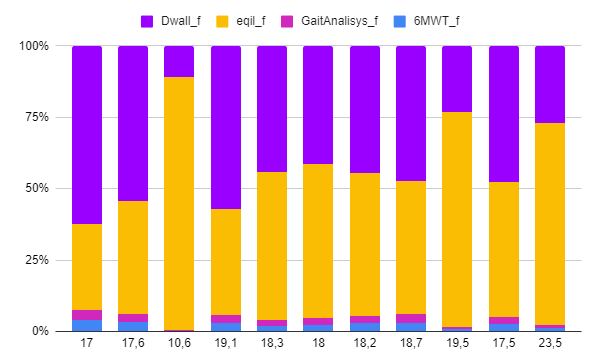
    This study aims to evaluate the effectiveness of using high-tech tools in caring for patients diagnosed with Anorexia Nervosa associated with hyperactivity and body image disturbance. This evaluation was conducted through a qualitative research project which involved a large multidisciplinary team (Physiotherapists, Educators, Dietitians, Physiatrists, Psychiatrists and Psychologists). The rehabilitation protocol was defined using the Walker View and the D-Wall (Tecnobody).

    Methods

    The reporting standards sheet aims to evaluate the containment of hyperactivity and the restoration of fluid, conscious and purposeful motor activity.

    12 girls were recruited according to the inclusion criteria (diagnosis of Anorexia nervosa with hyperactivity, body image disturbance, BMI>16 and acceptance of increased caloric intake); the measurement of the results was carried out through the observation of the researchers and the definition of scales and evaluation tools: for motor activity we chose stabilometric analysis, gait analysis and 6-minute walking test; the psycho-educational staff took care of the administration of SPPB (sarcopenia) and IPAQ questionnaire.

    The treatment protocol was calibrated on the patients with training programs and exergames with the exclusion of the mirror or avatar function; the treatment lasted ten weekly sessions plus two focus group sessions (one in the middle and one at the end of the treatment) led by the Educator of the DCA center.

    Results

    The exercises, based on the exploration of body boundaries and performed excluding the mirror function, led to a greater awareness of the difference between one’s own body and the outside world. The movements, recorded by the instruments used, initially appeared “broken”, lacking harmony and with reduced motor control; compared with those recorded at the end of the treatment, there was greater familiarity with the patient’s own body and his motor potential.

    The specific physiotherapy process had a positive impact on the perception of body image, allowing greater awareness of both somatosensory afferents and the bodily self.

    During the Focus Group, all the participants found that the exercise helped them better manage the anxiety, stress and depression components that are often associated with this condition, promoting greater compliance and also allowing greater adherence to the plan food.

    Discussion and Conclusion

    From a physiotherapeutic point of view, to correctly approach this type of patient, it is necessary to know the physiology and what the alterations the subject may encounter. The treatment allows you to manage purely biomechanical complications (for example muscle hipotrophy, greater risk of fractures, postural alterations, etc.), but also to lay the foundations for restoring correct body perception, a fundamental prerequisite for healing. 

    Physiotherapy aimed at perceptive re-education, supported by the use of high-tech tools, has demonstrated significant improvements that are reported by the patients themselves. However, the actual effectiveness of this approach will need to be further analyzed, given the limited diffusion of high-tech tools and physiotherapy treatment protocols for patients with Anorexia Nervosa.

    REFERENCES

    1. Meyer D. Neill E. Phillipou A. Rossell S.L. Tan E.J Lin Toh W. Van Rheenen T.E. “Eating and exercise behaviors in eating disorders and the general population during the COVID-19 pandemic in Australia: Initial results from the COLLATE project” International journal of eating disorders Wiley, maggio 2020
    2. Black D.W. and Grant J. E. “DSM-5 Guidebook, first edition” , Raffaello Cortina Editore, 2015.
    3. Wehbe Chidiac. C “An update on the medical consequences of anorexia nervosa” , Current Opinion , Agosto 2019
    4. Purves D. Augustine G.J. Fitzpatrick D. Hall W.C. LaMantina A. White L.E. “Neuroscience” quarta edizione italiana , Zanichelli 2013
    5. Seyed Alireza Hosseini; Ranjit K. Padhy. “Body Image Distortion” Review StatPearls Publishing; 2021 Jan. 2021 Sep 9.84
    6. Probst M. The “Body Experience in Eating Disorders: Research & Therapy” european journal of adapted physical activity, Volume 4, Issue 1 (2005), Faculty of Kinesiology and Rehabilitation Sciences, Katholieke Universiteit Leuven, Belgium