Categoria: Congresso 2024

  • Efficacia e conseguenze dell’accesso diretto in fisioterapia: una revisione sistematica

    Efficacia e conseguenze dell’accesso diretto in fisioterapia: una revisione sistematica

    Effectiveness and consequences of Direct access in physical therapy: a systematic review

    Autori

    Gallotti Marco (Catholic University of the Sacred Heart – Rome University, Rome, Italy)

    Campagnola Benedetta (University Hospital Foundation Campus Bio-Medico – Rome University, Rome, Italy)

    Cocchieri Antonello (Catholic University of the Sacred Heart – Rome University, Rome, Italy)

    Firas Mourad (Department of Physiotherapy, LUNEX International University of Health, Exercise and Sports, 4671 Luxembourg, Luxembourg)

    John Heick (Department of Physical Therapy, Northern Arizona University, P.O. Box 15105, Flagstaff, AZ 86011, USA)

    Maselli Filippo (Department of Human Neurosciences, Sapienza – Rome University, Rome, Italy)

    Introduction

    Direct access in physical therapy (DAPT), it is the possibility that the patient has to self-refer to physical therapy without a previous medical examination. This model of care in the musculoskeletal field has shown better outcomes than traditional ones (based on the medical model of care). Unfortunately, this model, in the public care setting of many countries is still not considered. The primary aim of the present review is to understand if the DAPT for the patient with musculoskeletal disorders is effective about: management, cost-effectiveness, work for the patient, safety, satisfaction, health outcome compared to the medical model. The secondary objective is to define, which is the figure appointed to carry out the DAPT.

    Methods

    This systematic review complied with the reporting guidelines of the 27-item checklist 2020 of the Prisma statement. The search string was launched on: Medline, Scopus and Web Of Science. The risk of bias assessment was carried out through the Version 2 of the Cochrane risk-of-bias tool (ROB-2) for randomized controlled trials and the Newcastle Ottawa Scale (NOS) for observational studies. The qualitative data were discussed through a narrative synthesis of the evidence while the quantitative data were merged through parametric statistical tools.

    PROSPERO REGISTRATION NUMBER: CRD42022349261

    Results

    A total of 28 articles analyzed. Results show DAPT is independent in the evaluation and management of the patient, with a high referral accuracy and in the rate of return to visit. The medical model seems to be more inclined to use imaging, drugs and refer the patient to other specialists. DAPT would be cheaper than the medical model and determines a greater reduction of cases and sick leaves. Most studies show superiority of patient satisfaction with DAPT over the medical model. All studies show the absence of adverse events and DAPT would also seem to have a shorter average waiting times than the medical model. Regarding health outcomes, there would be no evidence of superiority of one model over the other. Risk of bias assessment using ROB-2 shows an intermediate risk of bias risk for the Randomized Controlled Trials, while, for the observational studies the average score is equal to 6/9 points for the NOS scale.

    Discussion and Conclusion

    DAPT is an independent, safe, and reliable triage and management model of care, superior from an economic and patient satisfaction point of view compared to the traditional medical care model. It is not possible to give a definitive conclusion on the type of figure most suitable for carrying out the DAPT. DAPT needs to be implemented within the public service playing a key role in reducing healthcare costs.

    REFERENCES

    1. The Burden of Musculoskeletal Diseases in the United States|Prevalence, Societal and Economic Cost. Available online:
      https://www.boneandjointburden.org/.
      APTA APTA Direct Access Advocacy. Available online: https://www.apta.org/advocacy/issues/direct-access-advocacy.
    2. Hon, S.; Ritter, R.; Allen, D.D. Cost-Effectiveness and Outcomes of Direct Access to Physical Therapy for Musculoskeletal
      Disorders Compared to Physician-First Access in the United States: Systematic Review and Meta-Analysis. Phys. Ther. 2021, 101,
      pzaa201.
    3. Maselli F, Piano L, Cecchetto S, Storari L, Rossettini G, Mourad F. Direct Access to Physical Therapy: Should Italy Move Forward? Int J Environ Res Public Health. 2022 Jan 4;19(1):555. doi: 10.3390/ijerph19010555. PMID: 35010817; PMCID: PMC8744939.
  • La riabilitazione robotica per il recupero degli arti superiori dopo un ictus produce effetti statisticamente significativi, ma non clinicamente rilevanti: una revisione sistematica con meta-analisi

    La riabilitazione robotica per il recupero degli arti superiori dopo un ictus produce effetti statisticamente significativi, ma non clinicamente rilevanti: una revisione sistematica con meta-analisi

    Robotic rehabilitation for upper limb recovery after stroke produces statistically significant, but not clinically relevant effects: a systematic review with meta-analysis

    Autori

    Ugolini Alessandro [Independent Researcher, Empoli (FI), Italy]

    Verola Sofia [Unit of Functional Rehabilitation, Department of Allied Health Professions, Azienda USL Toscana Centro, Florence, Italy]

    Pellicciari Leonardo [IRCCS Istituto delle Scienze Neurologiche di Bologna, Bologna, Italy]

    Di Bari Mauro [Department of Experimental and Clinical Medicine, University of Florence, Florence, Italy; Department of Medicine and Geriatrics, Unit of Geriatrics, Azienda Ospedaliero-Universitaria Careggi, Florence, Italy]

    Paci Matteo [Department of Allied Health Professions, Azienda USL Toscana Centro, Florence, Italy; Department of Experimental and Clinical Medicine, University of Florence, Florence, Italy]

    Introduction

    Recent randomized clinical trials (RCTs) provide statistical evidence on the effects of robot-assisted training (RAT) for upper limb impairments in post-stroke subjects; however, evidence on RAT clinical relevance is lacking. RCT findings are commonly judged in terms of their statistical significance, i.e. trying to ascertain whether the difference between the experimental and control groups evaluated is real and not attributable to chance. However, from a clinician’s perspective it is important that the RCT results are clinically relevant, i.e. that the effect size of the change is large enough to indicate that the patient’s condition has clinically improved. Usually, the clinical relevance is expressed by the minimal clinical important difference (MCID), i.e., the smallest change that is significant to the patient. Therefore, this study aimed to perform a systematic review with meta-analyses on the clinical relevance, expressed by the MCID, of RAT in improving independence in the activities of daily living, arm function and impairments in patients with stroke.

    Methods

    Four databases were queried until February 2023. RCTs investigating the RAT aimed to recover motor and functional skills of the upper limb in adult post-stroke patients were included. MCID values for each assessment tool were retrieved from specific databases. Two reviewers independently performed the screening, the data extraction and the assessment of methodological quality. Seven domains of the outcome measures were considered: activities of daily living, arm function, muscle strength, dexterity, muscle tone and pain. Two different sets of meta-analyses were performed, one for statistical significance and one for clinical relevance. When an MCID value was available, the clinical relevance of the original findings was expressed as standardized MCID overall score (SMOS), calculated as the difference between the mean of the outcome measures in the experimental and control groups divided by the corresponding MCID. The 95% CI associated with the SMOS point estimate was calculated using a pooled SD normalized by the corresponding MCID.

    Results

    Eighty-five studies were included in this systematic review and meta-analysis. In terms of statistical significance, meta-analyses showed that the domains of activity limitations (SMD=0.29; 95% CI: 0.15; 0.43), dexterity (SMD=0.19; 95% CI: 0.01; 0.37), function (SMD=0.28; 95% CI: 0.17; 0.39) and strength (SMD=0.44; 95% CI: 0.17; 0.71) showed a significant effect in favor of the experimental group; moreover, the domain of pain (SMD=0.53;95% CI:-0.15; 1.20) showed a non-significant effect in favor of the experimental treatment, while the domains of muscle tone (SMD=-0.02; 95% CI:-0.26; 0.23) showed a non-significant effect for the control group. However, none of the outcomes showed clinically relevant findings in the meta-analyses of the SMOSs, which was always <1.00, indicating that the advantage observed in the experimental group was lower than the corresponding MCID.

    Discussion and Conclusion

    The findings of this systematic review with meta-analysis showed that the RAT produces significant improvements in activity limitations, dexterity, function and strength but not in muscle tone and pain in patients with stroke when compared to control groups, but these improvements are not clinically relevant. Using the RAT in clinical practice can produce little improvement that cannot be relevant for stroke patients. Future research in this field should consider the clinical relevance when interpreting RCT results.

    REFERENCES

    Ferreira FMRM, Chaves MEA, Oliveira VC, Van Petten AMVN, Vimieiro CBS. Effectiveness of robot therapy on body function and structure in people with limited upper limb function: A systematic review and meta-analysis. PLoS One. 2018 Jul 12;13(7):e0200330. doi: 10.1371/journal.pone.0200330. Erratum in: PLoS One. 2018 Nov 16;13(11):e0207962. doi: 10.1371/journal.pone.0207962.

    Mehrholz J, Pohl M, Platz T, Kugler J, Elsner B. Electromechanical and robot-assisted arm training for improving activities of daily living, arm function, and arm muscle strength after stroke. Cochrane Database Syst Rev. 2018 Sep 3;9(9):CD006876. doi: 10.1002/14651858.CD006876.pub5.

    Mehrholz J, Pollock A, Pohl M, Kugler J, Elsner B. Systematic review with network meta-analysis of randomized controlled trials of robotic-assisted arm training for improving activities of daily living and upper limb function after stroke. J Neuroeng Rehabil. 2020 Jun 30;17(1):83. doi: 10.1186/s12984-020-00715-0.

  • Il tono serotoninergico e le soglie del dolore pressorio extracranico sono surrogati della risposta alla Pain Education nei pazienti con emicrania cronica.

    Il tono serotoninergico e le soglie del dolore pressorio extracranico sono surrogati della risposta alla Pain Education nei pazienti con emicrania cronica.

    Serotonergic tone and extracranial pressure pain thresholds are surrogates of response to Pain Education in Chronic Migraine patients.

    Autori

    Matteo Castaldo [IRCCS Fondazione Don Carlo Gnocchi, Milano, Italy]

    Tiziana Atzori [Dept. of Biomedical and Clinical Sciences, University of Milan, Milan, Italy]

    Daniele Lovattini [Dept. of Biomedical and Clinical Sciences, University of Milan, Milan, Italy]

    Carlo Manzoni [Dept. of Biomedical and Clinical Sciences, University of Milan, Milan, Italy]

    Chiara-Camilla Derchi [IRCCS Fondazione Don Carlo Gnocchi, Milano, Italy]

    Giacomo Querzola [Ospedale Luigi Sacco, Milano, Italy]

    Carlo Lovati [Ospedale Luigi Sacco, Milano, Italy]

    Angela Comanducci [IRCCS Fondazione Don Carlo Gnocchi, Milano, Italy]

    Simone Sarasso [Dept. of Biomedical and Clinical Sciences, University of Milan, Milan, Italy]

    Alessandro Viganò [IRCCS Fondazione Don Carlo Gnocchi, Milano, Italy]

    Introduction

    Pain neuroscience education (PNE) has been recently added as option for different chronic pain conditions. To date, however, no standard content or methods for PNE have been developed for chronic migraine (CM). This study aims at highlight mechanisms responsible for PNE effect in CM

    Methods

    We recruited consecutive CM patients aged 18-65. We excluded those with other headache diagnosis (except medication-overuse headache, MOH), migraine prophylaxis started in the last 3 months, concomitant neurological or psychiatric conditions, language barrier. Patients’ assessment included headache frequency and medication use, validated questionnaires (CSI, HADS, PCS, HIT-6, MIDAS), neurophysiological evaluations with nociceptive blink reflex (nBR), intensity dependence of auditory evoked potentials (IDAP), and clinical evaluation with pressure pain thresholds (PPTs) and wind-up ratio at baseline (T0), midway (T1) and at the end of the treatment (T2). PNE was administrated in ten lessons, once a week. Patients were treated in groups. Data from Responders (R) and Nonresponders (NR) were further analyzed.

    Results

    We recruited 14 female patients (mean age 43.4±16.4 years; mean schooling years 15.5±3.8). Headache days reduced from 18.5±5.2 to 13.4±7.5 (p=0.002) and HIT-6 from 63.1±3.3 to 56.0±6.0, p=0.013). Other evaluations were not significant. Serotonergic tone tended to reduce from T0 to T1 (p=0.13), while WUR significantly decreased from 3.1±1.8 at T0 to 1.8±1.6 at T1 (p=0.002) and negatively correlated with HIT-6 value at T2 (rho=-0.5, p=0.02). IDAP at midway negatively correlated with headache days’ reduction at T2 (rho=-0.5, p=0.04). Values of PPT on tibialis anterior (but not on temporalis muscle or metacarpophalangeal tendon) recorded midway to treatment positively correlated with ipsi- (rho= 0.73, p=0.002) and contralateral (rho=0.6, p=0.007) nBR at the same time point but not in other time-points

    Discussion and Conclusion

    PNE resulted to be effective in reducing migraine days and disability in a sample of CM patients as stand-alone preventive therapy. Early determination of the serotonergic tone could represent a predictive biomarker of response since, as in other studies, it correlated with later clinical benefit. PPT values on tibialis anterior could serve as a proxy of nNR, allowing for an intra-subject evaluation of central sensitization in CM also at clinical bed-side level.


    REFERENCES

    1. Aaseth, K., Grande, R. B., Kvaerner, K., Lundqvist, C., & Russell, M. B.
    (2010). Chronic rhinosinusitis gives a ninefold increased risk of chronic
    headache. The Akershus study of chronic headache. Cephalalgia, 30(2), 152-
    160.
    2. Al-Hassany, L., Haas, J., Piccininni, M., Kurth, T., Maassen Van Den Brink,
    A., & Rohmann, J. L. (2020). Giving researchers a headache–sex and gender
    differences in migraine. Frontiers in neurology, 11, 549038.
    3. Ambrosini, A., de Noordhout, A. M., Sandor, P. S., & Schoenen, J. (2003).
    Electrophysiological studies in migraine: a comprehensive review of their
    interest and limitations. Cephalalgia, 23(1_suppl), 13-31.
    4. Ambrosini, A., Rossi, P., De Pasqua, V., Pierelli, F., & Schoenen, J. (2003).
    Lack of habituation causes high intensity dependence of auditory evoked cortical
    potentials in migraine. Brain, 126(9), 2009-2015.
    5. Andersen, S., Petersen, M. W., Svendsen, A. S., & Gazerani, P. (2015).
    Pressure pain thresholds assessed over temporalis, masseter, and frontalis
    muscles in healthy individuals, patients with tension-type headache, and those
    with migraine—A systematic review. Pain, 156(8), 1409-1423.
    78
    6. Andrasik, F., Buse, D. C., & Grazzi, L. (2009). Behavioral medicine for
    migraine and medication overuse headache. Current pain and headache reports,
    13, 241-248.
    7. Andreatta, M., Puschmann, A. K., Sommer, C., Weyers, P., Pauli, P., &
    Mühlberger, A. (2012). Altered processing of emotional stimuli in migraine: an
    event-related potential study. Cephalalgia, 32(15), 1101-1108.
    8. Aramideh, M., & Ongerboer de Visser, B. W. (2002). Brainstem reflexes:
    electrodiagnostic techniques, physiology, normative data, and clinical
    applications. Muscle & Nerve: Official Journal of the American Association of
    Electrodiagnostic Medicine, 26(1), 14-30.
    9. Arendt‐Nielsen, L., & Yarnitsky, D. (2009). Experimental and clinical
    applications of quantitative sensory testing applied to skin, muscles and viscera.
    The Journal of Pain, 10(6), 556-572.
    10. Arendt‐Nielsen, L., Morlion, B., Perrot, S., Dahan, A., Dickenson, A., Kress,
    H. G., … & Drewes, A. M. (2018). Assessment and manifestation of central
    sensitisation across different chronic pain conditions. European Journal of Pain,
    22(2), 216-241.
    11. As, Z. (1983). The hospital anxiety and depression scale. Acta psychiatr
    scand, 67, 361-370.
    12. Ashina, M. Migraine. N Engl J Med, 383(19), 1866-1877.
    13. Ashina, M., Hansen, J. M., Do, T. P., Melo-Carrillo, A., Burstein, R., &
    Moskowitz, M. A. (2019). Migraine and the trigeminovascular system—40 years
    and counting. The Lancet Neurology, 18(8), 795-804.
    14. Ashina, S., Bentivegna, E., Martelletti, P., & Eikermann-Haerter, K. (2021).
    Structural and functional brain changes in migraine. Pain and Therapy, 10, 211-
    223.
    15. Ashkenazi, A., & Silberstein, S. (2007). Menstrual migraine: a review of
    hormonal causes, prophylaxis and treatment. Expert Opinion on
    Pharmacotherapy, 8(11), 1605-1613.
    16. Baeumler, P. I., Conzen, P., & Irnich, D. (2019). High temporal summation
    of pain predicts immediate analgesic effect of acupuncture in chronic pain
    patients—a prospective cohort study. Frontiers in Neuroscience, 13, 498.
    79
    17. Bartsch, T., & Goadsby, P. J. (2002). Stimulation of the greater occipital
    nerve induces increased central excitability of dural afferent input. Brain, 125(7),
    1496-1509.
    18. Bakhshani, N. M., Amirani, A., Amirifard, H., & Shahrakipoor, M. (2016).
    The effectiveness of mindfulness-based stress reduction on perceived pain
    intensity and quality of life in patients with chronic headache. Global journal of
    health science, 8(4), 142.
    19. Becker, W. J. (2013). The premonitory phase of migraine and migraine
    management. Cephalalgia, 33(13), 1117-1121.
    20. Benedetti, F., & Shaibani, A. (2018). Nocebo effects: more investigation
    is needed. Expert Opinion on Drug Safety, 17(6), 541-543.
    21. Benedetti, F., Lanotte, M., Lopiano, L., & Colloca, L. (2007). When words
    are painful: unraveling the mechanisms of the nocebo effect. Neuroscience,
    147(2), 260-271.
    22. Berardelli, A., Cruccu, G., Kimura, J., Ongerboer de Visser, B., B. W., &
    Valls-Solé, J. (1999). The orbicularis oculi reflexes. The International Federation
    of Clinical Neurophysiology. Electroencephalography and Clinical
    neurophysiology. Supplement, 52, 249-253.
    23. Bigal, M. E., Walter, S., & Rapoport, A. M. (2015). Therapeutic antibodies
    against CGRP or its receptor. British journal of clinical pharmacology, 79(6), 886-
    895.
    24. Bigal, M. E., Serrano, D., Buse, D., Scher, A., Stewart, W. F., & Lipton, R. B.
    (2008). Acute migraine medications and evolution from episodic to chronic
    migraine: A longitudinal population‐based study. Headache: The Journal of Head
    and Face Pain, 48(8), 1157-1168.
    25. Bjelland, I., Dahl, A. A., Haug, T. T., & Neckelmann, D. (2002). The validity
    of the Hospital Anxiety and Depression Scale: an updated literature review.
    Journal of psychosomatic research, 52(2), 69-77.
    26. Blau, J. N. (1992). Migraine: theories of pathogenesis. The Lancet,
    339(8803), 1202-1207.
    27. Blumenfeld, A. M., Bloudek, L. M., Becker, W. J., Buse, D. C., Varon, S. F.,
    Maglinte, G. A., … & Lipton, R. B. (2013). Patterns of use and reasons for
    80
    discontinuation of prophylactic medications for episodic migraine and chronic
    migraine: results from the second international burden of migraine study (IBMSII).
    Headache: The Journal of Head and Face Pain, 53(4), 644-655.
    28. Borsook, D., Maleki, N., Becerra, L., & McEwen, B. (2012). Understanding
    migraine through the lens of maladaptive stress responses: a model disease of
    allostatic load. Neuron, 73(2), 219-234.
    29. Bose, P., Karsan, N., & Goadsby, P. J. (2018). The migraine postdrome.
    CONTINUUM: Lifelong Learning in Neurology, 24(4), 1023-1031.
    30. Brinjikji, W., Luetmer, P. H., Comstock, B., Bresnahan, B. W., Chen, L. E.,
    Deyo, R. A., … & Jarvik, J. G. (2015). Systematic literature review of imaging
    features of spinal degeneration in asymptomatic populations. American journal
    of neuroradiology, 36(4), 811-816.
    31. Buchgreitz, L., Lyngberg, A. C., Bendtsen, L., & Jensen, R. (2006).
    Frequency of headache is related to sensitization: a population study. Pain,
    123(1-2), 19-27.
    32. Buse, D. C., Loder, E. W., Gorman, J. A., Stewart, W. F., Reed, M. L.,
    Fanning, K. M., … & Lipton, R. B. (2013). Sex differences in the prevalence,
    symptoms, and associated features of migraine, probable migraine and other
    severe headache: Results of the American migraine prevalence and prevention
    (ampp) study. Headache: The Journal of Head and Face Pain, 53(8), 1278-1299.
    33. Burstein, R., & Jakubowski, M. (2005). Unitary hypothesis for multiple
    triggers of the pain and strain of migraine. Journal of comparative neurology,
    493(1), 9-14.
    34. Burstein, R., Noseda, R., & Borsook, D. (2015). Migraine: multiple
    processes, complex pathophysiology. Journal of Neuroscience, 35(17), 6619-
    6629.
    35. Burstein, R., Yarnitsky, D., Goor‐Aryeh, I., Ransil, B. J., & Bajwa, Z. H.
    (2000). An association between migraine and cutaneous allodynia. Annals of
    neurology, 47(5), 614-624.
    36. Carvalho, H. (2009). Active teaching and learning for a deeper
    understanding of physiology. Advances in physiology education, 33(2), 132-133.
    81
    37. Castaldo, M., Catena, A., Chiarotto, A., Fernández-de-Las-Peñas, C., &
    Arendt-Nielsen, L. (2017). Do subjects with whiplash-associated disorders
    respond differently in the short-term to manual therapy and exercise than those
    with mechanical neck pain?. Pain Medicine, 18(4), 791-803.
    38. Castien, R. F., van der Wouden, J. C., & De Hertogh, W. (2018). Pressure
    pain thresholds over the cranio-cervical region in headache: a systematic review
    and meta-analysis. The journal of headache and pain, 19(1), 1-15.
    39. Castonguay, L. G., & Hill, C. E. (2017). How and why are some therapists
    better than others?: Understanding therapist effects (pp. xv-356). American
    Psychological Association.
    40. Chiarotto, A., Viti, C., Sulli, A., Cutolo, M., Testa, M., & Piscitelli, D. (2018).
    Cross-cultural adaptation and validity of the Italian version of the Central
    Sensitization Inventory. Musculoskeletal Science and Practice, 37, 20-28.
    41. Chen, W. T., Wang, S. J., Fuh, J. L., Ko, Y. C., Lee, Y. C., Hämäläinen, M. S.,
    & Lin, Y. Y. (2012). Visual cortex excitability and plasticity associated with
    remission from chronic to episodic migraine. Cephalalgia, 32(7), 537-543.
    42. Chen, W. T., Wang, S. J., Fuh, J. L., Lin, C. P., Ko, Y. C., & Lin, Y. Y. (2011).
    Persistent ictal-like visual cortical excitability in chronic migraine. PAIN®, 152(2),
    254-258.
    43. Clarke, C. L., Ryan, C. G., & Martin, D. J. (2011). Pain neurophysiology
    education for the management of individuals with chronic low back pain: A
    systematic review and meta-analysis. Manual therapy, 16(6), 544-549.
    44. Cosentino, G., Brighina, F., Talamanca, S., Paladino, P., Vigneri, S., Baschi,
    R., … & Fierro, B. (2014). Reduced threshold for inhibitory homeostatic responses
    in migraine motor cortex? A tDCS/TMS study. Headache: The Journal of Head
    and Face Pain, 54(4), 663-674.
    45. Costantini, M., Musso, M., Viterbori, P., Bonci, F., Del Mastro, L., Garrone,
    O., … & Morasso, G. (1999). Detecting psychological distress in cancer patients:
    validity of the Italian version of the Hospital Anxiety and Depression Scale.
    Supportive Care in Cancer, 7, 121-127.
    82
    46. Coppola, G., Di Lorenzo, C., Schoenen, J., & Pierelli, F. (2013). Habituation
    and sensitization in primary headaches. The journal of headache and pain, 14, 1-
    13.
    47. Coppola, G., Pierelli, F., & Schoenen, J. (2009). Habituation and migraine.
    Neurobiology of learning and memory, 92(2), 249-259.
    48. D’amico, D., Mosconi, P., Genco, S., Usai, S., Prudenzano, A. M. P., Grazzi,
    L., … & Bussone, G. (2001). The Migraine Disability Assessment (MIDAS)
    questionnaire: translation and reliability of the Italian version. Cephalalgia,
    21(10), 947-952.
    49. Day, M. A., Thorn, B. E., Ward, L. C., Rubin, N., Hickman, S. D., Scogin, F.,
    & Kilgo, G. R. (2014). Mindfulness-based cognitive therapy for the treatment of
    headache pain: a pilot study. The Clinical journal of pain, 30(2), 152-161.
    50. De Icco, R., Fiamingo, G., Greco, R., Bottiroli, S., Demartini, C., Zanaboni,
    A. M., … & Tassorelli, C. (2020). Neurophysiological and biomolecular effects of
    erenumab in chronic migraine: An open label study. Cephalalgia, 40(12), 1336-
    1345.
    51. De Marinis, M., Pujia, A., Colaizzo, E., & Accornero, N. (2007). The blink
    reflex in “chronic migraine”. Clinical neurophysiology, 118(2), 457-463.
    52. de Tommaso, M., & Delussi, M. (2017). Nociceptive blink reflex
    habituation biofeedback in migraine. Functional neurology, 32(3), 123
    53. de Tommaso, M., Guido, M., Libro, G., Losito, L., Sciruicchio, V., Monetti,
    C., & Puca, F. (2002). Abnormal brain processing of cutaneous pain in migraine
    patients during the attack. Neuroscience letters, 333(1), 29-32.
    54. de Tommaso, M., Murasecco, D., Libro, G., Guido, M., Sciruicchio, V.,
    Specchio, L. M., … & Puca, F. (2002). Modulation of trigeminal reflex excitability
    in migraine: effects of attention and habituation on the blink reflex. International
    journal of psychophysiology, 44(3), 239-249.
    55. de Tommaso, M., Sciruicchio, V., Ricci, K., Montemurno, A., Gentile, F.,
    Vecchio, E., … & Livrea, P. (2016). Laser-evoked potential habituation and central
    sensitization symptoms in childhood migraine. Cephalalgia, 36(5), 463-473.

    56. Di Antonio S, Castaldo M, Ponzano M, et al. (2022) Trigeminal and
    cervical sensitzation during the four phases of the migraine cycle in patients with
    episodic migraine. Headache, 62(2): 176-190
    57. Di Clemente, L., Coppola, G., Magis, D., Fumal, A., De Pasqua, V., &
    Schoenen, J. (2005). Nociceptive blink reflex and visual evoked potential
    habituations are correlated in migraine. Headache: The Journal of Head and
    Face Pain, 45(10), 1388-1393.
    58. Diener, H. C., Küper, M., & Kurth, T. (2008). Migraine-associated risks and
    comorbidity. Journal of neurology, 255, 1290-1301
    59. Dodick, D. W. (2018). A phase‐by‐phase review of migraine
    pathophysiology. Headache: the journal of head and face pain, 58, 4-16.
    60. Dodick, D., & Silberstein, S. (2006). Central sensitization theory of
    migraine: clinical implications. Headache: The Journal of Head and Face Pain,
    46, S182-S191.
    61. Edvinsson, L., Haanes, K. A., Warfvinge, K., & Krause, D. N. (2018). CGRP
    as the target of new migraine therapies—successful translation from bench to
    clinic. Nature Reviews Neurology, 14(6), 338-350.
    62. Ellrich, J., Bromm, B., & Hopf, H. C. (1997). Pain‐evoked blink reflex.
    Muscle & nerve, 20(3), 265-270.
    63. Ellrich, J., & Hopf, H. C. (1996). The R3 component of the blink reflex:
    normative data and application in spinal lesions. Electroencephalography and
    Clinical Neurophysiology/Electromyography and Motor Control, 101(4), 349-354.
    64. Ellrich, J., & Hopf, H. C. (1997). Pain‐evoked blink reflex. Muscle & nerve,
    20(3), 265-270.
    65. Ellrich, J., & Messlinger, K. (1999). Afferent input to the medullary dorsal
    horn from the contralateral face in rat. Brain research, 826(2), 321-324.
    66. Ellrich, J., & Treede, R. D. (1998). Characterization of blink reflex
    interneurons by activation of diffuse noxious inhibitory controls in man. Brain
    research, 803(1-2), 161-168.
    67. Esteban, A. (1999). A neurophysiological approach to brainstem
    reflexes. Blink reflex. Neurophysiologie Clinique/Clinical Neurophysiology, 29(1),
    7-38.
    84
    68. Feigin, V. L., Abajobir, A. A., Abate, K. H., Abd-Allah, F., Abdulle, A. M.,
    Abera, S. F., … & Nguyen, G. (2017). Global, regional, and national burden of
    neurological disorders during 1990–2015: a systematic analysis for the Global
    Burden of Disease Study 2015. The Lancet Neurology, 16(11), 877-897.
    69. Fernández-de-Las-Peñas, C., Simons, D. G., Cuadrado, M. L., & Pareja, J.
    A. (2007). The role of myofascial trigger points in musculoskeletal pain
    syndromes of the head and neck. Current pain and headache reports, 11, 365-
    372.
    70. Filatova, E., Latysheva, N., & Kurenkov, A. (2008). Evidence of persistent
    central sensitization in chronic headaches: a multi-method study. The journal of
    headache and pain, 9, 295-300.
    71. Fusco, B. M., Colantoni, O., & Giacovazzo, M. (1997). Alteration of central
    excitation circuits in chronic headache and analgesic misuse. Headache: The
    Journal of Head and Face Pain, 37(8), 486-491.
    72. Gaul, C., Brömstrup, J., Fritsche, G., Diener, H. C., & Katsarava, Z. (2011).
    Evaluating integrated headache care: a one-year follow-up observational study in
    patients treated at the Essen headache centre. BMC neurology, 11(1), 1-7.
    73. Georgopoulos, V., Akin-Akinyosoye, K., Zhang, W., McWilliams, D. F.,
    Hendrick, P., & Walsh, D. A. (2019). Quantitative Sensory Testing (QST) and
    predicting outcomes for musculoskeletal pain, disability and negative affect: a
    systematic review and meta-analysis. Pain, 160(9), 1920.
    74. Giffin, N. J., Katsarava, Z., Pfundstein, A., Ellrich, J., & Kaube, H. (2004).
    The effect of multiple stimuli on the modulation of the ‘nociceptive’ blink reflex.
    Pain, 108(1-2), 124-128.
    75. Giffin, N. J., Ruggiero, L., Lipton, R. B., Silberstein, S. D., Tvedskov, J. F.,
    Olesen, J., … & Macrae, A. (2003). Premonitory symptoms in migraine: an
    electronic diary study. Neurology, 60(6), 935-940
    76. Goadsby, P. J., Holland, P. R., Martins-Oliveira, M., Hoffmann, J.,
    Schankin, C., & Akerman, S. (2017). Pathophysiology of migraine: a disorder of
    sensory processing. Physiological reviews.
    85
    77. Goldberg, S. B., Hoyt, W. T., Nissen-Lie, H. A., Nielsen, S. L., & Wampold,
    B. E. (2018). Unpacking the therapist effect: Impact of treatment length differs
    for high-and low-performing therapists. Psychotherapy Research, 28(4), 532-
    544.
    78. González-Hernández, A., Marichal-Cancino, B. A., Maassen Van Den
    Brink, A., & Villalón, C. M. (2018). Side effects associated with current and
    prospective antimigraine pharmacotherapies. Expert opinion on drug
    metabolism & toxicology, 14(1), 25-41.
    79. Grill, J. D., & Coghill, R. C. (2002). Transient analgesia evoked by noxious
    stimulus offset. Journal of neurophysiology, 87(4), 2205-2208.
    80. Hart, S. L., Hoyt, M. A., Diefenbach, M., Anderson, D. R., Kilbourn, K. M.,
    Craft, L. L., … & Stanton, A. L. (2012). Meta-analysis of efficacy of interventions
    for elevated depressive symptoms in adults diagnosed with cancer. Journal of
    the National Cancer Institute, 104(13), 990-1004.
    81. Hegerl, U., & Juckel, G. (1993). Intensity dependence of auditory evoked
    potentials as an indicator of central serotonergic neurotransmission: a new
    hypothesis. Biological psychiatry, 33(3), 173-187.
    82. Hepp, Z., Bloudek, L. M., & Varon, S. F. (2014). Systematic review of
    migraine prophylaxis adherence and persistence. Journal of Managed Care
    Pharmacy, 20(1), 22-33.
    83. Hidalgo-Lozano, A., Fernández-de-las-Peñas, C., Díaz-Rodríguez, L.,
    González-Iglesias, J., Palacios-Ceña, D., & Arroyo-Morales, M. (2011). Changes in
    pain and pressure pain sensitivity after manual treatment of active trigger points
    in patients with unilateral shoulder impingement: a case series. Journal of
    bodywork and movement therapies, 15(4), 399-404.
    84. Houben, R. M., Ostelo, R. W., Vlaeyen, J. W., Wolters, P. M., Peters, M., &
    Stomp-van Den Berg, S. G. (2005). Health care providers’ orientations towards
    common low back pain predict perceived harmfulness of physical activities and
    recommendations regarding return to normal activity. European Journal of Pain,
    9(2), 173-183.
  • Misurazione delle Contrazioni dei Muscoli del Pavimento Pelvico Maschile e del Core Utilizzando un Innovativo Dispositivo a Pressione Esterna, sEMG e Ultrasuoni

    Misurazione delle Contrazioni dei Muscoli del Pavimento Pelvico Maschile e del Core Utilizzando un Innovativo Dispositivo a Pressione Esterna, sEMG e Ultrasuoni

    Assessing Male Pelvic Floor and Core Muscle Contractions Using an Innovative External Pressure Device, sEMG, and Ultrasound

    Autori

    Giardulli Benedetto (Department of Neurosciences, Rehabilitation, Ophthalmology, Genetics, Maternal and Child Health, University of Genova, Genova, Italy)

    Job Mirko (Department of Neurosciences, Rehabilitation, Ophthalmology, Genetics, Maternal and Child Health, University of Genova, Genova, Italy)

    Recenti Filippo (University, Clinical Epidemiology Unit, Orthopaedics, Department of Clinical Sciences, Lund, Sweden) (Department of Neurosciences, Rehabilitation, Ophthalmology, Genetics, Maternal and Child Health, University of Genova, Genova, Italy)

    Leuzzi Gaia (Vrije Universiteit of Brussel (VUB), Department of Physical Education and Rehabilitation, Experimental Anatomy Research Group (EXAN), Laarbeeklaan 103, 1090 Brussels, Belgium) (Department of Neurosciences, Rehabilitation, Ophthalmology, Genetics, Maternal and Child Health, University of Genova, Genova, Italy)

    Muda Alessandro (Department of Radiology, Hospital of Lavagna, ASL 4, Genova, Italy)

    Buccarella Ottavia (Department of Neurosciences, Rehabilitation, Ophthalmology, Genetics, Maternal and Child Health, University of Genova, Genova, Italy)

    Testa Marco (Department of Neurosciences, Rehabilitation, Ophthalmology, Genetics, Maternal and Child Health, University of Genova, Genova, Italy)

    Introduction

    In the early stages of pelvic floor muscle training (PFMT), correctly activating pelvic muscles can be challenging due to a lack of muscle awareness. To ease this process, physiotherapists adopt verbal guidance, non-invasive palpation of synergistic muscles, or invasive anal and vaginal biofeedback probes. Despite their potential value considering the variations in pelvic floor muscle shape and volume during contraction, external non-invasive biofeedback systems, especially for men, remain largely unexplored in the literature. Using an external pressure sensor beneath the perineum could indirectly monitor pelvic floor muscles recruitment in early phases of PFMT. Moreover, physiotherapists may adopt non-invasive palpation of core muscles to monitor pelvic floor recruitment. Hence, this study aimed to ascertain if an external pressure device can monitor pelvic floor muscle contraction, and explore the synergistic roles of obliquus internus (OI) and multifidus muscles in healthy men.

    Methods

    An experimental repeated measures study design was conducted by synchronising data collection from an external sensorised inflatable system, a sEMG amplifier and a wireless ultrasound probe (Figure 1). Healthy men were asked to sit on the sensorised inflatable system, with four pairs of electrodes on OI and multifidus, and the ultrasound probed positioned transabdominally on the suprapubic zone to get an image of the bladder base. Participants performed three trials, each comprising a sequence of three consecutive 2-second pelvic contractions followed by 2 seconds of rest. Data analysis involved a multivariate mixed-effect model to investigate whether there was a simultaneous increase in the normalised amplitude (NA) (dependent variable) across the different signals (ultrasound, pressure and sEMG) during ON and OFF contraction phases (fixed effects). The correlations between and within signals of the repeated measures of the same participant were accounted as random effects.

    Results

    Twenty healthy men assigned at birth were recruited (mean ± standard deviation [26 ± 2 years old; 344 ± 146.6 mL bladder volume]). The NA estimated means of the bladder base movements during the OFF and ON phases were 0.25 (CI [0.23-0.28]) and 0.73 (CI [0.70-0.75]), respectively. The NA means of the external pressure signals during the OFF and ON phases were 0.24 [0.22-0.26] and 0.57 [0.54-0.59]. For the multifidus sEMG signals, the NA estimated means during the OFF and ON phases were 0.98 [0.96-1.00] and 1.03 [1.00-1.05], respectively. The NA means of the OI sEMG signals during the OFF and ON phases were 0.90 [0.88-0.92] and 1.10 [1.08-1.12]. Figure 2 represents the graphic distribution of these values.

    Discussion and Conclusion

    The synchronised amplitude variations in pressure and ultrasound signals suggest the effectiveness of an external pressure device for monitoring pelvic floor muscle contraction. This system has potential as a non-invasive biofeedback in the early PFMT stages, also for paediatric interventions. Similarly, amplitude variations in OI signals between ON and OFF phases might provide valuable feedback for physiotherapists, especially in standing exercises. The same pattern with smaller variations was found for multifidus, but future research involving ultrasound or deep EMG to assess multifidus activity are required. To conclude, an external pressure device placed below perineum could indirectly monitor the contraction of the bulbocavernosus muscle in healthy men. Moreover, the co-activation of the OI and multifidus during pelvic floor contraction provides an additional opportunity for non-invasive biofeedback, even in positions where the perineum is not easily accessible, such as standing.

    REFERENCES

    1. Hodges PW, Stafford RE, Hall L, Neumann P, Morrison S, Frawley H, et al. Reconsideration of pelvic floor muscle training to prevent and treat incontinence after radical prostatectomy. Urol Oncol. 2020;38:354–71.
    2. Sayner AM, Tang CY, Toohey K, Mendoza C, Nahon I. Opportunities and Capabilities to Perform Pelvic Floor Muscle Training Are Critical for Participation: A Systematic Review and Qualitative Meta-Synthesis. Phys Ther. 2022;102.
    3. Dumoulin C, Alewijnse D, Bo K, Hagen S, Stark D, Van Kampen M, et al. Pelvic-Floor-Muscle Training Adherence: Tools, Measurements and Strategies-2011 ICS State-of-the-Science Seminar Research Paper II of IV. Neurourol Urodyn. 2015;34:615–21.
  • Miglioramento della resistenza durante la deambulazione in pazienti con lesione midollare incompleta: Uno studio randomizzato controllato sul cammino assistito da esoscheletro – Risultati Preliminari

    Miglioramento della resistenza durante la deambulazione in pazienti con lesione midollare incompleta: Uno studio randomizzato controllato sul cammino assistito da esoscheletro – Risultati Preliminari

    Enhancing Gait Performance in Patients with Incomplete Spinal Cord Injury: A Randomized Controlled Trial on Exoskeleton-Assisted Walking – Preliminary Results

    Autori

    Martina Regazzetti [Healthcare Innovation Technology Lab, IRCCS San Camillo Hospital, Venice, Italy]

    Zitti Mirko [Department of Human Neuroscience, “Sapienza” University, Rome, Italy ]

    Lazzaro Giovanni [IRCCS San Camillo Hospital, Venice, Italy]

    Federico Sara [Healthcare Innovation Technology Lab, IRCCS San Camillo Hospital, Venice, Italy]

    Cieslik Blazej [Healthcare Innovation Technology Lab, IRCCS San Camillo Hospital, Venice, Italy]

    Kiper Pawel [Healthcare Innovation Technology Lab, IRCCS San Camillo Hospital, Venice, Italy]

    Introduction

    In recent years, the global incidence of spinal cord injuries (SCI), including incomplete cases (11.5 to 53.4 cases per million), has highlighted the importance of rehabilitation potential in these patients (DeVivo, 2012; Kirshblum et al., 2011). Exoskeletons, stimulating spinal neural circuits like the Central Pattern Generator (CPG), are increasingly used to aid walking (Gizzi et al., 2011). However, few studies provide adequate information on their efficacy, emphasizing the need to bridge current knowledge gaps (Sczesny-Kaiser et al., 2015). This study aimed to assess motor improvements and clinical parameters such as spasticity, muscle strength, pain, and EMG patterns post-exoskeleton treatment, contributing to advancing understanding in this field (Sczesny-Kaiser et al., 2015).

    Methods

    This randomized controlled study at IRCCS San Camillo (N° GR-2018-12367485) involved patients aged 18-65 with incomplete spinal cord injury (SCI), ASIA scale C or D, who did not have bone fragility, cardiopulmonary diseases, or musculoskeletal conditions that hinder walking. The experimental group underwent an 8-week traditional treatment regimen combined with 12 sessions using the EKSO-NR exoskeleton. The control group received 8 weeks of traditional neurorehabilitation focusing on muscle reinforcement, balance exercises, and walking. The primary outcome measured was walking performance, evaluated using the 10-Meters Walk Test (10MWT) and 6-Minute Walk Test (6MWT). Secondary outcomes were assessed using the Modified Ashworth Scale, Numeric Rating Scale (NRS), Lower Extremity Motor Score (LEMS, ASIA subscale), and dynamic electromyography (DEMG) during gait.

    Results

    This study involved five patients: three in the control group and two in the treatment group. Patients had various lesions: three lumbar (L2-S1), one thoracic (T11-T12), and one cervical (C4-C6). Preliminary findings indicated no statistically significant differences in walking performance for both control (p = 0.571, p = 0.403) and treatment groups (p = 0.716, p = 0.354) in the 10MWT and 6MWT. Additionally, there were no significant intergroup differences in the 10MWT (p = 0.445) and 6MWT (p = 0.111). However, electromyographic (EMG) data revealed an increase in muscle contractions in the tibialis anterior and rectus femoris in the same time interval after 4 weeks of Ekso treatment compared to the control group where the number of contractions remained stable.

    Discussion and Conclusion

    Given the small number of participants, the current data do not allow us to determine if training with the exoskeleton can improve motor performance during walking in terms of endurance and speed. More data are needed to define in greater detail the impact that using this device can have on walking. Additionally, it is essential to verify on a larger number of patients whether the observed trends are consistent and significant. Examining the specific mechanisms by which the exoskeleton influences muscle activity could provide valuable insights. Comprehensive research with larger cohorts and extended follow-up periods is crucial to fully understand and optimize the potential of exoskeleton-assisted rehabilitation for improving patient outcomes.

    REFERENCES

    • Devivo MJ. Epidemiology of traumatic spinal cord injury: trends and future implications. Spinal Cord. 2012 May;50(5):365-72. Epub 2012 Jan 24. PMID: 22270188.
    • Kirshblum SC, Burns SP, Biering-Sorensen F, Donovan W, Graves DE, Jha A, Johansen M, Jones L, Krassioukov A, Mulcahey MJ, Schmidt-Read M, Waring W. International standards for neurological classification of spinal cord injury. J Spinal Cord Med. 2011 Nov;34(6):535-46. PMID: 22330108
    • Gizzi, L., Nielsen, J. F., Felici, F., Ivanenko, Y. P., and Farina, D. (2011). Impulses of activation but not motor modules are preserved in the locomotion of subacute stroke patients. Neurophysiol. 106, 202–210.
    • Sczesny-Kaiser M, Trost R, Aach M, Schildhauer TA, Schwenkreis P, Tegenthoff M. A Randomized and Controlled Crossover Study Investigating the Improvement of Walking and Posture Functions in Chronic Stroke Patients Using HAL Exoskeleton – The HALESTRO Study. Front Neurosci. 2019 Mar 29;13:259. PMID: 30983953;
  • La Realtà Virtuale Immersiva tramite Head-Mounted Display per implementare il recupero motorio dell’arto superiore in pazienti stroke in fase subacuta: dati preliminari di un RCT multicentrico.

    La Realtà Virtuale Immersiva tramite Head-Mounted Display per implementare il recupero motorio dell’arto superiore in pazienti stroke in fase subacuta: dati preliminari di un RCT multicentrico.

    Immersive Virtual Reality through Head-Mounted Display for improving upper limb motor recovery in subacute stroke survivors: preliminary data of a multicenter randomized controlled trial.

    Autori

    Giulia Fregna (Doctoral Program in Translational Neurosciences and Neurotechnologies, University of Ferrara, Italy)

    Andrea Baroni (Department of Neuroscience and Rehabilitation, University of Ferrara, Italy)

    Gabriele Perachiotti (Doctoral Program in Translational Neurosciences and Neurotechnologies, University of Ferrara, Italy)

    Chiara Paoluzzi (Department of Neuroscience and Rehabilitation, University of Ferrara, Italy)

    Antonino Casile (Department of Biomedical and Dental Sciences and Morphofunctional Imaging, University of Messina, Italy)

    Sofia Straudi (Department of Neuroscience and Rehabilitation, University of Ferrara, Italy)

    Introduction

    The use of Virtual Reality (VR) as a therapy complement in the rehabilitation treatment of post-stroke subjects seems useful for improving upper limb (UL) function1. Recently, an increasing scientific interest has been focused on Immersive VR tools, such as Head-Mounted Displays (HMD), for their promising role in ameliorating UL impairment after stroke thanks to greater immersion and presence feelings experienced by the user, instrumental factors in promoting neuroplasticity processes. Clinical use of HMDs in UL rehabilitation treatment has revealed positive effects on motor recovery and arm use in chronic stroke survivors but its application in the subacute phase has been under-investigated so far2.

    The present study aims to analyze the clinical effect of an UL rehabilitation program through HMD in subacute stroke subjects on motor impairment, independence and quality of life compared to a conventional treatment. We also explored cybersickness phenomena, satisfaction and embodiment perceived.

    Methods

    We are leading a multicenter randomized controlled trial. Patients within 4 weeks after stroke are enrolled if they present UL impairment (Fugl-Meyer Assessment – Upper Extremity – FMA-UE – score < 55) and are then randomized into the experimental group (EG) and the control one (CG) during their intensive rehabilitation stay; subjects are stratified between groups according to UL impairment severity (FMA-UE score). EG patients undergo HMD sessions 5 days per week for 4 weeks, 1 hour each, into the routine clinical activities. The system used has been previously developed and tested in a stroke sample3. For CG patients only the conventional treatment identified by their clinical needs is administered. Before (T0), after the 4-week treatment (T1), and in a 6-month follow-up (T2), all the subjects are assessed through the FMA-UE, the Barthel Index (BI), and the Stroke Impact Scale 3.0 (SIS). Cybersickness, embodiment and satisfaction perceived are investigated in EG subjects through specific questionnaires.

    Results

    10 patients have been enrolled so far (5 for each group): 3 females, age range: 51-79, FMA-UE score: 9-47, BI score: 10-85. Considering the clinical changes detected from T0 to T1, EG patients showed greater gains in the FMA-UE, in a statistically significant way (p<0.05). While both groups improved in all the other outcome measures, no other significant between groups differences have been found. The majority of EG patients were fully satisfied with the treatment reporting high embodiment levels, and no cybersickness events occurred. T2 data acquisition is still ongoing, thus, further information will allow a more comprehensive understanding of the clinical effects of the treatment performed, analyzing longitudinal changes in a multi-dimensional way.

    Discussion and Conclusion

    These preliminary data suggest a beneficial effect of adding Immersive VR training through HMD to the conventional rehabilitation treatment in improving UL motor recovery in subacute stroke survivors.

    REFERENCES

    1. Laver KE, Lange B, George S, Deutsch JE, Saposnik G, Crotty M. Virtual reality for stroke rehabilitation. Cochrane Database Syst Rev. 2017;11(11):CD008349. Published 2017 Nov 20. doi:10.1002/14651858.CD008349.pub4
    2. Fregna G, Paoluzzi C, Baroni A, Cano-de-la-Cuerda R, Casile A, Straudi S. Head-Mounted Displays for Upper Limb Stroke Rehabilitation: A Scoping Review. J Clin Med. 2023;12(23):7444. Published 2023 Nov 30. doi:10.3390/jcm12237444
    3. Fregna G, Schincaglia N, Baroni A, Straudi S, Casile A. A novel immersive virtual reality environment for the motor rehabilitation of stroke patients: A feasibility study. Front Robot AI. 2022;9:906424. Published 2022 Aug 29. doi:10.3389/frobt.2022.906424
  • L’efficacia dell’applicazione domiciliare della stimolazione transcranica elettrica continua sul dolore. Una revisione sistematica con metanalisi.

    L’efficacia dell’applicazione domiciliare della stimolazione transcranica elettrica continua sul dolore. Una revisione sistematica con metanalisi.

    The effectiveness of home-based transcranial direct current stimulation on pain. A systematic review and meta-analysis.

    Autori

    Giulia Fregna (Doctoral Program in Translational Neurosciences and Neurotechnologies, University of Ferrara, Italy)

    Annibale Antonioni (Doctoral Program in Translational Neurosciences and Neurotechnologies, University of Ferrara, Italy)

    Andrea Baroni (Department of Neuroscience and Rehabilitation, University of Ferrara)

    Ishtiaq Ahmed (Pain in Motion International Research Group, Department of Physiotherapy, Human Physiology and Anatomy, Faculty of Physical Education & Physiotherapy, Vrije Universiteit Brussel, Brussels, Belgium)

    Sofia Straudi (Department of Neuroscience and Rehabilitation, University of Ferrara)

    Introduction

    A crucial goal of current research is to find cost-effective solutions to improve pain management and noninvasive brain stimulation (NIBS) techniques represent a promising intervention for managing pain of different aetiology1. Among these, transcranial direct current stimulation (tDCS) is widely used to treat pain symptomatology and it has been recently tested as a remote intervention, delivered at home by the patient and caregiver after specific training or under remote supervision2,3. However, the studies published so far were mainly characterized by small sample sizes, high heterogeneity, thus, limited generalizability of findings.

    We performed a systematic review and meta-analysis to evaluate the effectiveness of home-based tDCS (alone or as an adjunct to other noninvasive treatments) in managing various types of pain compared to other noninvasive (home-based or not) interventions.

    Methods

    This systematic review and meta-analysis was pre-registered on PROSPERO registry. The following electronic bibliographic databases were searched for eligible articles: MEDLINE (via PubMed), EMBASE, Scopus (via EBSCO), Web of Science, and the Cochrane Library. Grey literature was screened through research from institutional repositories or online platforms. Specific search strings were used for each queried database. We included papers involving patients affected by pain (regardless of type and underlying pathology) treated with home-based tDCS (both self-administered or remotely supervised, alone or in combination with or as augmentation for other noninvasive treatments) for the management of various types of pain. We collected data on clinical conditions, interventions, comparators, outcome measures, adverse effects, and risk of bias. Furthermore, the GRADE assessment was carried out.

    Results

    We included 12 randomized controlled trials (RCTs) with 404 participants with pain. Low certainty evidence from the meta-analysis showed that home-based tDCS might produce large and clinically meaningful improvement in pain intensity at the end of the intervention. Sub-group analysis showed clinically significant improvement in pain intensity in fibromyalgia and beneficial effects on pain pressure threshold, heat pain threshold, and heat pain tolerance in people with knee osteoarthritis. Further, tDCS appeared to be generally safe, well-accepted and easily applied at home.

    Discussion and Conclusion

    Our synthesized evidence suggests that remote self-administered tDCS is a safe and effective tool for managing various types of pain and supports its use in home-based pain treatment.

    REFERENCES

    1. Shirahige, L., Melo, L., Nogueira, F., Rocha, S., Monte-Silva, K., 2016. Efficacy of Noninvasive Brain Stimulation on Pain Control in Migraine Patients: A Systematic Review and Meta-Analysis. Headache 56, 1565–1596. https://doi.org/10.1111/head.12981
    2. Ahn, H., Sorkpor, S., Miao, H., Zhong, C., Jorge, R., Park, L., Abdi, S., Cho, R.Y., 2019. Home-based self-administered transcranial direct current stimulation in older adults with knee osteoarthritis pain: An open-label study. J. Clin. Neurosci. Off. J. Neurosurg. Soc. Australas. 66, 61–65. https://doi.org/10.1016/j.jocn.2019.05.023
    3. Cappon, D., den Boer, T., Jordan, C., Yu, W., Lo, A., LaGanke, N., Biagi, M.C., Skorupinski, P., Ruffini, G., Morales, O., Metzger, E., Manor, B., Pascual-Leone, A., 2021. Safety and Feasibility of Tele-Supervised Home-Based Transcranial Direct Current Stimulation for Major Depressive Disorder. Front. Aging Neurosci. 13, 765370. https://doi.org/10.3389/fnagi.2021.765370
  • EFFETTI CLINICI E NEUROFISIOLOGICI DELLA RIABILITAZIONE ROBOT-ASSISTITA PER GLI ARTI SUPERIORI SUL RECUPERO MOTORIO IN PAZIENTI CON ICTUS SUBACUTO: RISULTATI PRELIMINARI DI UNO RCT MULTICENTRICO

    EFFETTI CLINICI E NEUROFISIOLOGICI DELLA RIABILITAZIONE ROBOT-ASSISTITA PER GLI ARTI SUPERIORI SUL RECUPERO MOTORIO IN PAZIENTI CON ICTUS SUBACUTO: RISULTATI PRELIMINARI DI UNO RCT MULTICENTRICO

    EFFETTI CLINICI E NEUROFISIOLOGICI DELLA RIABILITAZIONE ROBOT-ASSISTITA PER GLI ARTI SUPERIORI SUL RECUPERO MOTORIO IN PAZIENTI CON ICTUS SUBACUTO: RISULTATI PRELIMINARI DI UNO RCT MULTICENTRICO

    Clinical and Neurophysiological Effects of Robot-Assisted Rehabilitation for Upper Limbs on Motor Recovery in Subacute Stroke Patients: Preliminary Results of a Single-Blind Multicentric RCT.

    Autori

    Pournajaf Sanaz (IRCCS San Raffaele, Roma)

    Morone Giovanni (San Raffaele Sulmona, Sulmona; Università degli Studi dell’Aquila, Aquila)

    Straudi Sofia (AUSL Ferrara University Hospital, Ferrara)

    Leo Maria Rosaria (Villa Bellombra Hospital, Bologna)

    Russo Emanuele (Fondazione Gli Angeli di Padre Pio, San Giovanni Rotondo)

    De Martino Alex (IRCCS Santa Lucia, Roma); Tuoant Carrie Louise (IRCCS San Raffaele, Roma)

    Santamato Andrea (Ospedali Riunuiti University Hospital, Foggia)

    Calabrò Rocco Salvatore (IRCCS Centro Neurolesi Bonino Pulejo, Messina)

    Franceschini Marco (IRCCS San Raffaele, Rome)

    On behalf of the Italian PowerUPS-REHAB Study Group

    Introduction

    The promising effects of Robot-Assisted Therapy (RT) for Upper Limbs (UL) have been demonstrated in the literature [1], and its utilization in clinical practice is steadily increasing. Task-specific, repetitive, and high-intensity exercises are defined as key points to facilitate motor relearning in neurorehabilitation [2], which RT can provide through an “assisted-as-needed” approach [3].

    The primary aim of this study was to assess the effectiveness of a robotic exoskeleton system for upper limb rehabilitation compared to conventional rehabilitation without robotic assistance in terms of improvement in motor performance assessed with the Fugl-Meyer Assessment Upper Limb (FM-UL) – motor part. The secondary objective was to evaluate the effectiveness of robotic treatment in terms of central neurophysiological changes relating to the upper limb in a subgroup of patients.

    Methods

    Individuals with subacute stroke (time from acute event ≤3 months); hemiparesis and moderate to severe motor deficit (FM-UL ≤ 44); sufficient cognitive conditions to understand instructions; and stable general clinical conditions were recruited and randomly assigned to the Experimental Group (EG) receiving upper limb rehabilitation using the Armeo®Power exoskeleton (Hocoma, Zurich) for 25 sessions – 5 days/week – 45 minutes each; or the Control Group (CG) receiving conventional rehabilitation with the same dose and frequency as the EG, in addition to regular rehabilitation program. All participants were clinically evaluated at baseline (T0) and at the end of treatment (T1). Clinical assessments were based on the International Classification of Function, Disability, and Health (ICF). A satisfaction questionnaire was administered to EG participants at T1. The brain electrical activity of a subgroup of EG patients (N=5) was evaluated at T0 and T1 using resting-state electroencephalography (EEG) with eyes closed and eyes open (5 minutes each). The primary outcome was the motor part of FM-UL (Score 0-66). The Wilcoxon test (p<0.05) was used to detect significant changes between the two groups.

    Results

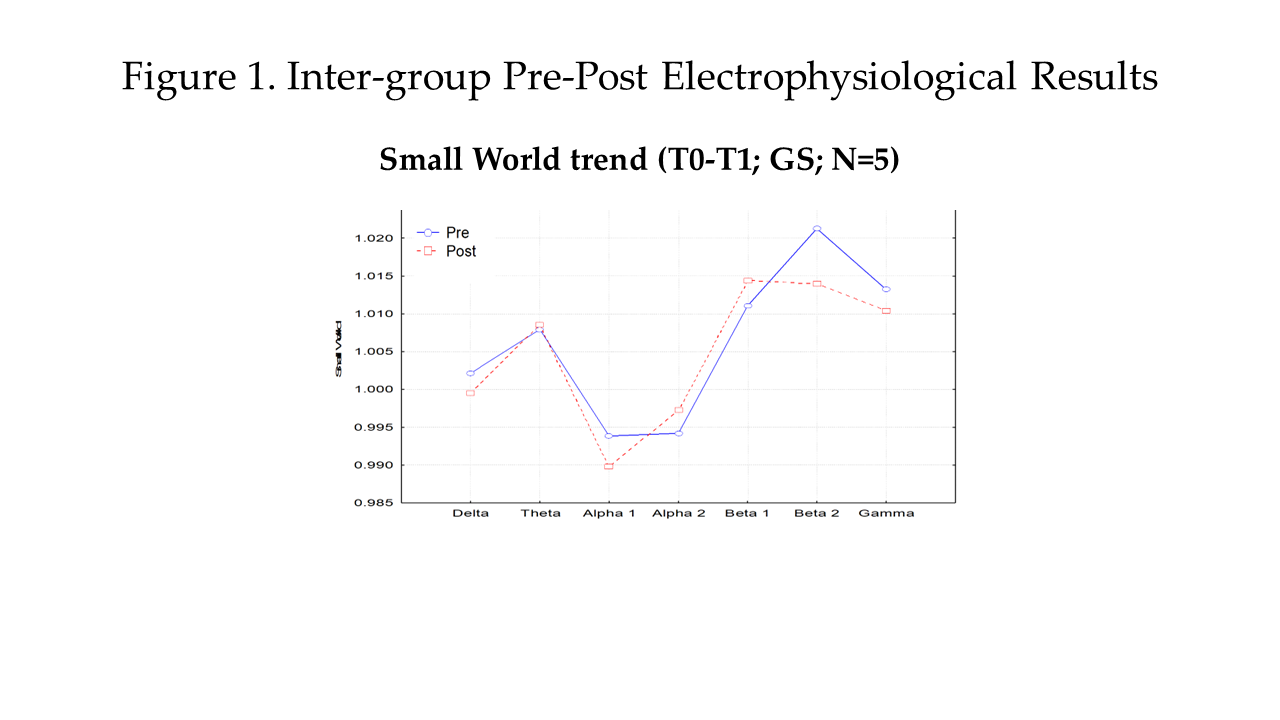
    A total of 84 participants were recruited (42 in EG, 42 in CG), with a mean age (+SD) of 63+13 years, including 32 females (38%) and 37 with right hemiparesis (43%), mainly following subacute stroke (mean+SD: 37+27) of PACI type (40%) based on Bamford classification. Of these, 67 completed treatments, with a dropout rate of 20% (EG=11; CG=6) during the experimental phase for reasons unrelated to treatment. Both groups showed clinical improvements over time in most outcomes as demonstrated in table 1. Only EG achieved significant improvement between T0 and T1 in FM-UL Part A (p=0.037) related to proximal performance, while CG improved in FM-UL wrist part (p=0.016) and hand part (p=0.023). The modified Barthel Index (mBI) showed statistically more significant improvement in favor of EG (p=0.042). A remodulation in alpha1 and beta 2 bands (figure 1), although not significant due to the reduced number of acquisitions, was found indicating a more regular organization of the electroencephalographic rhythm of brain areas responsible for upper limb motor control. Upper limb rehabilitation using the Armeo®Power exoskeleton was well accepted by EG patients and no adverse events were noted during treatment.

    Discussion and Conclusion

    This study highlights the positive impact of RT using the exoskeleton for upper limb rehabilitation on motor recovery post-subacute stroke. EG showed significant improvements in proximal motor performances, specifically in FM-UL Part A, while CG showed improvements in wrist and hand parts of FM-UL. The inclusion of mBI further underscores broader functional benefits in favor of EG. Despite preliminary non-significant results in modulating brain electrical activity, the study recognizes the potential for more organized electroencephalographic rhythms related to upper limb motor control. This aspect requires further confirmation through studies conducted on a larger number of individuals with homogeneous etiology and clinical characteristics. Overall, the results support the promising role of robot-assisted therapy in promoting task-specific motor relearning in individuals with subacute stroke undergoing neurorehabilitation.

    REFERENCES

    • Mehrholz J, Pohl M, Platz T, Kugler J, Elsner B. Electromechanical and robot-assisted arm training for improving activities of daily living, arm function, and arm muscle strength after stroke. Cochrane Database Syst Rev. 2018 Sep 3;9(9):CD006876. doi: 10.1002/14651858.CD006876.pub5. PMID: 30175845; PMCID: PMC6513114.
    • Tomassini V, Jbabdi S, Kincses ZT, Bosnell R, Douaud G, Pozzilli C, Matthews PM, Johansen-Berg H. Structural and functional bases for individual differences in motor learning. Hum Brain Mapp. 2011 Mar;32(3):494-508. doi: 10.1002/hbm.21037. PMID: 20533562; PMCID: PMC3674543.
    • Klamroth-Marganska V, Blanco J, Campen K, Curt A, Dietz V, Ettlin T, Felder M, Fellinghauer B, Guidali M, Kollmar A, Luft A, Nef T, Schuster-Amft C, Stahel W, Riener R. Three-dimensional, task-specific robot therapy of the arm after stroke: a multicentre, parallel-group randomised trial. Lancet Neurol. 2014 Feb;13(2):159-66. doi: 10.1016/S1474-4422(13)70305-3. Epub 2013 Dec 30. PMID: 24382580
  • Strategie di formazione efficaci per l’insegnamento delle abilità comunicative ai professionisti sanitari: overview di revisioni sistematiche

    Strategie di formazione efficaci per l’insegnamento delle abilità comunicative ai professionisti sanitari: overview di revisioni sistematiche

    Strategie di formazione efficaci per l’insegnamento delle abilità comunicative ai professionisti sanitari: overview di revisioni sistematiche

    Effective training strategies for teaching communication skills to healthcare professionals: overview of systematic reviews

    Autori

    Marinari Noemi [University of Florence, Florence, Italy]

    Ferrarello Francesco [Unit of Functional Rehabilitation, Department of Allied Health Professions, Azienda USL Toscana Centro, Prato, Italy.

    Serafini Isabella [University of Florence, Florence, Italy]

    Introduction

    Effective communication between health care professionals (HCPs) and patients is recognized as being a fundamental clinical skill. Research has found that effective communication leads to significant benefits such as patient satisfaction, resolution of symptoms, improved functioning, and better psychological status.
    An overview of systematic reviews on training strategies for teaching communication skills was published by Berkhof et al.1 They concluded that role-play, feedback, and small group discussions are effective training strategies.

    Our purpose was to identify effective methods for teaching communication skills to HCPs in order to facilitate communication in hospitals, nursing homes and health care institutions. In particular, we were interested in understanding how successful teaching was in changing the communicative behavior of health care workers, and how significantly this might affect their work.

    Methods

    Study design: overview of systematic reviews.

    Data resources: MedLine, PsycINFO and EMBASE. Last data search, 31 December 2023.

    Eligibility criteria: systematic reviews or meta-analyses published in English language from march 2009 (last data search of Berkhof et al.1). To be included, studies had to involve licensed HCPs, communication with adult patients, and communication training programs for HCPs.

    We extracted data on the characteristics of the studies included in the reviews. Specifically we investigated study design, sample size, target population, participants’ professional profile, interventions researched (e.g., educational strategies, delivery modality, setting, duration), and outcome measures.

    We systematically assessed the methodological quality of the included studies with the AMSTAR-2 tool.
    We synthesized the findings through qualitative analysis.

    Results

    We retrieved eight systematic reviews on communication skills training programs for HCPs, including 2-17 studies (mean, 9.75).2-9 The participants were physicians, nurses, midwives, and physiotherapists. One study focused on feedback, while most reported on mixed-strategy approaches. Components of the interventions were lectures (7 reviews), role-playing (6 reviews), feedback (5 reviews), active review session (3 reviews), and clinical cases discussion (2 reviews).

    Out of 21 outcome measures, the most used were self-efficacy (5 reviews) and communication skills (3 reviews).

    Some evidence for the effectiveness of using training courses to improve HCPs’ communication skills exists. Moore et al., in their Cochrane review, found that a variety of communication skills training courses are likely to improve HCPs’ empathy.3

    According to the AMSTAR-2 tool the reviews ranged in levels of confidence from low (4 studies) to critically low (4 studies).


    Discussion and Conclusion

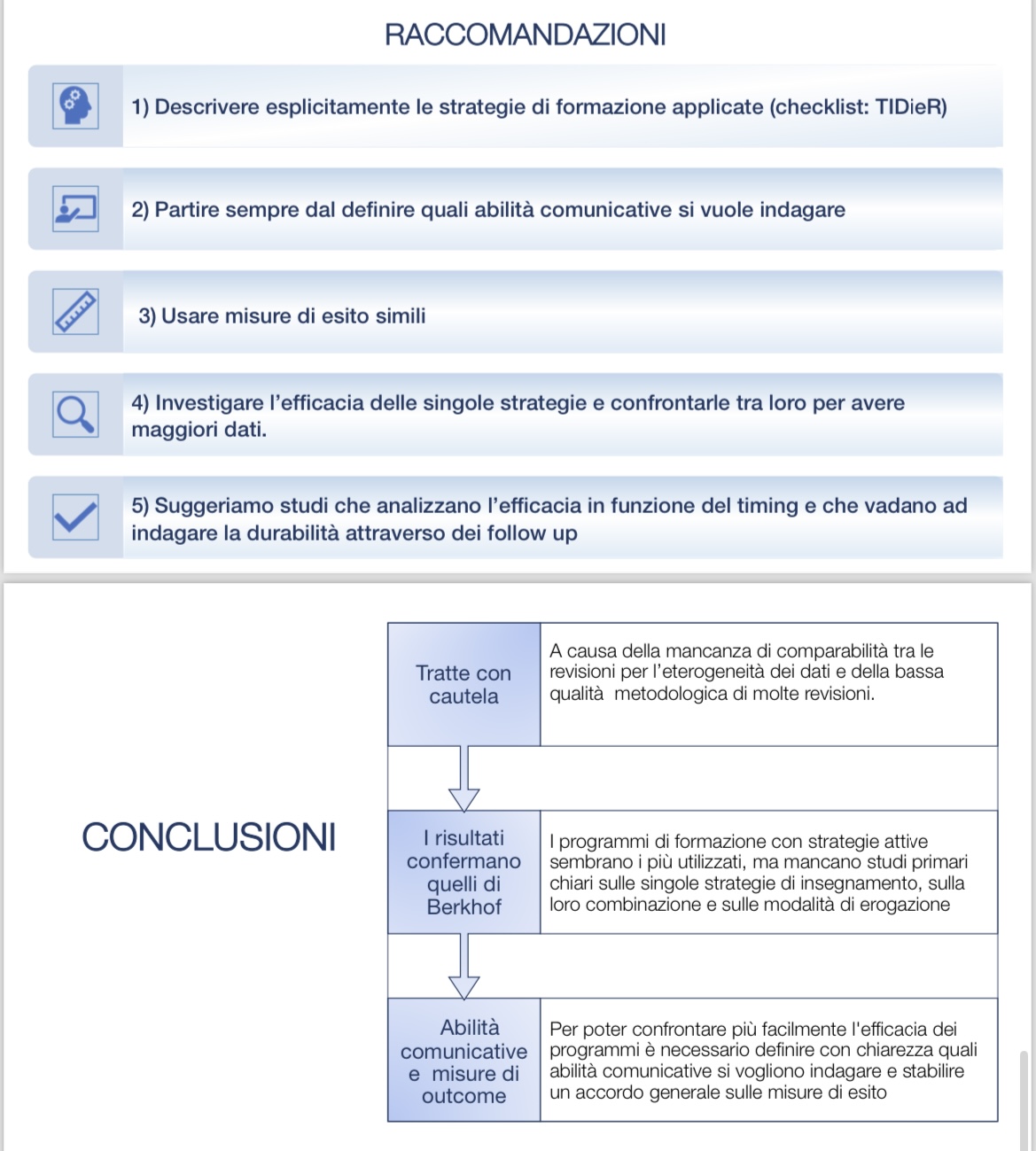
    Although the reviews included studies on role-playing, feedback, and small group discussions, interventions reported as effective by Berkhof et al.,1 no new evidence have emerged on strategies for teaching communication skills. In particular, there is no clear evidence of which modality (e.g., intensive), duration, or combination of training strategies is the most effective in a learning program.

    There is a lack of primary studies on each of the teaching strategies, their combinations, and delivery methods. Such studies could help to understand which educational strategy is the most effective for teaching communication skills to HCPs. The results of our overview confirm the conclusions of Berkhof et al., on the need to establish general agreement on outcome measures in order to compare the effectiveness of training programs.1

    REFERENCES

    1. Berkhof M, et al. Patient Educ Couns. 2011;84:152
    2. Reinders ME, et al. Acad Med. 2011;86:1426
    3. Moore PM, et al. Cochrane Database Syst Rev. 2013(3):CD003751
    4. Lord L, et al. Palliat Support Care. 2016;14:433
    5. Bakke KE, et al. J Surg Educ. 2018;75:702
    6. Chang YS, et al. Midwifery. 2018;59:4
    7. Kerr D, et al. Nurse Educ Today. 2020;89:104405
    8. Reading JM, et al. Transl Behav Med. 2020;10:1110
    9. Ryan RE, et al. Cochrane Database Syst Rev. 2022;7(7):CD013116
  • Facilitators And Barriers To Exercise Adherence In Hip and Knee Osteoarthritis: A Thematic Synthesis Of Qualitative Studies.

    1. Facilitators And Barriers To Exercise Adherence In Hip and Knee Osteoarthritis: A Thematic Synthesis Of Qualitative Studies.

    Facilitators And Barriers To Exercise Adherence In Hip and Knee Osteoarthritis: A Thematic Synthesis Of Qualitative Studies.

    Autori

    Nespoli Alessandro [Department of Neurosciences, Rehabilitation, Ophthalmology, Genetics, Maternal and Child Health, University of Genoa, Campus of Savona, Savona, Italy]

    Marazzi Davide [Department of Neurosciences, Rehabilitation, Ophthalmology, Genetics, Maternal and Child Health, University of Genoa, Campus of Savona, Savona, Italy]

    Giardulli Benedetto [Department of Neurosciences, Rehabilitation, Ophthalmology, Genetics, Maternal and Child Health, University of Genoa, Campus of Savona, Savona, Italy]

    Leuzzi Gaia [Department of Neurosciences, Rehabilitation, Ophthalmology, Genetics, Maternal and Child Health, University of Genoa, Campus of Savona, Savona, Italy]

    Battista Simone [School of Health and Society, Center for Human Movement and Rehabilitation, University of Salford, Salford, Greater Manchester, United Kingdom]

    Introduction

    Osteoarthritis(OA) is the most common form of arthritis globally, predominantly affecting the knee and hip. Most international OA clinical practice guidelines suggest exercise, self-management education and weight loss as first-line treatments. People with OA often experience inadequate adherence to first-line interventions, in particular to exercise. Exercise adherence is one of the primary predictors of long-term exercise outcomes in people with OA, and there is a need to identify strategies to improve adherence to exercise programs. Factors related to adherence are strongly linked to personal preferences. Therefore, several qualitative studies were conducted on this topic, giving voice to one’s experience. This meta-synthesis aims to synthesise the available qualitative evidence exploring the main facilitators and barriers to exercise adherence in people with OA.

    Methods

    The authors conducted a meta-synthesis of qualitative studies. Articles were retrieved from five electronic databases: MEDLINE, Cochrane Central, Embase, CINAHL, and PsychInfo. The search was conducted between October and December 2023. The included qualitative studies were in English, involving adults (age>16 ys) without gender restrictions, with a diagnosis of hip and knee OA, who claimed they performed an exercise program. The Critical Appraisal Skills Programme (CASP) tool ensured the quality of the studies. Thematic Synthesis by Thomas and Harden was used to synthesise the themes.

    Results

    We included 17 studies (294 participants). We created seven descriptive themes from the thematic analysis that summarised the results of the primary studies (The Role of Beliefs, The experience of the exercise program, Individuals’ mindset, Relationship with the health professional, Social aspects, Environmental Circumstances, Technological support). These descriptive themes were further interpreted to create three analytical themes that went beyond the primary research to answer our research question (barriers and facilitators to exercise adherence). The three analytical themes were: ‘No Body Without Mind’, ‘Wellness Web’ and ‘Ecological Support. The first theme highlighted the importance of cognitive and psychological factors, emphasising education about OA, personalised exercise programs, and a positive mindset. The second theme explored the critical role of social support from healthcare professionals and significant others. The third theme examined external factors, highlighting facilitators such as flexible exercise locations and technological aids, but also barriers like financial and time constraints.

    Discussion and Conclusion

    This meta-synthesis underscored the complex nature of exercise adherence in OA, providing information for researchers and clinicians. Future research should focus on creating tailored interventions to foster exercise adherence, starting with insights into people’s stories. Clinicians should provide personalised guidance and flexible home-based exercises and meet people’s needs to improve adherence and health outcomes.

    REFERENCES

    Battista, S., Manoni, M., Dell’Isola, A., Englund, M., Palese, A., & Testa, M. (2022). Giving an account of patients’ experience: A qualitative study on the care process of hip and knee osteoarthritis. Health Expectations, 25(3), 1140–1156. https://doi.org/10.1111/hex.13468

    Bull, F. C., Al-Ansari, S. S., Biddle, S., Borodulin, K., Buman, M. P., Cardon, G., Carty, C., Chaput, J.-P., Chastin, S., Chou, R., Friedenreich, C. M., Garcia, L., Gichu, M., Jago, R., Katzmarzyk, P. T., Lambert, E., Leitzmann, M., Milton, K., Ortega, F. B., … Willumsen, J. F. (1451). World Health Organization 2020 guidelines on physical activity and sedentary behaviour. Br J Sports Med, 54, 20. https://doi.org/10.1136/bjsports-2020-102955

    Allen Y, K. D., Thoma, L. M., & Golightly, Y. M. (n.d.). Epidemiology of osteoarthritis. https://doi.org/10.1016/j.joca.2021.04.020

    Haskins, R., Henderson, J. M., & Bogduk, N. (2014). Health professional consultation and use of conservative management strategies in patients with knee or hip osteoarthritis awaiting orthopaedic consultation. Australian Journal of Primary Health, 20(3), 305–310. https://doi.org/10.1071/PY13064

    Hinman, R. S., Jones, S. E., Nelligan, R. K., Campbell, P. K., Hall, M., Foster, N. E., Russell, T., & Bennell, K. L. (2023). Absence of Improvement With Exercise in Some Patients With Knee Osteoarthritis: A Qualitative Study of Responders and Nonresponders. Arthritis Care and Research, 75(9), 1925–1938. https://doi.org/10.1002/acr.25085

    Ledingham, A., Cohn, E. S., Baker, K. R., & Keysor, J. J. (2020). Exercise adherence: beliefs of adults with knee osteoarthritis over 2 years. Physiotherapy Theory and Practice, 36(12), 1363–1378. https://doi.org/10.1080/09593985.2019.1566943

    Thomas, J., & Harden, A. (2008). Methods for the thematic synthesis of qualitative research in systematic reviews. BMC Medical Research Methodology, 8. https://doi.org/10.1186/1471-2288-8-45

    Wallis, J. A., Ackerman, I. N., Brusco, N. K., Kemp, J. L., Sherwood, J., Young, K., Jennings, S., Trivett, A., & Barton, C. J. (2020). Barriers and enablers to uptake of a contemporary guideline-based management program for hip and knee osteoarthritis: A qualitative study. Osteoarthritis and Cartilage Open, 2(4). https://doi.org/10.1016/j.ocarto.2020.100095