The Role of Clinical Practice in Research Methodology: A Survey of Healthcare Student and Professional Insights
Autori
FICHERA WALTER ANGELO (Presidio Ospedaliero “Santa Marta e Santa Venera”- U.O.C. Recupero e Riabilitazione, Acireale (CT), Italia)
DI FATTA ELEONORA (IRCCS Associazione Oasi Maria SS, TROINA (EN), Italia)
Background and aims
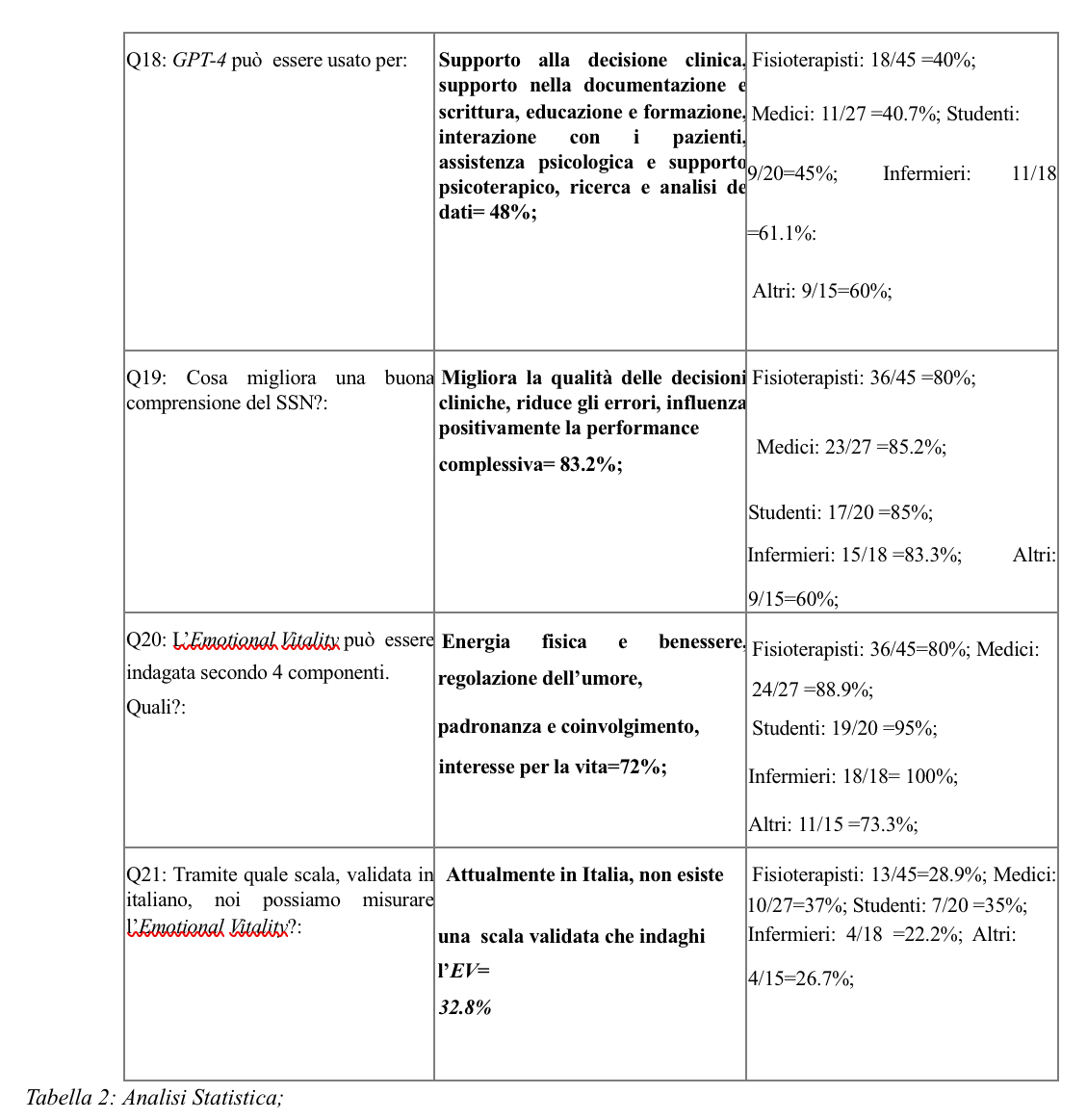
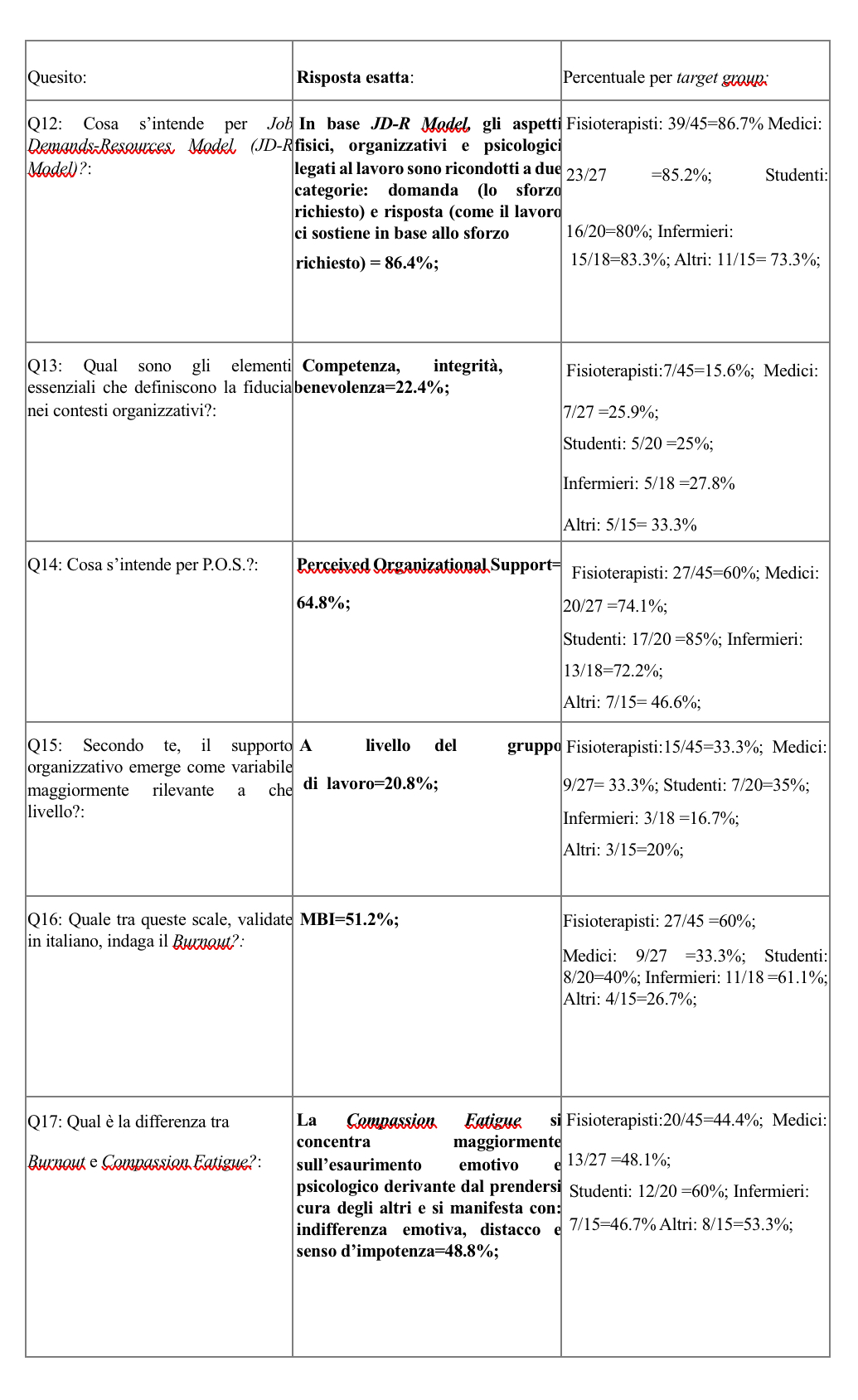
This thesis aims to explore the level of knowledge and awareness that Healthcare Professionals (including Physicians, Physicians in managerial roles) and finalyear Students enrolled in Healthcare Profession Degree Courses and the Medicine and Surgery Degree Course have regarding six specific variables (trust in the organization and the workgroup, organizational and workgroup support, Psychosomatic Disorders, GPT-4 usage, knowledge of the NHS, and Emotional Vitality) present in both the literature and professional practice.
Methods
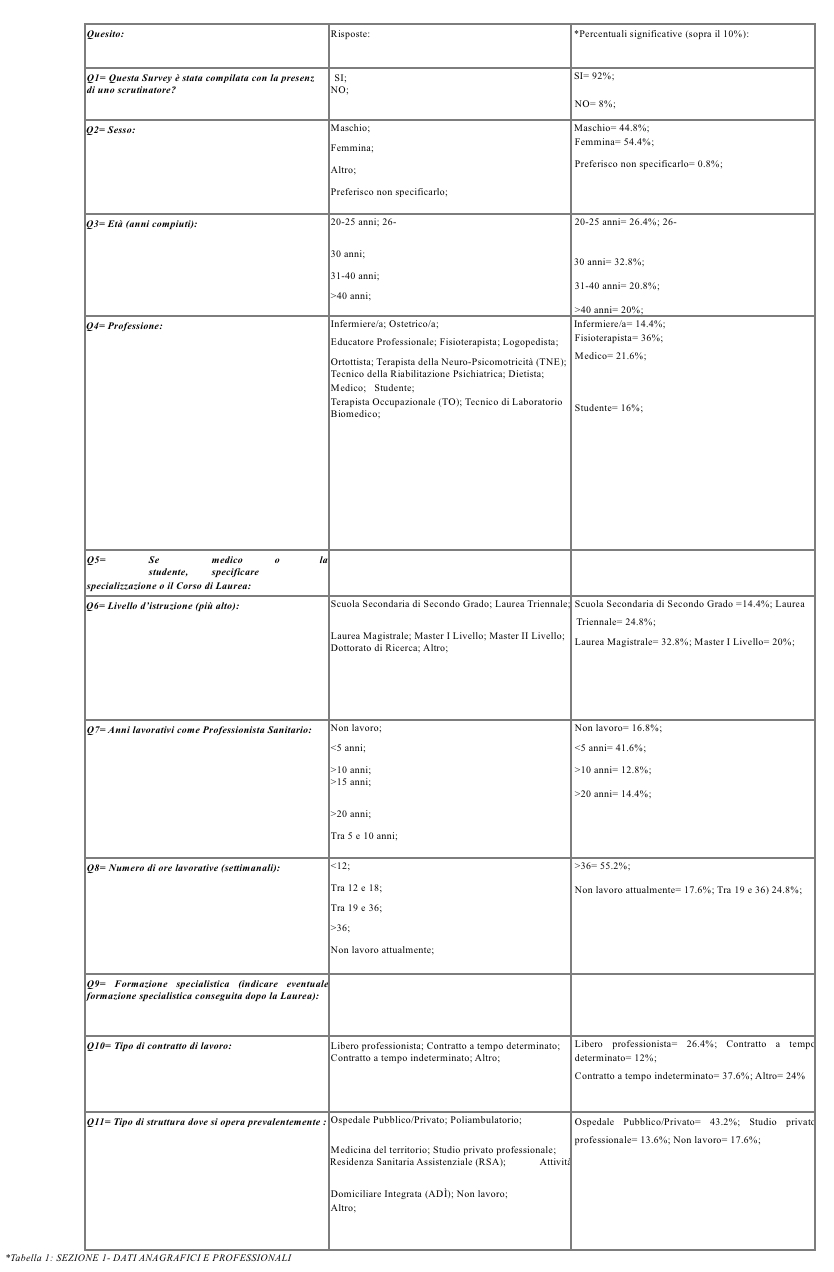
To this end, a descriptive cross-sectional study was conducted involving Italian Healthcare Professionals, Physicians, and Students (enrolled in their final year of Healthcare Profession Degree Courses and the Medicine and Surgery Degree Course) who regularly use social media or electronic devices. An online survey was used to collect data, which was analyzed descriptively.
Results
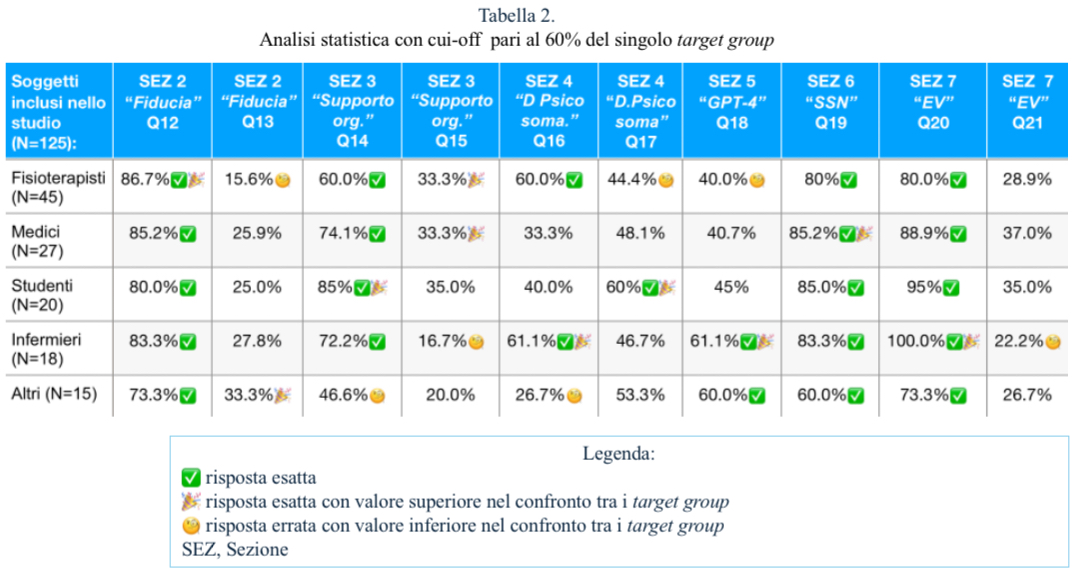
A total of 125 participants completed the survey. The most represented target group was Physiotherapists (n=45), followed by Physicians (n=27), Nurses (n=20), and Students (n=20). For statistical analysis purposes, all other categories of Healthcare Professionals (n=33) were grouped into a single target group (Other). The results indicate that among the investigated variables, across all target groups, the least known were: knowledge of the elements that define trust in organizational contexts, organizational support, the difference between Burnout and Compassion Fatigue, and knowledge of an Italian-validated scale for EV (Emotional Vitality).
Conclusion
Despite the small sample size, this study offers important insights. Further research will be necessary to evaluate the knowledge of Healthcare Professionals, Physicians, and students of Healthcare Profession Degree Courses regarding the investigated variables present in both the literature and everyday professional and working life. Furthermore, there is a need for more in-depth training programs, both during and after university studies, for the recognition of these useful variables in the healthcare setting.
Key words: Research Methodology, Survey, Healthcare Professionals, Trust and Support,GPT-4, Emotional Vitality, Burnout, Compassion Fatigue, Validation of the scale.
REFERENCES
(1) Sackett, D.L., Rosenberg, W.M., Gray, J.A., Haynes, R.B. et al. (1996). Evidence-based medicine: What it is and what it isn’t. BMJ, 312(7023), 71-72.
(2) Wright, K.B. (2005). Researching internet-based populations: Advantages and disadvantages of online survey research, online questionnaire authoring software packages, and web survey services. Jounral of Computer-Mediated Communication, 10(3).
(3) Di Stefano, G., Venza, G., Cascio, G. E Gaudino, M. (2018). Il ruolo della fiducia e del supporto organizzativo sul benessere al lavoro. Med Lav; 109(6), 459-470.
(4) Sacco, T., et al. (2015). Compassione fatigue, burnout and compassion satisfaction among healthcare workers: A review of the literature. Journal of Nursing Scholarship, 47(5), 400-406.
(5) Laura, D., e Kubzansky, L. (2007). Emotional vitality and incident coronary heart disease. Arch Gen. Psychiatry, 64(12), 1393-1401.