DIAGNOSTIC PREDICTION MODELS FOR SPINAL FRACTURES IN PEOPLE WITH SPINAL PAIN OR TRAUMA: A SYSTEMATIC REVIEW WITH META-ANALYSIS
Autori
Feller Daniel (Azienda Provinciale per i Servizi Sanitari, Trento, Italia; Erasmus Medical Center, Rotterdam, The Netherlands)
Wingbermühle Roel (Erasmus Medical Center, Rotterdam, The Netherlands)
Oei Edwin (Erasmus Medical Center, Rotterdam, The Netherlands)
Koes Bart (Erasmus Medical Center, Rotterdam, The Netherlands; University of Southern Denmark, Odense, Denmark)
Chiarotto Alessandro (Erasmus Medical Center, Rotterdam, The Netherlands)
Background and aims
In this systematic review we aimed to evaluate the performance of multivariable diagnostic prediction models for identifying spinal fractures in patients with spinal pain and/or trauma.
Methods
We conducted a systematic review with meta-analysis, following a prospectively registered protocol in PROSPERO (CRD42024539898). We included studies that developed (with or without internal validation) or externally validated multivariable diagnostic prediction models for identifying spinal fractures in patients with spinal pain and/or trauma. We searched MEDLINE, EMBASE, and Web of Science (up to May 2025), and conducted backward and forward citation tracking strategies. Two independent reviewers extracted studies’ data using the CHARMS checklist, and assessed the risk of bias with the PROBAST tool. A bivariate random-effects model was used to pool classification measures, while univariate random-effects models were used for discrimination and calibration measures. We assessed the certainty of the evidence using an adapted version of the GRADE for prognostic factor studies.
Results
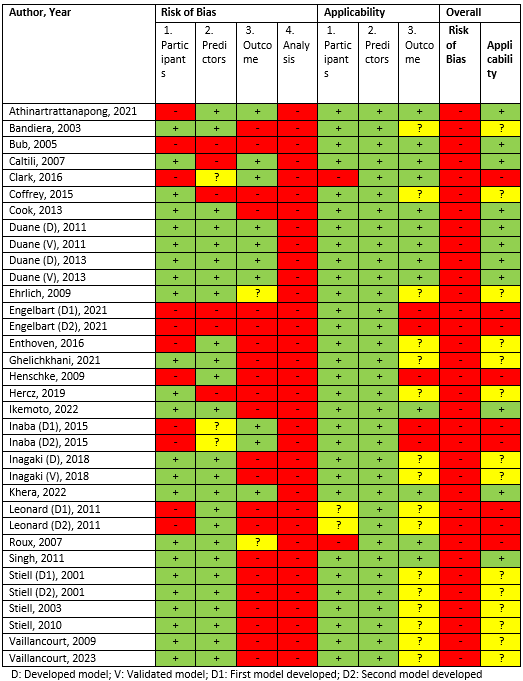
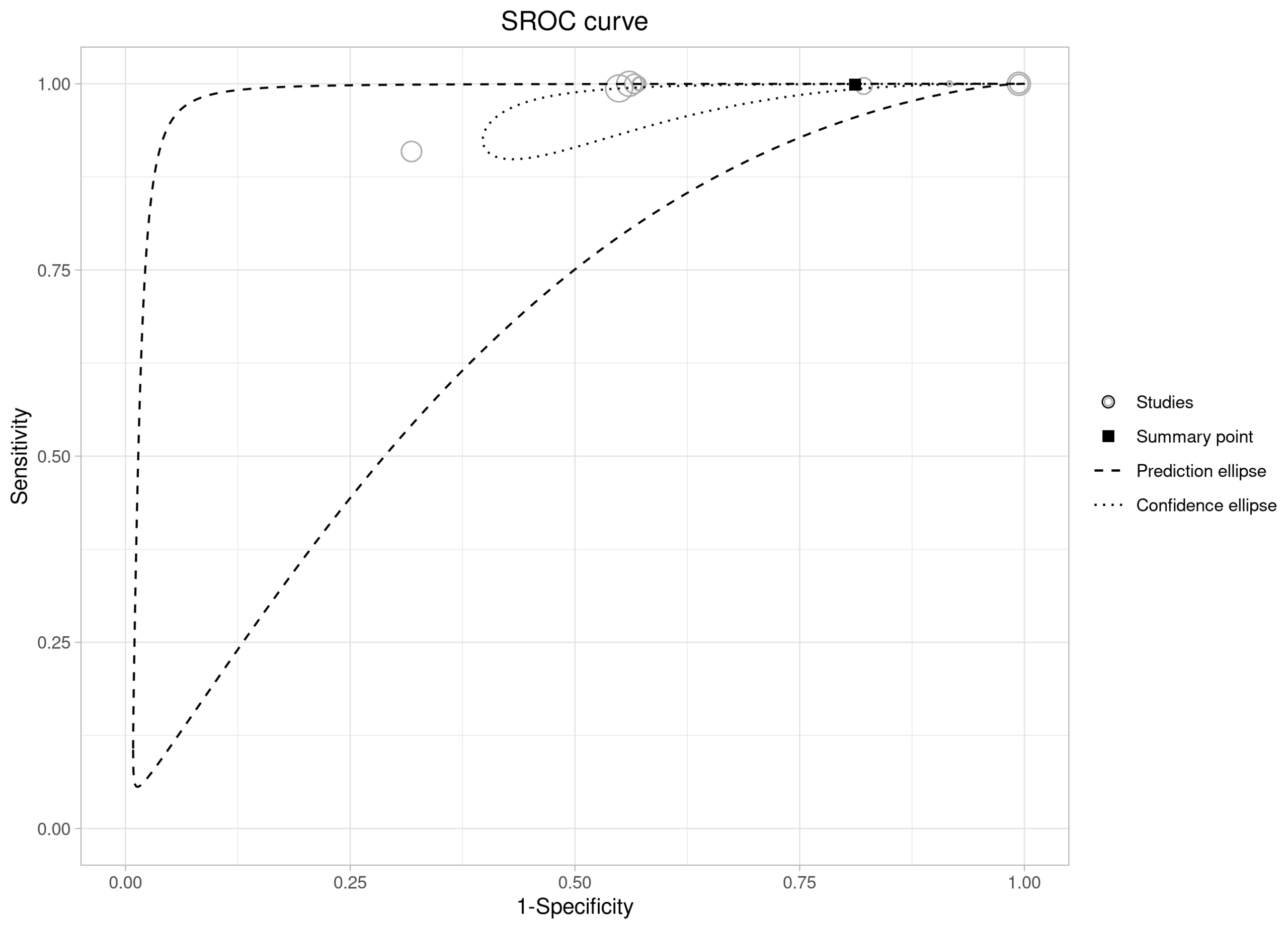
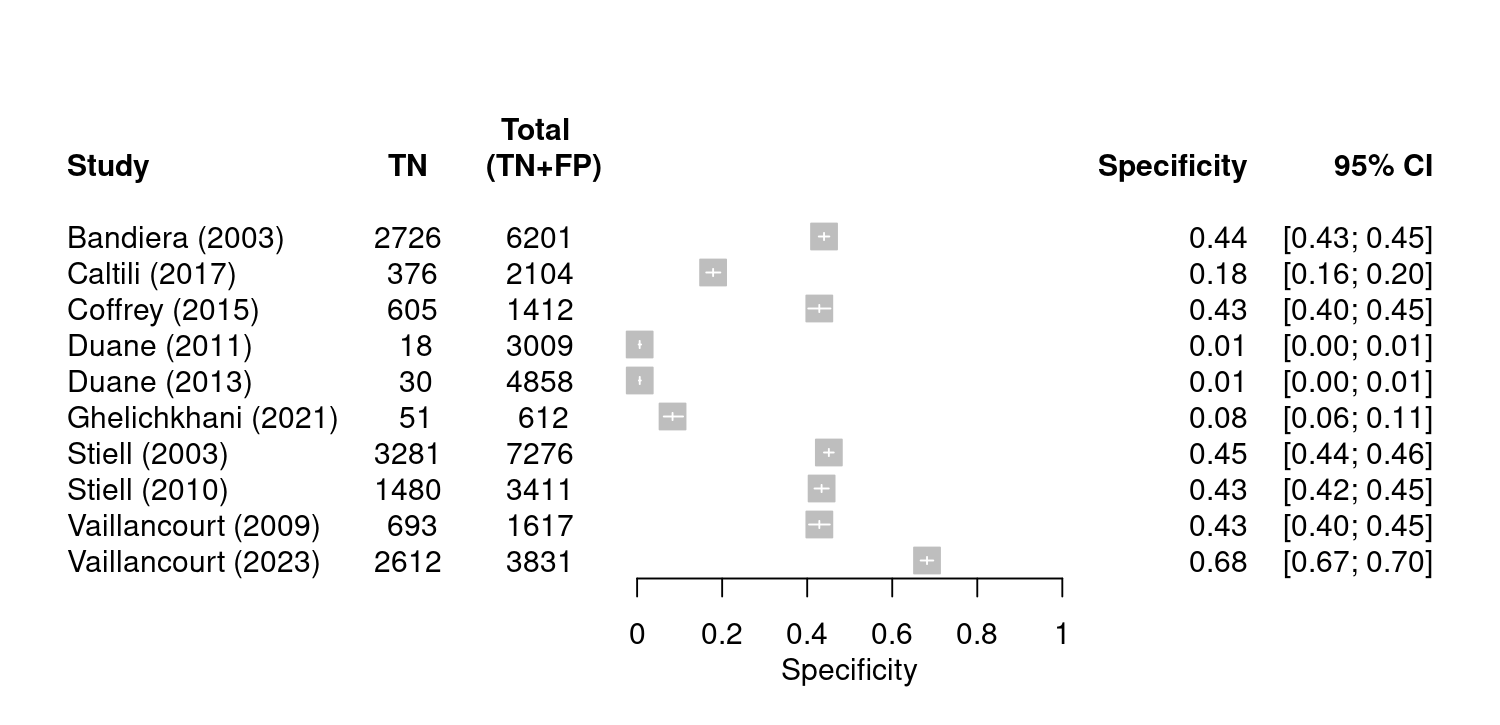
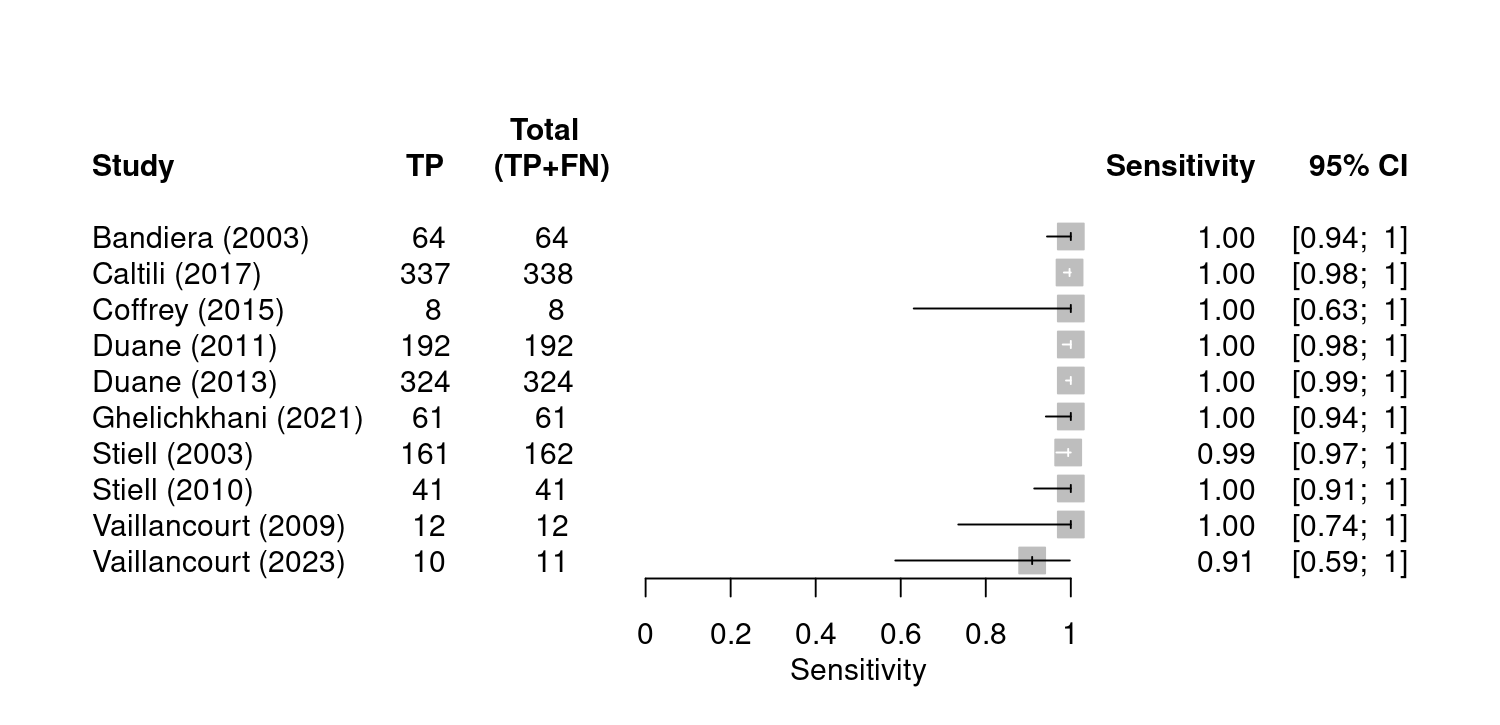
We included 27 studies encompassing 34 diagnostic models. All models showed an overall high risk of bias. Meta-analyses of ten studies that externally validated the use of the Canadian C-spine Rule in adults presenting with trauma to emergency departments demonstrated, with very low certainty of the evidence, excellent sensitivity (0.999; 95% CI 0.976 to 1), an high area under the curve (0.85; 95% CI 0.72 to 0.97), and a low specificity (0.188; 95% CI 0.063 to 0.443). We estimated a pooled positive likelihood ratio of 1.23 (95% CI 0.978 to 1.548) and a negative likelihood ratio of 0.007 (95% CI 0.001 to 0.082) for the same model. Other models for traumatic cervical fractures and osteoporotic fractures showed promise but lacked external validation or sufficient reporting on calibration and discrimination measures. No models for thoracolumbar fractures were deemed ready to be used clinically.
Conclusion
Our findings indicate that, while the Canadian C-spine Rule shows potential for screening traumatic cervical fractures, the very low to low certainty of the evidence limits confidence in its accuracy and appropriateness for clinical use. Notably, the Canadian C-spine Rule has only been validated in emergency department settings and is therefore not applicable to standard rehabilitation settings. Also, we did not identify any externally validated model suitable for clinical use regarding osteoporotic fractures, traumatic fractures of the thoracolumbar spine, and traumatic fractures of the cervical spine in non-emergency settings. Future research with rigorous methodological and statistical approaches should aim to fill these gaps.
REFERENCES
- Moons KG, de Groot JA, Bouwmeester W, Vergouwe Y, Mallett S, Altman DG, Reitsma JB, Collins GS. Critical appraisal and data extraction for systematic reviews of prediction modelling studies: the CHARMS checklist. PLoS Med. 2014 Oct 14;11(10):e1001744. doi: 10.1371/journal.pmed.1001744. PMID: 25314315; PMCID: PMC4196729.
- Wolff RF, Moons KGM, Riley RD, Whiting PF, Westwood M, Collins GS, Reitsma JB, Kleijnen J, Mallett S; PROBAST Group†. PROBAST: A Tool to Assess the Risk of Bias and Applicability of Prediction Model Studies. Ann Intern Med. 2019 Jan 1;170(1):51-58. doi: 10.7326/M18-1376. PMID: 30596875.
- Huguet A, Hayden JA, Stinson J, McGrath PJ, Chambers CT, Tougas ME, Wozney L. Judging the quality of evidence in reviews of prognostic factor research: adapting the GRADE framework. Syst Rev. 2013 Sep 5;2:71. doi: 10.1186/2046-4053-2-71. PMID: 24007720; PMCID: PMC3930077.
- van Smeden M, Reitsma JB, Riley RD, Collins GS, Moons KG. Clinical prediction models: diagnosis versus prognosis. J Clin Epidemiol. 2021 Apr;132:142-145. doi: 10.1016/j.jclinepi.2021.01.009. PMID: 33775387.
- Feller D, Chiarotto A, Koes B, Maselli F, Mourad F. Red flags for potential serious pathologies in people with neck pain: a systematic review of clinical practice guidelines. Arch Physiother. 2024 Dec 4;14:105-115. doi: 10.33393/aop.2024.3245. PMID: 39639931; PMCID: PMC11618059.