Perceived motor discomfort after the exposure to high temperatures: hypothesis of an evaluation form
Autori
Francesca Sposito
Francesco Bonanno
Antonio Di Dio
Patrizia Maenza
Giada Di Marco
Silvia Saraceno
Filippo Cavallaro
Introduction to clinical case
The experience of a clinical case with motor disorders due to high temperature exposure and heat collapse led us to search in literature guidelines or recommendations. Unfortunately, not finding useful data and documents, we decided to describe the proposed therapeutic physiotherapy intervention and set ourselves the task of gathering more information on the motor discomfort perceived in the exposure to high temperatures by setting up an evaluation form to be proposed to those who had been exposed in the same event with the clinical case mentioned.
Methods
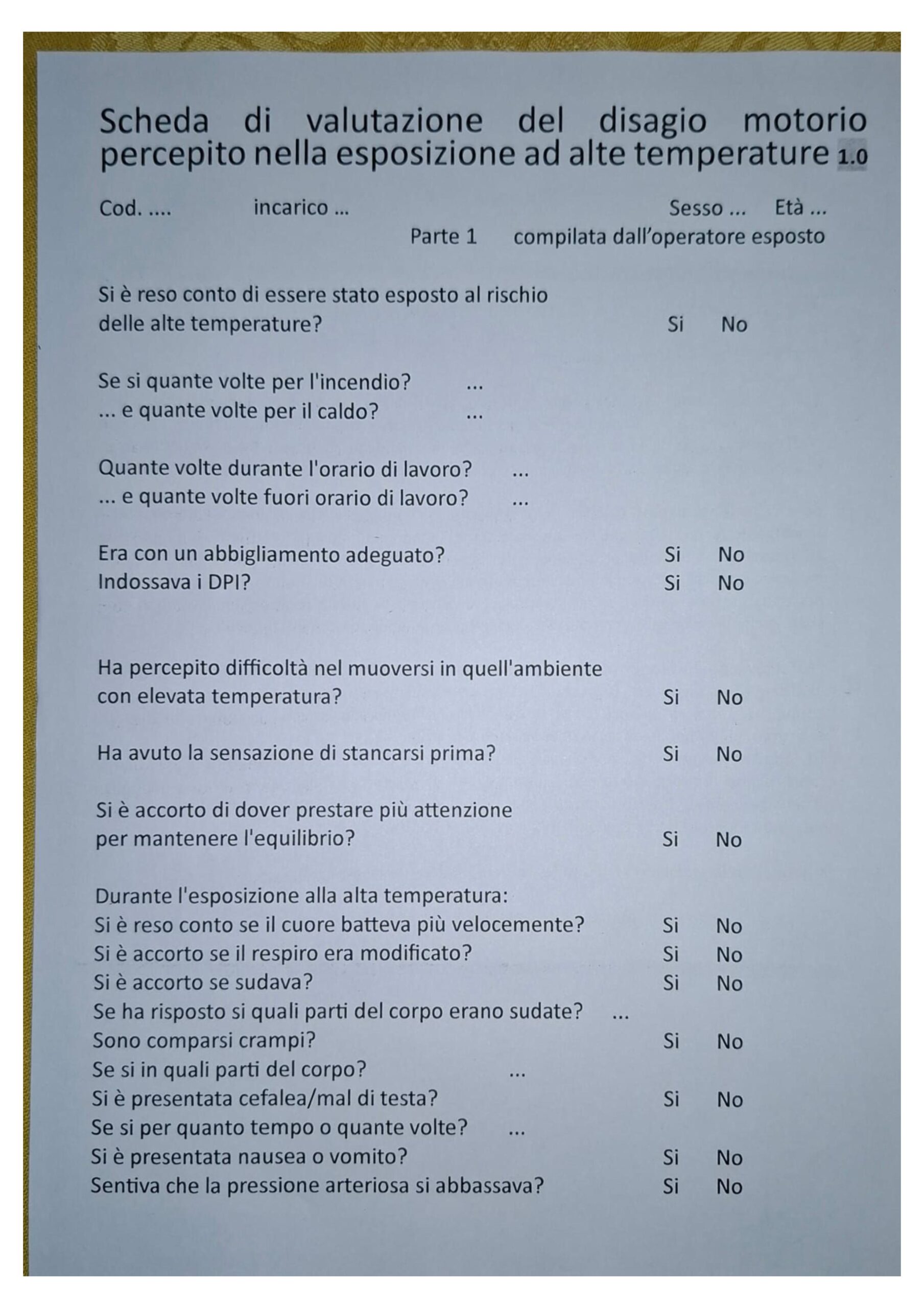
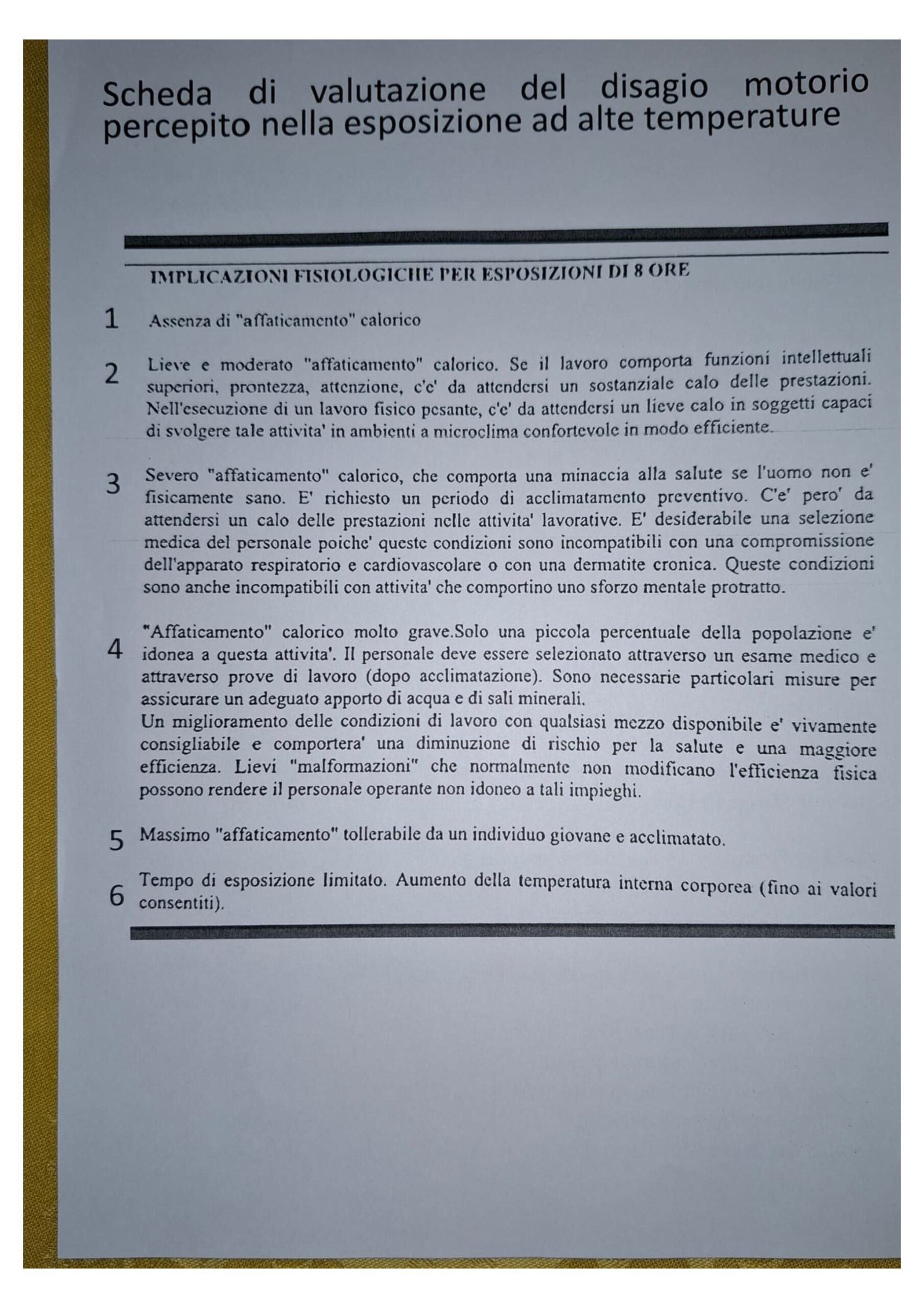
The scale proposed was the Belding-Hatch heat stress index, in order to identify the Heat Stress Index (HSI). Considering that sweat is the main mechanism by which the body transfers heat to maintain homothermia, this parameter was combined with the other aspects such as heart rate, respiratory performance, blood pressure, cramps, headache, nausea or vomiting. Clothing and the use of personal protective equipment (PPE) were also considered.
Results
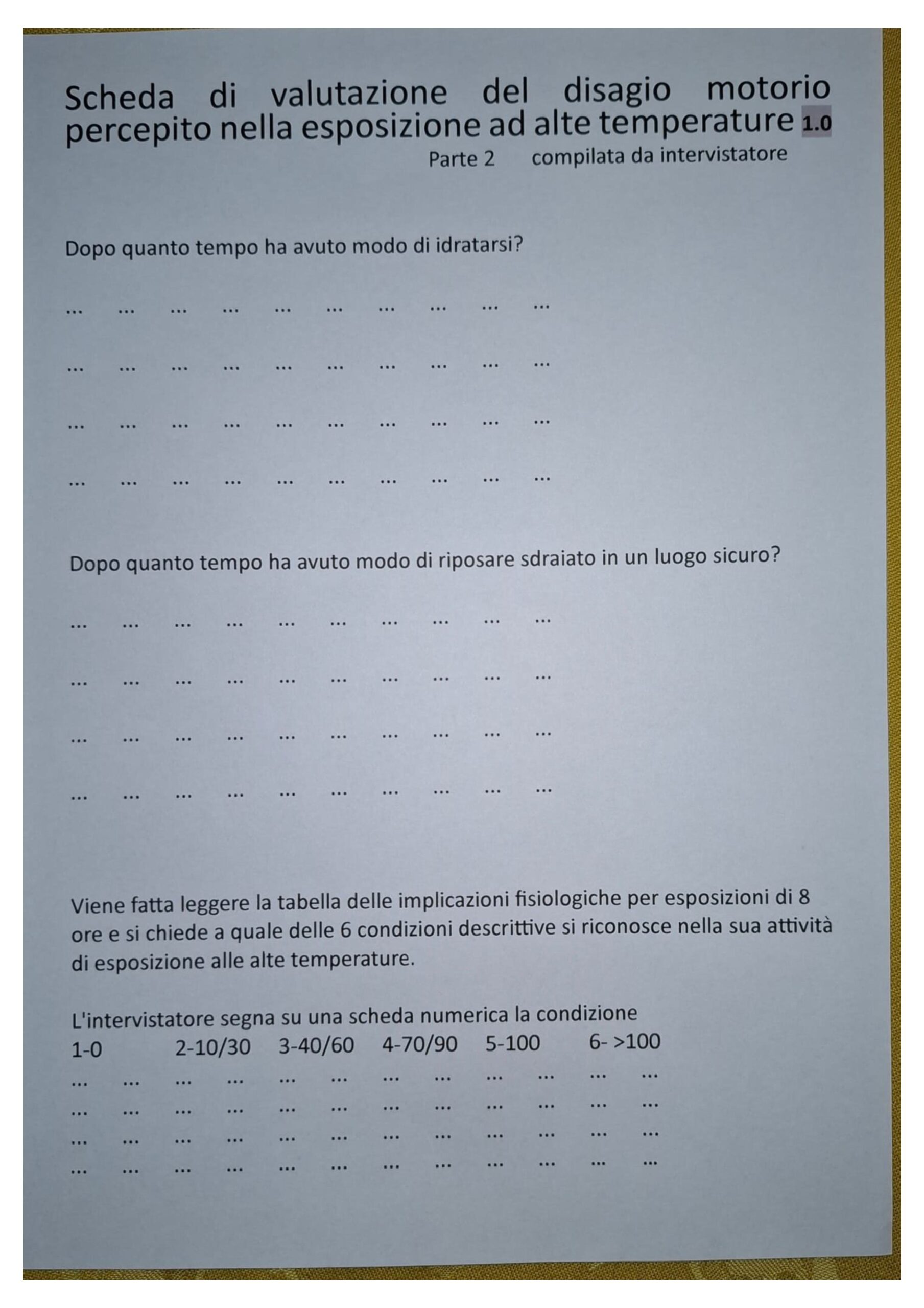
We proposed a simple form composed by 20 questions (13 of them with closed yes or no answers and 7 open ones to better define 4 questions that had already been answered yes or no) (Fig.1). The initial master sheet enabled each respondent to be identified by survey code, job title, sex and age. This sheet was presented to the subject after he or she agreed to participate in the study. A second set of questions was asked by the interviewer on the amount and timing of hydration and on the duration of working hours before being able to go and lie down in a safe place.
Discussion and clinical relevance
The scale, being easy to use, could have the advantage of being included among the tools for assessing motor discomfort in conditions of exposure to the risk of high temperature. It could be used in risk assessment and to give greater awareness to people who most frequently confronted with the heat problem such as fires, or furnaces.
REFERENCES
Mario Lizza – la fatica di essere sani – Seusi
https://www.messinamedica.it/2023/12/noterelle-riabilitative-del-padre-del-libraio-fiamme/