The Experience of Peer Tutoring During Clinical Internships of Physiotherapy Students: A Meta-Synthesis of Qualitative Studies
Autori
Salvitti Simone [Unit of Cardiorespiratory Physiotherapy, Azienda Sanitaria Universitaria Friuli Centrale (ASUFC) and Department of Medicine, University of Udine – Udine, Italy]
Colado Gimeno Isabel [Unit of Pediatric Physiotherapy, Azienda Sanitaria Universitaria Friuli Centrale (ASUFC) – Udine, Italy]
Palese Alvisa [Department of Medicine, University of Udine – Udine, Italy]
Mansutti Irene [Department of Medicine, University of Udine – Udine, Italy]
Di Bari Mauro [Unit of Geriatrics, Department of Medicine and Geriatrics, Azienda Ospedaliero-Universitaria Careggi and Department of Experimental and Clinical Medicine, University of Florence – Florence, Italy]
Background and aims
Clinical internships are fundamental for the development of clinical competence and professional identity, yet they often overlook psychodynamic and adaptive skills, which are essential in high-pressure environments. Organisational variability and the lack of adequately trained clinical tutors further exacerbate the issue. In this context, peer tutoring emerges as a promising strategy: more experienced students support junior peers, fostering mutual learning, confidence, and emotional resilience.
While several qualitative and mixed-method studies exist on this topic, no systematic synthesis had been conducted prior to this work. A meta-synthesis is therefore needed to guide the development of innovative and sustainable educational models capable of addressing the challenges of an evolving healthcare system.
The aim of this study was to identify, analyze, and synthesize qualitative findings regarding the experiences of Physiotherapy students participating in a peer tutoring program during their clinical internships. Specifically, the study addresses the following research questions:
- What experiences of junior students (mentees) during clinical internships supervised by fellow students have been documented to date?
- What are the experiences of senior students (mentors) during clinical internships when acting as mentors to their peers?
Methods
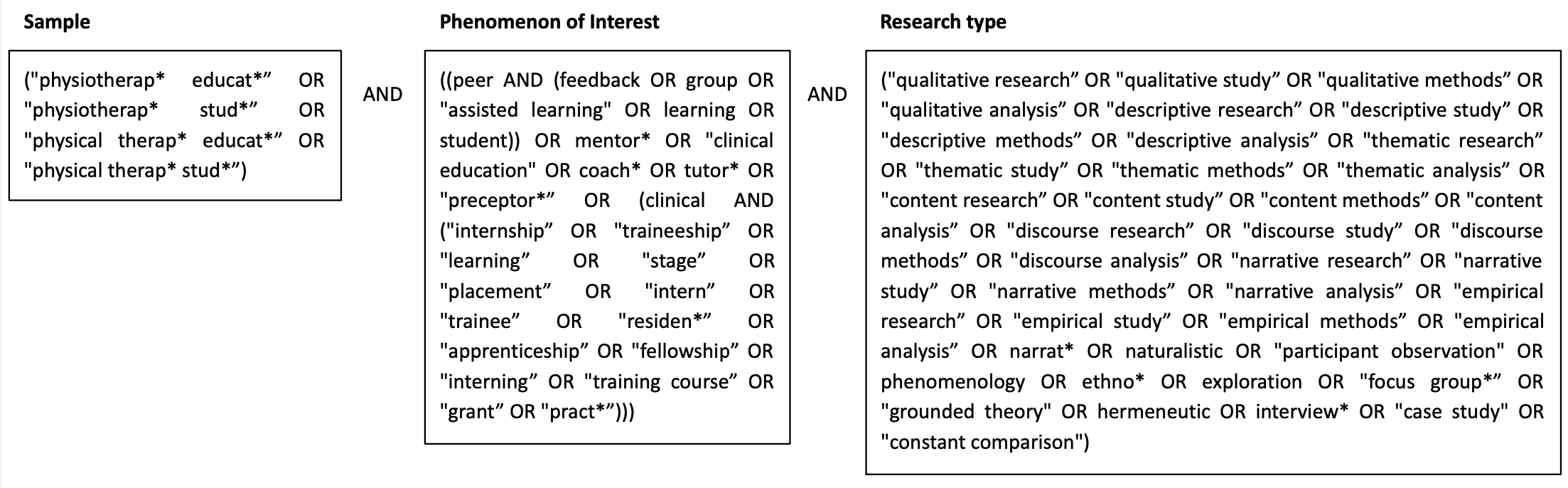
The SPIDER approach, specifically tailored for qualitative and mixed-methods research, was used to frame the research question for the database searches as an alternative to the PICO framework. A qualitative meta-synthesis was carried out, including studies evaluated using the Critical Appraisal Skills Programme (CASP) checklist for qualitative research. Data were analyzed through inductive thematic analysis, and the GRADE-CERQual tool was used to assess confidence in the findings. Reporting followed Cochrane Qualitative Evidence Synthesis guidelines. The research protocol was registered in PROSPERO (CRD420251004431).
Results
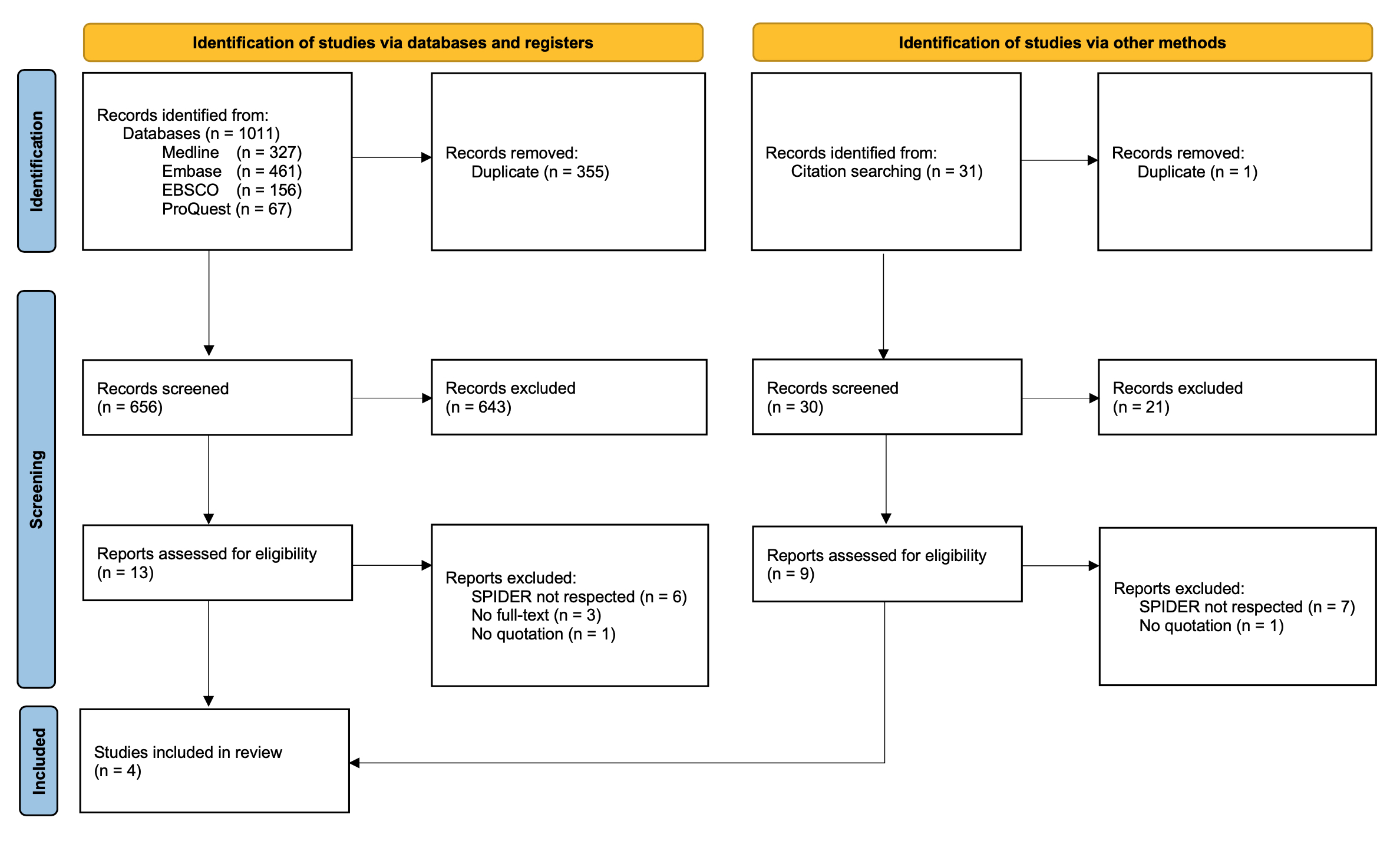
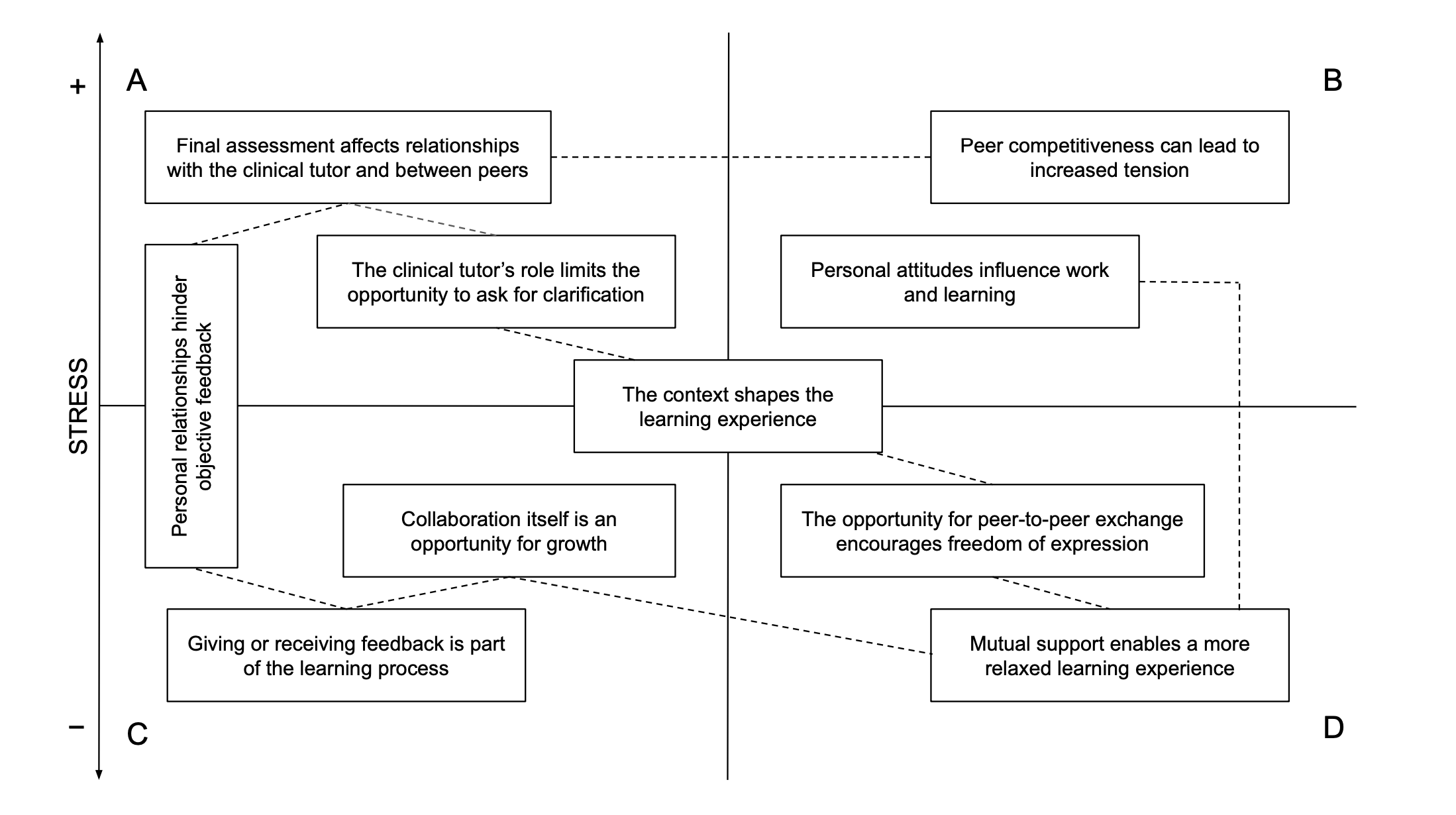
Out of 686 identified articles, four were included in the final analysis. Two central themes emerged: 1) Mentees reported a desire to engage in patient care, viewing mentors as role models; 2) Mentors focused on their own personal and professional development, embracing a reciprocal, non-competitive learning dynamic. The integrative synthesis also revealed four broader themes: a) Indirect impact of clinical tutors on peer relationships; b) Barriers to peer collaboration; c) Peer tutoring as a driver of personal growth; d) Easing the difficulties of working independently.
Conclusion
A well-structured peer tutoring can benefit both mentors and mentees, enhancing learning and skill development. However, the dual role of the clinical tutors as both supervisors and evaluators may strain peer relationships and contribute to increased anxiety and stress among students.
REFERENCES
- Laitinen-Väänänen, S., Talvitie, U., & Luukka, M. R. (2007). Clinical supervision as an interaction between the clinical educator and the student. Physiotherapy theory and practice, 23(2), 95-103.
- Sevenhuysen, S., Thorpe, J., Molloy, E., Keating, J., & Haines, T. (2017). Peer-assisted learning in education of allied health professional students in the clinical setting: a systematic review. Journal of allied health, 46(1), 26-35.
- Price, D., & Whiteside, M. (2016). Implementing the 2: 1 student placement model in occupational therapy: Strategies for practice. Australian Occupational Therapy Journal, 63(2), 123-129.
- Campbell, I. E., Larrivee, L., Field, P. A., Day, R. A., & Reutter, L. (1994). Learning to nurse in the clinical setting. Journal of advanced nursing, 20(6), 1125-1131.
- Hunt, C. W., & Ellison, K. J. (2010). Enhancing faculty resources through peer mentoring. Nurse educator, 35(5), 192-196.