Prevalence and characteristics of idiopathic scoliosis in dancers
Prevalence and characteristics of idiopathic scoliosis in dancers
Autori
Angela Contri (Clinical and Experimental Medicine Program, University of Modena and Reggio Emilia, Italy)
Sara Muccioli (Institute for Social Security, Repubblica di San Marino)
Francesca Castagnoli (Fondazione Alma Mater, Alma Mater Studiorum, University of Bologna, Italy)
Omar De Bartolomeo (Istituto Ortopedico Gaetano Pini and La Scala Opera House, Milano, Italy)
Introduction
Purpose:
To investigate the prevalence of idiopathic scoliosis (IS) in dancers, the diagnostic and classification procedures used, and to identify potential predictors.
Background:
The prevalence of IS is 2–3% in the general population. The presence of a hump can be detected clinically, but only X-rays can confirm the diagnosis. Early detection and treatment can prevent IS progression and complications.
There is a lack of knowledge about the true prevalence and predictors of IS in dancers.
Methods
Design: Prevalence systematic review with meta-analysis.
PubMed, Embase, Scopus, CINAHL Plus databases and the Cochrane Central Register of Controlled Trials were searched up to November 2023.
Original research involving dancers who had received a diagnosis of IS and reporting a measure of its prevalence, or sufficient data to calculate it, were included. Two authors independently performed study selection, data extraction, and risk of bias assessment of the included studies using the Joanna Briggs Institute checklists. A third reviewer assisted in case of disagreement.
Data Synthesis: Random-effects model meta-analysis. The certainty of evidence was assessed using the GRADE approach.
Results
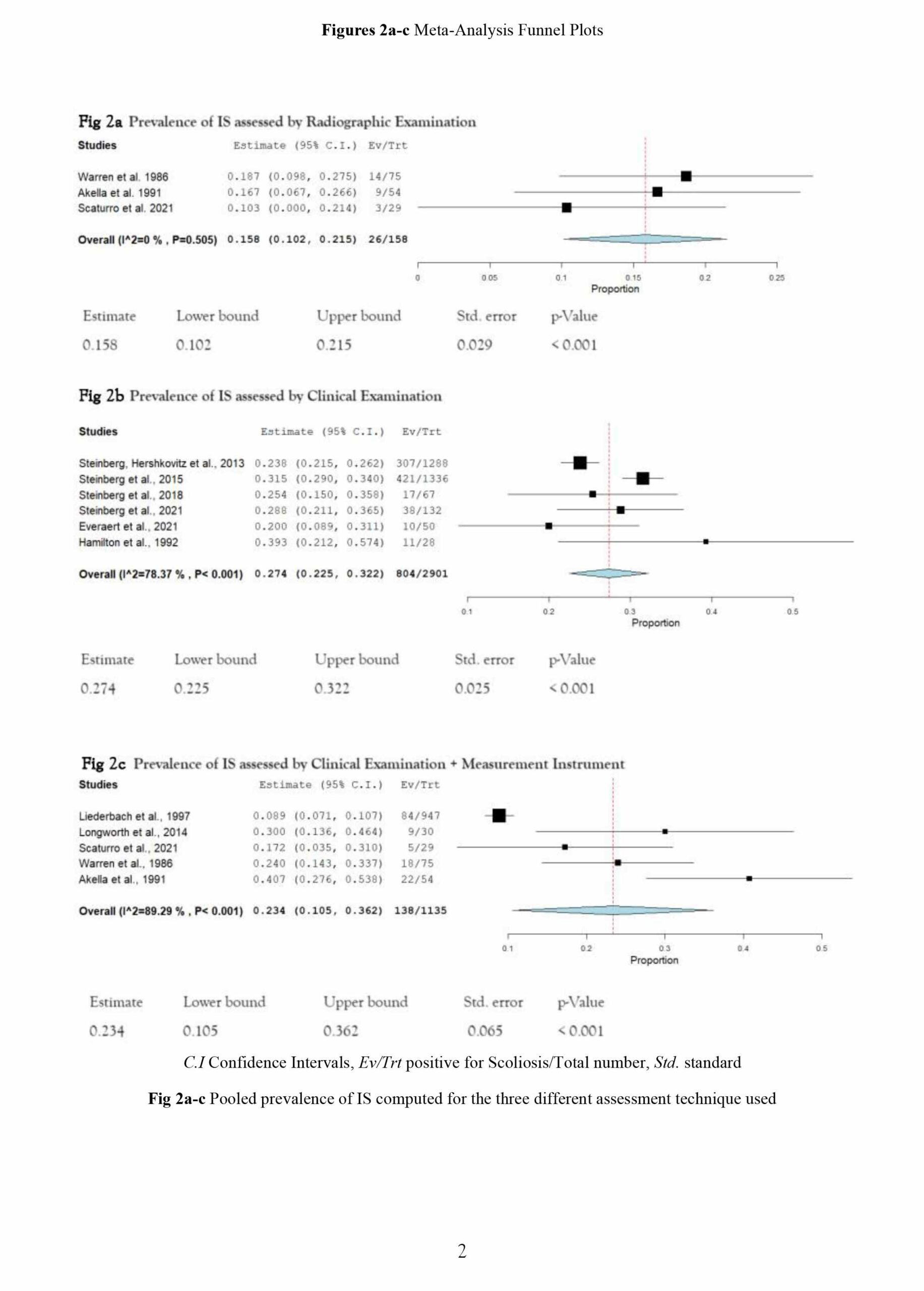
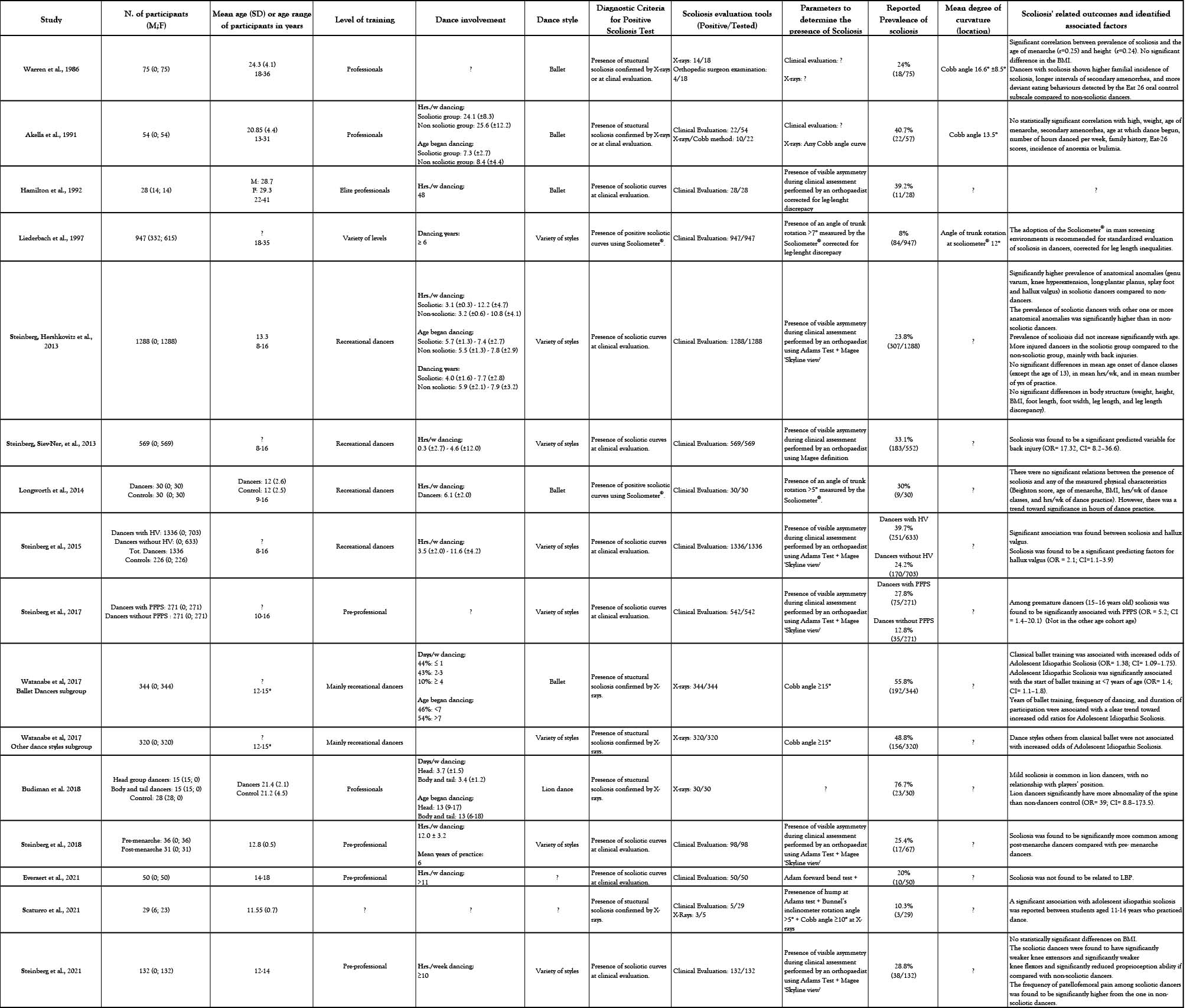
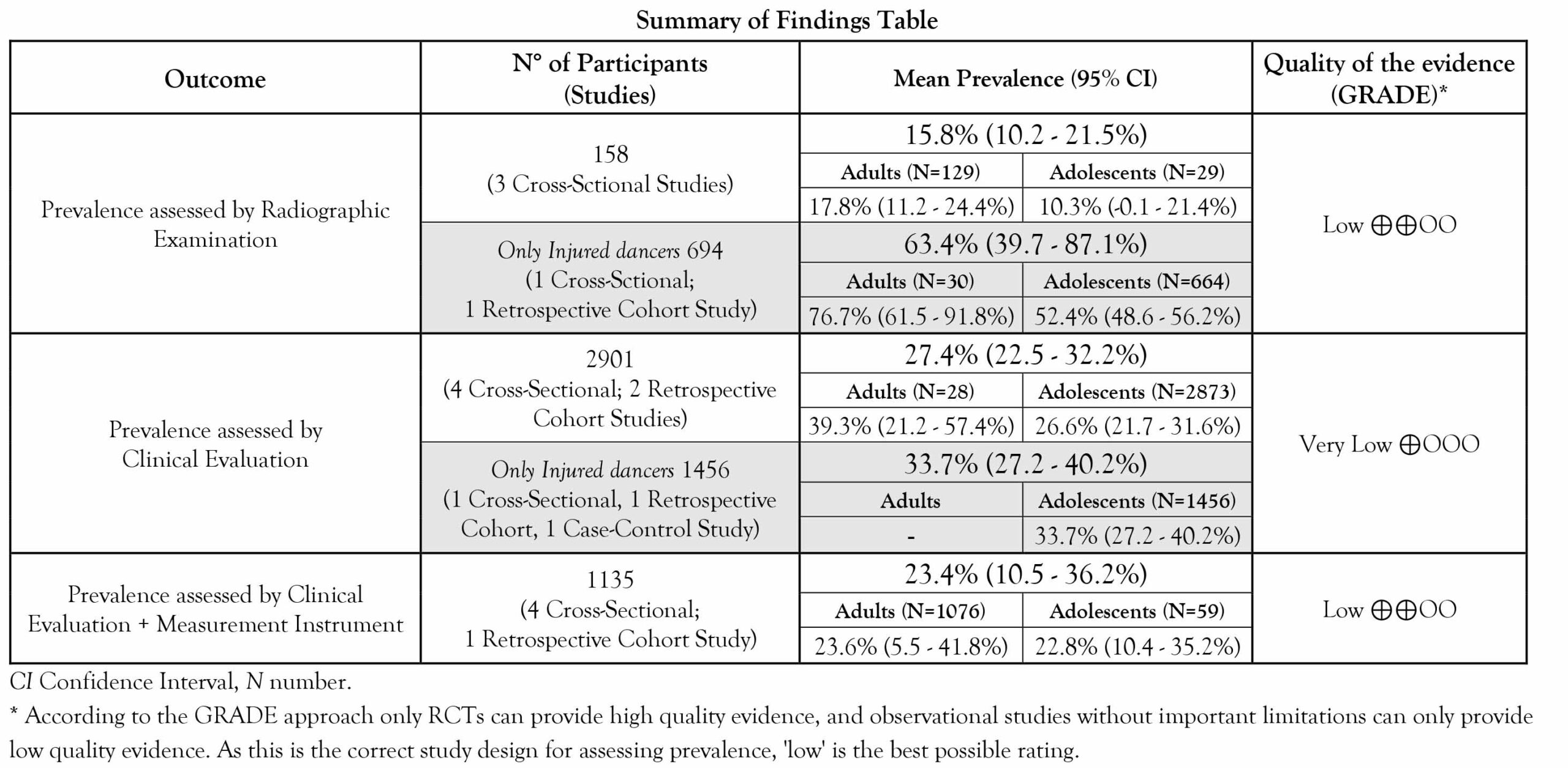
Fifteen studies, comprising 5709 dancers aged 8–41 years, were included in the analysis. The overall prevalence of IS was 15.8% (10-22%).
When X-rays were not taken, clinical examination alone biased the prevalence, making it appear 48.1-73.4% higher.
Evidence suggests that IS may be associated with several physical, behavioural, and hormonal characteristics, common to dancers, such as generalised joint hypermobility, flexibility, and the RED-S syndrome.
Discussion and Conclusion
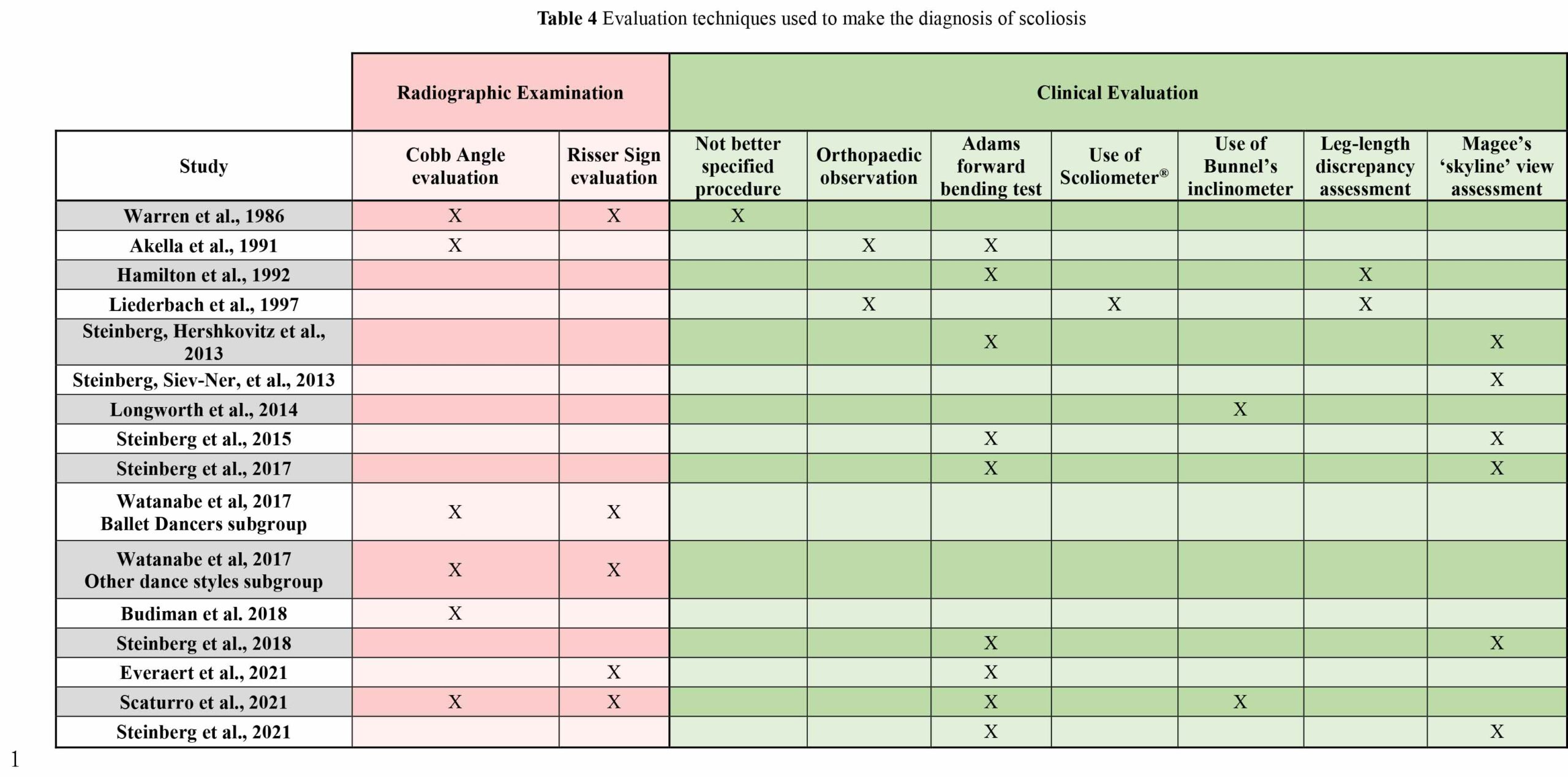
The prevalence of IS in dancers, regardless of the level of training or age, has been found to be at least triple that of general population. The reasons for this discrepancy remain unclear, but it is known that early diagnosis and treatment can help manage this condition, by influencing the scoliotic curve progression and reducing the likelihood of surgery and complications. In the context of dance medicine, it is still common to diagnose IS purely clinically, mainly using the Adam forward bending test, sometimes with the additional use of a scoliometer to assess the angle of trunk rotation.
Only X-rays should be used to diagnose IS, but we believe that the use of a screening tool for dancers, with standardised testing procedures, should be encouraged; to make referrals, improve their health, and provide research tools to better understand the problem, with the aim of developing dance-specific preventative training and treatments. identified associated factors may help to recognise young dancers at risk of developing the condition.
REFERENCES
Newman M, Hannink E, Barker KL. Associations Between Physical Activity and Adolescent Idiopathic Scoliosis: A Systematic Review and Meta-analysis. Archives of Physical Medicine and Rehabilitation. 2023;doi:https://dx.doi.org/10.1016/j.apmr.2023.01.019
Wong AYL, Chan C, Hiller C, et al. Is Scoliosis Associated with Dance Injury in Young Recreational Dancers? A Large-Scale Cross-Sectional Epidemiological Study. Journal of dance medicine & science : official publication of the International Association for Dance Medicine & Science. 2022;26(1):41-49. doi:https://dx.doi.org/10.12678/1089-313X.031522f
Negrini A, Donzelli S, Vanossi M, Poggio M, Cordani C, Zaina F, et al. Sports participation reduces the progression of idiopathic scoliosis and the need for bracing. An observational study of 511 adolescents with Risser 0-2 maturation stage. European journal of physical and rehabilitation medicine. 2023 Apr;59(2):222-7.
Mousavi L, Seidi F, Minoonejad H, Nikouei F. Prevalence of idiopathic scoliosis in athletes: a systematic review and meta-analysis. BMJ Open Quality. 2022;11(3):001312. doi:https://dx.doi.org/10.1136/bmjoq-2022-001850